


Physical AI startup Enact Intelligence emerged from stealth on October 22, 2026, announcing $30 million in pre-seed funding to advance its force-and-touch approach to robotic dexterity. The Zurich-based company is building robots that can sense force and touch in addition to seeing their surroundings.
Venture firms redalpine, Notion Capital and firstminute capital backed the round. Angel investors named in the announcement include Arthur Mensch, founder of Mistral; Yann LeCun, founder of AMI Labs and former Chief AI Scientist at Meta; and Andrew Lonsberry, founder of Path Robotics. The company described the round as one of the largest pre-seed rounds raised in Europe to date.
In a post on its own LinkedIn page, Enact also named Thomas Wolf of Hugging Face among its backers. A follow-up comment from the company lists further angels, including Paolo Cerruti of Northvolt, ETH Zürich professors Marc Pollefeys and Thomas Hofmann, Elias Kleimann of Wingtra, and Ameet Patel, formerly of J.P. Morgan, among others.
The company operates publicly as Enact, while a company profile lists the registered entity as Eta Robotics AG, founded in 2026 in the canton of Zurich.
A Full-Stack Approach to Force and Touch
Most robots being built rely primarily, if not exclusively, on vision to understand their environment, according to Enact. That reliance limits their ability to manipulate objects, operate reliably in the real world and learn efficiently from experience, and existing solutions that add haptic sensing of force and touch typically remain too expensive and too brittle for real industrial deployment.
Enact says it is addressing the problem across the full stack, rethinking the robotic tech stack from model architectures and data pipelines down to the actuators and sensors that feed the model. Rather than relying on costly sensors that measure force at a single point, the company captures force inside the actuators themselves, much as humans sense force through the tension in their muscles rather than only at their fingertips. The company describes its goal as building a proprioceptive nervous system for robots together with the cortex that makes sense of it, solving dexterity through whole-body force-awareness. It says it has focused from day one on enabling that capability within the cost and reliability constraints needed to make it useful across thousands of tasks in industry and beyond, and that the technology will benefit every form factor, from a simple arm to a full-scale humanoid.
In its LinkedIn post, the company said the system lets robots sense what is happening in real time through their own actuators, with no fragile sensors and no extra hardware, and that force-and-touch feedback lets the system learn efficiently and perform tasks faster. Enact said it is targeting automation where variability, rather than volume, determines value. On its website, the company summarizes its mission as solving dexterity through force and touch.
Harald Nieder, a general partner at redalpine, said Enact is tackling dexterity with a new data modality, starting with high-precision force data from bespoke actuators and rethinking the entire stack from the hardware up. Kamil Mieczakowski, a general partner at Notion Capital, said, “Robots won’t generalise until they have a nervous system, one that lets them not only see the world but feel it.” He added that Zurich’s Limmat Valley has established itself as a leading region for robotics over the past few years.
Founder, Team and the Zurich Base
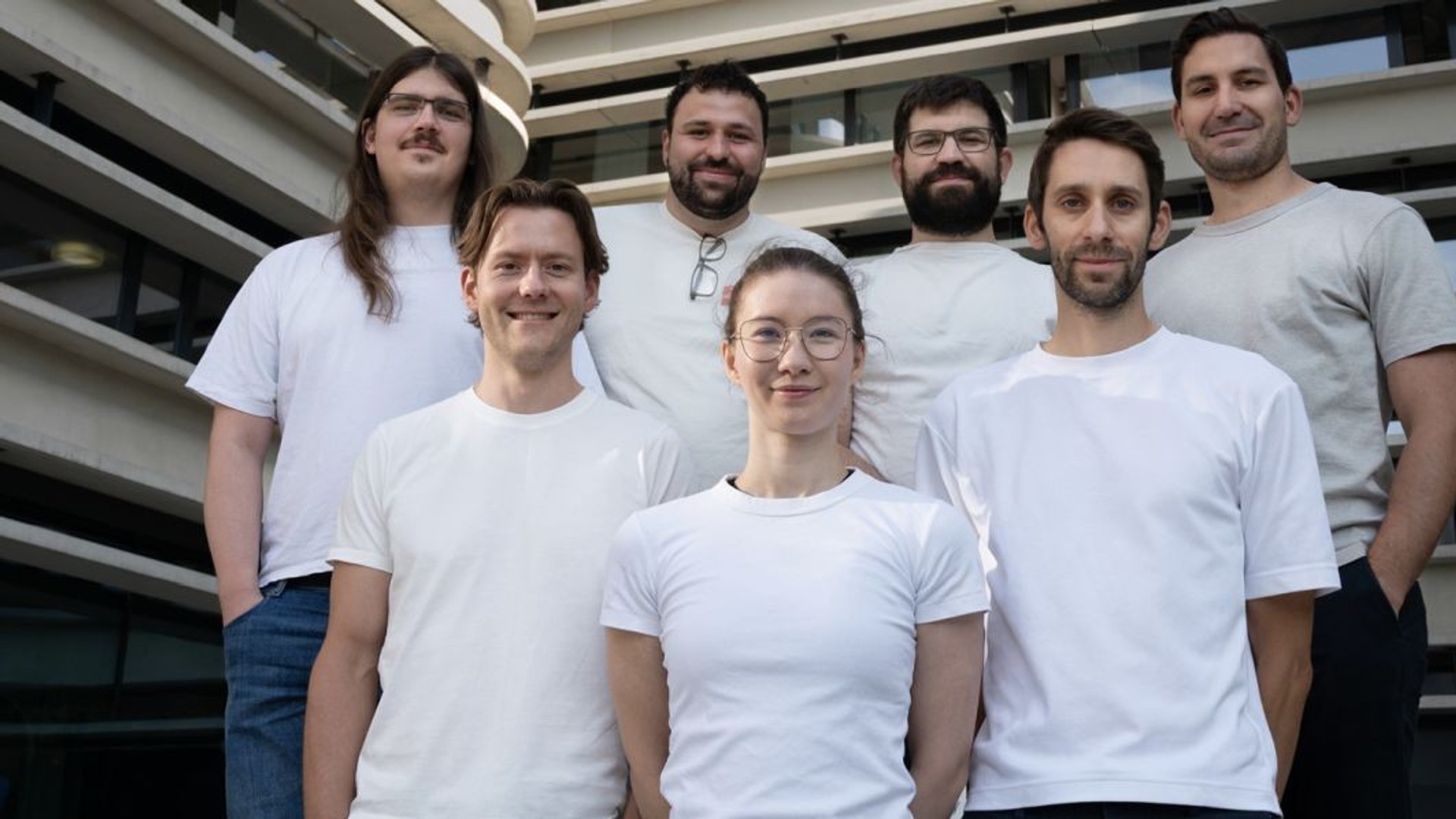
Enact was founded in March 2026 by Manuel Yves Galliker, who previously led the software team for the NEO humanoid at 1X, helped build 1X’s AI team in Silicon Valley and then worked at robotics lab Physical Intelligence. The company’s twelve-person team includes engineering talent from DeepMind, 1X, Amazon Robotics, Helsing and Physical Intelligence. Philip Kneis, previously a deeptech investor at redalpine, has also joined to spearhead growth at the company.
Galliker said physical AI has the advantage of starting from strong reasoning, language and vision capabilities already in place, rather than having to collect every piece of data needed to teach a robot common sense about the world. “We can build on top of existing models, like video models, and adapt them to output robot actions for interacting with the real world,” he said. The problems Enact is addressing, he said, are learning efficiently from experience and performing tasks reliably, both of which require the model to understand the physics of the robot and the task at hand.
The company made a deliberate decision to build in Zürich over the Bay Area. Galliker said Silicon Valley has traditionally been very strong in software and AI but is lacking in robotics and hardware engineering talent, and that with the current excitement around robotics, a lot of money is chasing a few people. He said Enact will bring AI experience with it from Silicon Valley and combine it with Zürich’s local talent pool.
Use of Funds and First Deployments
Enact will use the funding to grow its team fivefold by the end of 2027, accelerate its hardware and R&D pipelines, and seek to deploy its first robots with industrial partners. The company said it is already in discussions with major European industry players across manufacturing, infrastructure, retail and food processing. Its LinkedIn post also points applicants to an active hiring page as the company builds out the team.
Credit: Source link