
• bitcoinBitcoin(BTC)$75,680.00-2.71%
  • ethereumEthereum(ETH)$2,396.07-4.53%
  • tetherTether(USDT)$1.00-0.05%
  • binancecoinBNB(BNB)$712.92-0.81%
  • rippleXRP(XRP)$1.29-9.25%
  • usd-coinUSDC(USDC)$1.00-0.02%
  • solanaSolana(SOL)$96.85-5.31%
  • tronTRON(TRX)$0.333081-1.38%
  • Figure HelocFigure Heloc(FIGR_HELOC)$1.00-2.42%
  • zcashZcash(ZEC)$1,115.70-3.81%
  • HyperliquidHyperliquid(HYPE)$77.22-3.74%
  • dogecoinDogecoin(DOGE)$0.079935-4.36%
  • RainRain(RAIN)$0.014058-1.42%
  • USDSUSDS(USDS)$1.00-0.03%
  • moneroMonero(XMR)$508.68-0.92%
  • whitebitWhiteBIT Coin(WBT)$77.78-3.40%
  • chainlinkChainlink(LINK)$10.89-5.73%
  • leo-tokenLEO Token(LEO)$8.83-1.80%
  • cardanoCardano(ADA)$0.193924-6.71%
  • stellarStellar(XLM)$0.175514-8.76%
  • Ethena USDeEthena USDe(USDE)$1.00-0.08%
  • daiDai(DAI)$1.00-0.02%
  • bitcoin-cashBitcoin Cash(BCH)$217.21-2.49%
  • USD1USD1(USD1)$1.00-0.06%
  • uniswapUniswap(UNI)$6.36-4.77%
  • litecoinLitecoin(LTC)$51.09-3.06%
  • the-open-networkGram (prev. Toncoin)(GRAM)$1.31-2.68%
  • CantonCanton(CC)$0.090730-5.35%
  • Global DollarGlobal Dollar(USDG)$1.00-0.01%
  • hedera-hashgraphHedera(HBAR)$0.074153-4.76%
  • avalanche-2Avalanche(AVAX)$7.23-4.26%
  • nearNEAR Protocol(NEAR)$2.34-4.85%
  • shiba-inuShiba Inu(SHIB)$0.000005-5.82%
  • paypal-usdPayPal USD(PYUSD)$1.00-0.03%
  • suiSui(SUI)$0.68-4.66%
  • BlackRock USD Institutional Digital Liquidity FundBlackRock USD Institutional Digital Liquidity Fund(BUIDL)$1.000.00%
  • crypto-com-chainCronos(CRO)$0.055178-6.04%
  • tether-goldTether Gold(XAUT)$4,279.08-0.35%
  • Circle USYCCircle USYC(USYC)$1.140.01%
  • MemeCoreMemeCore(M)$1.144.24%
  • BittensorBittensor(TAO)$216.83-6.45%
  • Ripple USDRipple USD(RLUSD)$1.00-0.01%
  • okbOKB(OKB)$111.15-1.51%
  • Ondo US Dollar YieldOndo US Dollar Yield(USDY)$1.150.21%
  • aaveAave(AAVE)$121.96-4.74%
  • BitwayBitway(BTW)$0.6920.52%
  • pax-goldPAX Gold(PAXG)$4,283.07-0.33%
  • AsterAster(ASTER)$0.68-3.22%
  • World Liberty FinancialWorld Liberty Financial(WLFI)$0.056963-1.56%
  • mantleMantle(MNT)$0.54-4.92%
TradePoint.io
  • Main
  • AI & Technology
  • Stock Charts
  • Market & News
  • Business
  • Finance Tips
  • Trade Tube
  • Blog
  • Shop
No Result
View All Result
TradePoint.io
No Result
View All Result

LangChain’s CEO argues that better models alone won’t get your AI agent to production

March 6, 2026
in AI & Technology
Reading Time: 3 mins read
A A
LangChain’s CEO argues that better models alone won’t get your AI agent to production
ShareShareShareShareShare

As models get smarter and more capable, the “harnesses” around them must also evolve.

YOU MAY ALSO LIKE

How To Get Spotify’s Best Audio Quality

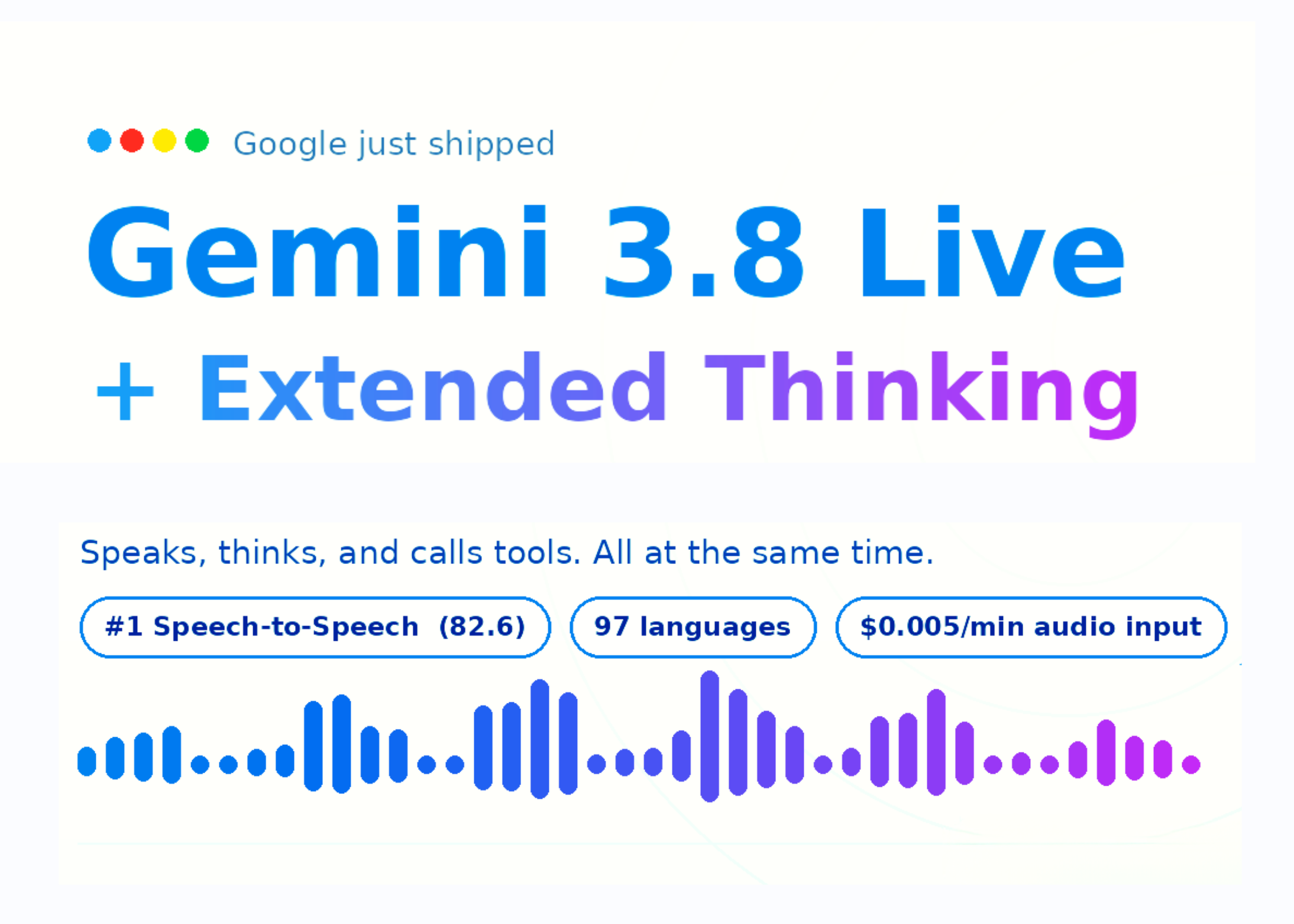
Google Releases Gemini 3.8 Live and 3.8 Live Extended Thinking for Production Grade Voice Agents

This “harness engineering” is an extension of context engineering, says LangChain co-founder and CEO Harrison Chase in a new VentureBeat Beyond the Pilot podcast episode. Whereas traditional AI harnesses have tended to constrain models from running in loops and calling tools, harnesses specifically built for AI agents allow them to interact more independently and effectively perform long-running tasks.

Chase also weighed in on OpenAI’s acquisition of OpenClaw, arguing that its viral success came down to a willingness to “let it rip” in ways that no major lab would — and questioning whether the acquisition actually gets OpenAI closer to a safe enterprise version of the product.

“The trend in harnesses is to actually give the large language model (LLM) itself more control over context engineering, letting it decide what it sees and what it doesn’t see,” Chase says. “Now, this idea of a long-running, more autonomous assistant is viable.”

Tracking progress and maintaining coherence

While the concept of allowing LLMs to run in a loop and call tools seems relatively simple, it’s difficult to pull off reliably, Chase noted. For a while, models were “below the threshold of usefulness” and simply couldn’t run in a loop, so devs used graphs and wrote chains to get around that. Chase pointed to AutoGPT — once the fastest-growing GitHub project ever — as a cautionary example: same architecture as today’s top agents, but the models weren’t good enough yet to run reliably in a loop, so it faded fast.

But as LLMs keep improving, teams can construct environments where models can run in loops and plan over longer horizons, and they can continually improve these harnesses. Previously, “you couldn’t really make improvements to the harness because you couldn’t actually run the model in a harness,” Chase said.

LangChain’s answer to this is Deep Agents, a customizable general-purpose harness.

Built on LangChain and LangGraph, it has planning capabilities, a virtual filesystem, context and token management, code execution, and skills and memory functions. Further, it can delegate tasks to subagents; these are specialized with different tools and configurations and can work in parallel. Context is also isolated, meaning subagent work doesn’t clutter the main agent’s context, and large subtask context is compressed into a single result for token efficiency.

All of these agents have access to file systems, Chase explained, and can essentially create to-do lists that they can execute on and track over time.

“When it goes on to the next step, and it goes on to step two or step three or step four out of a 200 step process, it has a way to track its progress and keep that coherence,” Chase said. “It comes down to letting the LLM write its thoughts down as it goes along, essentially.”

He emphasized that harnesses should be designed so that models can maintain coherence over longer tasks, and be “amenable” to models deciding when to compact context at points it determines is “advantageous.”

Also, giving agents access to code interpreters and BASH tools increases flexibility. And, providing agents with skills as opposed to just tools loaded up front allows them to load information when they need it. “So rather than hard code everything into one big system prompt,” Chase explained, “you could have a smaller system prompt, ‘This is the core foundation, but if I need to do X, let me read the skill for X. If I need to do Y, let me read the skill for Y.'”

Essentially, context engineering is a “really fancy” way of saying: What is the LLM seeing? Because that’s different from what developers see, he noted. When human devs can analyze agent traces, they can put themselves in the AI’s “mindset” and answer questions like: What is the system prompt? How is it created? Is it static or is it populated? What tools does the agent have? When it makes a tool call, and gets a response back, how is that presented?

“When agents mess up, they mess up because they don’t have the right context; when they succeed, they succeed because they have the right context,” Chase said. “I think of context engineering as bringing the right information in the right format to the LLM at the right time.”

Listen to the podcast to hear more about:

  • How LangChain built its stack: LangGraph as the core pillar, LangChain at the center, Deep Agents on top.

  • Why code sandboxes will be the next big thing.

  • How a different type of UX will evolve as agents run at longer intervals (or continuously).

  • Why traces and observability are core to building an agent that actually works.

You can also listen and subscribe to Beyond the Pilot on Spotify, Apple or wherever you get your podcasts.

Credit: Source link

ShareTweetSendSharePin

Related Posts

How To Get Spotify’s Best Audio Quality
AI & Technology

How To Get Spotify’s Best Audio Quality

September 15, 2026
Google Releases Gemini 3.8 Live and 3.8 Live Extended Thinking for Production Grade Voice Agents
AI & Technology

Google Releases Gemini 3.8 Live and 3.8 Live Extended Thinking for Production Grade Voice Agents

September 15, 2026
How To Improve The Audio Quality On Your iPhone
AI & Technology

How To Improve The Audio Quality On Your iPhone

September 15, 2026
Ferrovalle Taps INFORM for AI Smart Yard at Mexico City Rail Hub – Unite.AI
AI & Technology

Ferrovalle Taps INFORM for AI Smart Yard at Mexico City Rail Hub – Unite.AI

September 15, 2026
Next Post
Dudes Don’t Even Care About Weddings

Dudes Don't Even Care About Weddings

Leave a Reply Cancel reply

Your email address will not be published. Required fields are marked *

Search

No Result
View All Result
What Is MSI Mode On Windows PCs And Does It Speed Up Your GPU?

What Is MSI Mode On Windows PCs And Does It Speed Up Your GPU?

September 14, 2026
Anthropic Discloses Fourth Cyber Incident in Alignment Assessment – Unite.AI

Anthropic Discloses Fourth Cyber Incident in Alignment Assessment – Unite.AI

September 10, 2026
Bari Weiss caught in ‘Cold War’ power struggle with CBS News president

Bari Weiss caught in ‘Cold War’ power struggle with CBS News president

September 13, 2026

About

Learn more

Our Services

Legal

Privacy Policy

Terms of Use

Bloggers

Learn more

Article Links

Contact

Advertise

Ask us anything

©2020- TradePoint.io - All rights reserved!

Tradepoint.io, being just a publishing and technology platform, is not a registered broker-dealer or investment adviser. So we do not provide investment advice. Rather, brokerage services are provided to clients of Tradepoint.io by independent SEC-registered broker-dealers and members of FINRA/SIPC. Every form of investing carries some risk and past performance is not a guarantee of future results. “Tradepoint.io“, “Instant Investing” and “My Trading Tools” are registered trademarks of Apperbuild, LLC.

This website is operated by Apperbuild, LLC. We have no link to any brokerage firm and we do not provide investment advice. Every information and resource we provide is solely for the education of our readers. © 2020 Apperbuild, LLC. All rights reserved.

No Result
View All Result
  • Main
  • AI & Technology
  • Stock Charts
  • Market & News
  • Business
  • Finance Tips
  • Trade Tube
  • Blog
  • Shop

© 2023 - TradePoint.io - All Rights Reserved!