• bitcoinBitcoin(BTC)$86,409.006.46%
  • ethereumEthereum(ETH)$2,777.565.38%
  • tetherTether(USDT)$1.000.01%
  • binancecoinBNB(BNB)$800.803.58%
  • rippleXRP(XRP)$1.5610.36%
  • usd-coinUSDC(USDC)$1.000.01%
  • solanaSolana(SOL)$119.417.77%
  • tronTRON(TRX)$0.3442000.47%
  • zcashZcash(ZEC)$1,471.50-2.99%
  • Figure HelocFigure Heloc(FIGR_HELOC)$1.010.00%
  • HyperliquidHyperliquid(HYPE)$93.760.05%
  • dogecoinDogecoin(DOGE)$0.10030914.83%
  • moneroMonero(XMR)$599.616.69%
  • whitebitWhiteBIT Coin(WBT)$87.035.05%
  • RainRain(RAIN)$0.013982-0.81%
  • chainlinkChainlink(LINK)$13.215.79%
  • USDSUSDS(USDS)$1.000.00%
  • cardanoCardano(ADA)$0.2461437.82%
  • leo-tokenLEO Token(LEO)$8.950.11%
  • stellarStellar(XLM)$0.2158328.48%
  • nearNEAR Protocol(NEAR)$4.316.01%
  • uniswapUniswap(UNI)$8.992.52%
  • bitcoin-cashBitcoin Cash(BCH)$270.618.09%
  • avalanche-2Avalanche(AVAX)$11.240.15%
  • Ethena USDeEthena USDe(USDE)$1.000.00%
  • litecoinLitecoin(LTC)$61.635.00%
  • CantonCanton(CC)$0.1165447.51%
  • daiDai(DAI)$1.00-0.01%
  • USD1USD1(USD1)$1.000.00%
  • suiSui(SUI)$1.0314.98%
  • the-open-networkGram (prev. Toncoin)(GRAM)$1.454.52%
  • hedera-hashgraphHedera(HBAR)$0.0929187.72%
  • shiba-inuShiba Inu(SHIB)$0.00000610.43%
  • BittensorBittensor(TAO)$312.9519.43%
  • crypto-com-chainCronos(CRO)$0.06640811.45%
  • MemeCoreMemeCore(M)$1.44-2.17%
  • Global DollarGlobal Dollar(USDG)$1.000.01%
  • paypal-usdPayPal USD(PYUSD)$1.000.01%
  • tether-goldTether Gold(XAUT)$4,361.16-0.27%
  • okbOKB(OKB)$123.234.21%
  • Circle USYCCircle USYC(USYC)$1.140.01%
  • Ripple USDRipple USD(RLUSD)$1.000.01%
  • BlackRock USD Institutional Digital Liquidity FundBlackRock USD Institutional Digital Liquidity Fund(BUIDL)$1.000.00%
  • Ondo US Dollar YieldOndo US Dollar Yield(USDY)$1.150.02%
  • aaveAave(AAVE)$145.765.97%
  • OndoOndo(ONDO)$0.4581065.76%
  • BitwayBitway(BTW)$0.817.26%
  • mantleMantle(MNT)$0.656.88%
  • EthenaEthena(ENA)$0.211670-4.24%
  • polkadotPolkadot(DOT)$1.216.79%
TradePoint.io
  • Main
  • AI & Technology
  • Stock Charts
  • Market & News
  • Business
  • Finance Tips
  • Trade Tube
  • Blog
  • Shop
No Result
View All Result
TradePoint.io
No Result
View All Result

Google AI Proposes a Machine Learning Framework for Understanding AI Models in Medical Imaging

June 9, 2024
in AI & Technology
Reading Time: 4 mins read
A A
Google AI Proposes a Machine Learning Framework for Understanding AI Models in Medical Imaging
ShareShareShareShareShare

Recent advancements in machine learning have been actively used to improve the domain of healthcare. Despite performing remarkably well on various tasks, these models are often unable to provide a clear understanding of how specific visual changes affect ML decisions. These AI models have shown great promise and even human capabilities in some cases, but there remains a critical need for explanations of what signals these models have learned. Such explanations are essential to building trust among medical professionals and potentially uncovering novel scientific insights from the data, which are not yet recognized by experts. Google researchers introduced a novel framework, StylEx, that leverages generative AI to address the challenges in the field of medical imaging, especially focusing on the lack of explainability in AI models. 

Current methods for explaining AI models in computer vision, particularly in medical imaging, often rely on techniques that generate heatmaps indicating the importance of different pixels in an image. These methods, while useful for showing the “where” of important features, fall short of explaining the “what” and “why” behind these features. Specifically, they do not typically explain higher-level characteristics like texture, shape, or size that might underlie the model’s decisions. To overcome these limitations, Google’s StylEx leverages a StyleGAN-based image generator guided by a classifier. This approach aims to generate hypotheses by identifying and visualizing visual signals correlated with a classifier’s predictions. 

The workflow involves four key steps: training a classifier to confirm the presence of relevant signals in the imagery, training a StylEx model to generate images guided by the classifier, automatically detecting and visualizing the top visual attributes influencing the classifier, and having an interdisciplinary panel of experts review these findings to formulate hypotheses for future research. First, the proposed workflow starts by training a classifier on a given medical imaging dataset to perform a specific task, ensuring that the classifier achieves high performance (above 0.8 accuracy). This step confirms that the images contain relevant information for the task. 

Second, a StyleGAN2-based generator is trained to produce realistic images while preserving the classifier’s decision-making process. This generator is adapted to focus on attributes that significantly affect the classifier’s output. The third stage involves automatically selecting the top attributes in the StyleSpace of the generator that influence the classifier’s predictions. For each image, the researchers manipulate each coordinate in the StyleSpace to measure its effect on the classification output, identifying attributes that significantly change the prediction. This process results in counterfactual visualizations, where each attribute is independently adjusted to show its impact.

Finally, an interdisciplinary panel of experts, including clinicians, social scientists, and machine learning engineers, reviews these visualizations. This panel interprets the attributes to determine whether they correspond to known clinical features, potential biases, or novel findings. The panel’s insights are then used to generate hypotheses for further research, considering both biological and socio-cultural determinants of health.

In conclusion, the proposed framework enhances the explainability of AI models in medical imaging. By generating counterfactual images and visualizing the attributes that affect classifier predictions, this approach provides a deeper understanding of the “what” behind the model’s decisions. The interdisciplinary panel involvement, beyond physiology or pathophysiology, ensures that these insights are rigorously interpreted, accounting for potential biases and suggesting new avenues for scientific inquiry. 


Check out the Paper and Blog. All credit for this research goes to the researchers of this project. Also, don’t forget to follow us on Twitter. Join our Telegram Channel, Discord Channel, and LinkedIn Group.

If you like our work, you will love our newsletter..

Don’t Forget to join our 44k+ ML SubReddit


YOU MAY ALSO LIKE

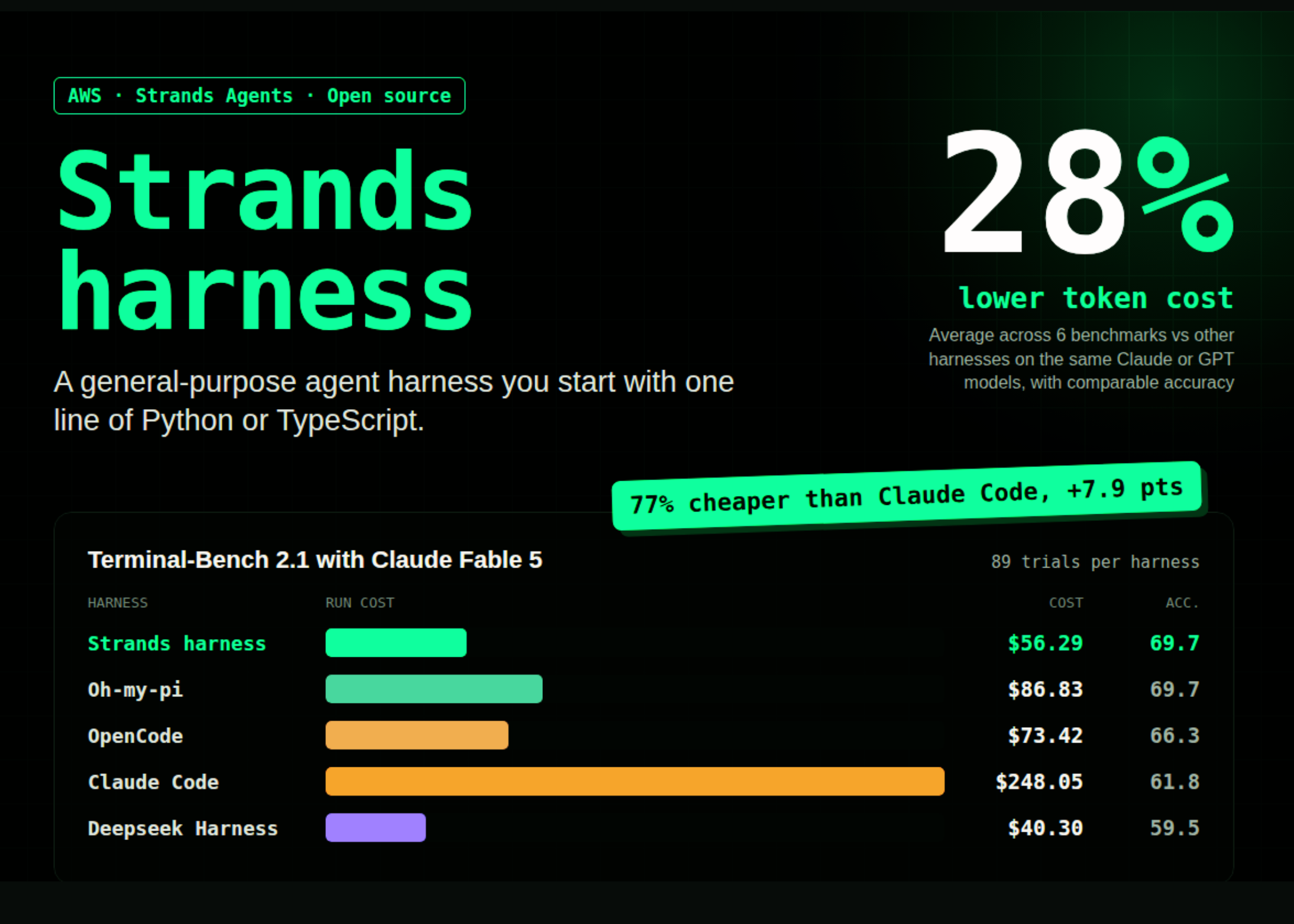
AWS Strands Agents Team Releases Strands Harness: An Open-Source Agent Harness With 28% Lower Token Cost at Comparable Accuracy

Bungie Leaders Now Say The Studio’s ‘Not Done With Destiny’

Pragati Jhunjhunwala is a consulting intern at MarktechPost. She is currently pursuing her B.Tech from the Indian Institute of Technology(IIT), Kharagpur. She is a tech enthusiast and has a keen interest in the scope of software and data science applications. She is always reading about the developments in different field of AI and ML.


🐝 Join the Fastest Growing AI Research Newsletter Read by Researchers from Google + NVIDIA + Meta + Stanford + MIT + Microsoft and many others…


Credit: Source link

ShareTweetSendSharePin

Related Posts

AWS Strands Agents Team Releases Strands Harness: An Open-Source Agent Harness With 28% Lower Token Cost at Comparable Accuracy
AI & Technology

AWS Strands Agents Team Releases Strands Harness: An Open-Source Agent Harness With 28% Lower Token Cost at Comparable Accuracy

September 21, 2026
Bungie Leaders Now Say The Studio’s ‘Not Done With Destiny’
AI & Technology

Bungie Leaders Now Say The Studio’s ‘Not Done With Destiny’

September 21, 2026
Here’s Why Apple’s Mac Studio Has Become So Expensive
AI & Technology

Here’s Why Apple’s Mac Studio Has Become So Expensive

September 21, 2026
Tesla Will Soon Roll Out FSD Supervised In The Czech Republic
AI & Technology

Tesla Will Soon Roll Out FSD Supervised In The Czech Republic

September 21, 2026
Next Post
EU elections: Millions head to polls on final day as right seeks surge

EU elections: Millions head to polls on final day as right seeks surge

Leave a Reply Cancel reply

Your email address will not be published. Required fields are marked *

Search

No Result
View All Result
The Pros And Cons Of Using Wired Vs. Wireless Xbox Controllers

The Pros And Cons Of Using Wired Vs. Wireless Xbox Controllers

September 19, 2026
At least two dead as rescuers search for missing in Grand Canyon

At least two dead as rescuers search for missing in Grand Canyon

September 20, 2026
LA Review of Books spikes interview with pro-Israel professor Shai Davidai

LA Review of Books spikes interview with pro-Israel professor Shai Davidai

September 18, 2026

About

Learn more

Our Services

Legal

Privacy Policy

Terms of Use

Bloggers

Learn more

Article Links

Contact

Advertise

Ask us anything

©2020- TradePoint.io - All rights reserved!

Tradepoint.io, being just a publishing and technology platform, is not a registered broker-dealer or investment adviser. So we do not provide investment advice. Rather, brokerage services are provided to clients of Tradepoint.io by independent SEC-registered broker-dealers and members of FINRA/SIPC. Every form of investing carries some risk and past performance is not a guarantee of future results. “Tradepoint.io“, “Instant Investing” and “My Trading Tools” are registered trademarks of Apperbuild, LLC.

This website is operated by Apperbuild, LLC. We have no link to any brokerage firm and we do not provide investment advice. Every information and resource we provide is solely for the education of our readers. © 2020 Apperbuild, LLC. All rights reserved.

No Result
View All Result
  • Main
  • AI & Technology
  • Stock Charts
  • Market & News
  • Business
  • Finance Tips
  • Trade Tube
  • Blog
  • Shop

© 2023 - TradePoint.io - All Rights Reserved!