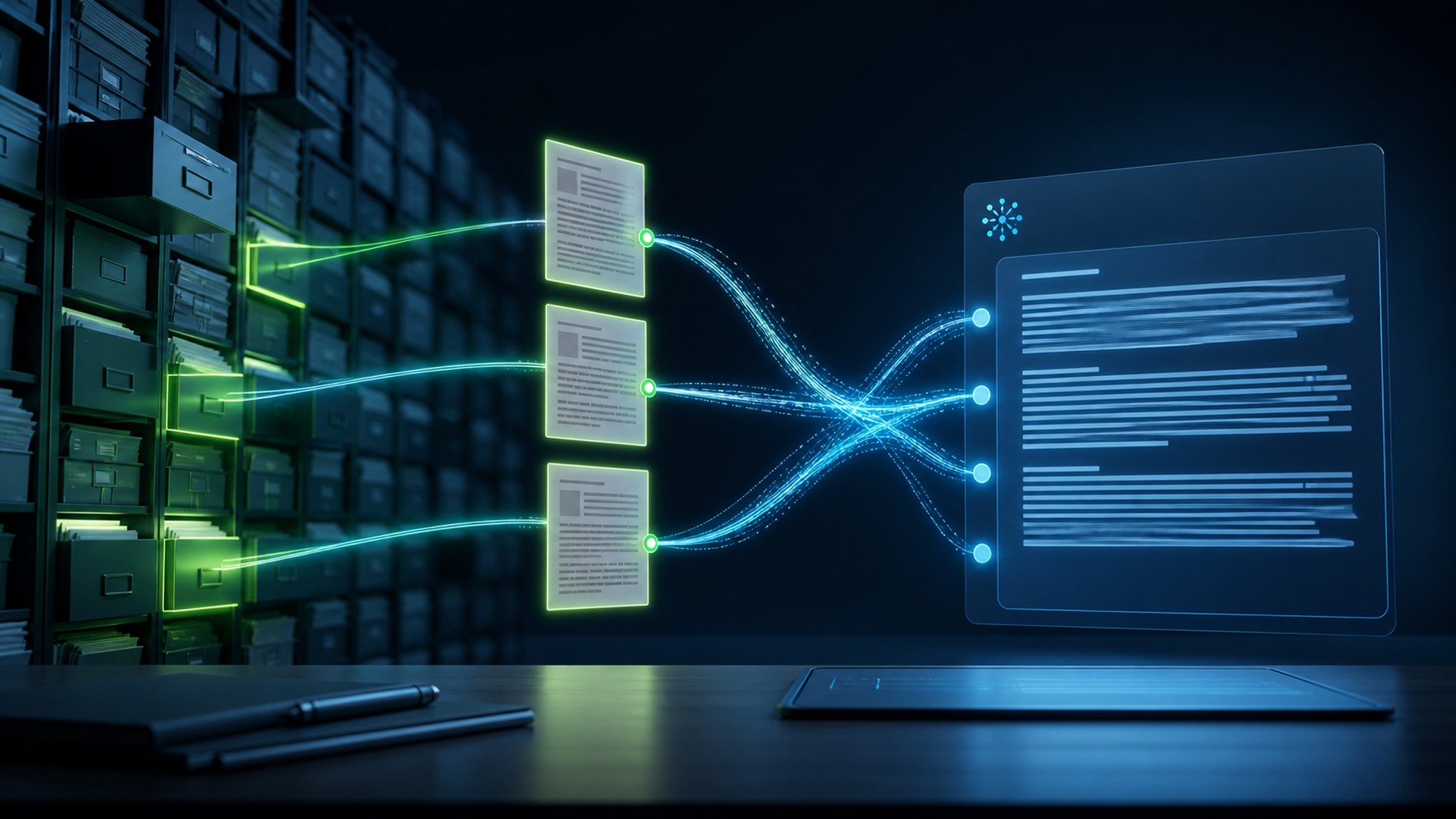
Amidst rapid technological advancements, Tiny AI is emerging as a silent powerhouse. Imagine algorithms compressed to fit microchips yet capable of recognizing faces, translating languages, and predicting market trends. Tiny AI operates discreetly within our devices, orchestrating smart homes and propelling advancements in personalized medicine.
Tiny AI excels in efficiency, adaptability, and impact by utilizing compact neural networks, streamlined algorithms, and edge computing capabilities. It represents a form of artificial intelligence that is lightweight, efficient, and positioned to revolutionize various aspects of our daily lives.
Looking into the future, quantum computing and neuromorphic chips are new technologies taking us into unexplored areas. Quantum computing works differently than regular computers, allowing for faster problem-solving, realistic simulation of molecular interactions, and quicker decryption of codes. It is not just a sci-fi idea anymore; it’s becoming a real possibility.
On the other hand, neuromorphic chips are small silicon-based entities designed to mimic the human brain. Beyond traditional processors, these chips act as synaptic storytellers, learning from experiences, adapting to new tasks, and operating with remarkable energy efficiency. The potential applications include real-time decision-making for robots, swift medical diagnoses, and serving as a crucial link between artificial intelligence and the intricacies of biological systems.
Exploring Quantum Computing: The Potential of Qubits
Quantum computing, a groundbreaking field at the intersection of physics and computer science, promises to revolutionize computation as we know it. At its core lies the concept of qubits, the quantum counterparts to classical bits. Unlike classical bits, which can only be in one of two states (0 or 1), qubits can simultaneously exist in a superposition of both states. This property enables quantum computers to perform complex calculations exponentially faster than classical computers.
Superposition allows qubits to explore multiple possibilities simultaneously, leading to parallel processing. Imagine a coin spinning in the air—before it lands, it exists in a superposition of heads and tails. Similarly, a qubit can represent both 0 and 1 until measured.
However, qubits do not stop there. They also exhibit a phenomenon called entanglement. When two qubits become entangled, their states become intrinsically linked. Changing the state of one qubit instantaneously affects the other, even if they are light-years apart. This property opens exciting possibilities for secure communication and distributed computing.
Contrasting with Classical Bits
Classical bits are like light switches—either on or off. They follow deterministic rules, making them predictable and reliable. However, their limitations become apparent when tackling complex problems. For instance, simulating quantum systems or factoring large numbers (essential for encryption breaking) is computationally intensive for classical computers.
Quantum Supremacy and Beyond
In 2019, Google achieved a significant milestone known as quantum supremacy. Their quantum processor, Sycamore, solved a specific problem faster than the most advanced classical supercomputer. While this achievement sparked excitement, challenges remain. Quantum computers are notoriously error-prone due to decoherence—interference from the environment that disrupts qubits.
Researchers are working on error correction techniques to mitigate decoherence and improve scalability. As quantum hardware advances, applications emerge. Quantum computers could revolutionize drug discovery by simulating molecular interactions, optimize supply chains by solving complex logistics problems, and break classical encryption algorithms.
Neuromorphic Chips: Mimicking the Brain’s Architecture
Neuromorphic chips mimic the complex structure of the human brain. They are designed to perform tasks in a brain-inspired way. These chips aim to replicate the brain’s efficiency and adaptability. Inspired by its neural networks, these chips intricately weave silicon synapses, seamlessly connecting in a cerebral dance.
Unlike conventional computers, neuromorphic chips redefine the paradigm by integrating computation and memory within a single unit—distinct from the traditional separation in Central Processing Units (CPUs) and Graphics Processing Units (GPUs).
Unlike traditional CPUs and GPUs, which follow a von Neumann architecture, these chips intertwine computation and memory. They process information locally, like human brains, leading to remarkable efficiency gains.
Neuromorphic chips excel at edge AI—performing computations directly on devices rather than cloud servers. Consider your smartphone recognizing faces, understanding natural language, or even diagnosing diseases without sending data to external servers. Neuromorphic chips make this possible by enabling real-time, low-power AI at the edge.
A significant stride in neuromorphic technology is the NeuRRAM chip, which emphasizes in-memory computation and energy efficiency. In addition, NeuRRAM embraces versatility, adapting seamlessly to various neural network models. Whether for image recognition, voice processing, or predicting stock market trends, NeuRRAM confidently asserts its adaptability.
NeuRRAM chips run computations directly in memory, consuming less energy than traditional AI platforms. It supports various neural network models, including image recognition and voice processing. The NeuRRAM chip bridges the gap between cloud-based AI and edge devices, empowering smartwatches, VR headsets, and factory sensors.
The convergence of quantum computing and neuromorphic chips holds immense promise for the future of Tiny AI. These seemingly disparate technologies intersect in fascinating ways. Quantum computers, with their ability to process vast amounts of data in parallel, can enhance the training of neuromorphic networks. Imagine a quantum-enhanced neural network that mimics the brain’s functions while leveraging quantum superposition and entanglement. Such a hybrid system could revolutionize generative AI, enabling faster and more accurate predictions.
Beyond Quantum and Neuromorphic: Additional Trends and Technologies
As we head toward the continuously evolving artificial intelligence discipline, several additional trends and technologies bring opportunities for integration into our daily lives.
Customized Chatbots are leading in a new era of AI development by democratizing access. Now, individuals without extensive programming experience can craft personalized chatbots. Simplified platforms allow users to focus on defining conversational flows and training models. Multimodal capabilities empower chatbots to engage in more nuanced interactions. We can think of it as an imaginary real estate agent seamlessly blending responses with property images and videos, elevating user experiences through a fusion of language and visual understanding.
The desire for compact yet powerful AI models drives the rise of Tiny AI, or Tiny Machine Learning (Tiny ML). Recent research efforts are focused on shrinking deep-learning architectures without compromising functionality. The goal is to promote local processing on edge devices such as smartphones, wearables, and IoT sensors. This shift eliminates reliance on distant cloud servers, ensuring enhanced privacy, reduced latency, and energy conservation. For example, a health-monitoring wearable analyze vital signs in real time, prioritizing user privacy by processing sensitive data on the device.
Similarly, federated learning is emerging as a privacy-preserving method, allowing AI models to be trained across decentralized devices while keeping raw data local. This collaborative learning approach ensures privacy without sacrificing the quality of AI models. As federated learning matures, it is poised to play a pivotal role in expanding AI adoption across various domains and promoting sustainability.
From an energy efficiency standpoint, battery-less IoT Sensors are revolutionizing AI applications for Internet of Things (IoT) devices. Operating without traditional batteries, these sensors leverage energy harvesting techniques from ambient sources like solar or kinetic energy. The combination of Tiny AI and battery-less sensors transforms smart devices, enabling efficient edge computing and environmental monitoring.
Decentralized Network Coverage is also emerging as a key trend, guaranteeing inclusivity. Mesh networks, satellite communication, and decentralized infrastructure ensure AI services reach even the most remote corners. This decentralization bridges digital divides, making AI more accessible and impactful across diverse communities.
Potential Challenges
Despite the excitement surrounding these advancements, challenges persist. Quantum computers are notoriously error-prone due to decoherence. Researchers continuously struggle with error correction techniques to stabilize qubits and improve scalability. In addition, neuromorphic chips face design complexities, balancing accuracy, energy efficiency, and versatility. Additionally, ethical considerations arise as AI becomes more pervasive. Furthermore, ensuring fairness, transparency, and accountability remains a critical task.
Conclusion
In conclusion, the next generation of Tiny AI, driven by Quantum Computing, Neuromorphic Chips, and emerging trends, promises to reshape the technology. As these advancements unfold, the combination of quantum computing and neuromorphic chips symbolizes innovation. While challenges persist, the collaborative efforts of researchers, engineers, and industry leaders pave the way for a future where Tiny AI transcends boundaries, leading to a new era of possibilities.

Credit: Source link