• bitcoinBitcoin(BTC)$78,041.00-1.07%
  • ethereumEthereum(ETH)$2,462.31-1.38%
  • tetherTether(USDT)$1.00-0.01%
  • binancecoinBNB(BNB)$721.40-4.35%
  • rippleXRP(XRP)$1.38-2.36%
  • usd-coinUSDC(USDC)$1.00-0.01%
  • solanaSolana(SOL)$101.12-2.63%
  • tronTRON(TRX)$0.338971-0.06%
  • Figure HelocFigure Heloc(FIGR_HELOC)$1.03-0.94%
  • zcashZcash(ZEC)$1,214.722.47%
  • HyperliquidHyperliquid(HYPE)$83.33-2.51%
  • dogecoinDogecoin(DOGE)$0.085469-5.26%
  • RainRain(RAIN)$0.0161460.14%
  • USDSUSDS(USDS)$1.000.00%
  • moneroMonero(XMR)$511.113.22%
  • whitebitWhiteBIT Coin(WBT)$80.55-1.36%
  • chainlinkChainlink(LINK)$11.73-6.19%
  • leo-tokenLEO Token(LEO)$9.200.10%
  • cardanoCardano(ADA)$0.210800-3.63%
  • stellarStellar(XLM)$0.179070-4.79%
  • bitcoin-cashBitcoin Cash(BCH)$250.29-3.13%
  • daiDai(DAI)$1.000.01%
  • Ethena USDeEthena USDe(USDE)$1.00-0.02%
  • USD1USD1(USD1)$1.00-0.01%
  • CantonCanton(CC)$0.103683-4.13%
  • litecoinLitecoin(LTC)$52.72-2.65%
  • the-open-networkGram (prev. Toncoin)(GRAM)$1.36-2.16%
  • uniswapUniswap(UNI)$6.01-11.40%
  • avalanche-2Avalanche(AVAX)$7.76-2.64%
  • hedera-hashgraphHedera(HBAR)$0.076384-3.22%
  • Global DollarGlobal Dollar(USDG)$1.000.00%
  • nearNEAR Protocol(NEAR)$2.455.96%
  • suiSui(SUI)$0.76-6.66%
  • shiba-inuShiba Inu(SHIB)$0.000005-3.85%
  • paypal-usdPayPal USD(PYUSD)$1.00-0.01%
  • crypto-com-chainCronos(CRO)$0.057906-6.01%
  • BlackRock USD Institutional Digital Liquidity FundBlackRock USD Institutional Digital Liquidity Fund(BUIDL)$1.000.00%
  • MemeCoreMemeCore(M)$1.21-1.19%
  • tether-goldTether Gold(XAUT)$4,412.710.94%
  • Circle USYCCircle USYC(USYC)$1.140.01%
  • BittensorBittensor(TAO)$252.37-1.90%
  • Ripple USDRipple USD(RLUSD)$1.000.00%
  • okbOKB(OKB)$112.88-1.15%
  • Ondo US Dollar YieldOndo US Dollar Yield(USDY)$1.150.07%
  • mantleMantle(MNT)$0.60-5.27%
  • AsterAster(ASTER)$0.72-4.98%
  • aaveAave(AAVE)$124.18-3.84%
  • pax-goldPAX Gold(PAXG)$4,415.350.93%
  • polkadotPolkadot(DOT)$1.11-7.46%
  • World Liberty FinancialWorld Liberty Financial(WLFI)$0.056116-0.16%
TradePoint.io
  • Main
  • AI & Technology
  • Stock Charts
  • Market & News
  • Business
  • Finance Tips
  • Trade Tube
  • Blog
  • Shop
No Result
View All Result
TradePoint.io
No Result
View All Result

How Do Schrodinger Bridges Beat Diffusion Models On Text-To-Speech (TTS) Synthesis?

December 11, 2023
in AI & Technology
Reading Time: 4 mins read
A A
How Do Schrodinger Bridges Beat Diffusion Models On Text-To-Speech (TTS) Synthesis?
ShareShareShareShareShare

With the growing number of advancements in Artificial Intelligence, the fields of Natural Language Processing, Natural Language Generation, and Computer Vision have gained massive popularity recently, all thanks to the introduction of Large Language Models (LLMs). Diffusion models, which have proven to be successful in producing text-to-speech (TTS) synthesis, have shown some great generation quality. However, their prior distribution is limited to a representation that introduces noise and offers little information about the desired generation goal.

In recent research, a team of researchers from Tsinghua University and Microsoft Research Asia has introduced a new text-to-speech system called Bridge-TTS. It is the first attempt to substitute a clean and predictable alternative for the noisy Gaussian prior used in well-established diffusion-based TTS approaches. This replacement prior provides strong structural information about the target and has been taken from the latent representation extracted from the text input.

The team has shared that the main contribution is the development of a completely manageable Schrodinger bridge that connects the ground-truth mel-spectrogram and the clean prior. The suggested bridge-TTS uses a data-to-data process, which improves the information content of the previous distribution, in contrast to diffusion models that function through a data-to-noise process.

The team has evaluated the approach, and upon evaluation, the efficacy of the suggested method has been highlighted by the experimental validation conducted on the LJ-Speech dataset. In 50-step/1000-step synthesis settings, Bridge-TTS has demonstrated better performance than its diffusion counterpart, Grad-TTS. It has even performed better in few-step scenarios than strong and fast TTS models. The Bridge-TTS approach’s primary strengths have been emphasized as being the synthesis quality and sampling efficiency. 

The team has summarized the primary contributions as follows.

  1. Mel-spectrograms have been produced from an uncontaminated text latent representation. Unlike the traditional data-to-noise procedure, this representation, which functions as the condition information in the context of diffusion models, has been created to be noise-free. Schrodinger bridge has been used to investigate a data-to-data process.
  1. For paired data, a fully tractable Schrodinger bridge has been proposed. This bridge uses a reference stochastic differential equation (SDE) in a flexible form. This method permits empirical investigation of design spaces in addition to offering a theoretical explanation. 
  1. It has been studied that how the sampling technique, model parameterization, and noise scheduling contribute to improved TTS quality. An asymmetric noise schedule, data prediction, and first-order bridge samplers have also been implemented. 
  1. The complete theoretical explanation of the underlying processes has been made possible by the fully tractable Schrodinger bridge. Empirical investigations have been carried out in order to comprehend how different elements affect the quality of TTS, which includes examining the effects of asymmetric noise schedules, model parameterization decisions, and sampling process efficiency.
  1. The method has produced great outcomes in terms of inference speed and generation quality. The diffusion-based equivalent Grad-TTS has been greatly outperformed by the method in both 1000-step and 50-step generation situations. It also outperformed FastGrad-TTS in 4-step generation, the transformer-based model FastSpeech 2, and the state-of-the-art distillation approach CoMoSpeech in 2-step generation.
  1. The method has achieved outstanding outcomes after just one training session. This efficiency is visible at several stages of the creation process, demonstrating the dependability and potency of the suggested approach.

Check out the Paper and Project. All credit for this research goes to the researchers of this project. Also, don’t forget to join our 33k+ ML SubReddit, 41k+ Facebook Community, Discord Channel, and Email Newsletter, where we share the latest AI research news, cool AI projects, and more.

If you like our work, you will love our newsletter..


YOU MAY ALSO LIKE

Apple Wallet Is Not The Same As Apple Pay: Here’s How They Differ

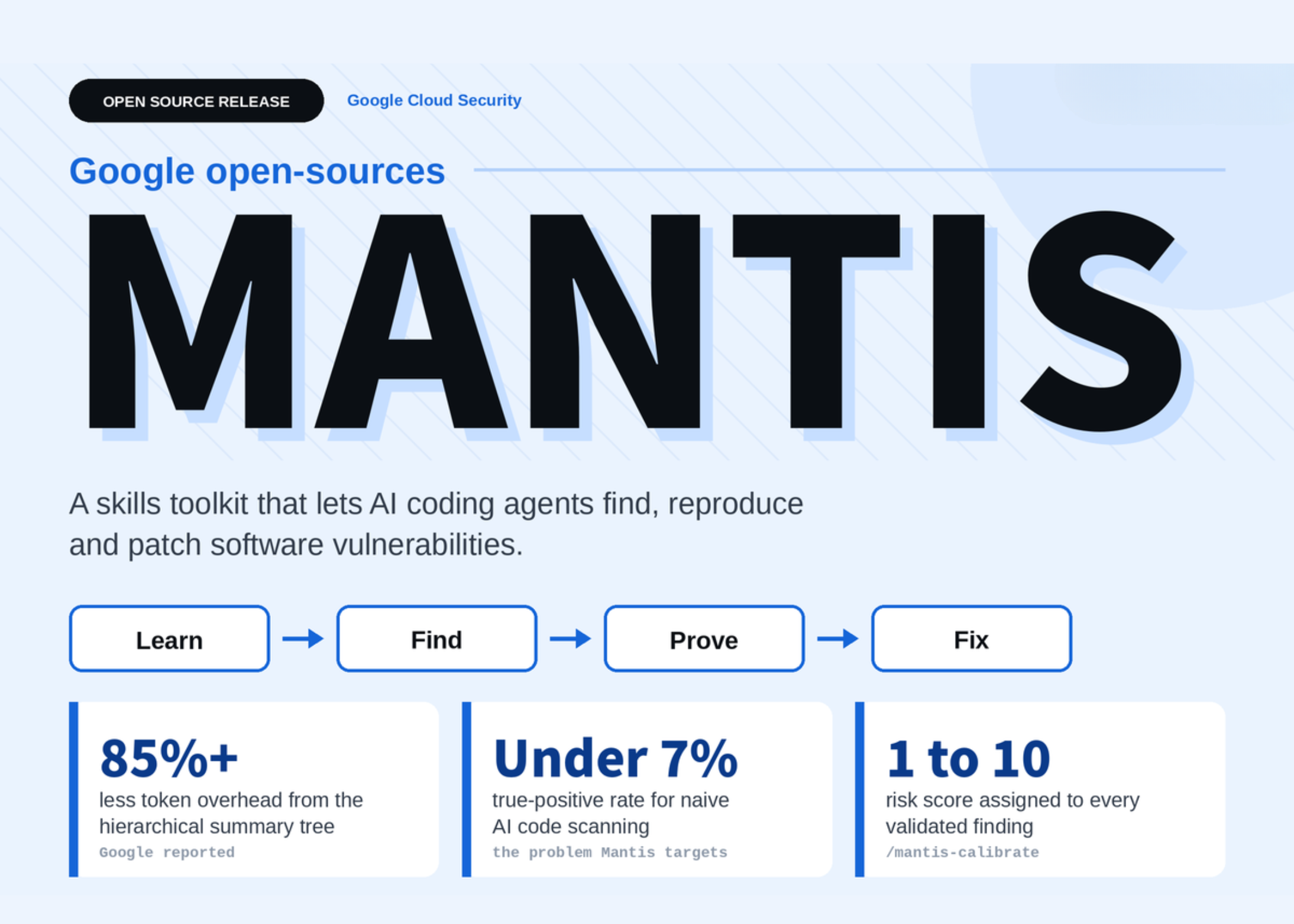
Google Open-Sources Mantis: A Modular Skills Toolkit That Lets Coding Agents Find, Reproduce and Patch Vulnerabilities

Tanya Malhotra is a final year undergrad from the University of Petroleum & Energy Studies, Dehradun, pursuing BTech in Computer Science Engineering with a specialization in Artificial Intelligence and Machine Learning.
She is a Data Science enthusiast with good analytical and critical thinking, along with an ardent interest in acquiring new skills, leading groups, and managing work in an organized manner.


🐝 [Free Webinar] LLMs in Banking: Building Predictive Analytics for Loan Approvals (Dec 13 2023)

Credit: Source link

ShareTweetSendSharePin

Related Posts

Apple Wallet Is Not The Same As Apple Pay: Here’s How They Differ
AI & Technology

Apple Wallet Is Not The Same As Apple Pay: Here’s How They Differ

September 9, 2026
Google Open-Sources Mantis: A Modular Skills Toolkit That Lets Coding Agents Find, Reproduce and Patch Vulnerabilities
AI & Technology

Google Open-Sources Mantis: A Modular Skills Toolkit That Lets Coding Agents Find, Reproduce and Patch Vulnerabilities

September 9, 2026
Muse, The Band, Lost Its Social Media Handles To Muse, Meta’s New AI Agent
AI & Technology

Muse, The Band, Lost Its Social Media Handles To Muse, Meta’s New AI Agent

September 9, 2026
Blizzard Employees Have Ratified Their First Union Contracts
AI & Technology

Blizzard Employees Have Ratified Their First Union Contracts

September 9, 2026
Next Post
United Auto Workers strike expands against Ford and GM

United Auto Workers strike expands against Ford and GM

Leave a Reply Cancel reply

Your email address will not be published. Required fields are marked *

Search

No Result
View All Result
New video helps Louisiana man walk free from death row nearly three decades after murder trial

New video helps Louisiana man walk free from death row nearly three decades after murder trial

September 4, 2026
Full Episode: TODAY Show – July 24

Full Episode: TODAY Show – July 24

September 5, 2026
The three coolest things at the World AI Conference

The three coolest things at the World AI Conference

September 7, 2026

About

Learn more

Our Services

Legal

Privacy Policy

Terms of Use

Bloggers

Learn more

Article Links

Contact

Advertise

Ask us anything

©2020- TradePoint.io - All rights reserved!

Tradepoint.io, being just a publishing and technology platform, is not a registered broker-dealer or investment adviser. So we do not provide investment advice. Rather, brokerage services are provided to clients of Tradepoint.io by independent SEC-registered broker-dealers and members of FINRA/SIPC. Every form of investing carries some risk and past performance is not a guarantee of future results. “Tradepoint.io“, “Instant Investing” and “My Trading Tools” are registered trademarks of Apperbuild, LLC.

This website is operated by Apperbuild, LLC. We have no link to any brokerage firm and we do not provide investment advice. Every information and resource we provide is solely for the education of our readers. © 2020 Apperbuild, LLC. All rights reserved.

No Result
View All Result
  • Main
  • AI & Technology
  • Stock Charts
  • Market & News
  • Business
  • Finance Tips
  • Trade Tube
  • Blog
  • Shop

© 2023 - TradePoint.io - All Rights Reserved!