• bitcoinBitcoin(BTC)$78,181.00-0.31%
  • ethereumEthereum(ETH)$2,464.16-0.77%
  • tetherTether(USDT)$1.00-0.01%
  • binancecoinBNB(BNB)$721.73-4.00%
  • rippleXRP(XRP)$1.39-1.59%
  • usd-coinUSDC(USDC)$1.00-0.01%
  • solanaSolana(SOL)$101.59-1.66%
  • tronTRON(TRX)$0.338479-0.12%
  • Figure HelocFigure Heloc(FIGR_HELOC)$1.03-0.94%
  • zcashZcash(ZEC)$1,241.415.48%
  • HyperliquidHyperliquid(HYPE)$83.41-1.76%
  • dogecoinDogecoin(DOGE)$0.086086-4.29%
  • RainRain(RAIN)$0.015864-2.03%
  • USDSUSDS(USDS)$1.00-0.01%
  • moneroMonero(XMR)$510.030.98%
  • whitebitWhiteBIT Coin(WBT)$80.70-0.64%
  • chainlinkChainlink(LINK)$11.77-5.91%
  • leo-tokenLEO Token(LEO)$9.18-0.24%
  • cardanoCardano(ADA)$0.211503-3.69%
  • stellarStellar(XLM)$0.181099-3.54%
  • bitcoin-cashBitcoin Cash(BCH)$250.85-2.95%
  • daiDai(DAI)$1.000.00%
  • Ethena USDeEthena USDe(USDE)$1.00-0.01%
  • USD1USD1(USD1)$1.00-0.01%
  • litecoinLitecoin(LTC)$53.07-2.28%
  • CantonCanton(CC)$0.104015-2.97%
  • uniswapUniswap(UNI)$6.17-8.07%
  • the-open-networkGram (prev. Toncoin)(GRAM)$1.37-2.04%
  • avalanche-2Avalanche(AVAX)$7.78-2.80%
  • hedera-hashgraphHedera(HBAR)$0.076505-3.42%
  • Global DollarGlobal Dollar(USDG)$1.000.00%
  • nearNEAR Protocol(NEAR)$2.487.28%
  • suiSui(SUI)$0.77-4.79%
  • shiba-inuShiba Inu(SHIB)$0.000005-3.17%
  • crypto-com-chainCronos(CRO)$0.058521-0.46%
  • paypal-usdPayPal USD(PYUSD)$1.00-0.01%
  • BlackRock USD Institutional Digital Liquidity FundBlackRock USD Institutional Digital Liquidity Fund(BUIDL)$1.000.00%
  • MemeCoreMemeCore(M)$1.20-2.04%
  • tether-goldTether Gold(XAUT)$4,391.800.77%
  • Circle USYCCircle USYC(USYC)$1.140.01%
  • BittensorBittensor(TAO)$253.68-2.46%
  • Ripple USDRipple USD(RLUSD)$1.000.00%
  • okbOKB(OKB)$112.76-0.96%
  • Ondo US Dollar YieldOndo US Dollar Yield(USDY)$1.150.12%
  • mantleMantle(MNT)$0.60-5.11%
  • AsterAster(ASTER)$0.73-2.10%
  • aaveAave(AAVE)$125.31-2.56%
  • polkadotPolkadot(DOT)$1.12-9.88%
  • pax-goldPAX Gold(PAXG)$4,394.760.77%
  • World Liberty FinancialWorld Liberty Financial(WLFI)$0.0564060.52%
TradePoint.io
  • Main
  • AI & Technology
  • Stock Charts
  • Market & News
  • Business
  • Finance Tips
  • Trade Tube
  • Blog
  • Shop
No Result
View All Result
TradePoint.io
No Result
View All Result

Meet snnTorch: An Open-Source Python Package for Performing Gradient-based Learning with Spiking Neural Networks

November 25, 2023
in AI & Technology
Reading Time: 4 mins read
A A
Meet snnTorch: An Open-Source Python Package for Performing Gradient-based Learning with Spiking Neural Networks
ShareShareShareShareShare

In artificial intelligence, efficiency, and environmental impact have become paramount concerns. Addressing this, Jason Eshraghian from UC Santa Cruz developed snnTorch, an open-source Python library implementing spiking neural networks, drawing inspiration from the brain’s remarkable efficiency in processing data. The crux, highlighted in the research, lies in the inefficiency of traditional neural networks and their escalating environmental footprint.

Traditional neural networks lack the elegance of the brain’s processing mechanisms. Spiking neural networks emulate the brain by activating neurons only when there’s input, in contrast to conventional networks that continually process data. Eshraghian aims to infuse AI with the efficiency observed in biological systems, providing a tangible solution to environmental concerns arising from the energy-intensive nature of current neural networks.

snnTorch, a pandemic-born passion project, has gained traction, surpassing 100,000 downloads. Its applications range from NASA’s satellite tracking to collaborations with companies like Graphcore, optimizing AI chips. SnnTorch is committed to harnessing the brain’s power efficiency and seamlessly integrating it into AI functionality. Eshraghian, with a chip design background, sees the potential for optimizing computing chips through software and hardware co-design for maximum power efficiency.

As snnTorch adoption grows, so does the need for educational resources. Eshraghian’s paper, a companion to the library, serves a dual purpose: documenting the code and providing an educational resource for brain-inspired AI. It takes an exceptionally honest approach, acknowledging the unsettled nature of neuromorphic computing, sparing students frustration in a field where even experts grapple with uncertainty.

The research’s honesty extends to its presentation, featuring code blocks—a departure from conventional research papers. These blocks, with explanations, underline the unsettled nature of certain areas, offering transparency in an often opaque field. Eshraghian aims to provide a resource he wished he had during his coding journey. This transparency resonates positively with reports of the research used in onboarding at neuromorphic hardware startups.

The research explores the limitations and opportunities of brain-inspired deep learning, recognizing the gap in understanding brain processes compared to AI models. Eshraghian suggests a path forward: identifying correlations and discrepancies. One key difference is the brain’s inability to revisit past data, focusing on real-time information—an opportunity for enhanced energy efficiency crucial for sustainable AI.

The research delves into the fundamental neuroscience concept: “fire together, wired together.” Traditionally seen as opposed to deep learning’s backpropagation, the researcher proposes a complementary relationship, opening avenues for exploration. Collaborating with biomolecular engineering researchers on cerebral organoids bridges the gap between biological models and computing research. Incorporating “wetware” into the software/hardware co-design paradigm, this multidisciplinary approach promises insights into brain-inspired learning.

In conclusion, snnTorch and its paper mark a milestone in the journey toward brain-inspired AI. Its success underscores the demand for energy-efficient alternatives to traditional neural networks. The researcher’s transparent and educational approach fosters a collaborative community dedicated to pushing neuromorphic computing boundaries. As guided by snnTorch insights, the field holds the potential to revolutionize AI and deepen our understanding of processes in the human brain.


Check out the Paper and Project. All credit for this research goes to the researchers of this project. Also, don’t forget to join our 33k+ ML SubReddit, 41k+ Facebook Community, Discord Channel, and Email Newsletter, where we share the latest AI research news, cool AI projects, and more.

If you like our work, you will love our newsletter..


YOU MAY ALSO LIKE

Apple Wallet Is Not The Same As Apple Pay: Here’s How They Differ

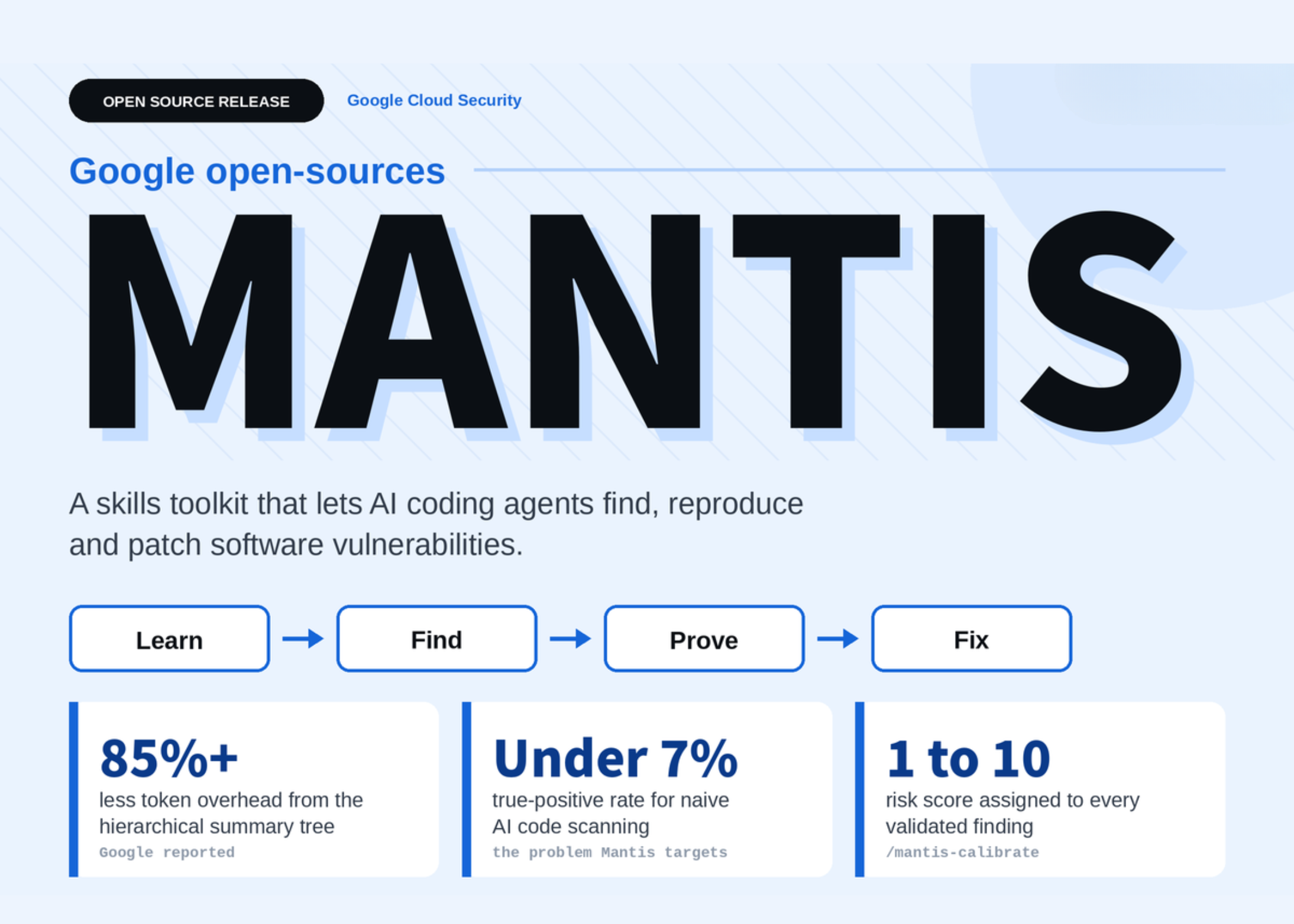
Google Open-Sources Mantis: A Modular Skills Toolkit That Lets Coding Agents Find, Reproduce and Patch Vulnerabilities

Madhur Garg is a consulting intern at MarktechPost. He is currently pursuing his B.Tech in Civil and Environmental Engineering from the Indian Institute of Technology (IIT), Patna. He shares a strong passion for Machine Learning and enjoys exploring the latest advancements in technologies and their practical applications. With a keen interest in artificial intelligence and its diverse applications, Madhur is determined to contribute to the field of Data Science and leverage its potential impact in various industries.


↗ Step by Step Tutorial on ‘How to Build LLM Apps that can See Hear Speak’

Credit: Source link

ShareTweetSendSharePin

Related Posts

Apple Wallet Is Not The Same As Apple Pay: Here’s How They Differ
AI & Technology

Apple Wallet Is Not The Same As Apple Pay: Here’s How They Differ

September 9, 2026
Google Open-Sources Mantis: A Modular Skills Toolkit That Lets Coding Agents Find, Reproduce and Patch Vulnerabilities
AI & Technology

Google Open-Sources Mantis: A Modular Skills Toolkit That Lets Coding Agents Find, Reproduce and Patch Vulnerabilities

September 9, 2026
Blizzard Employees Have Ratified Their First Union Contracts
AI & Technology

Blizzard Employees Have Ratified Their First Union Contracts

September 9, 2026
OpenAI Names Paul Christiano to Foundation Board and Safety Committee – Unite.AI
AI & Technology

OpenAI Names Paul Christiano to Foundation Board and Safety Committee – Unite.AI

September 9, 2026
Next Post
What does recent activity by Iranian proxy groups mean for the war?

What does recent activity by Iranian proxy groups mean for the war?

Leave a Reply Cancel reply

Your email address will not be published. Required fields are marked *

Search

No Result
View All Result
Lindsay Clancy trial latest: Judge declares a mistrial – follow live – BBC

Lindsay Clancy trial latest: Judge declares a mistrial – follow live – BBC

September 4, 2026
New video of American woman missing in Grenada 

New video of American woman missing in Grenada 

September 3, 2026
Pros And Cons Of Using A Chromebook As Your Everyday PC

Pros And Cons Of Using A Chromebook As Your Everyday PC

September 8, 2026

About

Learn more

Our Services

Legal

Privacy Policy

Terms of Use

Bloggers

Learn more

Article Links

Contact

Advertise

Ask us anything

©2020- TradePoint.io - All rights reserved!

Tradepoint.io, being just a publishing and technology platform, is not a registered broker-dealer or investment adviser. So we do not provide investment advice. Rather, brokerage services are provided to clients of Tradepoint.io by independent SEC-registered broker-dealers and members of FINRA/SIPC. Every form of investing carries some risk and past performance is not a guarantee of future results. “Tradepoint.io“, “Instant Investing” and “My Trading Tools” are registered trademarks of Apperbuild, LLC.

This website is operated by Apperbuild, LLC. We have no link to any brokerage firm and we do not provide investment advice. Every information and resource we provide is solely for the education of our readers. © 2020 Apperbuild, LLC. All rights reserved.

No Result
View All Result
  • Main
  • AI & Technology
  • Stock Charts
  • Market & News
  • Business
  • Finance Tips
  • Trade Tube
  • Blog
  • Shop

© 2023 - TradePoint.io - All Rights Reserved!