































NEURA Robotics announced on November 27, 2026 that it has signed a memorandum of understanding with the Government of Aragón and Costa Group to establish NEURA Gym Aragón and a surrounding Physical AI Model Zone, with investment planned in the double-digit millions of euros.
The partners are targeting a mid-2027 opening, with NEURA Robotics taking the leading investment role. Their aim is to help companies in agriculture, agri-food, logistics, automotive and manufacturing develop robotic applications and position Physical AI, which enables robots to use perception and learned capabilities for physical tasks, as a new source of economic growth in Aragón and Spain.
Training and Licensing Industrial Expertise
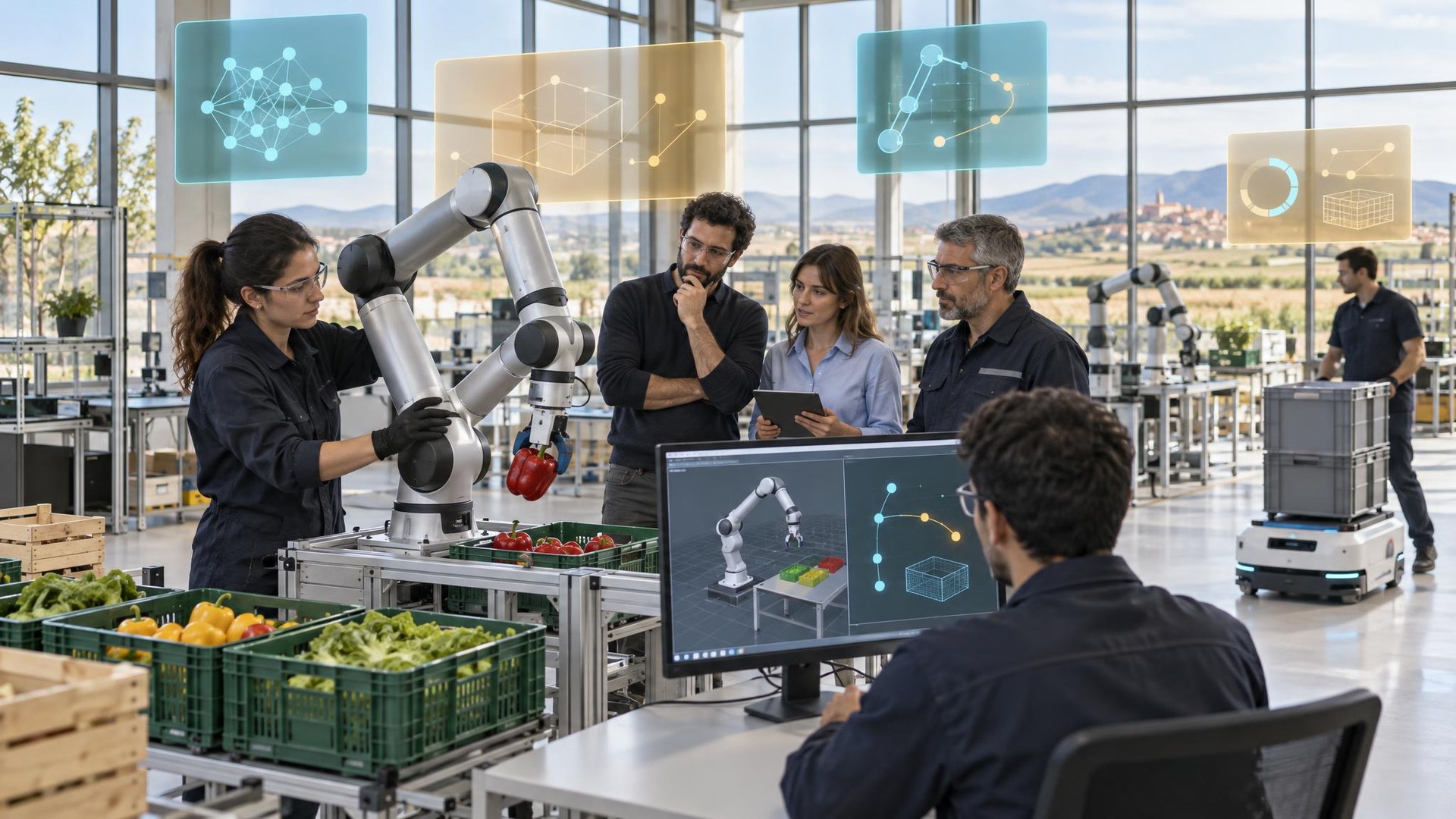
NEURA will build and operate the Gym, providing technology and tools that connect robotics, AI models, simulation and its Neuraverse platform. Companies will bring their own tasks and process knowledge, train and test applications on different robot systems, and assess performance before deployment.
The shared infrastructure is intended for small and medium-sized businesses as well as larger industrial groups, universities and technology centres. NEURA’s premise is that reliable Physical AI applications require experience with real materials, tools and processes; the Gym is meant to bring that training environment closer to the employees who understand the work.
Through Neuraverse, participating partners will retain control of their company-specific knowledge and robotic skills. They can keep a skill private or license it under agreed commercial terms, making control of industrial expertise part of the project’s commercial model. NEURA founder and CEO David Reger summarized the incentive: “A company that develops a valuable skill should benefit when others use it.”
Testing Under Representative Conditions
The Physical AI Model Zone will extend that work into designated environments where partners can test applications under representative operating conditions. Potential settings include industrial operations and selected service environments, and the Zone is intended to show how an application performs beyond a training cell before wider deployment.
The Zone’s scope and locations, as well as participation by other autonomous systems, remain to be defined with the relevant partners and authorities. Any extension into publicly accessible areas will require appropriate permissions and safety measures, placing limits on how testing can move into shared public spaces.
Partner Roles and Regional Development
Fraga-based Costa Group, an Aragonese agri-food group, will serve as the industrial anchor partner. Its agricultural and industrial operations will provide practical challenges, use cases and operational expertise for developing and evaluating applications, while its regional network will help connect the work with businesses and employees. The partners will initially explore applications intended to improve productivity and reduce physically demanding or repetitive work.
The Government of Aragón will support skills development, coordination with relevant authorities, and connections with regional companies, universities, research institutes and business associations. Universities in Aragón, including the University of Zaragoza, will contribute research expertise and methods, provide opportunities for students and researchers, and support talent training through joint projects and activities.
The partners expect the project to create skilled roles in Gym operations, user training and support, and application development, as well as opportunities for regional suppliers and technical service providers. Aragón will also join NEURA’s expanding Gym network, connecting regional teams and companies with other European and international locations.
That network is intended to make regional expertise commercially useful beyond its place of origin through deployment, technical services and skill licensing. For Aragón, the project’s central test is whether shared training and representative-condition testing can turn local process knowledge into deployable, licensable robotic skills, giving smaller companies access to development infrastructure while they retain control of their expertise.
Credit: Source link