




























Amazon announced on November 23, 2026 that it had signed an agreement to purchase the proprietary technology behind the Decart Optimization Stack and bring the AI startup’s three co-founders and their team of AI researchers and engineers to the company.
The agreement covers the DOS technology and the planned hiring of co-founders Dean Leitersdorf, Moshe Shalev and Orian Leitersdorf, together with their team. Completion remains subject to customary closing conditions, including regulatory clearance.
Peter DeSantis, Amazon’s senior vice president for foundational AI models, custom silicon and quantum computing, said: “Every leap forward in AI starts with getting more out of every chip. More efficient compute means better training, better reinforcement learning, faster inference, and better models for customers at a lower cost.”
What DOS Is Designed to Improve
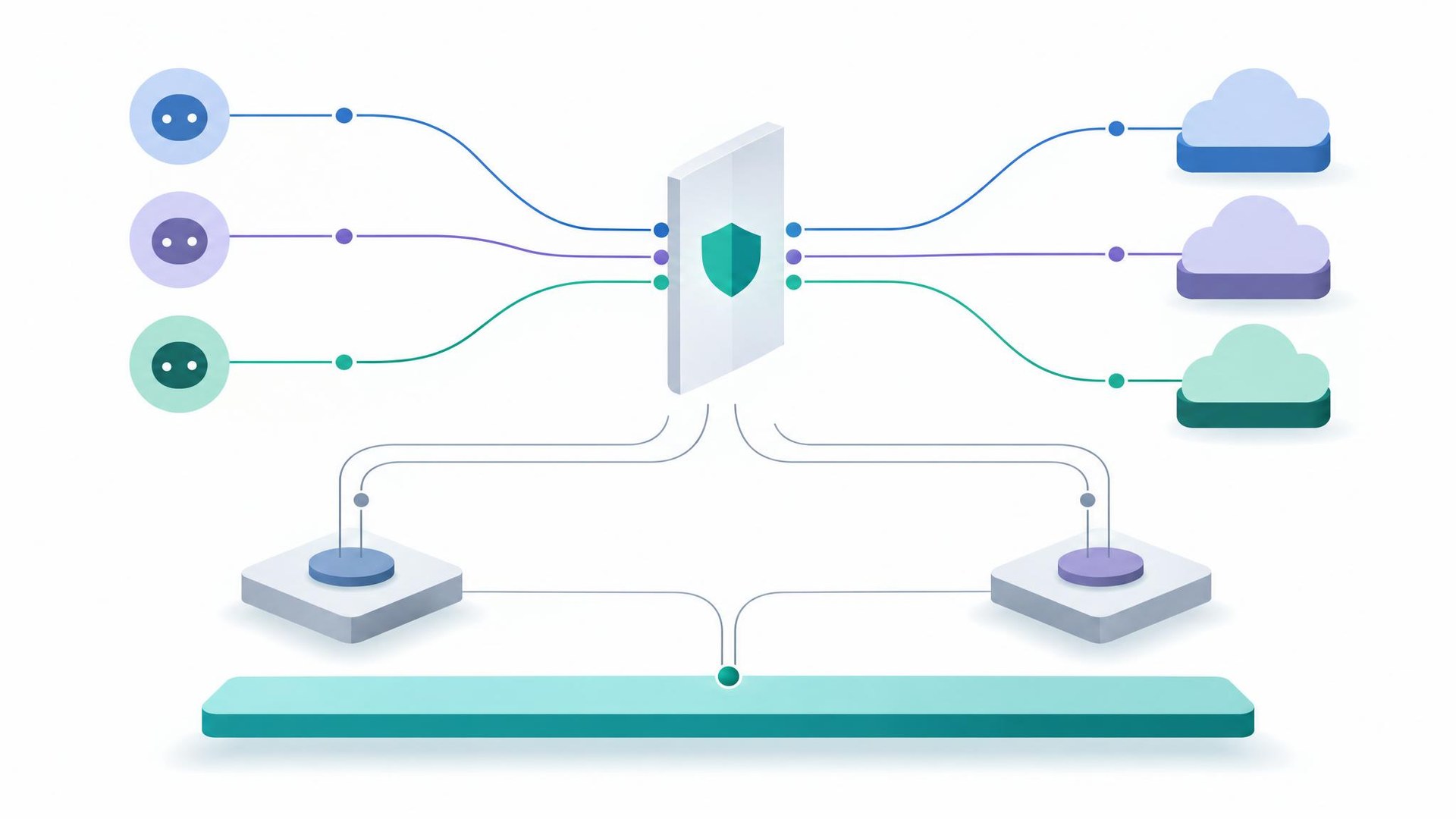
Decart’s product documentation describes DOS as a vertically integrated inference and training platform for workloads involving large language models, agentic systems, video and world models. It sits between the model and the chip, adjusting how operations are compiled and executed so the hardware can run at higher utilization. The software is designed to integrate with existing infrastructure rather than replace it, and supports Nvidia GPUs, Google TPUs and AWS Trainium.
Decart reports that DOS can deliver up to three times faster responses per user than leading systems. The same stack powers its Lucy and Oasis models, with Lucy editing live video in under 40 milliseconds at up to 100 frames per second and Oasis generating interactive worlds that respond in under 200 milliseconds.
Prior Work on Trainium
The agreement extends a relationship that began in 2025. Amazon said the collaboration used a full-stack approach spanning hardware and software and produced strong performance results on Trainium, its custom chip for AI training and inference.
Decart’s earlier funding announcement detailed an AWS commercial agreement and joint go-to-market initiative, including work with Annapurna Labs. Decart adapted Lucy2’s architecture to Trainium3’s design. Nafea Bshara, vice president at Amazon’s Annapurna Labs, said the model exceeded 80% Model FLOPS Utilization on Trainium3, a measure of how much of a chip’s theoretical computing capacity is put to productive work.
In that announcement, Decart also reported a $300 million funding round led by Radical Ventures and more than $450 million raised in total. Those figures cover the startup’s earlier financing and are separate from Amazon’s technology purchase.
Amazon’s Custom Silicon Business
Amazon reported in July 2026 that its custom-chip business had exceeded a $25 billion annual revenue run rate, with triple-digit year-over-year growth. The operation includes Trainium for AI training and inference and Graviton for general cloud computing. In 2026, Amazon also placed AI models, custom silicon and quantum computing under DeSantis.
For Amazon, the agreement would combine software built to optimize workloads across several accelerator families with a team already experienced in adapting models to Trainium. The central task after closing will be converting those earlier technical results into faster, lower-cost inference across its broader chip and model operations.
Credit: Source link