
AMD announced on November 16, 2026 that it had completed its acquisition of World Labs in an all-stock transaction originally valued at approximately $8.2 billion. Fei-Fei Li is joining AMD as executive vice president and chief scientist, reporting directly to chair and CEO Lisa Su.
“Delivering the infrastructure that will power the next era of superintelligence requires us to optimize compute platforms and models together,” Su said. The approach is intended to make World Labs’ model research an input to AMD’s future hardware, software and systems, connecting infrastructure planning more directly to emerging AI workloads.
AMD announced the definitive agreement on September 28, 2026. Closing was expected by the end of 2026, contingent on regulatory approvals and other customary conditions.
Research Team and Existing AMD Partnership
World Labs’ work spans interactive 3D environments and robotics. Its AI models generate and simulate those environments, while other technology supports robotic learning and simulation. Under AMD’s integration plan, the researchers will keep pursuing foundational models. Their work with AMD engineers is meant to turn lessons about emerging model capabilities into future infrastructure for customers and developers in the open AI ecosystem.
Founded in 2024, World Labs had an established technical relationship with AMD before the transaction. The lab said the companies’ technical partnership began in 2025, initially focusing on model training and inference optimization on AMD GPUs. Its leadership plan called for Li, Justin Johnson and Ben Mildenhall to continue leading the team as it joined AMD.
Atlas Shows the Technology Joining AMD
World Labs describes Atlas, released on November 12, 2026, as its next-generation world model: it creates and reconstructs 3D environments, while accompanying tools and APIs let developers use the results in their own workflows. The release provides a current example of the research and product workflows AMD has acquired.
World Labs says Viewfinder starts with a user’s photos or generated images, reconstructs the scene and supports new viewpoints and rendered camera paths. Chisel provides a way to lay out and adjust a scene, with each camera view responding when objects move. Other tools turn scene representations into meshes with real geometry for games and interactive environments, while Relight changes how those scenes are lit. A developer API and integrations, including Blender, extend Atlas into outside applications and existing 3D tools.
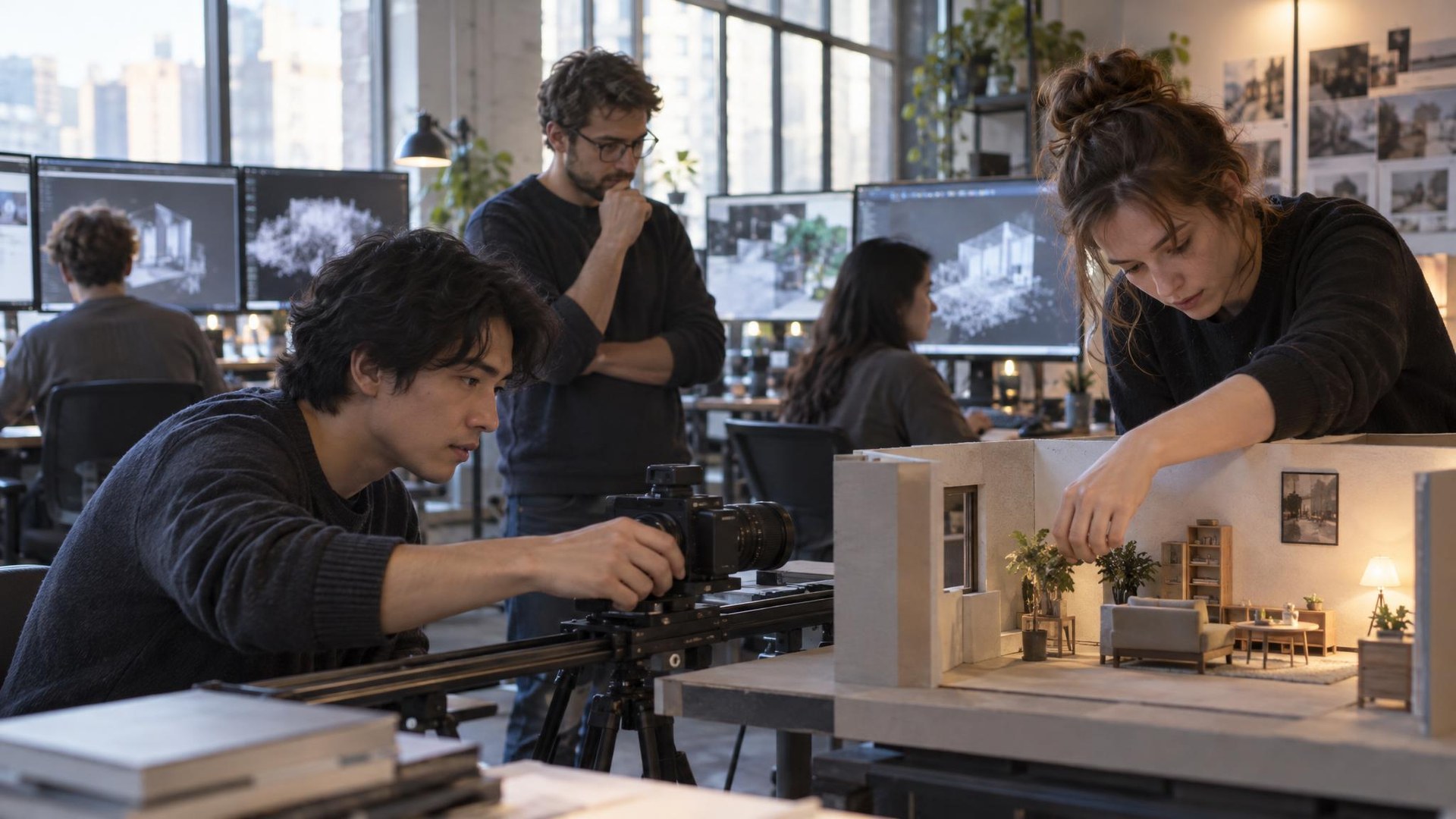
World Labs says film and visual-effects users can build a set, direct a camera through it and render shots. Architecture and design users can shape spaces from photos or rough scene layouts, explore them from any viewpoint and take a mesh into their existing tools. Robotics users can create spatial environments from real or generated scenes for research and simulation workflows.
Those applications give the acquisition a concrete product context alongside its research rationale. AMD has added a team working on generated environments, editable 3D scenes and simulation, and connected that work to its own engineers. The integration creates a direct path from studying emerging workloads to designing future infrastructure. How effectively the combined team uses that path, while World Labs continues its foundational research, is now the central question for the acquisition.
Credit: Source link