




























Tether AI Research announced the release of QVAC BotPsy-0.8B on November 11, 2026, an open-weight, 0.8-billion-parameter model for tool calls on personal devices, and reported that it outperformed every tested model of up to 1.2 billion parameters across six agentic benchmarks.
Built on Alibaba’s Qwen3.5-0.8B, BotPsy specializes in function calling and multi-step agentic workflows for local deployment. Its target tasks span calendars, messaging, files, device settings, web research, travel, commerce and customer operations, with low- to medium-difficulty work identified as its best fit. The surrounding application supplies service connections, permissions and execution controls.
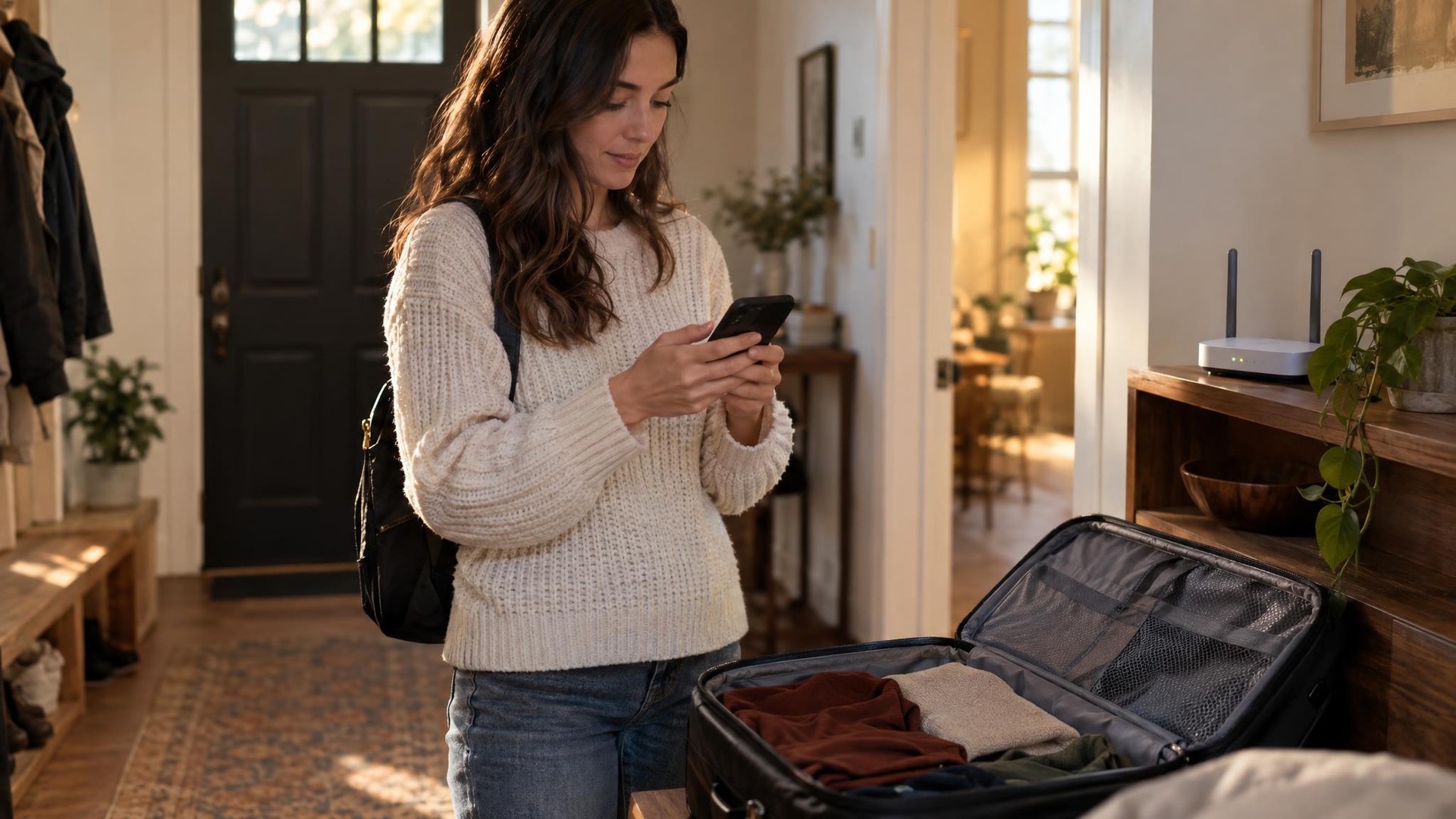
In Tether’s ACEBench example, a message failed because Wi-Fi was off and the inbox was full. BotPsy enabled Wi-Fi and freed inbox space before sending the message, while its base model repeated the failed action. The model can also recognize when none of the available tools fits a request, an important behavior for an assistant acting inside real applications.
Specialization Drives the Benchmark Gains
In Tether’s model-card evaluation, BFCL v4 rose from 23.4 for the Qwen3.5-0.8B-Think base to 44.0 for BotPsy, ACEBench from 30.1 to 58.7, and ToolSandbox from 30.5 to 64.6. BotPsy also beat Qwen3.5-2B-Think on five of the six agentic benchmarks; the larger model led on Claw-Eval, 48.9 to 46.5. All five models were evaluated in thinking mode with a shared harness, and the scores are percentages.
The largest gain concerns continuity across turns. Tether reports a BFCL v4 multi-turn score of 46.1 for BotPsy, against 7.5 for its base and 23.8 for Qwen3.5-2B-Think. That test measures whether an agent can keep working as new information arrives, such as checking availability, handling a conflict and updating a calendar. BotPsy’s 86.1 on BFCL’s hallucination test measures a separate requirement: refraining from a tool call when no available tool fits.
Tether’s wider results do not establish general superiority. Its GPQA Diamond and MMLU-Pro scores of 38.1 and 48.9 for BotPsy sit well below the 2B model’s 59.9 and 65.5. BotPsy’s BrowseComp-Plus score of 4.5 led the five-model group but remains low in absolute terms, exposing weak open-ended research performance. BotPsy is therefore designed to call tools for facts it does not know.
Training and On-Device Deployment
A technical write-up describes four post-training stages: supervised fine-tuning, multi-teacher on-policy distillation, and two reinforcement-learning rounds. Three specialist Qwen3.5-4B teachers handled tool use, general reasoning and instruction following during distillation. The reinforcement-learning stages used rule-based and verifiable rewards, first emphasizing tool calling and then adding more math, code, knowledge and structured-output work. The release omits the training code and training data.
The resulting model also produces shorter reasoning traces than its base. On GPQA Diamond questions that all five models answered correctly, Tether measured 3,690 reasoning tokens for BotPsy versus 11,563 for its base; on MMLU-Pro, the counts were 1,912 and 5,105. Because every model solved those questions, the comparison isolates reasoning length rather than question difficulty, providing a useful efficiency indicator for local inference.
The GGUF release supplies three files for llama.cpp and the QVAC SDK: BF16 at about 1.52 GB, Q8_0 at about 0.81 GB and Q4_K_M at about 0.53 GB. Tether recommends Q8_0 after it averaged 50.7 across ten benchmarks, close to the BF16 GGUF’s 50.4 at about half the file size. Q4_K_M averaged 48.9 and targets tighter memory budgets. The main repository provides BF16 safetensors weights under the Apache 2.0 license.
Safety Limits and the QVAC Plan
The model card’s intended-use boundaries are substantial. BotPsy was trained and tested primarily in English, which is the recommended language. Its Multi-IF evaluation covered seven additional languages and produced much weaker instruction-following results in Hindi and Russian. BotPsy makes mistakes and is not intended for safety-critical or high-stakes automated decisions, or for applications involving money, personal information, health and other sensitive topics.
In Tether’s automated red-teaming across six harm categories, BotPsy produced unsafe responses 21% of the time, compared with 36% for its base. Under prompt-injection attacks, a particular concern for agents reading untrusted tool outputs, the reported unsafe rates were 31% and 46%, respectively. The smaller model improved on both tests while still generating unsafe responses.
BotPsy joins QVAC’s vision, speech, health and translation models, with future development intended to combine their specialized capabilities. “Users should decide what their assistant can access and which external services it can connect to,” said Tether CEO Paolo Ardoino.
Tether’s longer-term design uses an Android or iPhone interface for everyday interaction, hands demanding tasks to a home PC or trusted peer-to-peer nodes, and routes web queries through encrypted peer-to-peer connections. That system is a stated vision; the current release supplies the model and deployment files.
BotPsy’s documented strength is a specialized local action layer for routine tasks. Whether it becomes a useful personal assistant depends on application-level permissions and execution controls, and on Tether’s planned integration and hardware delegation addressing the research, complexity and safety boundaries documented in this release.
Credit: Source link