

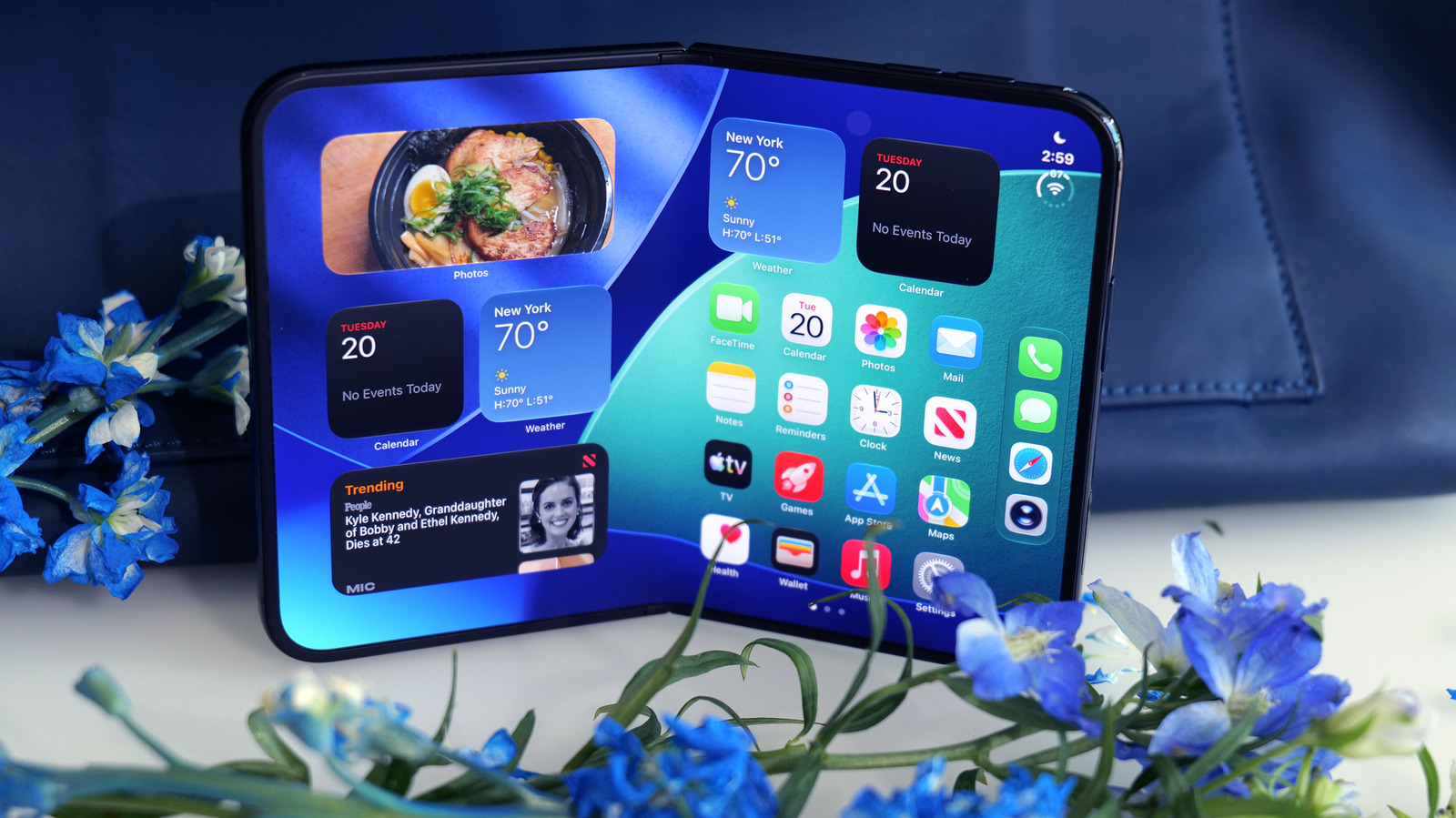

The move from one to two screens offers a world of possibilities for phone makers, but also a lot of traps. You make something too sleek and it might not have the durability to withstand the rigors of everyday life. And with not one but two displays to worry about, the handoff between from one panel to another becomes even more important. To balance things out, Apple went with a design that delivers strength and consistency, even though the downside of that decision is a device that’s significantly heavier than its closest competitors.
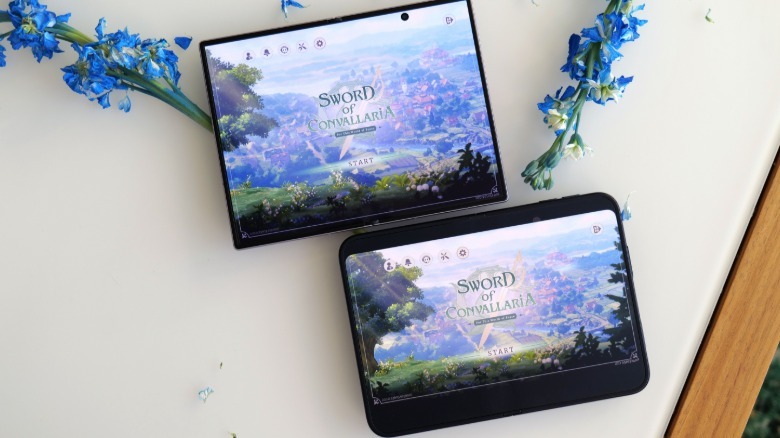
On the outside, the Duo features a glossy 1,878 x 2,670 5.4-inch OLED display with 120Hz ProMotion support and an impressive peak brightness of up to 3,000 nits. Meanwhile on the inside, there’s a larger 1,398 x 2,034 7.6-inch panel with a matching 1:1.4 aspect ratio and lofty luminance. This makes transitioning from one screen to another super smooth, as you get the same viewing experience (homescreen and all), just with twice as much real estate to work with. Additionally, Apple’s clever opening animation adds a bit of visual spice to tie everything together.
The one major difference is that the Duo’s inside screen has a matte nanotexture finish instead of a glossy treatment which serves a few purposes. Not only does it help protect the rest of the flexible display underneath, it also cuts down on reflections while hiding the appearance of a crease. To be clear, there is definitely a small divot that runs down the middle of the main display and if you’re looking for it at the right angle, it’s not hard to find. That said, during normal use when you’re looking at the phone head on, the crease basically disappears. A word of caution: While it is replaceable (for a $49 fee), the Duo’s nanotexture layer can be removed if you pick at it too much. And unlike with its Android rivals, there’s no warning during setup that this film should not be peeled off by anyone aside from Apple-certified technicians.
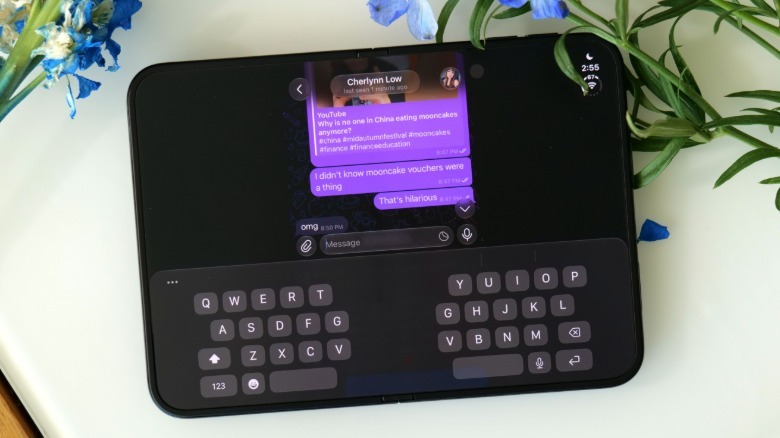
Regardless, the iPhone Duo’s two displays both provide excellent image quality. Its exterior display is a great size for one-handed use and the textured surface on its main panel should make drawing or taking notes with an Apple Pencil feel great (support for that arrives later this month). I also think the strong matte finish makes things like comics and anime look even better than they typically do on glossy screens. The small trade-off is that perceived color saturation and vividness from the Duo’s interior panel isn’t quite as pronounced in bright rooms, though at night, that deficiency goes away.
 Sam Rutherford for Engadget
Elsewhere, the Duo is held together by a burly titanium chassis and one of the nicest hinges I’ve used on any foldable. Apple says it’s composed of more than 100 different components, but you’d never know just from using it because it’s so damn smooth. It can hold itself open in a huge range of positions while the amount of pressure needed to unfold the device changes the wider you go, which adds an extra level of sophistication when switching between screens. And somehow amongst all this, Apple found a way to give the Duo an IP68 rating for dust and water resistance, which is only available from one other family of foldables on sale in the US: the Pixel 11 Pro Fold line.
Notably, instead of Face ID, which has become a standard feature on modern iPhones, the Duo uses a Touch ID sensor built into the lock button on the side. This might seem like a weird choice, but on a device that’s meant to be used in a ton of positions, the idea of having to put infrared face readers on both the inside and outside of the phone just doesn’t make a ton of sense. Thankfully, Apple’s solution is really accurate, though it does take a bit longer to unlock than you might expect. The company says the thought process behind this is that this creates a more consistent experience when compared to other devices that still use Touch ID (like iPads and MacBooks). Apple says this also gives the phone a chance to wake up and display things like notifications on your lock screen before you get access to the entire device.
 Sam Rutherford for Engadget
The main drawback to the Duo’s beefy build is that it weighs 254 grams (8.96 ounces), which is more than 25 percent heavier than a Galaxy Z Fold 8, despite the latter having the same number of cameras and larger displays. And that’s before you factor in the extra heft from a case. This kind of bulk is pretty significant to the point where the Duo can feel a bit like an anchor in your pocket if you’re wearing loose pants and during longer sessions, so you’ll probably want to hold the Duo with two hands instead of one.
Credit: Source link