


















XPENG on October 8, 2026 officially named its Robotaxi business “XPENG YOYO” and opened autonomous-driving online registration to the public in China, according to the company’s announcement. Registration is being handled through invitation codes, and a dedicated page carrying the YOYO name is live on XPENG’s official website.
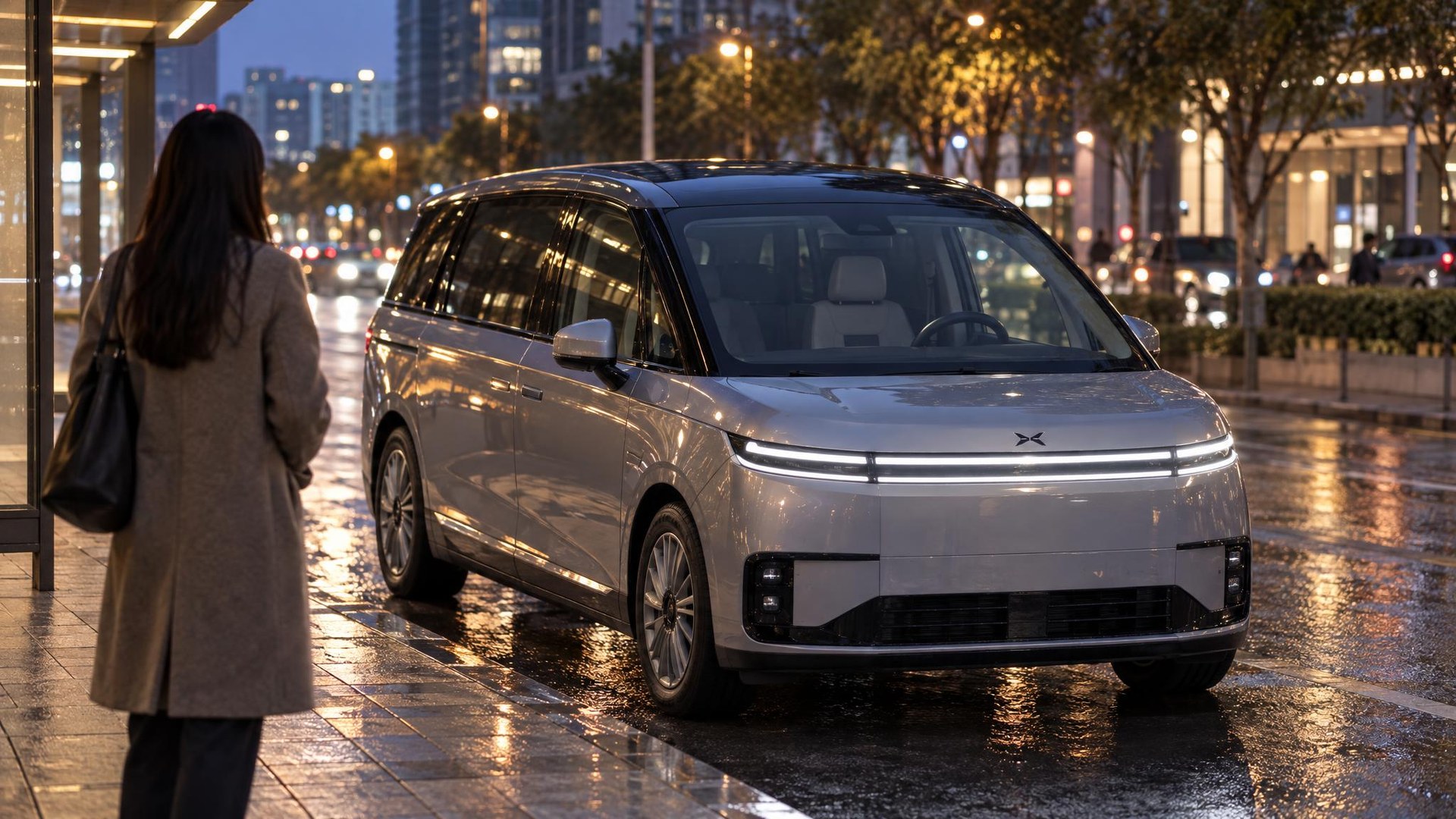
The naming moves the robotaxi program out of technical validation and into what the company describes as a new stage of marketization and industrialization. XPENG said YOYO will operate with a defined brand identity and commercial positioning, providing operation services to users and partners, and it calls the vehicle China’s first fully in-house developed robotaxi to achieve pre-loaded mass production.
XPENG said the English name was selected for brand recognition in global markets: it is short and easy to pronounce, stays consistent across different language environments, and gives the robotaxi one unified identity as it enters markets outside China in the future.
Turing Chips and VLA2.0
Each XPENG robotaxi is equipped with four of the company’s in-house Turing AI chips delivering 3,000 TOPS, which XPENG describes as the world’s highest in-vehicle compute. The vehicle runs on the company’s VLA2.0 large model and operates without high-definition maps or LiDAR, an approach XPENG says allows rapid deployment across different cities and environments. The official page carries the same point, stating that the system does not depend on high-definition maps and can adapt quickly when it moves to a new city.
XPENG says its technology path bridges L2 intelligent driver assistance and L4 autonomous driving, extending the AI capabilities it accumulated in its automotive business into the robotaxi program, and it characterizes this route as entirely different from that of traditional L4 companies.
The dedicated page presents XPENG YOYO as an L4 autonomous-driving solution built for global use, integrating the vehicle platform, the self-developed Turing chips, the second-generation VLA model and intelligent manufacturing into a single technology platform meant to be deployed at scale and to keep evolving. Partners can connect quickly without building an autonomous-driving system from scratch, the page states, and can shape their own mobility services around local markets, operating scenarios and user needs.
2026 Production and Testing Milestones
The announcement recounts the program’s 2026 milestones. XPENG’s mass-produced robotaxi rolled off the production line in Guangzhou in May 2026. In July 2026, the program completed the full chain from online ride-hailing to automated pickup and drop-off. In August 2026, XPENG obtained Guangzhou’s remote testing qualification for intelligent connected vehicles, which allows road tests without a safety operator in the driver’s seat on the relevant Class I, II and III test roads in the city.
Before the public opening, XPENG ran paid internal testing at 1 renminbi per ride, primarily to validate the payment process and service workflow. With registration now live, access expands from employees to external users, which the company says will further validate product and operational capabilities in real scenarios and prepare the program for the next phase of operations.
Cabin Experience, Business Model and Roadmap
Registered users can set the cabin temperature and switch on the fragrance system through the online registration flow before boarding. Inside, the vehicle offers zero-gravity seats, massage functions and a large entertainment screen with integrated content services. The official page adds that the seats adjust to multiple positions at one touch and include ventilation, heating and massage, alongside mobile online ordering, a voice assistant and the entertainment display.
Chairman and CEO He Xiaopeng said XPENG positions the robotaxi business as a technology provider and ecosystem enabler, with revenue generated through hardware sales, services and commission sharing, while offline operations are entrusted to global partners. He said the company will deliver a holistic solution combining its vehicle platform, autonomous-driving software and AI capabilities, moving the program from single-point validation toward scaled, global deployment.
XPENG also frames the robotaxi program as a key practice of its Physical AI strategy, extending its AI work from driver assistance to autonomous driving and, in the company’s description, bringing AI from the digital world into the physical world through the automobile.
The dedicated page lays out the staged roadmap behind the launch: operational validation in Guangzhou during 2026, with employee internal testing under an L4 demonstration-operations qualification; a new-generation robotaxi model planned for 2027; and global deployment at scale after that, expanding from Guangzhou as the model city.
Credit: Source link