















• bitcoinBitcoin(BTC)$84,187.00-1.34%
  • ethereumEthereum(ETH)$2,617.56-2.93%
  • tetherTether(USDT)$1.000.00%
  • binancecoinBNB(BNB)$767.99-1.37%
  • rippleXRP(XRP)$1.47-1.46%
  • usd-coinUSDC(USDC)$1.000.00%
  • solanaSolana(SOL)$118.82-0.83%
  • tronTRON(TRX)$0.333203-1.02%
  • Figure HelocFigure Heloc(FIGR_HELOC)$1.040.00%
  • zcashZcash(ZEC)$1,327.240.19%
  • HyperliquidHyperliquid(HYPE)$91.25-2.05%
  • dogecoinDogecoin(DOGE)$0.090733-3.84%
  • moneroMonero(XMR)$570.182.38%
  • chainlinkChainlink(LINK)$13.80-0.26%
  • USDSUSDS(USDS)$1.00-0.08%
  • whitebitWhiteBIT Coin(WBT)$83.77-1.67%
  • cardanoCardano(ADA)$0.257229-4.37%
  • leo-tokenLEO Token(LEO)$8.90-0.09%
  • RainRain(RAIN)$0.011185-1.82%
  • stellarStellar(XLM)$0.206808-3.56%
  • nearNEAR Protocol(NEAR)$5.16-0.02%
  • bitcoin-cashBitcoin Cash(BCH)$308.57-2.11%
  • litecoinLitecoin(LTC)$67.82-2.40%
  • uniswapUniswap(UNI)$8.21-6.92%
  • avalanche-2Avalanche(AVAX)$11.260.06%
  • Ethena USDeEthena USDe(USDE)$1.00-0.02%
  • CantonCanton(CC)$0.119434-6.67%
  • suiSui(SUI)$1.14-4.04%
  • daiDai(DAI)$1.000.01%
  • USD1USD1(USD1)$1.00-0.01%
  • hedera-hashgraphHedera(HBAR)$0.096233-3.89%
  • the-open-networkGram (prev. Toncoin)(GRAM)$1.48-4.01%
  • quant-networkQuant(QNT)$253.19-1.81%
  • BittensorBittensor(TAO)$300.25-0.28%
  • tether-goldTether Gold(XAUT)$4,135.070.03%
  • BitwayBitway(BTW)$1.244.63%
  • shiba-inuShiba Inu(SHIB)$0.000006-4.81%
  • crypto-com-chainCronos(CRO)$0.064528-4.02%
  • EthenaEthena(ENA)$0.237927-1.88%
  • Global DollarGlobal Dollar(USDG)$1.000.00%
  • Pump.funPump.fun(PUMP)$0.0064763.23%
  • paypal-usdPayPal USD(PYUSD)$1.00-0.03%
  • okbOKB(OKB)$134.272.90%
  • aaveAave(AAVE)$176.93-2.41%
  • Ripple USDRipple USD(RLUSD)$1.000.00%
  • Circle USYCCircle USYC(USYC)$1.140.01%
  • MemeCoreMemeCore(M)$1.053.01%
  • OndoOndo(ONDO)$0.475581-2.41%
  • Ondo US Dollar YieldOndo US Dollar Yield(USDY)$1.150.02%
  • BlackRock USD Institutional Digital Liquidity FundBlackRock USD Institutional Digital Liquidity Fund(BUIDL)$1.000.00%
TradePoint.io
  • Main
  • AI & Technology
  • Stock Charts
  • Market & News
  • Business
  • Finance Tips
  • Trade Tube
  • Blog
  • Shop
No Result
View All Result
TradePoint.io
No Result
View All Result

How Long Have Wireless Gaming Controllers Been Around For?

October 7, 2026
in AI & Technology
Reading Time: 6 mins read
A A
How Long Have Wireless Gaming Controllers Been Around For?
ShareShareShareShareShare

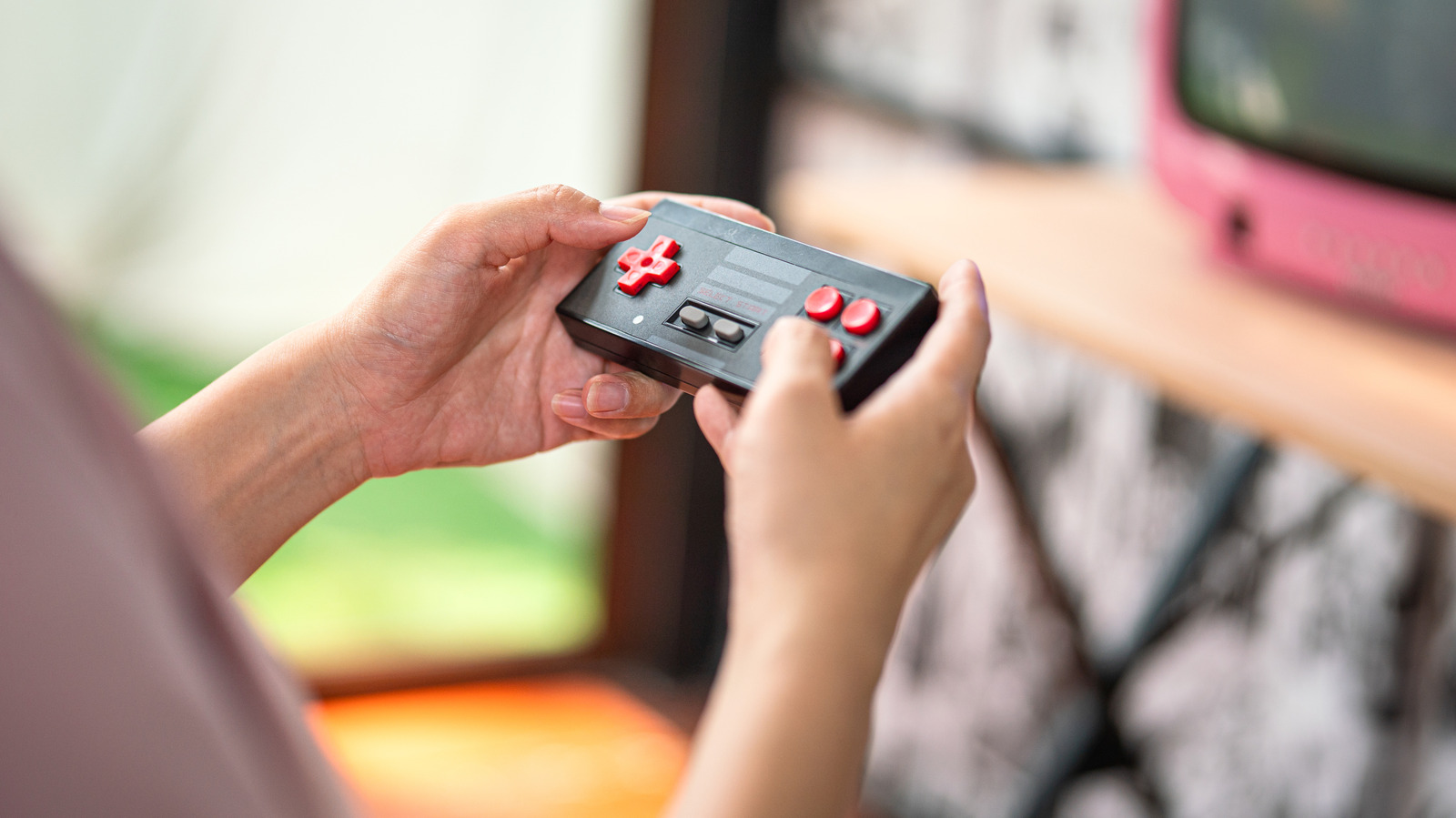
It took a while for controllers to work as well as they do today without cables.


Thank You For Your Assistant/Getty Images

If you’ve been a gamer for a while, you might know that wireless controllers have been used as far back as the 1980s. Those who grew up in the PS2/Xbox/GameCube era likely have a different gamepad in mind when they think of early wireless controllers. While wireless pads were tried in various iterations over the decades, they were only perfected within the last few console generations.

YOU MAY ALSO LIKE

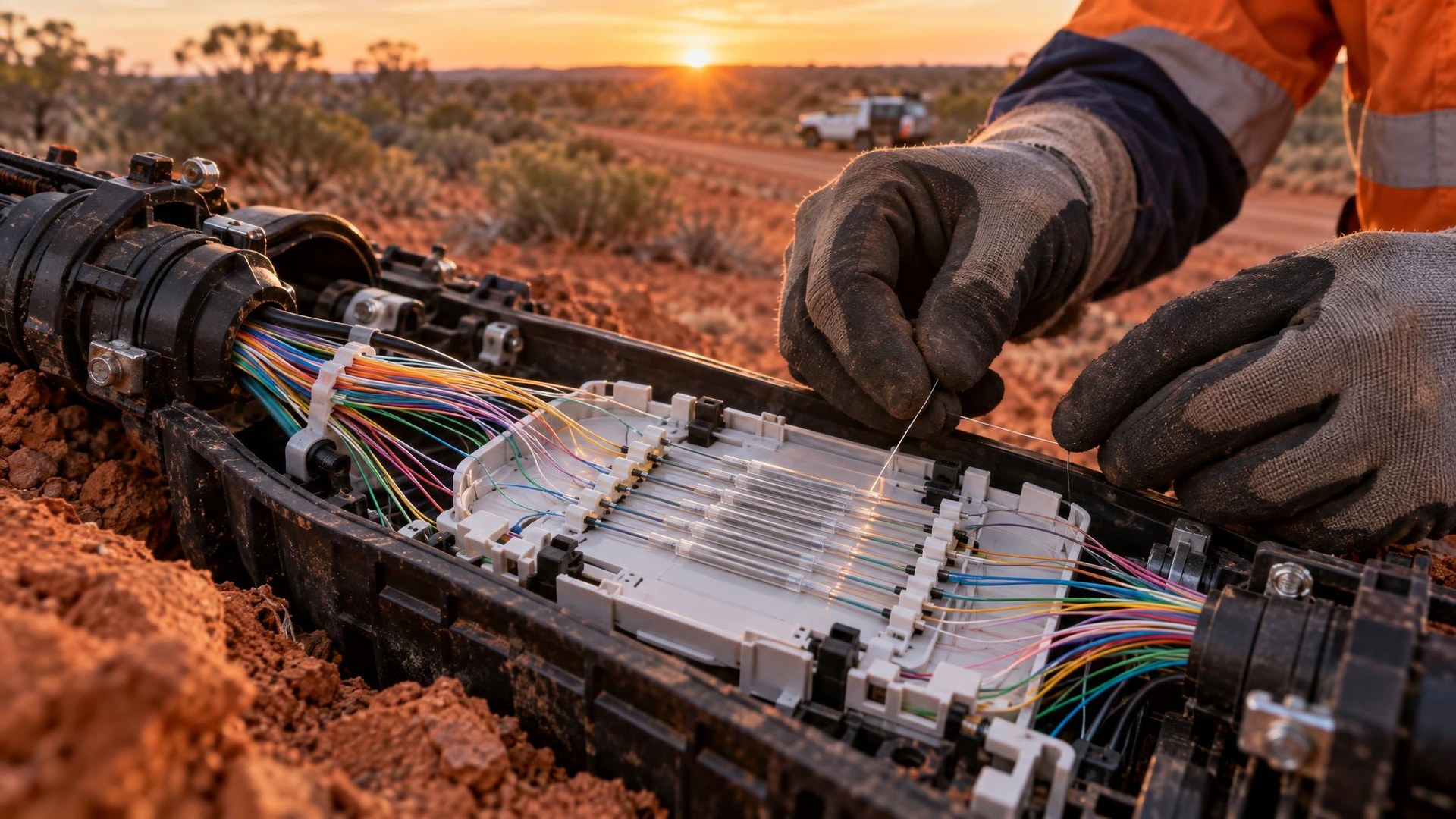
Telstra Launches Longest Aura Network Route Linking Perth and Sydney – Unite.AI

Anaconda Pairs AI Agent Swarms With Autonomous Security Testing – Unite.AI

The history of non-wired controllers is fascinating. Here’s the story of how your current console has unleashed you from the couch.

When did controllers first become wireless?
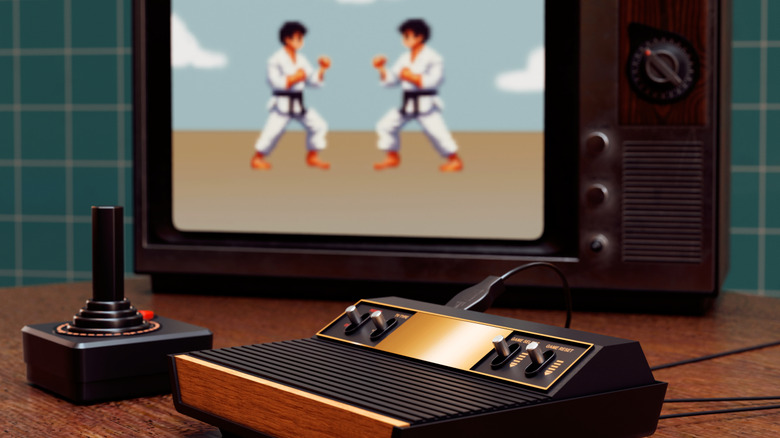

An Atari 2600 video game console and controller with a karate game on an old TV in the background.
Mikkelwilliam/Getty Images

As a 41-year-old, I’m slightly relieved that the first wireless gaming controller is older than me: enter the Cynex Game Mate 2. Released around 1982, this is an Atari 2600 peripheral widely regarded as the first wireless console-compatible gamepad. It was the debut of an evolving, genre-defying tech, albeit one that wouldn’t be fully realized for some time to come.

The Game Mate 2 used radio frequencies. By embracing RF technology, this pioneering pad gave gamers more freedom than lesser IR alternatives that would launch later in the decade. Unlike the Acclaim Remote Controller that launched for the NES in 1989, you didn’t need to point the Game Mate 2 directly at your Atari 2600 for its signal to be recognized.

Whereas early infrared pads could easily lose signal if any objects came between their sensors and the receiver on the console (much like IR TV remotes), the more flexible Game Mate wasn’t bound by these restrictions. Indeed, that early RF tech worked well enough that it reportedly boasted a range of up to 20 feet. 

While these were ahead of their time, they weren’t perfect. They were weighty and clunky, being essentially a standard 2600 controller on top of a heavy base. They also drained the required 9V battery quickly. Once Atari took over distribution a year after this peripheral launched, it was rebranded as the CX42 Remote Control Wireless Joystick. Catchy, right?

What was the first mainstream wireless controller?
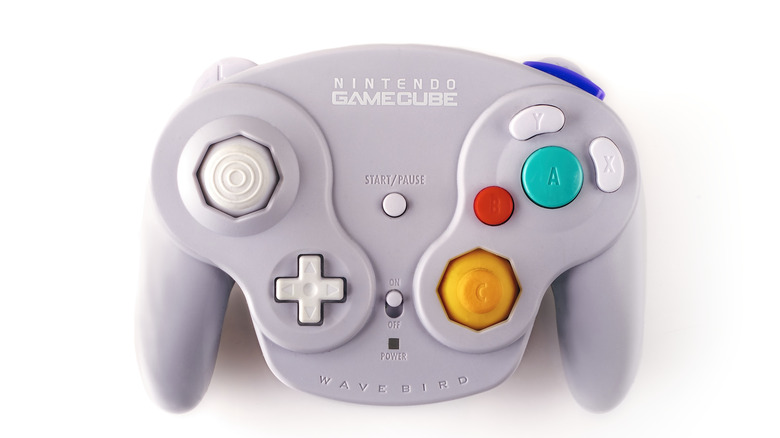

A Nintendo GameCube WaveBird wireless controller.
Lightspruch/Shutterstock

The GameCube’s mini discs weren’t the only notable part of the console’s legacy. The WaveBird wireless controller arrived in 2002 and was the first mainstream wireless pad that wasn’t weighed down by tons of compromises. I have vivid memories of waiting in line on a semi-balmy May evening in my native Edinburgh back in 2002 to pick up the Big N’s wondrous purple box, then buying the little console’s wireless controller around Christmas that same year.

And what a bulky but beloved brute it was; the WaveBird was anything but subtle. Adding serious girth to the GameCube’s standard controller, it came with an equally chunky receiver to plug into the sixth-gen console and required you to match a channel with sliders on each. If you have any affection for the best of the GameCube’s library, there’s a good chance you played some titles with a WaveBird.

Using radio 2.4G frequency tech for the first time in a controller, the WaveBird had a range of around 20 feet at minimum. It’s hard to explain what a big deal it was to have a gamepad that untethered you from a console. No longer did you have to precariously perch within six feet of your beloved gaming box. Instead, you could lean back or even move around the room, which was great for multiplayer sessions so everyone didn’t have to crowd onto the same couch. 

To maximize battery life, the WaveBird didn’t have rumble support, but it ran for up to 100 hours on a pair of AA batteries. The freedom it gave you in controlling games paved the way for future gamepads, leading to all the fabulous wireless controllers from Sony, Microsoft and others that have launched over the last quarter-century.

Which PlayStation had the first wireless controller?
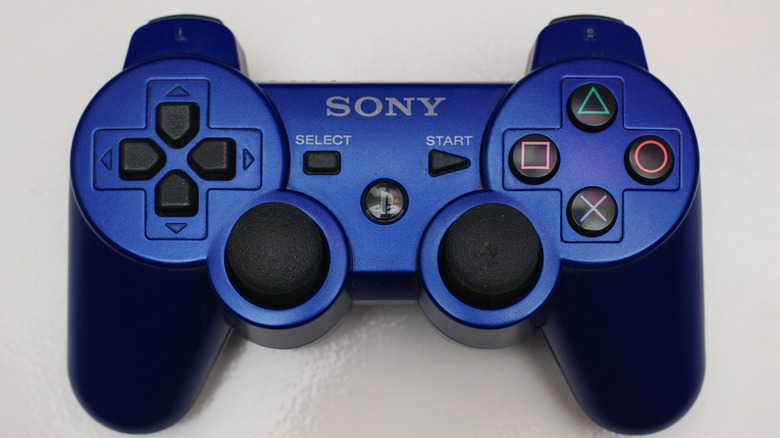

A blue PS3 SixAxis wireless controller
Dion Chandra/Shutterstock

Before learning this history, you might have thought that the first wireless gaming controller was a PlayStation product. That’s understandable, since Sony has (mostly) dominated the console market since the PS1 arrived stateside back in 1995. As it turns out, Sony’s debut wireless peripheral wasn’t introduced until the PS3 era. With the benefit of hindsight, we can say it was a bit of a stinker.

The Sixaxis is perhaps the most infamous Sony controller of all time, minus the banana-shaped “Boomerang” prototype PS3 gamepad that never saw the light of day. As the initial controller model for the PS3, the Sixaxis dropped rumble for half-baked, early, never-fully-realized motion controls.

Not long after the Sixaxis debuted in 2006, Phil Harrison said Sony didn’t incorporate rumble into Sixaxis not because of a lawsuit over patent rights, but because it was a “last-generation feature.” That was a pretty bold (fairly craven) statement, considering Phil was the President of Sony Computer Entertainment Worldwide Studios at the time.

Although PS3 launch title Resistance: Fall of Man was among the first games to support Sixaxis features, it was really the dragon-riding Lair that came to define the controller. It was widely panned for its semi-botched motion controls, and folks made it clear that the lack of rumble was unacceptable. Sony quickly saw sense, and soon enough, titles like 2007’s Ratchet & Clank Future: Tools of Destruction would embrace the palm-shaking possibilities of the DualShock 3 after its 2008 release.

Credit: Source link

ShareTweetSendSharePin

Related Posts

Telstra Launches Longest Aura Network Route Linking Perth and Sydney – Unite.AI
AI & Technology

Telstra Launches Longest Aura Network Route Linking Perth and Sydney – Unite.AI

October 7, 2026
Anaconda Pairs AI Agent Swarms With Autonomous Security Testing – Unite.AI
AI & Technology

Anaconda Pairs AI Agent Swarms With Autonomous Security Testing – Unite.AI

October 7, 2026
Nano Banana 2.1 Debuts at Half the Image Cost of Its Predecessor – Unite.AI
AI & Technology

Nano Banana 2.1 Debuts at Half the Image Cost of Its Predecessor – Unite.AI

October 6, 2026
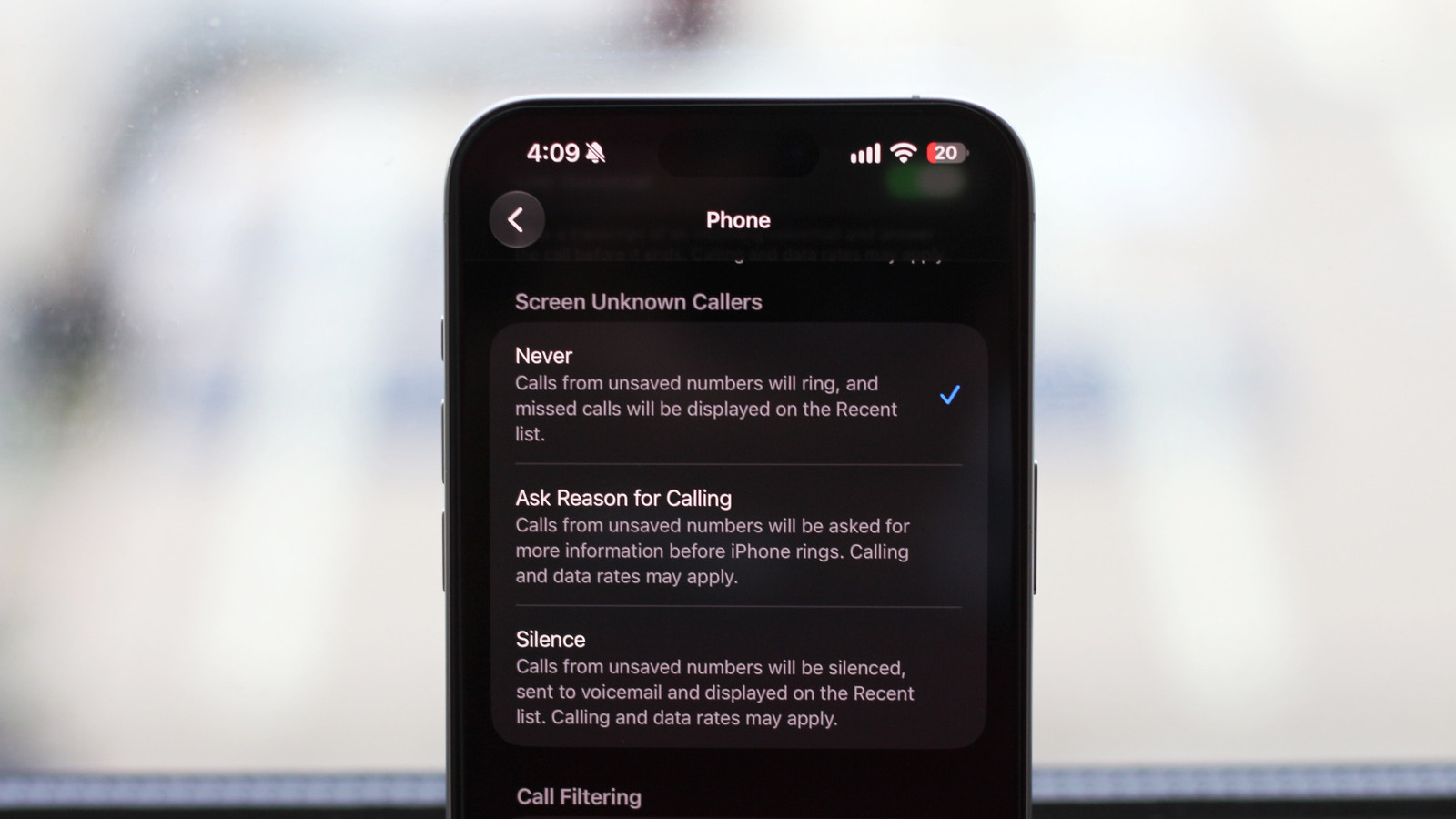
How To Help Stop Spam Calls On iPhone And Android
AI & Technology

How To Help Stop Spam Calls On iPhone And Android

October 6, 2026
Next Post
Athens building explosion leaves six dead

Athens building explosion leaves six dead

Leave a Reply Cancel reply

Your email address will not be published. Required fields are marked *

Search

No Result
View All Result
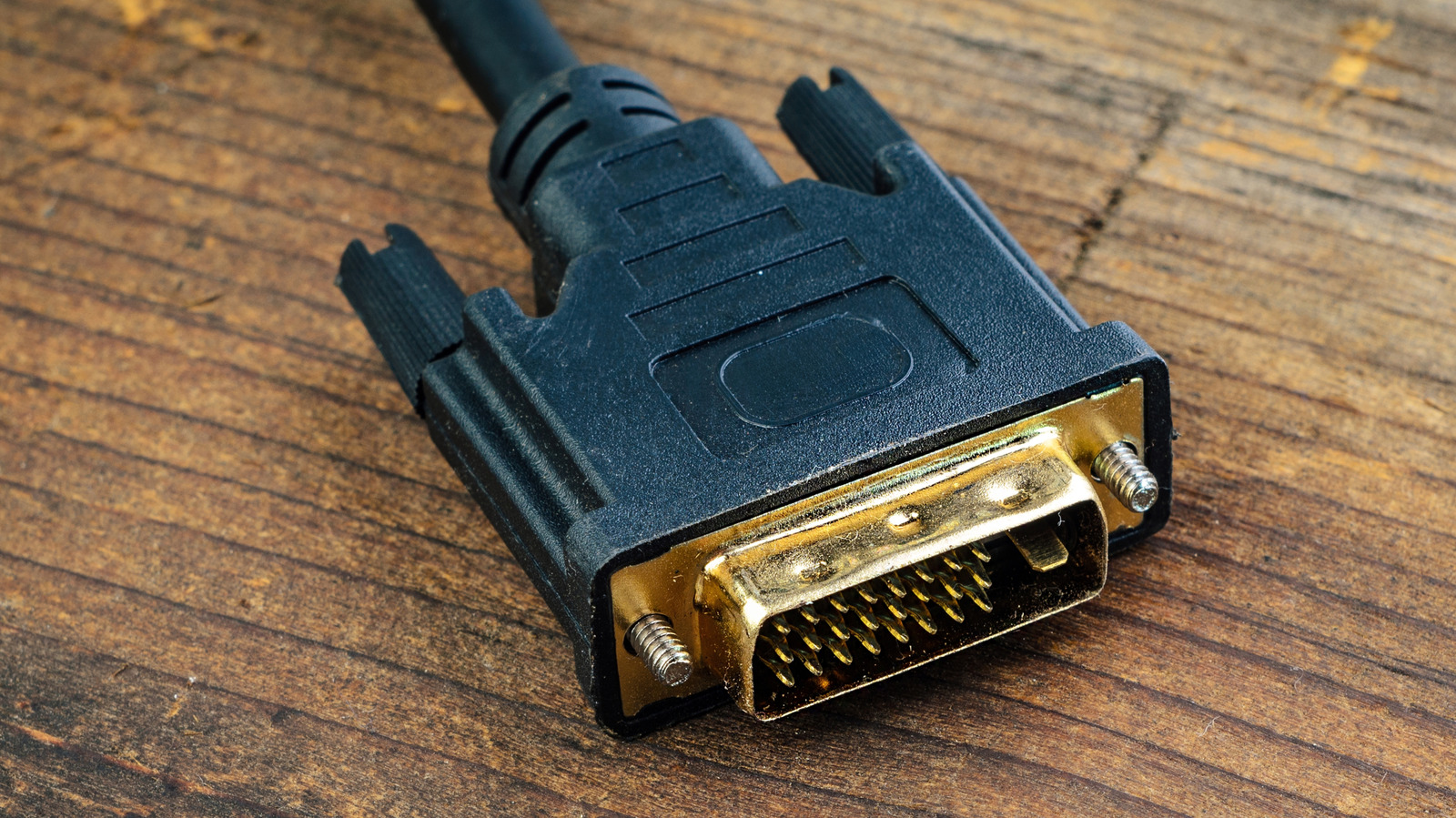
Why This Ancient Cable Still Connects To Modern TVs With A Simple Adapter

Why This Ancient Cable Still Connects To Modern TVs With A Simple Adapter

October 3, 2026
3 Days Into A Project And Over My Wife’s Spending

3 Days Into A Project And Over My Wife’s Spending

October 7, 2026
Suspects intended ‘big damage’ to U.S. base in U.K.,Trump says

Suspects intended ‘big damage’ to U.S. base in U.K.,Trump says

October 6, 2026

About

Learn more

Our Services

Legal

Privacy Policy

Terms of Use

Bloggers

Learn more

Article Links

Contact

Advertise

Ask us anything

©2020- TradePoint.io - All rights reserved!

Tradepoint.io, being just a publishing and technology platform, is not a registered broker-dealer or investment adviser. So we do not provide investment advice. Rather, brokerage services are provided to clients of Tradepoint.io by independent SEC-registered broker-dealers and members of FINRA/SIPC. Every form of investing carries some risk and past performance is not a guarantee of future results. “Tradepoint.io“, “Instant Investing” and “My Trading Tools” are registered trademarks of Apperbuild, LLC.

This website is operated by Apperbuild, LLC. We have no link to any brokerage firm and we do not provide investment advice. Every information and resource we provide is solely for the education of our readers. © 2020 Apperbuild, LLC. All rights reserved.

No Result
View All Result
  • Main
  • AI & Technology
  • Stock Charts
  • Market & News
  • Business
  • Finance Tips
  • Trade Tube
  • Blog
  • Shop

© 2023 - TradePoint.io - All Rights Reserved!