



















Giving an AI agent more tools can make it more useful. Giving several agents those tools at once creates a harder question: how does an enterprise keep track of what each one is doing, and stop a bad action before it reaches a real system?
Anaconda’s October 6 platform expansion addresses that problem by pairing coordinated AI development with autonomous security testing. It brings together technology from Kilo Code, Enkrypt AI and Outerbounds across development workspaces, security controls and production orchestration.
The strategic idea is to connect the places where agents build software, where their behavior is challenged, and where the resulting workflows run. Anaconda calls this an AI Dev Factory. For enterprises, the practical question is whether those connections make growing agent autonomy easier to inspect and govern.
How Kilo’s agents coordinate their work
An agent swarm distributes related tasks across multiple AI agents. One might investigate an authentication design while another writes tests or implements a separate component. The potential advantage is parallel progress, provided the agents can share discoveries and avoid working at cross-purposes.
Kilo’s technical description of Swarm explains the coordination mechanism: a main session and its descendant agents share a message board. Agents can post findings and read the board while work continues, rather than waiting for every subtask to finish before exchanging results.
That distinction matters. A testing agent can learn about an authentication decision before writing a suite that assumes something different. Kilo says early internal evaluations suggest less duplicate work can reduce token spending, but it has not published numerical results for that claim.
The same documentation also defines a boundary worth understanding: board messages do not wake, resume or approve agents, and advisory hold or veto messages do not automatically stop them. Everyone participating can read the full board history. Coordination therefore needs to be distinguished from enforceable permissions and execution controls.
Anaconda’s launch page places these workflows in VS Code and describes parallel work across worktrees. It also introduces Kilo Desktop in beta, combining engineering, data science and Python environment management with access to more than 500 models and local inference.
Security testing that changes tactics
Enkrypt AI supplies the adversarial testing side of the platform. Anaconda says the expanded security offering tests models, agents and MCP integrations across more than 300 attack categories, alongside runtime protection.
In its technical explanation of autonomous red teaming, Anaconda describes starting with known attack patterns and then using agents to adapt their approach to the target’s responses. An agent forms a hypothesis about a weakness, tests it, examines the outcome and decides what to try next.
A refusal, for example, can prompt a change of strategy rather than another paraphrase of the same request. The system uses session memory to avoid repeating failed approaches and parallel exploration to investigate different risks at once. Anaconda says this testing runs inside the customer’s environment and is tuned to the deployment’s threat model.
This approach is relevant to agents that consume information from tools and external sources. The risk is not limited to an unsafe answer: an instruction hidden in retrieved material might steer a later tool call. Testing needs to examine chains of behavior, including what information the agent trusts and what actions follow.
Runtime guardrails address a different problem
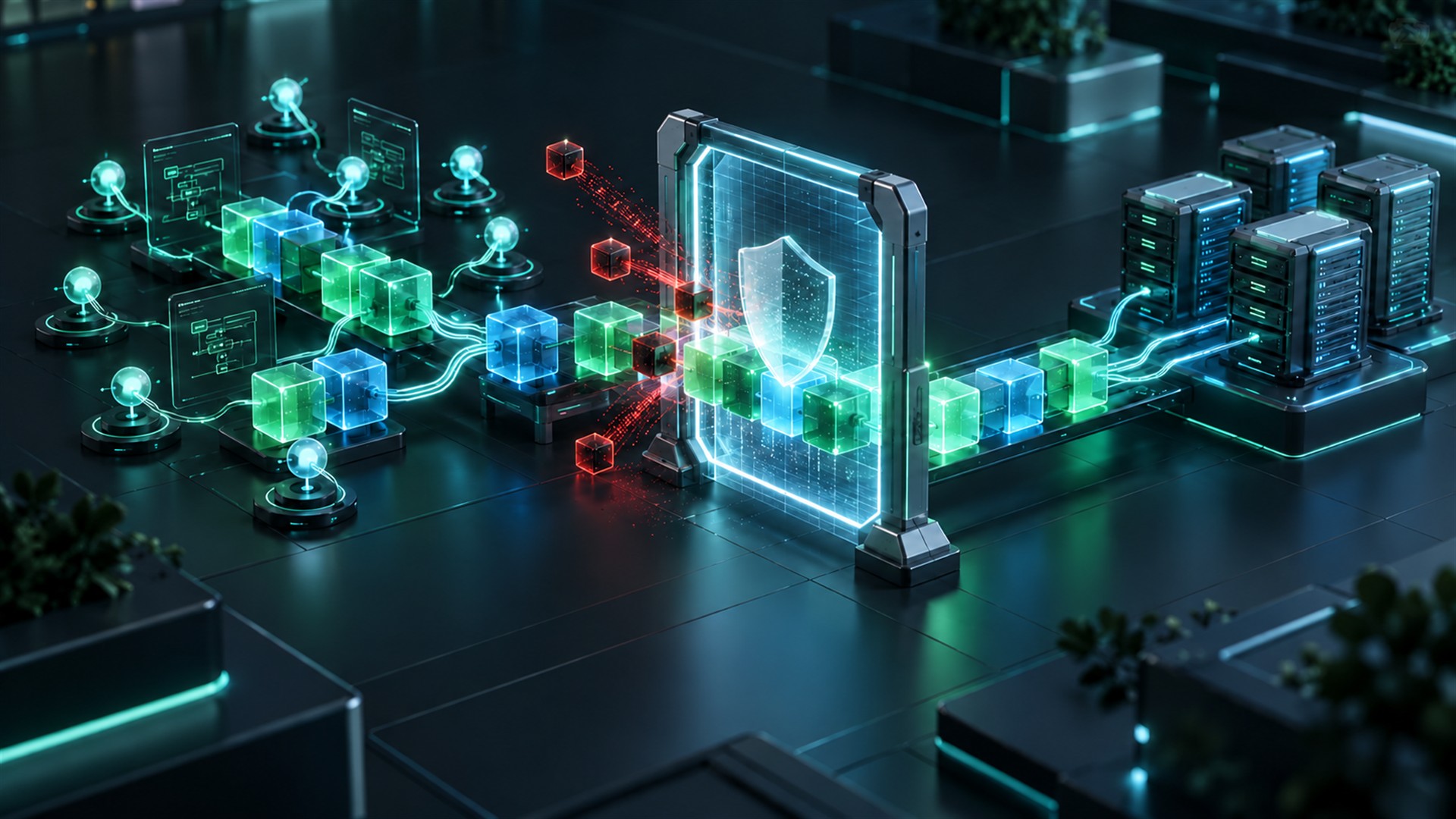
Finding a weakness during testing and preventing an unsafe action during operation are separate tasks. Enkrypt AI’s Guardrails product is designed to approve, modify or block risky behavior across agents, tools, retrieval-augmented generation and Model Context Protocol connections.
The company identifies prompt injection, unsafe tool actions, privilege-boundary violations and sensitive-data exfiltration among the risks it targets. Its emphasis on auditable decisions makes the control layer relevant to incident investigation as well as prevention.
Anaconda’s launch also includes model risk scores within Kilo and an Agent Incident Registry containing source-backed public incident reports. These can inform model selection and testing priorities. They should be treated as inputs into a security process, rather than proof that a particular deployment is safe.
The scale figures need similar care. Anaconda reports that 63% of respondents to its survey of AI-native builders were moving toward swarms in some form. Its announcement also cites Enkrypt research that found vulnerabilities in 73% of 25,264 MCP servers scanned over four months. These are vendor-reported findings about the respondents and systems examined, not a measurement of every enterprise agent deployment.
Why the production environment belongs in the story
Anaconda’s AI Orchestration platform, formerly Outerbounds, addresses what happens after development. Its website describes reproducible workflow runs, artifact tracking and lineage, with compute available across multiple clouds and governance applied to packages and models.
That provides a way to connect an output to the environment and dependencies that produced it. When a workflow changes, teams need to know which model, package or policy changed with it. Reproducibility makes investigation and comparison more practical.
The October launch adds native access to governed artifacts within orchestration workflows. Its broader release page also describes Fast Bakery, which builds container images from conda and PyPI dependencies, including native libraries, and an expanded catalog of 19,000-plus curated packages and 77 vetted open-source models.
The expansion gives Anaconda a wider role than supplying Python components. Its proposition now spans agent-assisted development, adversarial evaluation, runtime controls and repeatable delivery. The meaningful test will be whether those pieces give teams a dependable record of what agents built, what was tested and what they were permitted to do when the software began operating.
Credit: Source link