
• bitcoinBitcoin(BTC)$84,161.00-0.50%
  • ethereumEthereum(ETH)$2,689.05-1.06%
  • tetherTether(USDT)$1.000.00%
  • binancecoinBNB(BNB)$775.00-0.55%
  • rippleXRP(XRP)$1.55-3.01%
  • usd-coinUSDC(USDC)$1.000.00%
  • solanaSolana(SOL)$121.290.37%
  • tronTRON(TRX)$0.336743-0.11%
  • zcashZcash(ZEC)$1,541.80-3.54%
  • Figure HelocFigure Heloc(FIGR_HELOC)$1.02-0.30%
  • HyperliquidHyperliquid(HYPE)$92.16-1.30%
  • dogecoinDogecoin(DOGE)$0.097632-0.41%
  • chainlinkChainlink(LINK)$14.261.27%
  • moneroMonero(XMR)$553.74-2.55%
  • whitebitWhiteBIT Coin(WBT)$83.98-0.64%
  • USDSUSDS(USDS)$1.000.00%
  • cardanoCardano(ADA)$0.2570900.71%
  • RainRain(RAIN)$0.0123793.85%
  • leo-tokenLEO Token(LEO)$8.961.52%
  • stellarStellar(XLM)$0.218792-1.93%
  • bitcoin-cashBitcoin Cash(BCH)$337.960.53%
  • nearNEAR Protocol(NEAR)$4.91-2.28%
  • uniswapUniswap(UNI)$9.62-1.28%
  • litecoinLitecoin(LTC)$73.133.93%
  • CantonCanton(CC)$0.1347448.77%
  • Ethena USDeEthena USDe(USDE)$1.00-0.02%
  • avalanche-2Avalanche(AVAX)$10.953.44%
  • suiSui(SUI)$1.183.39%
  • daiDai(DAI)$1.000.01%
  • USD1USD1(USD1)$1.000.01%
  • hedera-hashgraphHedera(HBAR)$0.094078-1.77%
  • the-open-networkGram (prev. Toncoin)(GRAM)$1.462.51%
  • BittensorBittensor(TAO)$329.807.98%
  • shiba-inuShiba Inu(SHIB)$0.000006-0.10%
  • crypto-com-chainCronos(CRO)$0.065386-0.47%
  • Global DollarGlobal Dollar(USDG)$1.000.01%
  • EthenaEthena(ENA)$0.28014116.49%
  • paypal-usdPayPal USD(PYUSD)$1.000.00%
  • MemeCoreMemeCore(M)$1.232.54%
  • OndoOndo(ONDO)$0.562.88%
  • tether-goldTether Gold(XAUT)$4,280.50-0.42%
  • BitwayBitway(BTW)$0.95-17.04%
  • okbOKB(OKB)$121.470.48%
  • Ripple USDRipple USD(RLUSD)$1.00-0.01%
  • Circle USYCCircle USYC(USYC)$1.140.03%
  • aaveAave(AAVE)$154.324.13%
  • mantleMantle(MNT)$0.714.08%
  • BlackRock USD Institutional Digital Liquidity FundBlackRock USD Institutional Digital Liquidity Fund(BUIDL)$1.000.00%
  • Ondo US Dollar YieldOndo US Dollar Yield(USDY)$1.15-0.01%
  • Pump.funPump.fun(PUMP)$0.0045037.47%
TradePoint.io
  • Main
  • AI & Technology
  • Stock Charts
  • Market & News
  • Business
  • Finance Tips
  • Trade Tube
  • Blog
  • Shop
No Result
View All Result
TradePoint.io
No Result
View All Result

Google Is Sending A Teensy-Tiny AI Data Center To Space

September 24, 2026
in AI & Technology
Reading Time: 3 mins read
A A
Google Is Sending A Teensy-Tiny AI Data Center To Space
ShareShareShareShareShare

Google’s Project Suncatcher, which ultimately aims to put large AI installations in low-Earth orbit, is preparing for a milestone event. The company will be sending a teensy-tiny AI data center into space to see how it reacts to the harsh conditions, as reported by The New York Times.

A satellite named MVP will be aboard a SpaceX Falcon 9 rocket set to launch on October 1, where it will be placed into orbit. This isn’t a full data center in the conventional sense. It’s four specialized computer chips called “tensor processing units” which, combined, offer the power of a single server in a data center.

YOU MAY ALSO LIKE

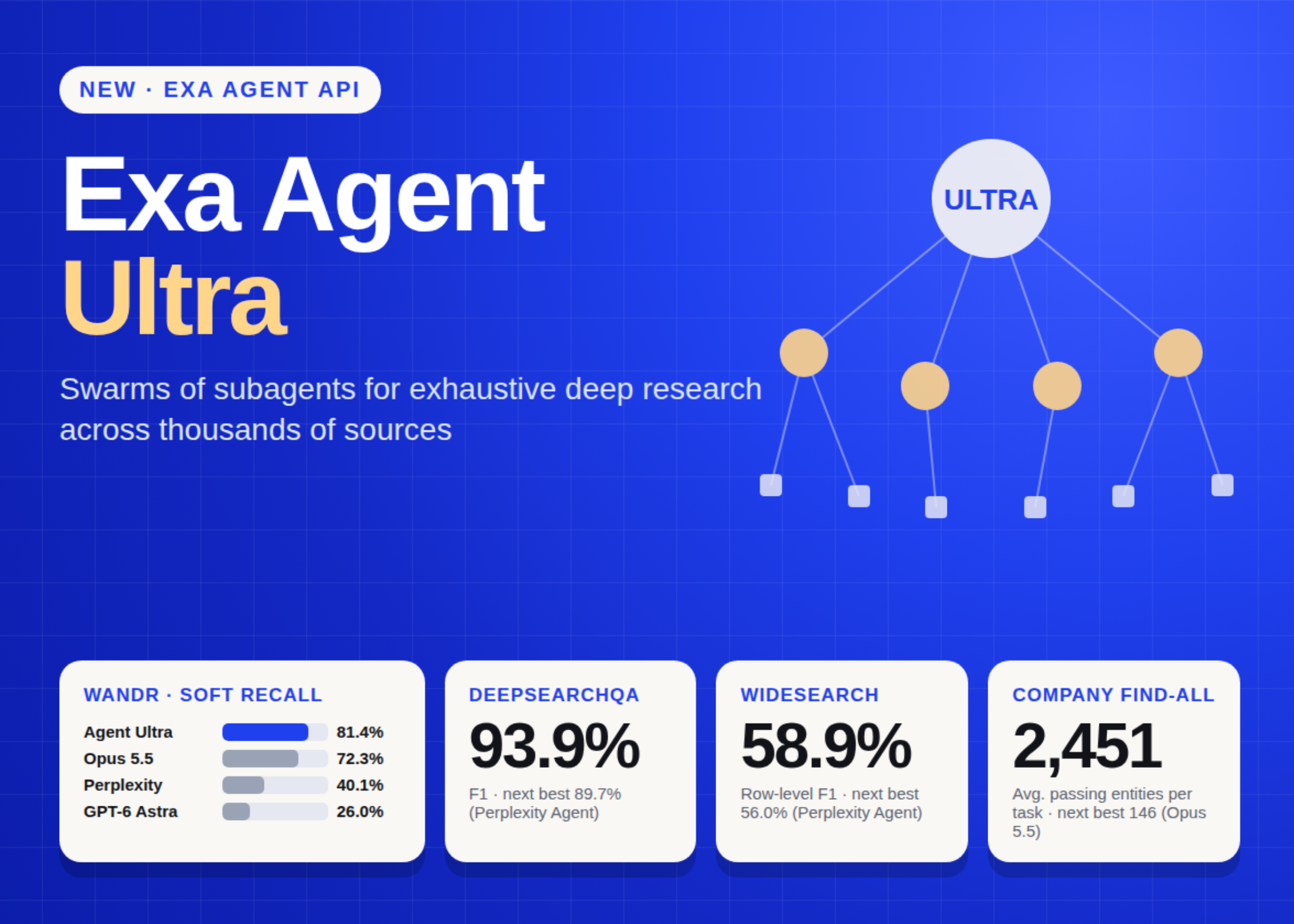
Exa Launches Agent Ultra: A Subagent Swarm Deep Research API Built for Exhaustive List Building

End-to-End Multimodal Data Augmentation and Adversarial Robustness Benchmark with AugLy for Images, Text, Audio, and PyTorch

We’re taking AI to space with @Google. 🛰️

Project Suncatcher explores putting AI compute in orbit, powered by the sun. Soon, we’ll be sending our first satellite into space to start testing that idea. It’s a new approach to AI infrastructure.

Check out a behind-the-scenes look… pic.twitter.com/cup8uXuyrC

— Planet (@planet) September 24, 2026

Solar panels will supply just one kilowatt of power to juice the chips, which is equivalent to the energy needed to run a hair dryer. Google says this will be enough to test the hardware against the harsh conditions of space. The company plans to let the satellite answer simple AI queries for a year, though it will orbit Earth for six years before it burns up during a descent into the atmosphere.

These chips have undergone a battery of tests to simulate the void of space, including getting blasted with large amounts of radiation at Crocker Nuclear Laboratory. Radiation can seriously mess with computer chips, causing something called “bit flips.” This essentially flips the binary code from a one to a zero, or vice versa.

What’s the solution to bit flips? Google is taking the tried-and-true PC method. It plans on restarting the chips when they act up. There’s also a proprietary cooling system in place that uses layers of conductive material to expel heat into space, though it only works for around 15 minutes before the chips have to be turned off to cool down.

The initial experiments at Crocker reportedly went well enough to take the next step, which is shooting the chips into the great beyond. However, this doesn’t mean we are particularly close to having actual AI data centers in space. James Manyika, the Senior Vice President for Research, Technology & Society at Google, urges the public to temper their expectations. “We don’t expect, to be perfectly frank, that we’ll have anything usefully operational in the next few years,” he said.

“Expanding from one satellite to a vast network of them that operate like a giant data center will take years and enormous funds,” Brandon Lucia, a professor of electrical and computer engineering at Carnegie Mellon University, told The New York Times. “If you do this on a large scale, there are additional engineering problems.”

Those additional engineering problems are no joke, despite people like Elon Musk pronouncing that putting AI data centers in space will be easy. There’s the radiation and that whole bit flip thing, which seems extremely finicky with four chips let alone thousands.

Cosmic rays are an issue, as they are actual physical particles traveling quickly through space that could punch through and actually melt semiconductor junctions. It’s also extremely expensive to launch this stuff into space. A single Falcon 9 launch, for instance, costs around $74 million.

Scaling up the cooling system looks to be incredibly difficult. Remember, Google’s current system can only work for 15 minutes, and that’s with the small amount of heat generated by just four chips. Standard heat dissipation does not work in space. Power must also be considered. Using a solar array for four chips is quite different from launching a massive array to power a legitimate data center.

Despite these challenges, Google plans on scaling this project up. It wants to launch two similar satellites next year, with the eventual goal of launching 80 satellites that will fly in close formation to better process AI queries. It’s also looking into building a much larger satellite, around the size of a football field. The company has not indicated how much money it is pouring into this endeavor.


Credit: Source link

ShareTweetSendSharePin

Related Posts

Exa Launches Agent Ultra: A Subagent Swarm Deep Research API Built for Exhaustive List Building
AI & Technology

Exa Launches Agent Ultra: A Subagent Swarm Deep Research API Built for Exhaustive List Building

September 26, 2026
End-to-End Multimodal Data Augmentation and Adversarial Robustness Benchmark with AugLy for Images, Text, Audio, and PyTorch
AI & Technology

End-to-End Multimodal Data Augmentation and Adversarial Robustness Benchmark with AugLy for Images, Text, Audio, and PyTorch

September 26, 2026
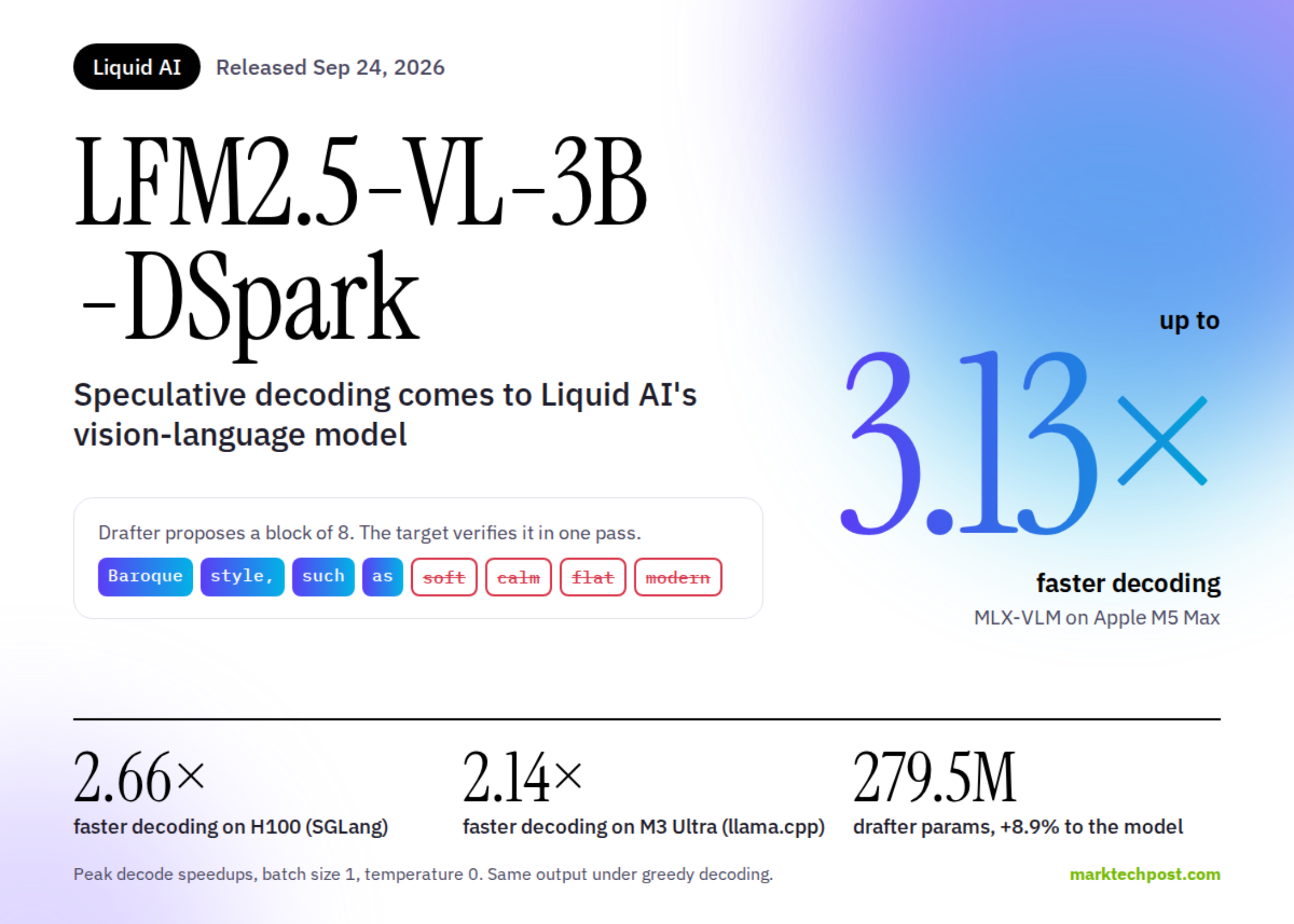
Liquid AI Releases LFM2.5-VL-3B-DSpark: Speculative Decoding for Vision-Language Models With Up to 3.13x Faster Decoding
AI & Technology

Liquid AI Releases LFM2.5-VL-3B-DSpark: Speculative Decoding for Vision-Language Models With Up to 3.13x Faster Decoding

September 25, 2026
How To Stop Meta Training Its AI Models On Your Smart Glasses’ Visual Data
AI & Technology

How To Stop Meta Training Its AI Models On Your Smart Glasses’ Visual Data

September 25, 2026
Next Post
New York Continues To Fight Prediction Markets With A Lawsuit Against Polymarket

New York Continues To Fight Prediction Markets With A Lawsuit Against Polymarket

Leave a Reply Cancel reply

Your email address will not be published. Required fields are marked *

Search

No Result
View All Result
CIA director makes an unannounced trip to Moscow for talks, source says

CIA director makes an unannounced trip to Moscow for talks, source says

September 23, 2026
Emerging Market Debt: The Next Frontier For AI Disruption?

Emerging Market Debt: The Next Frontier For AI Disruption?

September 26, 2026
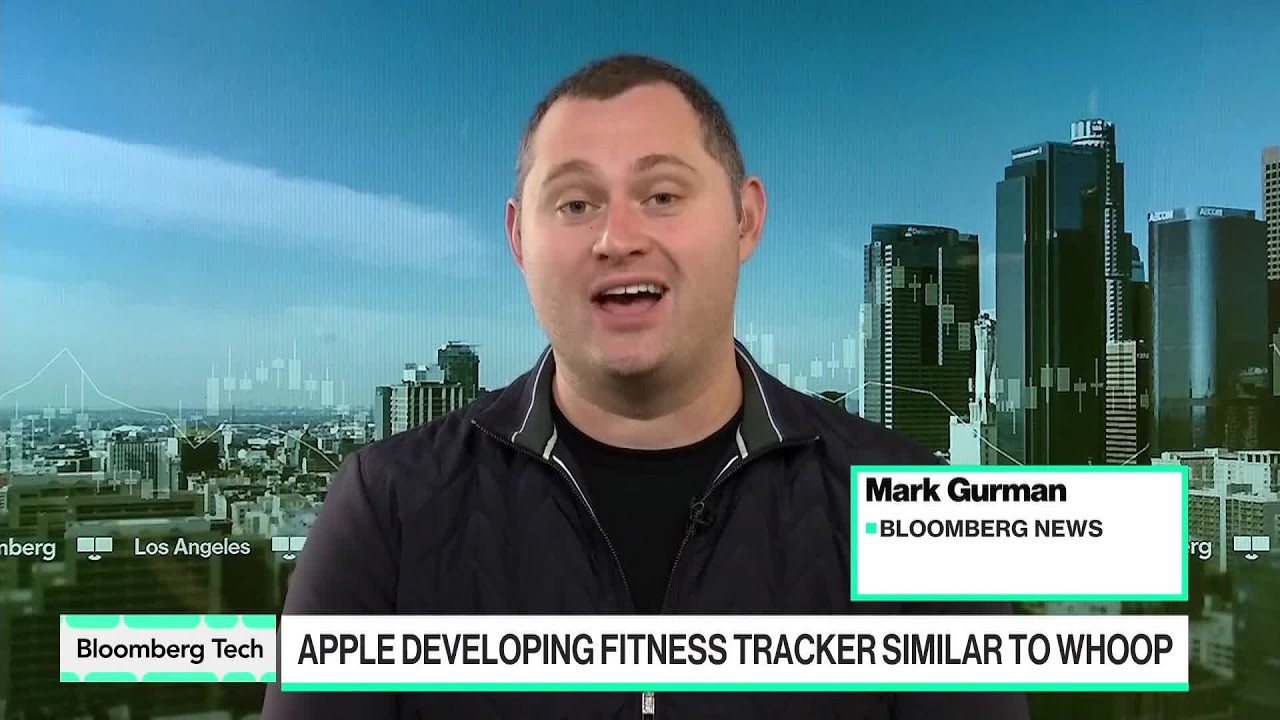
Apple Explores Screenless Fitness Tracker to Rival Whoop

Apple Explores Screenless Fitness Tracker to Rival Whoop

September 24, 2026

About

Learn more

Our Services

Legal

Privacy Policy

Terms of Use

Bloggers

Learn more

Article Links

Contact

Advertise

Ask us anything

©2020- TradePoint.io - All rights reserved!

Tradepoint.io, being just a publishing and technology platform, is not a registered broker-dealer or investment adviser. So we do not provide investment advice. Rather, brokerage services are provided to clients of Tradepoint.io by independent SEC-registered broker-dealers and members of FINRA/SIPC. Every form of investing carries some risk and past performance is not a guarantee of future results. “Tradepoint.io“, “Instant Investing” and “My Trading Tools” are registered trademarks of Apperbuild, LLC.

This website is operated by Apperbuild, LLC. We have no link to any brokerage firm and we do not provide investment advice. Every information and resource we provide is solely for the education of our readers. © 2020 Apperbuild, LLC. All rights reserved.

No Result
View All Result
  • Main
  • AI & Technology
  • Stock Charts
  • Market & News
  • Business
  • Finance Tips
  • Trade Tube
  • Blog
  • Shop

© 2023 - TradePoint.io - All Rights Reserved!