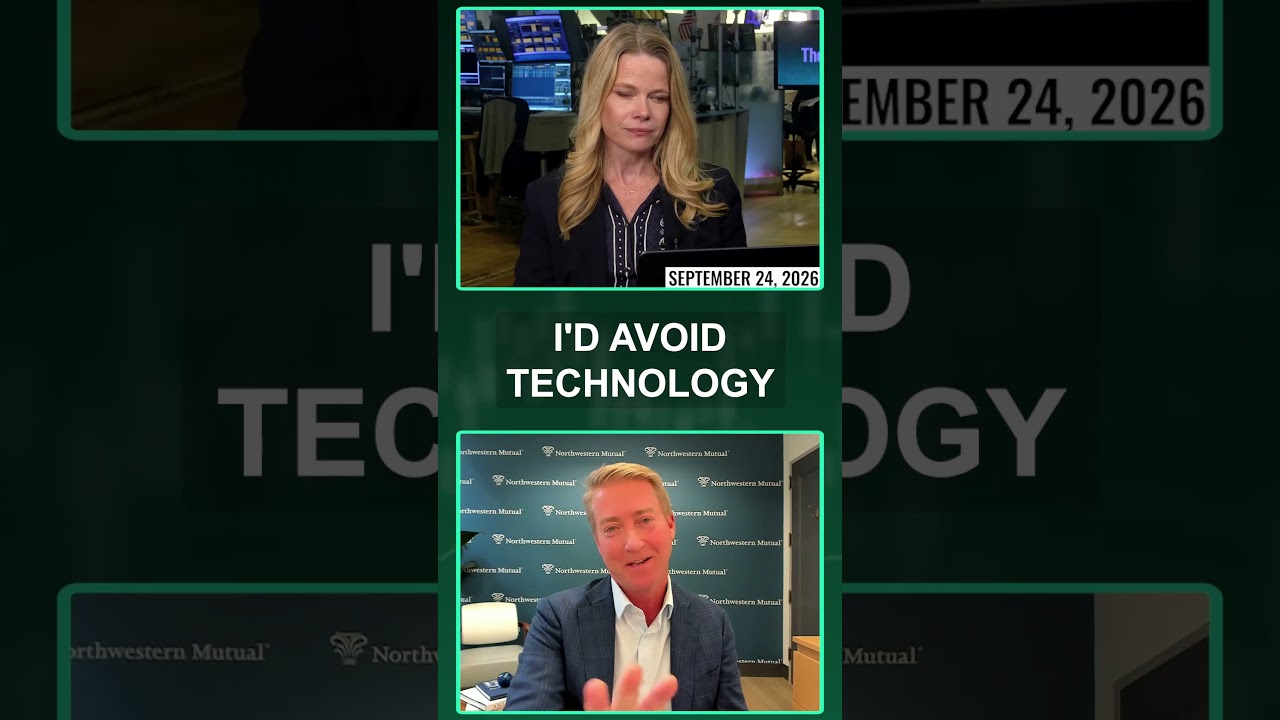
This episode focuses on what rising interest rates are really signaling, why stock market strength may be masking weakness beneath the surface, and how investors should think about bond allocations in a higher-for-longer rate environment.
Liz Ann Sonders argues that the relationship between stocks and bonds has fundamentally changed from the “Great Moderation” era. Rather than rising bond yields reflecting stronger growth and supporting stocks, today’s environment looks more like an earlier inflation-driven period where higher yields can put pressure on equity valuations. Despite the S&P 500 sitting near record highs, she notes that market leadership remains highly concentrated in a small group of mega-cap technology stocks. Beneath the surface, market breadth has deteriorated significantly, with relatively few stocks making new highs and many experiencing bear market-like drawdowns. Her takeaway for investors is to avoid becoming overly concentrated, maintaining long-term time horizons, and recognize that headline index performance tells only part of the story.
Collin explains that the recent rise in Treasury yields has been relatively orderly and is not primarily being driven by a surge in the term premium or investor fears about Treasury demand. Instead, yields are reflecting a resilient economy, sticky inflation, and expectations for additional Federal Reserve tightening.
Finally, Collin and Liz Ann look ahead to next week’s upcoming macroeconomic indicators and key data releases.
On Investing is an original podcast from Charles Schwab ( . For more on the show, visit schwab.com/OnInvesting ( .
If you enjoy the show, please leave a rating or review on Apple Podcasts ( .
Important Disclosures
Money market funds are neither insured nor guaranteed by the Federal Deposit Insurance Corporation or any other government agency. Although the fund seeks to preserve the value of an investment at $1.00 per share, it is possible to lose money by investing in the fund.
This material is intended for general informational and educational purposes only. This should not be considered an individualized recommendation or personalized investment advice. The securities, investment products and investment strategies mentioned are not suitable for everyone. Each investor needs to review an investment strategy for his or her own particular situation before making any investment decisions.
All expressions of opinion are subject to change without notice in reaction to shifting market, economic or political conditions. Data contained herein from third party providers is obtained from what are considered reliable sources. However, its accuracy, completeness or reliability cannot be guaranteed.
Past performance is no guarantee of future results.
Investing involves risk, including loss of principal.
Diversification, asset allocation, and rebalancing strategies do not ensure a profit and do not protect against losses in declining markets.
Rebalancing may cause investors to incur transaction costs and, when a non-retirement account is rebalanced, taxable events may be created that may affect your tax liability.
Performance may be affected by risks associated with non-diversification, including investments in specific countries or sectors. Additional risks may also include, but are not limited to, investments in foreign securities, especially emerging markets, real estate investment trusts (REITs), fixed income, municipal securities including state specific municipal securities, small capitalization securities and commodities. Each individual investor should consider these risks carefully before investing in a particular security or strategy.
Fixed income securities are subject to increased loss of principal during periods of rising interest rates. Fixed income investments are subject to various other risks including changes in credit quality, market valuations, liquidity, prepayments, early redemption, corporate events, tax ramifications, and other factors.
All names and market data shown are for illustrative purposes only and are not a recommendation, offer to sell, or a solicitation of an offer to buy any security.
Forecasts contained herein are for illustrative purposes only, may be based upon proprietary research and are developed through analysis of historical public data.
The policy analysis provided by Charles Schwab & Co., Inc., does not constitute and should not be interpreted as an endorsement of any political party.
Indexes are unmanaged, do not incur management fees, costs, and expenses and cannot be invested in directly. For more information on indexes, please see Schwab.com/IndexDefinitions
The Schwab Center for Financial Research is a division of Charles Schwab & Co., Inc.
Negative correlation refers to investments that tend to move in opposite directions: when one rises, the other falls….
source