
• bitcoinBitcoin(BTC)$76,699.00-0.84%
  • ethereumEthereum(ETH)$2,474.87-2.56%
  • tetherTether(USDT)$1.000.00%
  • binancecoinBNB(BNB)$715.38-2.79%
  • rippleXRP(XRP)$1.34-2.19%
  • usd-coinUSDC(USDC)$1.00-0.01%
  • solanaSolana(SOL)$99.70-2.30%
  • tronTRON(TRX)$0.3408360.01%
  • Figure HelocFigure Heloc(FIGR_HELOC)$1.00-1.59%
  • zcashZcash(ZEC)$1,091.45-5.89%
  • HyperliquidHyperliquid(HYPE)$77.66-3.31%
  • dogecoinDogecoin(DOGE)$0.083412-1.85%
  • RainRain(RAIN)$0.0152530.54%
  • moneroMonero(XMR)$530.270.12%
  • USDSUSDS(USDS)$1.00-0.01%
  • whitebitWhiteBIT Coin(WBT)$79.51-1.13%
  • chainlinkChainlink(LINK)$11.24-2.63%
  • leo-tokenLEO Token(LEO)$9.05-0.67%
  • cardanoCardano(ADA)$0.205015-1.80%
  • stellarStellar(XLM)$0.178317-1.78%
  • Ethena USDeEthena USDe(USDE)$1.00-0.01%
  • daiDai(DAI)$1.000.00%
  • bitcoin-cashBitcoin Cash(BCH)$223.68-3.10%
  • USD1USD1(USD1)$1.000.00%
  • litecoinLitecoin(LTC)$53.62-0.61%
  • uniswapUniswap(UNI)$6.27-1.58%
  • CantonCanton(CC)$0.094877-3.91%
  • the-open-networkGram (prev. Toncoin)(GRAM)$1.35-2.37%
  • Global DollarGlobal Dollar(USDG)$1.000.00%
  • hedera-hashgraphHedera(HBAR)$0.0753811.09%
  • avalanche-2Avalanche(AVAX)$7.31-1.65%
  • shiba-inuShiba Inu(SHIB)$0.000005-2.08%
  • nearNEAR Protocol(NEAR)$2.31-2.29%
  • suiSui(SUI)$0.71-2.40%
  • crypto-com-chainCronos(CRO)$0.0585220.53%
  • paypal-usdPayPal USD(PYUSD)$1.00-0.01%
  • BlackRock USD Institutional Digital Liquidity FundBlackRock USD Institutional Digital Liquidity Fund(BUIDL)$1.000.00%
  • tether-goldTether Gold(XAUT)$4,346.41-0.02%
  • MemeCoreMemeCore(M)$1.15-2.07%
  • Circle USYCCircle USYC(USYC)$1.140.00%
  • Ripple USDRipple USD(RLUSD)$1.000.00%
  • okbOKB(OKB)$112.72-1.17%
  • BittensorBittensor(TAO)$234.18-0.38%
  • Ondo US Dollar YieldOndo US Dollar Yield(USDY)$1.14-0.04%
  • aaveAave(AAVE)$125.69-0.81%
  • pax-goldPAX Gold(PAXG)$4,350.25-0.06%
  • AsterAster(ASTER)$0.691.10%
  • mantleMantle(MNT)$0.56-1.79%
  • World Liberty FinancialWorld Liberty Financial(WLFI)$0.0575530.89%
  • BitwayBitway(BTW)$0.6618.63%
TradePoint.io
  • Main
  • AI & Technology
  • Stock Charts
  • Market & News
  • Business
  • Finance Tips
  • Trade Tube
  • Blog
  • Shop
No Result
View All Result
TradePoint.io
No Result
View All Result

Why Do Routers Have So Many Antennas?

September 13, 2026
in AI & Technology
Reading Time: 4 mins read
A A
Why Do Routers Have So Many Antennas?
ShareShareShareShareShare

How many you need depends on your home and usage.


tinhkhuong/Shutterstock

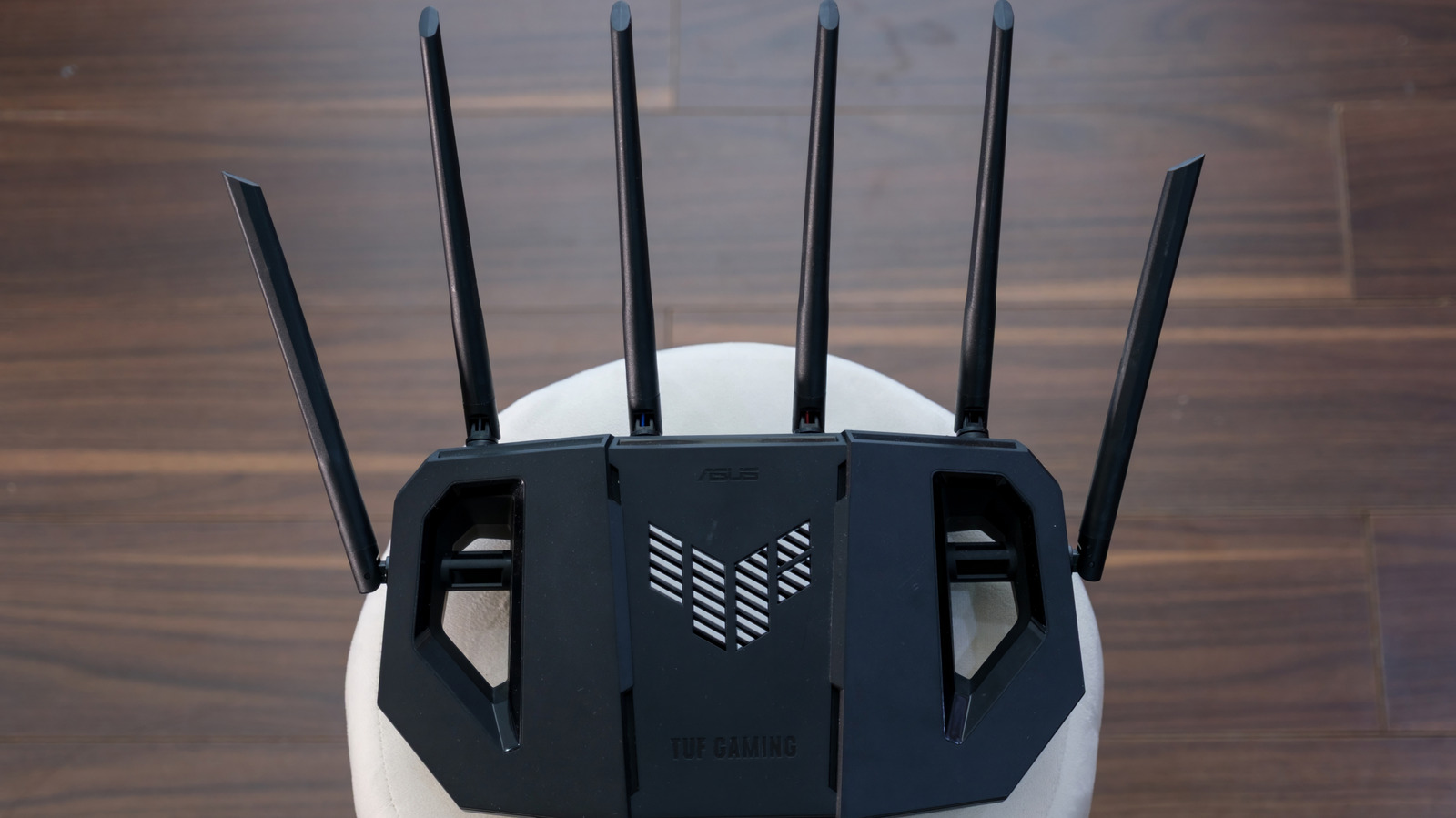
Not so many decades ago, in much simpler and slower times, many Wi-Fi routers shipped with just a single antenna that could only handle one wireless data stream at a time. As Wi-Fi got better, the internet got faster and devices rapidly multiplied across households. The number of antennas on routers did, too. Today, there are routers with as many as eight antennas.

YOU MAY ALSO LIKE

AWS Introduces Pizza Bot: An Open Source Inbox for Background AI Agents

Implementation of Machine Learning Workflows with NVIDIA cuML, RAPIDS, GPU Benchmarking, Explainability, Clustering, and Model Inference

At first glance, routers with many antennas might come off as a simple marketing gimmick, but there’s a good reason why single-antenna routers stopped being enough. Yes, even that alien spider-looking router with eight antennas has a good reason for existing, but that doesn’t mean it’s for everybody. Picture an antenna as a single-lane road. In a small town, that single lane is plenty. Take that same road into a busy city, and traffic congestion builds up fast. In the early days, when one of the internet’s main uses was email, a single antenna was plenty too, but that’s no longer the case. So instead of building routers with just one lane, manufacturers started building ones that could run several lanes of traffic at once, using a trick called MIMO (multiple-input, multiple-output). This tech is what actually makes multiple antennas useful, because contrary to what most people think, simply bolting on extra antennas without MIMO causes more problems than it solves.

What do multiple antennas actually do?

Thanks to MIMO, routers with multiple antennas can carry more data using a fancy technique called spatial multiplexing. So more antennas allow room for more lanes of data, but that doesn’t mean more antennas automatically equal more data lanes. The router also needs the right internal hardware to turn those lanes into separate data paths.

Another use of multiple antennas is beamforming. In plain terms, this means multiple antennas allow your router to determine where your device is and then focus its signal on it. And the more antennas, the better your router can do this, because each extra antenna gives it another signal it can fine-tune. Think of several people tossing pebbles into a pond at carefully timed moments. Their ripples can build into a stronger wave at one chosen spot and stay weaker elsewhere. Beamforming needs multiple antennas for the same reason: The router coordinates their signals so they combine more strongly around your device. One lone antenna has no other signals to coordinate with.

Signal diversity and reliability are other big reasons for multiple antennas. In a house, Wi-Fi signals don’t go straight to the recipient; instead, they bounce off walls, furniture, metal objects and even people. So having multiple spaced-apart antennas ensures at least one gets a clean signal even if others don’t. Also, multiple antennas are needed for MU-MIMO (Multi-User Multiple-Input Multiple-Output). Older routers served one device at a time before rapidly cycling to the next. MU-MIMO splits a router’s antenna array so it can actually talk to multiple devices simultaneously.

How many antennas is too many?
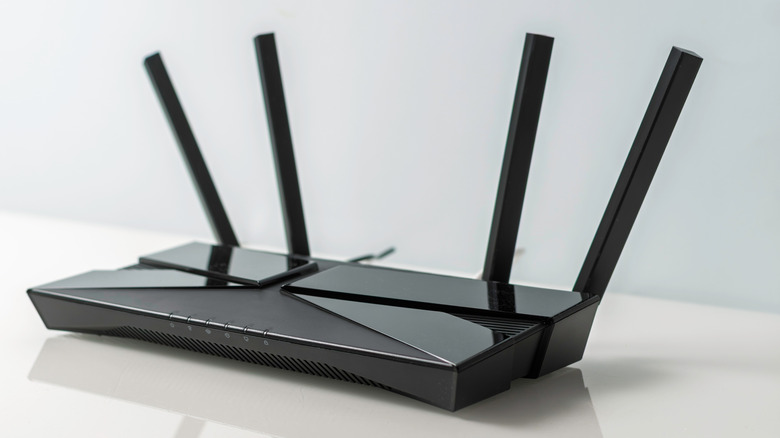

Black Wi-Fi router with four antennas on a glossy table.
SOLDATOOFF/Shutterstock

For most people and homes, a router with eight antennas is overkill; a good router with two to four antennas is usually more than enough. In fact, the most important thing isn’t just antennas; Wi-Fi standards and software also play a big role in the performance of a router. If coverage is one of your concerns, then a router with eight antennas might be a reasonable choice since you’d have more antennas to adjust to improve coverage. But for coverage cases, setting up a mesh network is usually a more reliable solution than simply having more antennas.

For businesses, a high-capacity router with more antennas and data streams can be useful, especially in offices, cafés or other places where lots of people are connected at once. But once again, beyond antenna count, Wi-Fi standard and software play a major role in keeping the network running smoothly even when several devices are connected. Another thing to know is that a newer, faster-looking Wi-Fi router with more antennas doesn’t necessarily mean faster internet speed. At the end of the day, your max internet speed is capped by your plan, and a new eight-legged, spider-looking router won’t magically bypass that.

Credit: Source link

ShareTweetSendSharePin

Related Posts

AWS Introduces Pizza Bot: An Open Source Inbox for Background AI Agents
AI & Technology

AWS Introduces Pizza Bot: An Open Source Inbox for Background AI Agents

September 13, 2026
Implementation of Machine Learning Workflows with NVIDIA cuML, RAPIDS, GPU Benchmarking, Explainability, Clustering, and Model Inference
AI & Technology

Implementation of Machine Learning Workflows with NVIDIA cuML, RAPIDS, GPU Benchmarking, Explainability, Clustering, and Model Inference

September 13, 2026
Hyundai Motor Group Puts Data Flywheel Into Full Operation – Unite.AI
AI & Technology

Hyundai Motor Group Puts Data Flywheel Into Full Operation – Unite.AI

September 13, 2026
What Is The Difference Between A Dead Pixel And A Stuck Pixel?
AI & Technology

What Is The Difference Between A Dead Pixel And A Stuck Pixel?

September 13, 2026
Next Post
The Fed Wants To Hike Rates But The Market Doesn’t Care

The Fed Wants To Hike Rates But The Market Doesn't Care

Leave a Reply Cancel reply

Your email address will not be published. Required fields are marked *

Search

No Result
View All Result
Inside the Discussions at AI Companies Over a Superintelligence Doomsday – The New York Times

Inside the Discussions at AI Companies Over a Superintelligence Doomsday – The New York Times

September 12, 2026
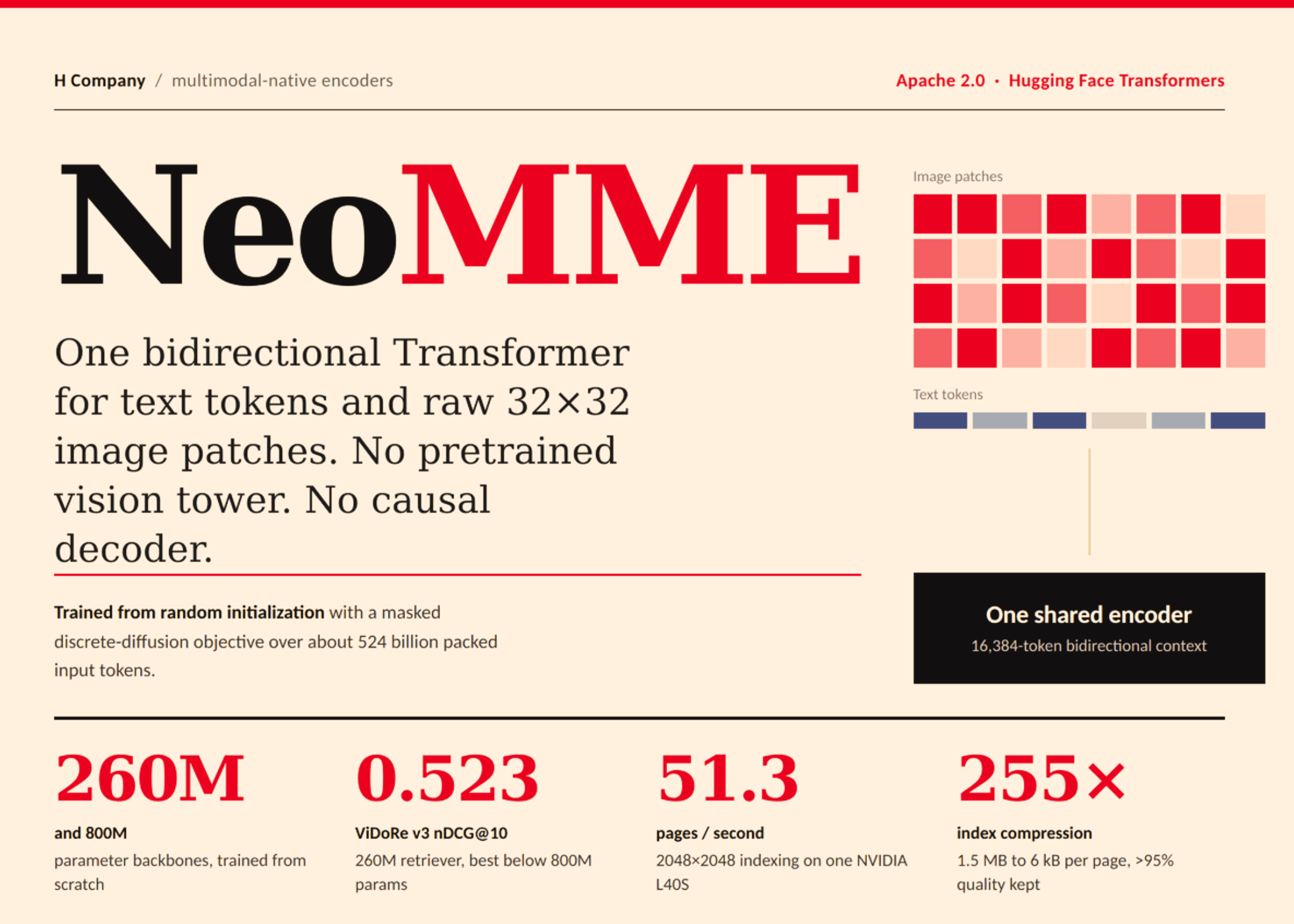
H Company Releases NeoMME: A Family of 260M and 800M Single-Tower Multimodal Encoders That Drop the Vision Tower and Causal Decoder

H Company Releases NeoMME: A Family of 260M and 800M Single-Tower Multimodal Encoders That Drop the Vision Tower and Causal Decoder

September 6, 2026
Beloved DTLA pasta restaurant to close after nearly a decade in business

Beloved DTLA pasta restaurant to close after nearly a decade in business

September 10, 2026

About

Learn more

Our Services

Legal

Privacy Policy

Terms of Use

Bloggers

Learn more

Article Links

Contact

Advertise

Ask us anything

©2020- TradePoint.io - All rights reserved!

Tradepoint.io, being just a publishing and technology platform, is not a registered broker-dealer or investment adviser. So we do not provide investment advice. Rather, brokerage services are provided to clients of Tradepoint.io by independent SEC-registered broker-dealers and members of FINRA/SIPC. Every form of investing carries some risk and past performance is not a guarantee of future results. “Tradepoint.io“, “Instant Investing” and “My Trading Tools” are registered trademarks of Apperbuild, LLC.

This website is operated by Apperbuild, LLC. We have no link to any brokerage firm and we do not provide investment advice. Every information and resource we provide is solely for the education of our readers. © 2020 Apperbuild, LLC. All rights reserved.

No Result
View All Result
  • Main
  • AI & Technology
  • Stock Charts
  • Market & News
  • Business
  • Finance Tips
  • Trade Tube
  • Blog
  • Shop

© 2023 - TradePoint.io - All Rights Reserved!