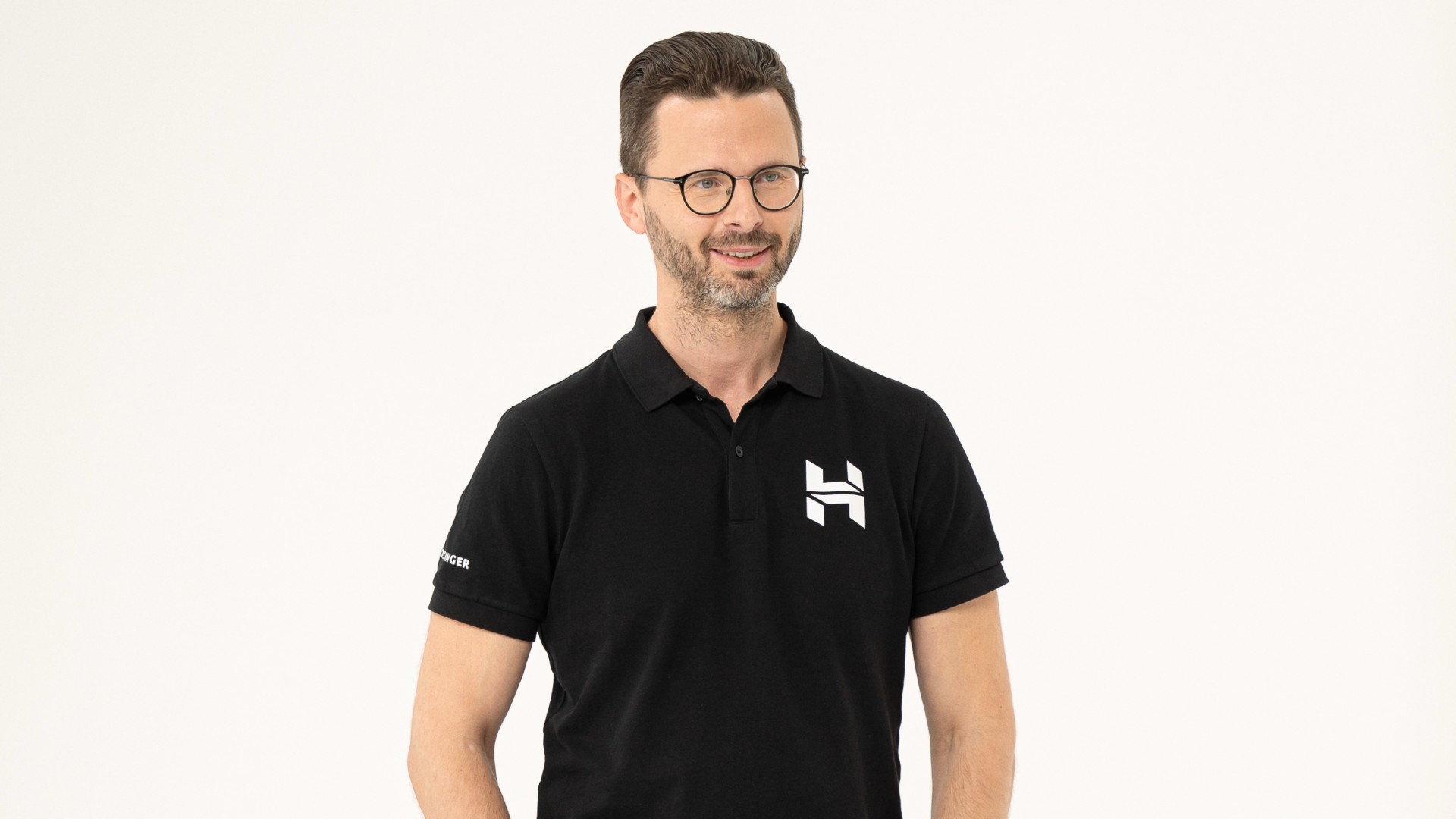

Saulius Lazaravičius, VP of Product at Hostinger, is an experienced technology and product leader whose career spans more than two decades across software engineering, entrepreneurship, e-commerce, and product development. He began as a software engineer before co-founding a B2B SaaS company, where he helped build a transportation management platform from the ground up. He later formed and led the software development team behind BARBORA, one of the Baltics’ largest grocery e-commerce platforms, before joining NFQ, where he managed cross-functional technology teams and client product development. Lazaravičius joined Hostinger as Head of Product in 2022 and was promoted to VP of Product in 2024, expanding his responsibilities from web hosting and managed WordPress to a broad portfolio encompassing core infrastructure, VPS, domains, business email, product design, product growth, and emerging AI products. His recent work includes the launch and growth of Hostinger’s email marketing offering and the introduction of managed solutions for open-source AI agents.
Hostinger is a Lithuania-founded technology company that has evolved from a traditional web hosting provider into a broader AI-driven platform for building, launching, and growing online businesses. Founded in 2004, the company now serves more than 5 million users across over 150 countries and has a team of roughly 900 employees. Its product portfolio spans web and cloud hosting, managed WordPress, virtual private servers (VPS), domains, business email, e-commerce, and AI-powered creation tools. Hostinger has increasingly positioned AI at the center of its strategy, including Hostinger Horizons, which enables users to create and publish websites and web applications through conversational AI, alongside integrated AI capabilities for e-commerce, customer support, and managed AI agents.
You began your career as a software engineer, later built and led development teams, and now oversee a broad Hostinger product portfolio spanning core infrastructure, VPS, domains, product growth, and managed solutions for open-source AI agents. How has that progression shaped the way you think about what developers actually need from AI beyond simply generating code?
For me, the most interesting part of software development has never been writing code itself. It is finding the right solution to a technical or user problem, forming a hypothesis, building something around it, and then seeing how people actually use and benefit from it.
In the past, a lot of the developer’s time went into the repetitive work around that process: searching for libraries and code snippets, connecting different pieces, debugging, testing, and fixing small issues before you could even properly evaluate whether the solution was good.
AI changes that balance. Much of that repetitive work can now be handled with a few prompts, leaving developers more time for the creative part: understanding the problem, exploring different approaches, making product decisions, and learning from real user behavior.
That is where I see the biggest value of AI for developers. It is not just about generating code faster. It is about removing more of the mandatory but less interesting work so developers can spend more time solving the problems that actually matter.
AI coding tools have dramatically reduced the time it takes to go from an idea to working code. Do you believe deployment and infrastructure management are now becoming the bigger bottlenecks in AI-assisted software development?
Yes, I think they are becoming the next major source of friction.
AI has compressed the time between an idea and usable code dramatically. But once the code exists, you still need to put it somewhere, configure it correctly, connect services, handle domains and security, and keep the application running. If those steps still require switching between several dashboards, documentation pages, terminals, and tools, the workflow suddenly slows down again.
We can see that developers want the same speed from code to production that they are now getting from idea to code. More than 19,000 customers have already tried Hostinger Connector, around 1,500 are using it daily, and they are completing roughly 30,000 to 40,000 actions per day. That is a strong signal that deployment and operations are moving directly into the AI-assisted development workflow.
Hostinger states its Connector is already processing 30,000 to 40,000 actions per day across websites and services. What are developers actually asking AI agents to do in production, and have any of those usage patterns surprised you?
Developers use Connector directly from the tools they already work in, such as VS Code, Antigravity, and Cursor. That shift matters because it brings infrastructure actions into the development flow instead of forcing developers to jump between separate dashboards.
One of the clearest use cases we’re seeing is deployment. More than 14,600 unique websites have already been deployed through MCP, and weekly deployments grew by nearly 300% over the past month.
Beyond deployment, agents use Connector to manage domains and DNS, website files, server resources, firewall rules, SSH keys, ecommerce tasks, email campaigns, and other Hostinger services. In practice, that means an agent can move from helping build a project to actually putting it online and managing the services around it.
There is a significant difference between allowing an AI agent to write code and allowing it to change DNS records, firewall rules, SSH keys, or server configurations. What new safeguards become necessary once agents are given this level of operational control?
The key difference is that the agent is no longer just suggesting what to do. It is making real changes to a live system, so security and control become much more important.
That means agents need clear permission boundaries, secure access, and visibility into the actions they perform. But ideally, developers should not have to manage all of that complexity themselves.
That is the approach we are taking with Hostinger Connector and our agent platform. The platform handles the infrastructure, access, and security layers around the agent, so developers can focus on what they want their agents to do rather than on configuring and maintaining everything underneath.
“Vibe coding” has made software development accessible to people who may have limited knowledge of infrastructure or DevOps. What happens when those users begin deploying applications through agents without fully understanding the systems underneath them?
I think this puts more responsibility on the platform, not on the user. If AI makes it possible for more people to build software, we cannot expect all of them to become infrastructure experts as well.
The platform needs to take care of more of the complexity underneath, from security and backups to monitoring, resource limits, and sensible defaults. Users should understand what is happening at a high level, but they should not need deep DevOps knowledge just to get an application online safely.
We have already seen a similar pattern with AI agents. With products such as Managed OpenClaw, the challenge for many users was not what the agent could do, but everything required to run it reliably: hosting, configuration, API keys, security, and maintenance. Removing that setup burden made the technology much more accessible.
I think infrastructure will increasingly work the same way. Users should be able to focus on what they want to build, while the platform handles more of the operational complexity safely in the background.
For an AI agent to operate infrastructure reliably, how much context does it need about the surrounding environment, such as dependencies, server resources, security policies, credentials, and previous configuration changes?
An agent needs enough context to understand not only the task, but also the environment around it.
A simple action like changing a DNS record, restarting a server, or deploying a new version can affect other parts of the system. So the agent should have access to structured information about the resources they are operating: what is deployed, what depends on it, what resources are available, what permissions the agent has, and what happened before.
At the same time, more context should not mean unlimited access. The agent should only receive the information and permissions it actually needs to complete the task safely. Giving an agent excessive access simply because more context might make it smarter would be the wrong tradeoff.
Where should human approval remain mandatory? Are there categories of infrastructure actions that you believe AI agents should be able to perform autonomously and others that should always require explicit human authorization?
I believe AI agents can operate largely on their own, as long as the system is configured properly from the start.
Instead of relying on one agent to do everything, different agents can have different responsibilities. One can handle coding and deployment, another can test the result, a third can monitor the system and raise alerts, and another can escalate issues when something goes wrong.
In that setup, the human does not need to approve every individual action. Their role is to oversee the whole agent system: define the rules, set the right permissions, monitor how the agents work together, and keep improving the setup over time.
So for me, the key question is less about which individual actions always need human approval and more about whether the overall system has been designed with the right checks, responsibilities, and escalation paths.
As development environments increasingly become interfaces for deploying applications, managing domains, configuring servers, and controlling external services, do you expect the traditional boundaries between the IDE, DevOps platforms, and cloud management consoles to disappear?
I expect the boundaries to blur significantly, although I do not think every specialized interface will disappear.
Today, developers often move between an IDE, a hosting dashboard, a domain panel, a terminal, and several external services just to get one application into production. AI agents can connect many of those steps and bring them into the environment where the developer is already working.
That does not mean dashboards or cloud management tools will disappear. They will still be useful for deeper configuration and oversight. But for many everyday tasks, developers may no longer need to think about which interface they have to open next.
The experience becomes more about the task you want to complete and less about which tool traditionally owns that task.
AI agents can potentially make infrastructure changes far faster than humans, but they can also make mistakes at machine speed. How important will capabilities such as audit trails, rollback mechanisms, permission boundaries, and continuous monitoring become as agentic development matures?
These capabilities will become essential as agents take on more operational work.
AI can make infrastructure changes much faster than a person, which is useful when everything goes right. But the same speed can also make a mistake spread much faster. That is why users need to know what changed, what the agent was allowed to access, and how to recover if something goes wrong.
Audit trails, permission boundaries, monitoring, and rollback mechanisms are what make that kind of automation trustworthy.
As agents become more capable, I think the quality of these safeguards will matter just as much as the intelligence of the agent itself.
Looking ahead, do you think the winning AI development platforms will be those with the best coding models, or will competitive advantage increasingly come from giving agents secure access to infrastructure, tools, organizational context, and production systems?
The quality of the coding model will still matter, but I do not think it will be enough on its own.
Once models are good at generating code, the bigger question becomes what happens next. Can the agent deploy the application? Can it connect the right services, understand the environment, make changes safely, and verify that everything is working?
That is where infrastructure access, tools, permissions, and context become much more important.
I think the strongest AI development platforms will combine good models with secure access to the systems around the code. The real value is not just helping someone write software faster, but helping them go from an idea to a working product with fewer steps in between.
Thank you for the great interview, readers who wish to learn more about the various hosting solutions on offer should visit Hostinger.
Credit: Source link