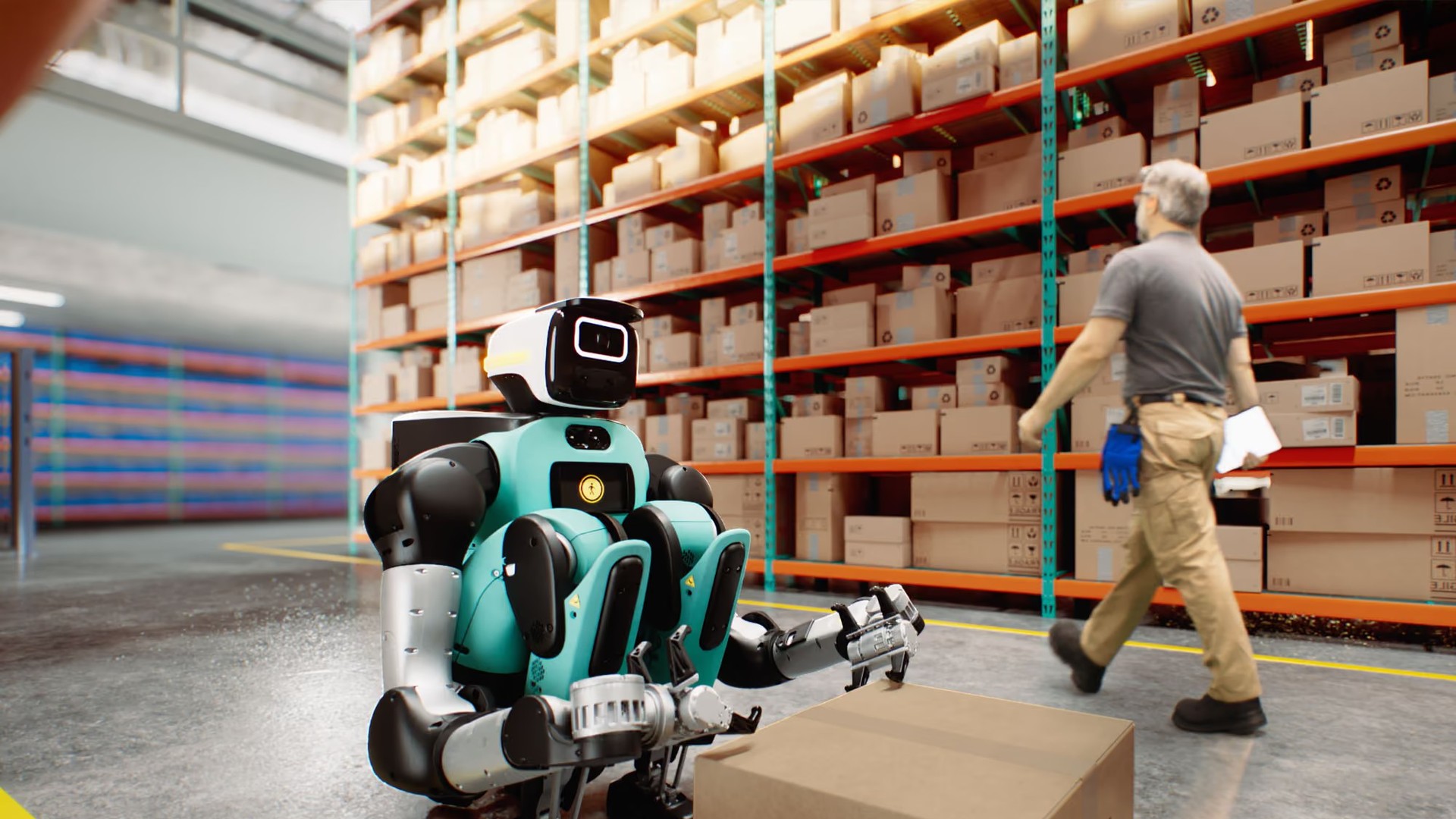




















For years, discussions around artificial intelligence have centered on capability.
Can AI write better content? Can it automate customer interactions? Can it improve productivity, detect fraud, analyze data, and support better decisions?
Today, those questions are becoming less relevant. AI is already doing these things.
The more important question is whether people trust it.
According to a 2025 global study by KPMG and the University of Melbourne, 66% of people now use AI regularly, and 83% believe it will deliver significant benefits. Yet only 46% are willing to trust AI systems.
The gap between adoption and trust is becoming increasingly difficult to ignore.
While much of the industry remains focused on what AI can do, the real challenge facing businesses, governments and society is how we build trust in systems that are becoming increasingly embedded in our everyday lives.
Because whether we actively choose to use AI or not, AI is increasingly choosing us.
We Are Not Adopting AI. AI is Adopting Us.
Historically, new technologies were something individuals consciously chose to adopt. We chose to buy smartphones. We chose to use social media. We chose to move our banking online. AI is different.
Increasingly, AI is becoming embedded within products, services, platforms and decision-making processes without users necessarily making an active choice. Today, AI already operates behind many everyday tools, from navigation and personalized recommendations to email filters and virtual assistants.
The recommendations we receive, the content we consume, the customer service interactions we have, the products we are offered, and even the information we see online are increasingly influenced by AI.
For many people, AI became part of daily life long before they fully understood what it was or how it worked.
This creates an uncomfortable reality.
People are being asked to trust systems they did not actively choose, do not fully understand, and often have little visibility into.
Understanding Isn’t the Real Problem
Conventional wisdom suggests that public concerns around AI stem from a lack of understanding.
If people knew more about the technology, they would trust it more. The reality is more complex. Most people do not understand how modern aircraft work, yet they trust them.
Few people understand the mathematics behind online banking encryption, yet they trust their money to digital platforms every day.
Trust does not come from technical understanding alone.
Trust comes from transparency, consistency, accountability, and confidence that systems are operating in our best interests.
Research highlighted by the World Economic Forum suggests that people who are less enthusiastic about AI may feel more positive about it when they better understand its personal and societal benefits. However, awareness alone cannot overcome concerns about how systems are governed and whose interests they serve.
This is where many AI discussions miss the mark. The challenge is not simply that people lack knowledge. The challenge is that many people are unsure whose interests AI ultimately serves.
The Emerging Trust Gap
As AI adoption accelerates, a trust gap is beginning to emerge.
Reuters’ reporting on the KPMG and University of Melbourne study found that while two-thirds of people now use AI regularly, 58% still view AI as untrustworthy. The research revealed a growing divide between technological capability and public confidence.
People worry about bias, misinformation, privacy, job displacement, manipulation, and loss of control. Not because they reject innovation, but because trust has not kept pace with adoption.
When trust is absent, resistance grows. And when resistance grows, meaningful adoption becomes significantly harder.
Why Trust Must Be Designed, Not Assumed
Trust cannot be treated as a by-product of innovation. It must be intentionally designed into AI systems from the beginning.
The 2025 Edelman Trust Barometer’s technology-sector report describes AI as a ‘trust inflection point’, arguing that the path forward depends on demonstrating value and responsibility while bringing society along on the journey.
This requires clear governance frameworks, transparent decision-making processes, strong security controls and meaningful accountability. These principles are also reflected in the US National Institute of Standards and Technology’s AI Risk Management Framework, which provides organizations with a structured approach to managing risks and promoting the trustworthy and responsible use of AI.
Most importantly, organizations must communicate openly about where AI is being used, what decisions it influences, and where human oversight remains essential.
Trust is not built through marketing campaigns. It is built through responsible implementation and consistent behavior over time.
Human Oversight Still Matters
One of the biggest misconceptions surrounding AI is that the end goal is complete automation.
The most successful AI deployments are often those that combine machine intelligence with human judgement.
Humans provide context.
Humans understand nuance.
Humans recognize ethical considerations that may not exist within a dataset.
AI can process information at extraordinary speed, but trust is still fundamentally human.
From a security and governance perspective, the European Union’s regulatory framework for AI includes human oversight among the requirements for certain high-risk AI systems.
When customers, employees and regulators know that important decisions remain subject to human judgement, accountability becomes clearer and confidence increases.
This is why organizations should focus less on replacing people and more on augmenting them.
The future is no AI versus humans.
The future is AI guided by humans.
Building a Future.
Credit: Source link