


For many, there’s a clear winner in this battle of the artificial minds.
ChatGPT was probably most people’s first encounter with an LLM, considering how many users it picked up shortly after its launch in 2022. It also enjoyed the privileged position of having no real competition until Anthropic released Claude a few months later in March 2023. Since then, both companies have constantly improved their models and added new features. But because there’s an overlap in features — both platforms have a coding mode and a dedicated workspace mode — it can be difficult to decide which tool is best for you.
Also, there’s little difference between the two during everyday usage: You can use either of them to code, answer a quick query, summarize documents, organize your files, and, if you’re feeling particularly blasphemous, write thought leadership pieces in the style of Herman Melville.
However, anything beyond that, and you’ll need to start thinking about which LLM fits your use case better.
Is Claude more accurate than ChatGPT?
Measuring accuracy in LLMs can be tricky, as there’s no straight answer. The specific model you’re using and the prompt you feed into it play an important role in the quality of the output.
When it comes to flagship models — Claude Fable 5 (Max) and GPT 5.6 Sol (Max) — Claude is marginally more accurate according to the AA-Omniscience Accuracy benchmark. The scores stand at 61 percent and 59 percent, respectively. Because the difference is so marginal, you’ll rarely notice it in day-to-day usage.
But, unless you’re tokenmaxxing, you’ll be using mid-tier models for most tasks. On Claude, this is Sonnet 5, and on ChatGPT, 5.6 Terra. Here, the scales are tipped in ChatGPT’s favor: ChatGPT 5.6 Terra (Max) scores 46 percent, whereas Claude Sonnet 5 (Max) is significantly lower at 38 percent.
Another important factor when measuring accuracy is the tendency of the model to hallucinate. Ideally, if an LLM doesn’t know the answer to something, it should flat out refuse to answer it instead of making stuff up, i.e., hallucinating. The benchmark for this is AA-Omniscience Hallucination Rate, in which Claude has a significant leg up against ChatGPT. A lower score is better in this benchmark, and Claude’s Fable 5 model scores 55 percent compared to ChatGPT 5.6 Sol’s score of 89 percent. The difference is even more stark in the mid-tier models: Claude Sonnet 5 scores 37 percent, whereas ChatGPT 5.6 Terra scores 85 percent.
What can Claude do that ChatGPT cannot?

There’s a difference in what people use Claude and ChatGPT for. According to the Anthropic Economic Index report from March 2026, 42 percent of Claude conversations revolved around personal usage and 45 percent were related to work (the remainder was coursework). A similar report by OpenAI states that 70 percent of ChatGPT usage is non-work-related.
Claude Cowork, which came out in January 2026, can perform knowledge-based tasks on your behalf: I mostly use it to organize my files. You can also create instruction bundles called skills that can be invoked mid-conversation using the forward slash (/). Additionally, Claude Artifacts can instantly render code snippets, single-page HTML websites, interactive React components and diagrams. You can share and publish Artifacts on the web too.
ChatGPT supports skills too, but the implementation differs from Claude’s. For example, ChatGPT skills can only be used by individual users in Codex and the API, not regular chats. Claude’s skills can be used across chat, Claude Cowork and Claude Code. ChatGPT’s Artifacts equivalent, Sites, is targeted towards businesses for internal use and is only available in Codex. Additionally, ChatGPT Sites can’t pull live data, unlike Claude Artifacts, which can do so using connected apps and Model Context Protocol (MCP) connectors.
There are some features that are better implemented in ChatGPT. Most notably, the voice feature: ChatGPT sounds more natural, and you can interrupt it and talk over it without it losing track of what it was saying earlier. For real-time assistance, you can use the live video feature while in Advanced voice mode and point it at the issue you’re facing. ChatGPT also has an image generation feature that can create photorealistic images, whereas Claude can only build diagrams, charts and interactive visuals using HTML and SVG.
Is ChatGPT getting worse in 2026?
ChatGPT’s new models score better than previous ones on almost all AA-Omniscience benchmarks, yet the overall experience of using the app seems to be getting worse. If you feel this way, you’re not wrong, because there are areas where the previous models performed better than the latest ones.
One such area is hallucinations: The same AA-Omniscience Hallucination Rate benchmark I mentioned earlier states that GPT-4o has a hallucination rate of 38 percent compared to GPT-5.6 Sol’s 89 percent. OpenAI also introduced safeguards to align with the industry’s maturation. Tone shifts, for example, may seem jarringly different with each update.
Additionally, OpenAI began showing ads in the free and ChatGPT Go tiers of the app while Anthropic improved Claude’s free tier by adding more features and skipping ads. Considering the company loses money even on paying customers, and OpenAI CEO Sam Altman once called ads a “Last Resort,” it’s a reasonable assumption that the ChatGPT experience may get even worse for free tier users.
There’s another reason why users left ChatGPT and Claude saw a simultaneous surge in downloads in recent months. Back in February 2026, Anthropic’s deal with the US Department of War fell through, and the company was designated a supply chain risk because it refused to let its models be used for mass domestic surveillance and fully autonomous weapons. Hours later, OpenAI announced that it had signed a similar deal with the US government in place of Anthropic, with certain safeguards in place. This decision caused many people to switch over to Claude because Anthropic was perceived as the more “ethical” AI company.
ChatGPT and Claude are priced similarly

Both Claude and ChatGPT’s free plans only offer you access to their mid-tier models: Sonnet 5 for Claude and GPT-5.5 for ChatGPT. The difference is that there are ads in ChatGPT.
Claude’s paid plans include the $20/month ($17/month if billed annually) Pro plan, the $100/month Max 5x plan (five times the usage limits of Pro) and the $200/month Max 20x plan (20 times the usage limits of Pro). The paid plans let you access the flagship models and Claude Code as well. However, Pro users have token-based billing for Fable 5, while users on the Max 5x or Max 20x plan can use 50 percent of their weekly usage limits on Fable 5. If you hit the limit, you can always purchase more usage credits.
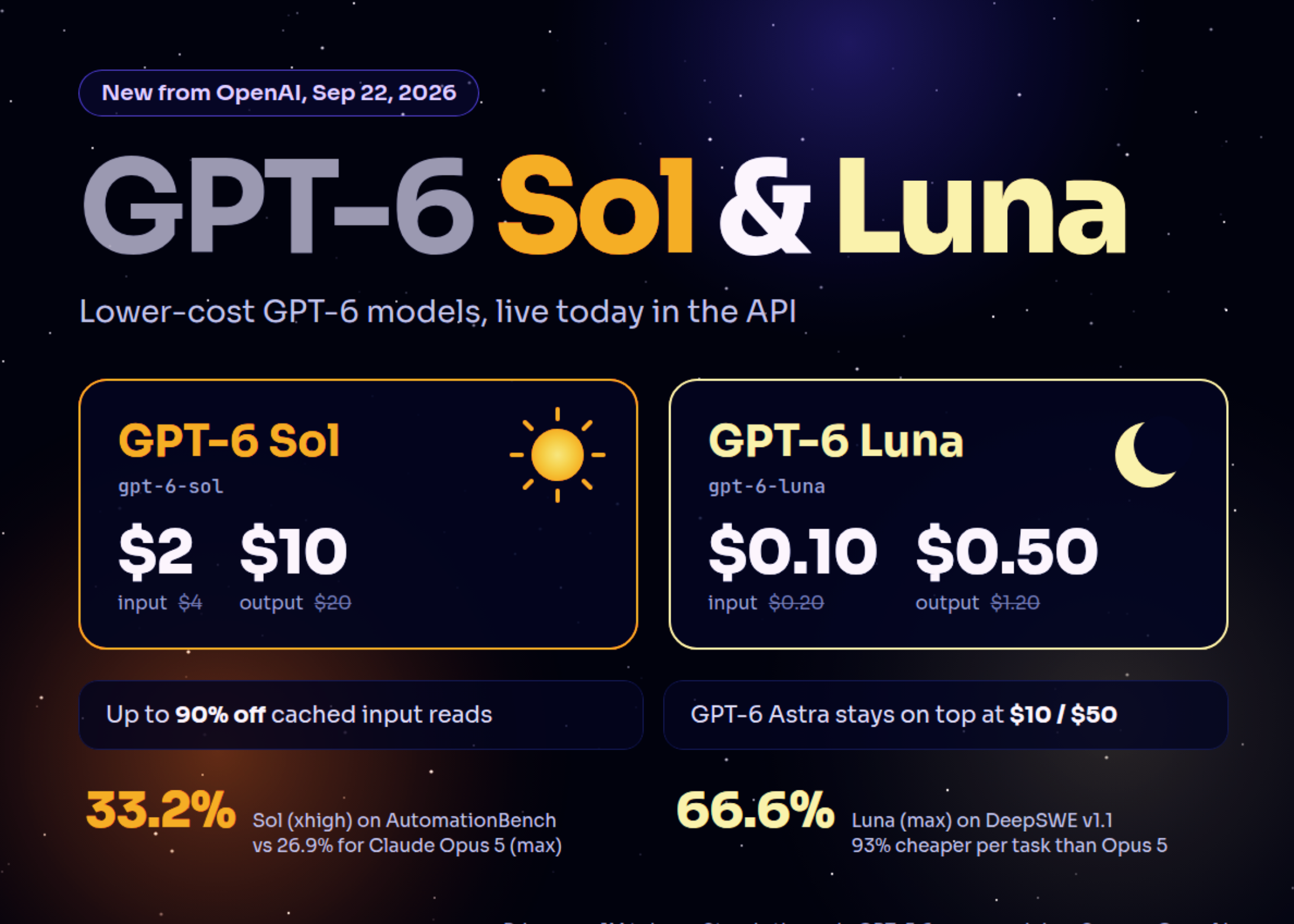
ChatGPT’s pricing is similar. There are $20/month, $100/month and $200/month plans that offer an increase in usage limits and access to flagship models. Access to Codex is free, but the low usage limits practically cancel it out. However, unlike Claude, ChatGPT has an $8/month plan that offers increased usage limits but still shows ads.
Credit: Source link