














It’s down to subscriptions, data and new AI-driven infotainment systems.
Since 2015, consumers and automakers have had a handshake agreement: we’ll buy their cars if they let us connect our smartphones to Android Auto or Apple CarPlay. For ten years or so, it has worked like a charm. We get seamless access to our music, maps and communication, while carmakers offload key infotainment system technology to Google or Apple.
Recently, though, that equation has changed. One of the world’s biggest automakers, General Motors, announced it was dropping Android Auto from its EVs, and plans to pull it from all of its vehicles in the near future. In its place, GM will offer its own conversational-based system that will employ Google’s Gemini AI.
Other manufacturers have never offered Android Auto to begin with, particularly Rivian and Tesla. And while the vast majority of 2026 car models still offer the tech, that could change soon for several reasons — and you may not like any of them.
How Android Auto came to dominate your dash

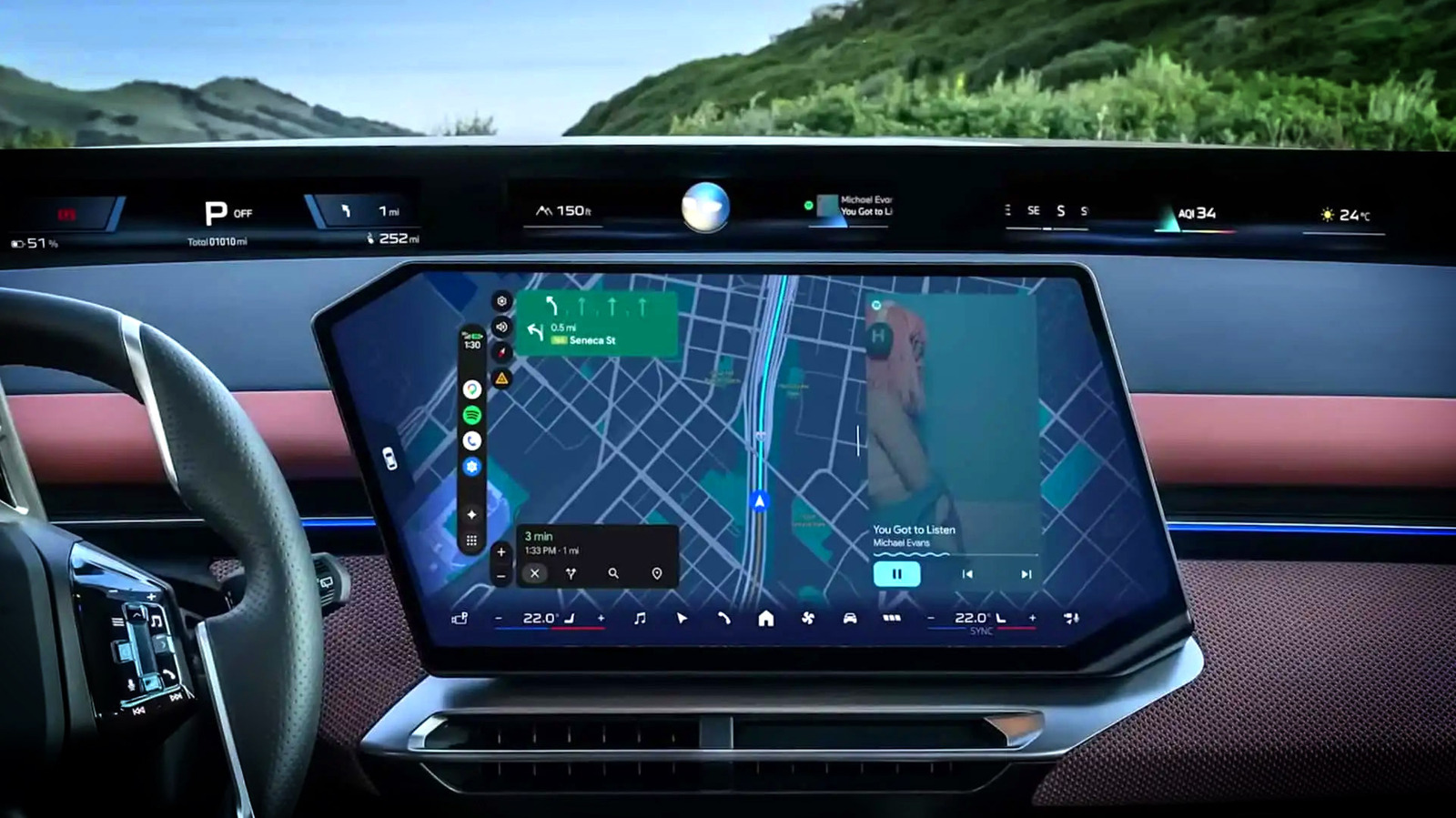
To understand how Android Auto came to dominate the dashboards of cars, a short history lesson is in order. Android Auto started out, much like CarPlay, as a simple projection system, letting you connect your phone and car via USB to get a driving-friendly version on the infotainment screen. Manufacturer adoption was not immediate. Toyota and Ford tried to create their own system and BMW even tried to charge users $80 a year for CarPlay (while not supporting Android Auto at all until 2020).
Car buyers wanted none of that. Rather, they loved the idea of plugging in their phones and having all their tunes, contacts and addresses available with no hassle or cost. Gradually, automakers began offering it as an option alongside their own in-house infotainment systems. Google made that as easy as possible by not charging for integration.
Google made a new play in 2017 with Android Automotive OS (AAOS), which debuted with the Polestar 2 in 2020. That supports Android Auto, but also provides an Android-based vehicle operating system that doesn’t require your phone’s processing power. This came at a good time, as traditional car manufacturers like Volkswagen discovered that developing an in-car OS wasn’t like building a transaxle. Many gave up and adopted AAOS for some or all of their models, starting with Volvo and a couple of Stellantis and GM brands.
Carmakers want your data

In exchange for the extra convenience, Google helps itself to a lot of the data you generate while driving. On top of the usual info collected, it also grabs GPS and mapping data it can use to help advertisers target you. Since we use our cars to go places and buy stuff, this info is obviously valuable.
None of this data goes to car manufacturers, though. Most aren’t looking to sell that data to advertisers — in fact, GM is actually forbidden for doing so after breaking California’s privacy laws and paying a $12.75 million fine. Rather, some like Rivian and GM say it deprives them of valuable data they could use to improve their vehicles and retain customers.
For instance, GM has claimed that it needs sat nav data to improve the EV charging experience. “With Android Auto or Apple CarPlay environments, the vehicle energy model or road segment data is sending energy usage and everything else associated with it to the phone, and it’s pretty difficult to off-board it from the phone,” GM’s infotainment manager told GM Authority in 2023. The company said its own system will allow for intelligent EV routing that takes into account charge state, range and charging station availability, plus integration with its Super Cruise driver assistant.
Since it will still use Google’s AAOS, GM claims that it will work like your phone for things like calls and streaming from contacts and apps. You’ll also be able to use built-in assistants like Siri and Google assistant using Bluetooth pass-through. All that will happen more smoothly as well, the company says, thanks to the responsive built-in hardware.
GM adds that its own infotainment system will deliver features “that go beyond what’s possible with just phone projection,” it told MotorTrend. It cited Dolby Atmos on Amazon Music as an example of that, calling that experience “impossible” with simple phone projection.
Rivian and Tesla are two companies that never adopted Android Auto in the first place, with both saying they want more control over the driver experience. Rivian, whose operating system is built on top of AAOS, also believes that phone mirroring systems aren’t necessary, given what’s possible with AI these days. “The possibilities now for such deep AI integration in the car make the entire CarPlay debate completely obsolete,” the company told The Verge last month.
Potential consumer blowback
There are caveats, though. GM has also acknowledged that there are “subscription revenue opportunities” available with by using its own infotainment systems. That’s what got BMW into trouble in the past, when it wanted to charge $18 per month for heated seats in select regions.
Built-in apps require the vehicle to have an active cellular connection, too, since your phone is no longer being used. Though GM’s latest vehicles ship with eight years of OnStar connected services, it’s not clear what will happen after that. Rivian offers its own premium data service, Rivian Connect+ that costs $150 per year. Tesla, which also eschews Android Auto in favor of its own system, also charges $150 per year for its Connect+ premium cellular data service. Then again, even manufacturers like Kia that fully support Android Auto end up putting features like remote locking behind trial subscriptions that eventually need to be paid for.
Car shoppers may prove to be the biggest hurdle. GM’s announcement that it’s eliminating Android Auto from its vehicles created blowback, with many of Engadget’s readers for instance saying they wouldn’t buy cars that don’t have it. There’s also a groundswell movement against subscription services of all kinds these days, and having to pay one in your car has chafed a lot of people.
Fortunately, Android Auto and CarPlay are still available in most vehicles. Traditional automakers have also shown that they’re uniquely bad at creating their own infotainment systems. So despite Android Auto disappearing from a few brands, plenty of others will continue to support the system, and it should keep on getting better and smarter.
Credit: Source link