















• bitcoinBitcoin(BTC)$83,083.00-1.78%
  • ethereumEthereum(ETH)$2,647.31-2.28%
  • tetherTether(USDT)$1.000.00%
  • binancecoinBNB(BNB)$762.80-1.48%
  • rippleXRP(XRP)$1.48-2.85%
  • usd-coinUSDC(USDC)$1.000.00%
  • solanaSolana(SOL)$118.76-2.26%
  • tronTRON(TRX)$0.3334760.07%
  • zcashZcash(ZEC)$1,545.32-6.93%
  • Figure HelocFigure Heloc(FIGR_HELOC)$1.06-0.38%
  • HyperliquidHyperliquid(HYPE)$88.72-4.73%
  • dogecoinDogecoin(DOGE)$0.093004-4.06%
  • chainlinkChainlink(LINK)$13.79-3.12%
  • moneroMonero(XMR)$533.07-4.64%
  • whitebitWhiteBIT Coin(WBT)$82.91-1.79%
  • USDSUSDS(USDS)$1.00-0.01%
  • cardanoCardano(ADA)$0.245744-3.90%
  • RainRain(RAIN)$0.012533-1.41%
  • leo-tokenLEO Token(LEO)$9.080.37%
  • stellarStellar(XLM)$0.208877-3.60%
  • nearNEAR Protocol(NEAR)$5.14-5.34%
  • bitcoin-cashBitcoin Cash(BCH)$308.56-9.58%
  • uniswapUniswap(UNI)$9.14-7.88%
  • litecoinLitecoin(LTC)$70.77-1.95%
  • CantonCanton(CC)$0.1374441.66%
  • avalanche-2Avalanche(AVAX)$10.57-3.22%
  • Ethena USDeEthena USDe(USDE)$1.000.01%
  • suiSui(SUI)$1.20-0.50%
  • daiDai(DAI)$1.000.01%
  • the-open-networkGram (prev. Toncoin)(GRAM)$1.600.52%
  • USD1USD1(USD1)$1.000.01%
  • hedera-hashgraphHedera(HBAR)$0.0962472.13%
  • quant-networkQuant(QNT)$270.6550.77%
  • BitwayBitway(BTW)$1.3427.25%
  • BittensorBittensor(TAO)$305.49-6.36%
  • shiba-inuShiba Inu(SHIB)$0.000006-4.08%
  • Global DollarGlobal Dollar(USDG)$1.000.01%
  • crypto-com-chainCronos(CRO)$0.064497-4.15%
  • tether-goldTether Gold(XAUT)$4,177.31-2.39%
  • OndoOndo(ONDO)$0.576.62%
  • paypal-usdPayPal USD(PYUSD)$1.000.01%
  • MemeCoreMemeCore(M)$1.18-4.24%
  • EthenaEthena(ENA)$0.263757-2.55%
  • Ripple USDRipple USD(RLUSD)$1.000.01%
  • okbOKB(OKB)$117.10-3.37%
  • Circle USYCCircle USYC(USYC)$1.140.00%
  • Pump.funPump.fun(PUMP)$0.00507713.69%
  • aaveAave(AAVE)$149.07-4.52%
  • BlackRock USD Institutional Digital Liquidity FundBlackRock USD Institutional Digital Liquidity Fund(BUIDL)$1.000.00%
  • Ondo US Dollar YieldOndo US Dollar Yield(USDY)$1.15-0.05%
TradePoint.io
  • Main
  • AI & Technology
  • Stock Charts
  • Market & News
  • Business
  • Finance Tips
  • Trade Tube
  • Blog
  • Shop
No Result
View All Result
TradePoint.io
No Result
View All Result

Meet oLLM: A Lightweight Python Library that brings 100K-Context LLM Inference to 8 GB Consumer GPUs via SSD Offload—No Quantization Required

September 29, 2025
in AI & Technology
Reading Time: 5 mins read
A A
Meet oLLM: A Lightweight Python Library that brings 100K-Context LLM Inference to 8 GB Consumer GPUs via SSD Offload—No Quantization Required
ShareShareShareShareShare

oLLM is a lightweight Python library built on top of Huggingface Transformers and PyTorch and runs large-context Transformers on NVIDIA GPUs by aggressively offloading weights and KV-cache to fast local SSDs. The project targets offline, single-GPU workloads and explicitly avoids quantization, using FP16/BF16 weights with FlashAttention-2 and disk-backed KV caching to keep VRAM within 8–10 GB while handling up to ~100K tokens of context.

But What’s new?

(1) KV cache read/writes that bypass mmap to reduce host RAM usage; (2) DiskCache support for Qwen3-Next-80B; (3) Llama-3 FlashAttention-2 for stability; and (4) GPT-OSS memory reductions via “flash-attention-like” kernels and chunked MLP. The table published by the maintainer reports end-to-end memory/I/O footprints on an RTX 3060 Ti (8 GB):

YOU MAY ALSO LIKE

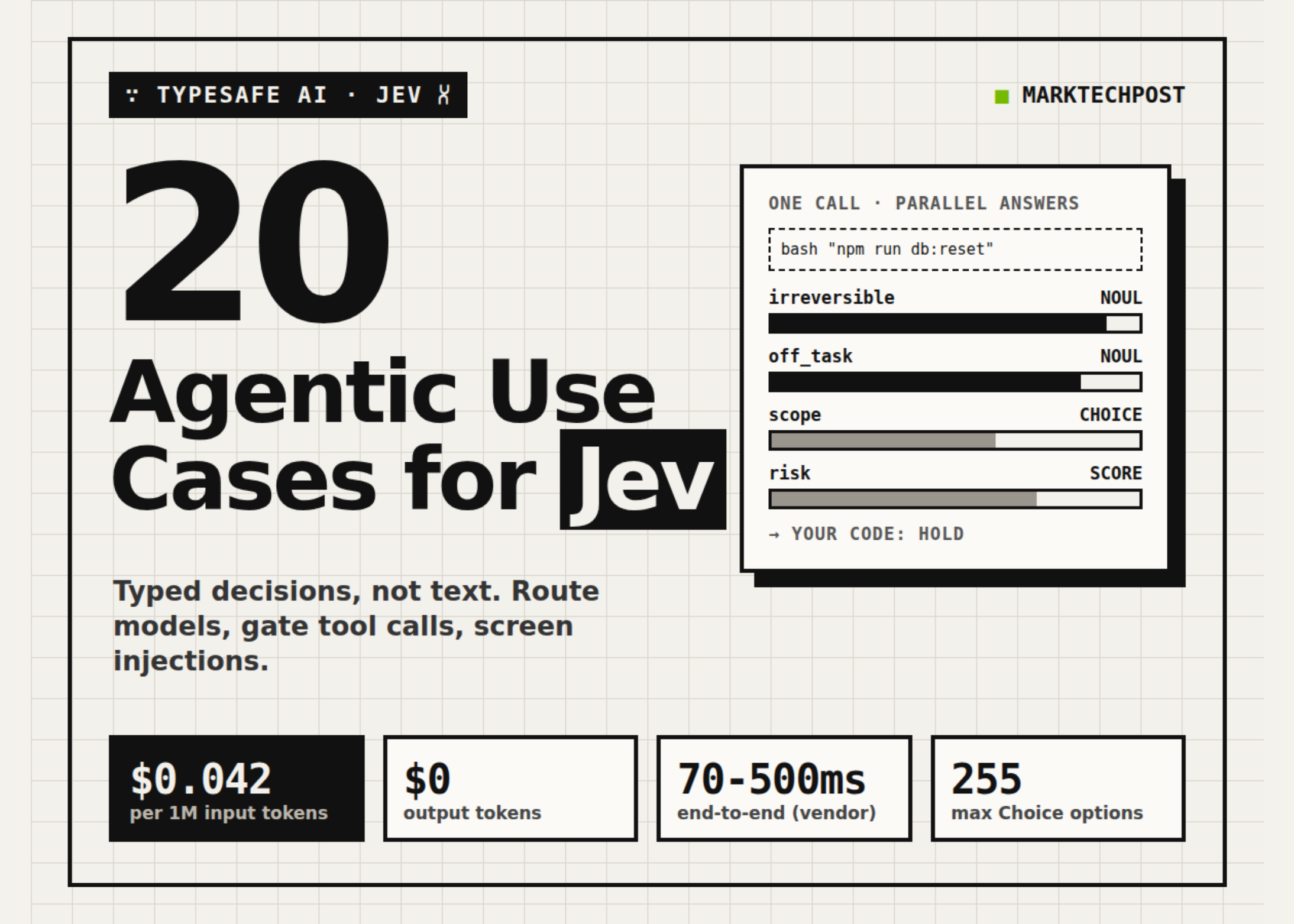
20 Agentic Use Cases of TypeSafe AI’s Jev

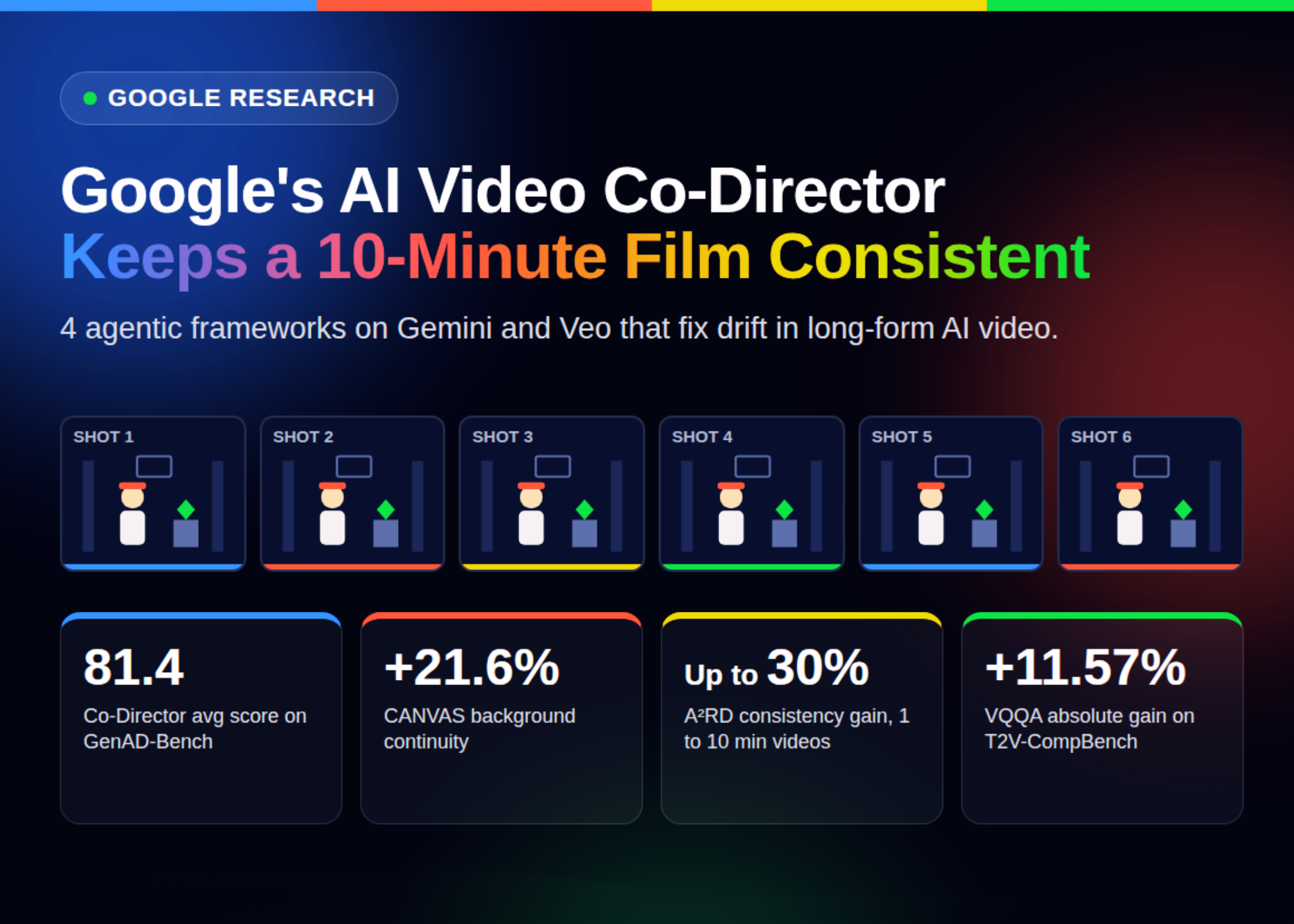
Google Research Introduces an AI Video Co-Director: 4 Agentic Frameworks for Coherent, Minutes-Long Video Generation

  • Qwen3-Next-80B (bf16, 160 GB weights, 50K ctx) → ~7.5 GB VRAM + ~180 GB SSD; noted throughput “≈ 1 tok/2 s”.
  • GPT-OSS-20B (packed bf16, 10K ctx) → ~7.3 GB VRAM + 15 GB SSD.
  • Llama-3.1-8B (fp16, 100K ctx) → ~6.6 GB VRAM + 69 GB SSD.

How it works

oLLM streams layer weights directly from SSD into the GPU, offloads the attention KV cache to SSD, and optionally offloads layers to CPU. It uses FlashAttention-2 with online softmax so the full attention matrix is never materialized, and chunks large MLP projections to bound peak memory. This shifts the bottleneck from VRAM to storage bandwidth and latency, which is why the oLLM project emphasizes NVMe-class SSDs and KvikIO/cuFile (GPUDirect Storage) for high-throughput file I/O.

Supported models and GPUs

Out of the box the examples cover Llama-3 (1B/3B/8B), GPT-OSS-20B, and Qwen3-Next-80B. The library targets NVIDIA Ampere (RTX 30xx, A-series), Ada (RTX 40xx, L4), and Hopper; Qwen3-Next requires a dev build of Transformers (≥ 4.57.0.dev). Notably, Qwen3-Next-80B is a sparse MoE (80B total, ~3B active) that vendors typically position for multi-A100/H100 deployments; oLLM’s claim is that you can execute it offline on a single consumer GPU by paying the SSD penalty and accepting low throughput. This stands in contrast to vLLM docs, which suggest multi-GPU servers for the same model family.

Installation and minimal usage

The project is MIT-licensed and available on PyPI (pip install ollm), with an additional kvikio-cu{cuda_version} dependency for high-speed disk I/O. For Qwen3-Next models, install Transformers from GitHub. A short example in the README shows Inference(...).DiskCache(...) wiring and generate(...) with a streaming text callback. (PyPI currently lists 0.4.1; the README references 0.4.2 changes.)

Performance expectations and trade-offs

  • Throughput: The maintainer reports ~0.5 tok/s for Qwen3-Next-80B at 50K context on an RTX 3060 Ti—usable for batch/offline analytics, not for interactive chat. SSD latency dominates.
  • Storage pressure: Long contexts require very large KV caches; oLLM writes these to SSD to keep VRAM flat. This mirrors broader industry work on KV offloading (e.g., NVIDIA Dynamo/NIXL and community discussions), but the approach is still storage-bound and workload-specific.
  • Hardware reality check: Running Qwen3-Next-80B “on consumer hardware” is feasible with oLLM’s disk-centric design, but typical high-throughput inference for this model still expects multi-GPU servers. Treat oLLM as an execution path for large-context, offline passes rather than a drop-in replacement for production serving stacks like vLLM/TGI.

Bottom line

oLLM pushes a clear design point: keep precision high, push memory to SSD, and make ultra-long contexts viable on a single 8 GB NVIDIA GPU. It won’t match data-center throughput, but for offline document/log analysis, compliance review, or large-context summarization, it’s a pragmatic way to execute 8B–20B models comfortably and even step up to MoE-80B if you can tolerate ~100–200 GB of fast local storage and sub-1 tok/s generation.


Check out the GITHUB REPO here. Feel free to check out our GitHub Page for Tutorials, Codes and Notebooks. Also, feel free to follow us on Twitter and don’t forget to join our 100k+ ML SubReddit and Subscribe to our Newsletter.


Asif Razzaq is the CEO of Marktechpost Media Inc.. As a visionary entrepreneur and engineer, Asif is committed to harnessing the potential of Artificial Intelligence for social good. His most recent endeavor is the launch of an Artificial Intelligence Media Platform, Marktechpost, which stands out for its in-depth coverage of machine learning and deep learning news that is both technically sound and easily understandable by a wide audience. The platform boasts of over 2 million monthly views, illustrating its popularity among audiences.

🔥[Recommended Read] NVIDIA AI Open-Sources ViPE (Video Pose Engine): A Powerful and Versatile 3D Video Annotation Tool for Spatial AI

Credit: Source link

ShareTweetSendSharePin

Related Posts

20 Agentic Use Cases of TypeSafe AI’s Jev
AI & Technology

20 Agentic Use Cases of TypeSafe AI’s Jev

September 28, 2026
Google Research Introduces an AI Video Co-Director: 4 Agentic Frameworks for Coherent, Minutes-Long Video Generation
AI & Technology

Google Research Introduces an AI Video Co-Director: 4 Agentic Frameworks for Coherent, Minutes-Long Video Generation

September 28, 2026
Which Is Better To Use?
AI & Technology

Which Is Better To Use?

September 28, 2026
Are 3D Printers Worth Buying In 2026?
AI & Technology

Are 3D Printers Worth Buying In 2026?

September 28, 2026
Next Post
3 Undervalued Stocks With Strong Balance Sheets To Buy On The Dip

3 Undervalued Stocks With Strong Balance Sheets To Buy On The Dip

Leave a Reply Cancel reply

Your email address will not be published. Required fields are marked *

Search

No Result
View All Result
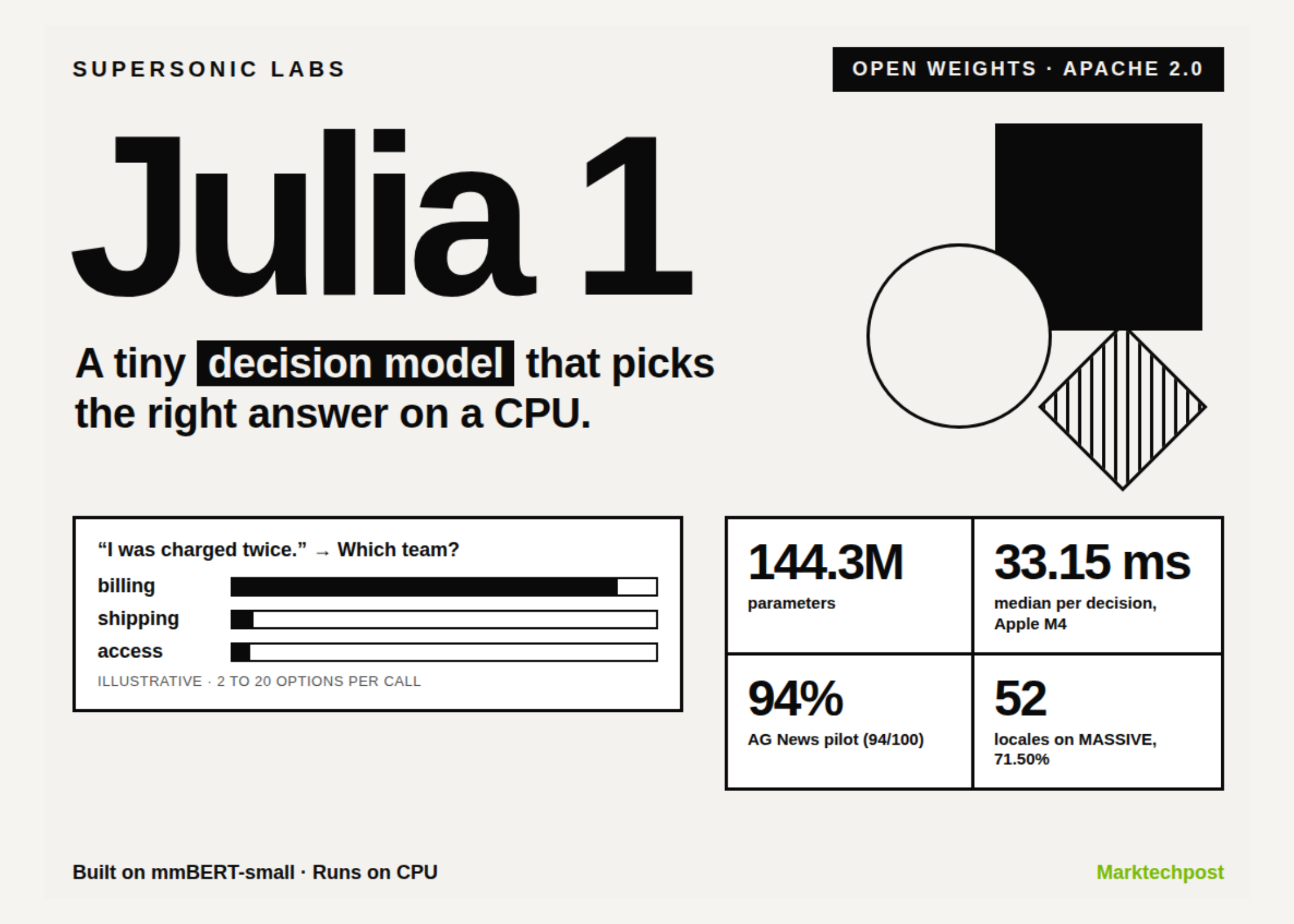
Supersonic Labs Releases Julia 1: A 144.3M-Parameter Open Decision Model That Runs on a CPU

Supersonic Labs Releases Julia 1: A 144.3M-Parameter Open Decision Model That Runs on a CPU

September 26, 2026
Chaplain Cavanaugh recalls conversations with Lindsay Clancy

Chaplain Cavanaugh recalls conversations with Lindsay Clancy

September 26, 2026
I hired a stylist to makeover my minimalist wardrobe

I hired a stylist to makeover my minimalist wardrobe

September 27, 2026

About

Learn more

Our Services

Legal

Privacy Policy

Terms of Use

Bloggers

Learn more

Article Links

Contact

Advertise

Ask us anything

©2020- TradePoint.io - All rights reserved!

Tradepoint.io, being just a publishing and technology platform, is not a registered broker-dealer or investment adviser. So we do not provide investment advice. Rather, brokerage services are provided to clients of Tradepoint.io by independent SEC-registered broker-dealers and members of FINRA/SIPC. Every form of investing carries some risk and past performance is not a guarantee of future results. “Tradepoint.io“, “Instant Investing” and “My Trading Tools” are registered trademarks of Apperbuild, LLC.

This website is operated by Apperbuild, LLC. We have no link to any brokerage firm and we do not provide investment advice. Every information and resource we provide is solely for the education of our readers. © 2020 Apperbuild, LLC. All rights reserved.

No Result
View All Result
  • Main
  • AI & Technology
  • Stock Charts
  • Market & News
  • Business
  • Finance Tips
  • Trade Tube
  • Blog
  • Shop

© 2023 - TradePoint.io - All Rights Reserved!