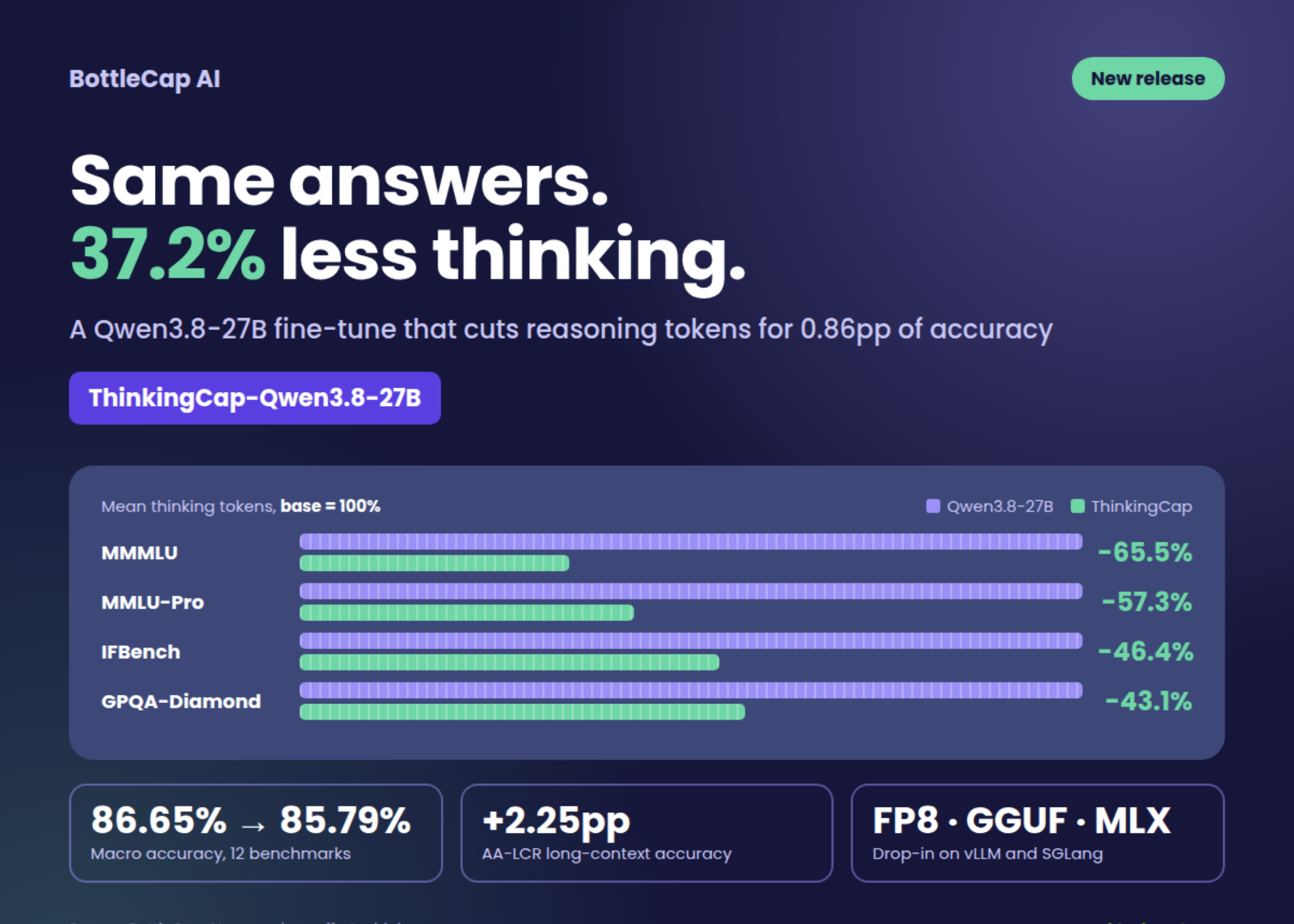











Large language models (LLMs) have evolved significantly. What started as simple text generation and translation tools are now being used in research, decision-making, and complex problem-solving. A key factor in this shift is the growing ability of LLMs to think more systematically by breaking down problems, evaluating multiple possibilities, and refining their responses dynamically. Rather than merely predicting the next word in a sequence, these models can now perform structured reasoning, making them more effective at handling complex tasks. Leading models like OpenAI’s O3, Google’s Gemini, and DeepSeek’s R1 integrate these capabilities to enhance their ability to process and analyze information more effectively.
Understanding Simulated Thinking
Humans naturally analyze different options before making decisions. Whether planning a vacation or solving a problem, we often simulate different plans in our mind to evaluate multiple factors, weigh pros and cons, and adjust our choices accordingly. Researchers are integrating this ability to LLMs to enhance their reasoning capabilities. Here, simulated thinking essentially refers to LLMs’ ability to perform systematic reasoning before generating an answer. This is in contrast to simply retrieving a response from stored data. A helpful analogy is solving a math problem:
- A basic AI might recognize a pattern and quickly generate an answer without verifying it.
- An AI using simulated reasoning would work through the steps, check for mistakes, and confirm its logic before responding.
Chain-of-Thought: Teaching AI to Think in Steps
If LLMs have to execute simulated thinking like humans, they must be able to break down complex problems into smaller, sequential steps. This is where the Chain-of-Thought (CoT) technique plays a crucial role.
CoT is a prompting approach that guides LLMs to work through problems methodically. Instead of jumping to conclusions, this structured reasoning process enables LLMs to divide complex problems into simpler, manageable steps and solve them step-by-step.
For example, when solving a word problem in math:
- A basic AI might attempt to match the problem to a previously seen example and provide an answer.
- An AI using Chain-of-Thought reasoning would outline each step, logically working through calculations before arriving at a final solution.
This approach is efficient in areas requiring logical deduction, multi-step problem-solving, and contextual understanding. While earlier models required human-provided reasoning chains, advanced LLMs like OpenAI’s O3 and DeepSeek’s R1 can learn and apply CoT reasoning adaptively.
How Leading LLMs Implement Simulated Thinking
Different LLMs are employing simulated thinking in different ways. Below is an overview of how OpenAI’s O3, Google DeepMind’s models, and DeepSeek-R1 execute simulated thinking, along with their respective strengths and limitations.
OpenAI O3: Thinking Ahead Like a Chess Player
While exact details about OpenAI’s O3 model remain undisclosed, researchers believe it uses a technique similar to Monte Carlo Tree Search (MCTS), a strategy used in AI-driven games like AlphaGo. Like a chess player analyzing multiple moves before deciding, O3 explores different solutions, evaluates their quality, and selects the most promising one.
Unlike earlier models that rely on pattern recognition, O3 actively generates and refines reasoning paths using CoT techniques. During inference, it performs additional computational steps to construct multiple reasoning chains. These are then assessed by an evaluator model—likely a reward model trained to ensure logical coherence and correctness. The final response is selected based on a scoring mechanism to provide a well-reasoned output.
O3 follows a structured multi-step process. Initially, it is fine-tuned on a vast dataset of human reasoning chains, internalizing logical thinking patterns. At inference time, it generates multiple solutions for a given problem, ranks them based on correctness and coherence, and refines the best one if needed. While this method allows O3 to self-correct before responding and improve accuracy, the tradeoff is computational cost—exploring multiple possibilities requires significant processing power, making it slower and more resource-intensive. Nevertheless, O3 excels in dynamic analysis and problem-solving, positioning it among today’s most advanced AI models.
Google DeepMind: Refining Answers Like an Editor
DeepMind has developed a new approach called “mind evolution,” which treats reasoning as an iterative refinement process. Instead of analyzing multiple future scenarios, this model acts more like an editor refining various drafts of an essay. The model generates several possible answers, evaluates their quality, and refines the best one.
Inspired by genetic algorithms, this process ensures high-quality responses through iteration. It is particularly effective for structured tasks like logic puzzles and programming challenges, where clear criteria determine the best answer.
However, this method has limitations. Since it relies on an external scoring system to assess response quality, it may struggle with abstract reasoning with no clear right or wrong answer. Unlike O3, which dynamically reasons in real-time, DeepMind’s model focuses on refining existing answers, making it less flexible for open-ended questions.
DeepSeek-R1: Learning to Reason Like a Student
DeepSeek-R1 employs a reinforcement learning-based approach that allows it to develop reasoning capabilities over time rather than evaluating multiple responses in real time. Instead of relying on pre-generated reasoning data, DeepSeek-R1 learns by solving problems, receiving feedback, and improving iteratively—similar to how students refine their problem-solving skills through practice.
The model follows a structured reinforcement learning loop. It starts with a base model, such as DeepSeek-V3, and is prompted to solve mathematical problems step by step. Each answer is verified through direct code execution, bypassing the need for an additional model to validate correctness. If the solution is correct, the model is rewarded; if it is incorrect, it is penalized. This process is repeated extensively, allowing DeepSeek-R1 to refine its logical reasoning skills and prioritize more complex problems over time.
A key advantage of this approach is efficiency. Unlike O3, which performs extensive reasoning at inference time, DeepSeek-R1 embeds reasoning capabilities during training, making it faster and more cost-effective. It is highly scalable since it does not require a massive labeled dataset or an expensive verification model.
However, this reinforcement learning-based approach has tradeoffs. Because it relies on tasks with verifiable outcomes, it excels in mathematics and coding. Still, it may struggle with abstract reasoning in law, ethics, or creative problem-solving. While mathematical reasoning may transfer to other domains, its broader applicability remains uncertain.
Table: Comparison between OpenAI’s O3, DeepMind’s Mind Evolution and DeepSeek’s R1
The Future of AI Reasoning
Simulated reasoning is a significant step toward making AI more reliable and intelligent. As these models evolve, the focus will shift from simply generating text to developing robust problem-solving abilities that closely resemble human thinking. Future advancements will likely focus on making AI models capable of identifying and correcting errors, integrating them with external tools to verify responses, and recognizing uncertainty when faced with ambiguous information. However, a key challenge is balancing reasoning depth with computational efficiency. The ultimate goal is to develop AI systems that thoughtfully consider their responses, ensuring accuracy and reliability, much like a human expert carefully evaluating each decision before taking action.
Credit: Source link



![Support & Resistance Strategy For Beginners [2025]](https://i.ytimg.com/vi/Ogj1tFEXDQ8/maxresdefault.jpg "Support & Resistance Strategy For Beginners [2025]")