





• bitcoinBitcoin(BTC)$84,888.001.20%
  • ethereumEthereum(ETH)$2,707.550.91%
  • tetherTether(USDT)$1.000.00%
  • binancecoinBNB(BNB)$779.530.99%
  • rippleXRP(XRP)$1.53-0.53%
  • usd-coinUSDC(USDC)$1.000.00%
  • solanaSolana(SOL)$122.962.14%
  • tronTRON(TRX)$0.333939-0.76%
  • zcashZcash(ZEC)$1,649.887.25%
  • Figure HelocFigure Heloc(FIGR_HELOC)$1.063.09%
  • HyperliquidHyperliquid(HYPE)$92.390.55%
  • dogecoinDogecoin(DOGE)$0.0975020.60%
  • chainlinkChainlink(LINK)$14.19-0.17%
  • moneroMonero(XMR)$549.040.23%
  • whitebitWhiteBIT Coin(WBT)$84.661.08%
  • USDSUSDS(USDS)$1.000.00%
  • cardanoCardano(ADA)$0.2556180.57%
  • RainRain(RAIN)$0.0126752.57%
  • leo-tokenLEO Token(LEO)$9.020.68%
  • stellarStellar(XLM)$0.215823-0.55%
  • bitcoin-cashBitcoin Cash(BCH)$336.321.01%
  • nearNEAR Protocol(NEAR)$5.157.44%
  • uniswapUniswap(UNI)$9.852.71%
  • litecoinLitecoin(LTC)$71.05-1.75%
  • CantonCanton(CC)$0.135361-3.33%
  • suiSui(SUI)$1.257.15%
  • Ethena USDeEthena USDe(USDE)$1.000.02%
  • avalanche-2Avalanche(AVAX)$10.891.48%
  • daiDai(DAI)$1.000.01%
  • the-open-networkGram (prev. Toncoin)(GRAM)$1.609.19%
  • USD1USD1(USD1)$1.000.00%
  • hedera-hashgraphHedera(HBAR)$0.0938370.56%
  • BittensorBittensor(TAO)$328.490.84%
  • shiba-inuShiba Inu(SHIB)$0.0000061.11%
  • crypto-com-chainCronos(CRO)$0.0680064.55%
  • Global DollarGlobal Dollar(USDG)$1.00-0.01%
  • BitwayBitway(BTW)$1.1624.47%
  • paypal-usdPayPal USD(PYUSD)$1.000.00%
  • EthenaEthena(ENA)$0.272574-2.14%
  • MemeCoreMemeCore(M)$1.19-1.47%
  • tether-goldTether Gold(XAUT)$4,279.02-0.02%
  • OndoOndo(ONDO)$0.54-0.06%
  • okbOKB(OKB)$121.700.74%
  • Ripple USDRipple USD(RLUSD)$1.000.00%
  • Circle USYCCircle USYC(USYC)$1.140.00%
  • aaveAave(AAVE)$154.500.09%
  • quant-networkQuant(QNT)$162.0455.58%
  • BlackRock USD Institutional Digital Liquidity FundBlackRock USD Institutional Digital Liquidity Fund(BUIDL)$1.000.00%
  • Ondo US Dollar YieldOndo US Dollar Yield(USDY)$1.14-0.05%
  • mantleMantle(MNT)$0.68-2.55%
TradePoint.io
  • Main
  • AI & Technology
  • Stock Charts
  • Market & News
  • Business
  • Finance Tips
  • Trade Tube
  • Blog
  • Shop
No Result
View All Result
TradePoint.io
No Result
View All Result

Revolutionizing LLM Alignment: A Deep Dive into Direct Q-Function Optimization

December 31, 2024
in AI & Technology
Reading Time: 7 mins read
A A
Revolutionizing LLM Alignment: A Deep Dive into Direct Q-Function Optimization
ShareShareShareShareShare

Aligning large language models (LLMs) with human preferences is an essential task in artificial intelligence research. However, current reinforcement learning (RL) methods face notable challenges. Proximal Policy Optimization (PPO) and similar techniques often demand extensive online sampling, which can lead to high computational costs and instability. Offline RL methods like Direct Preference Optimization (DPO) avoid these issues but face difficulties with tasks requiring multi-step reasoning, such as solving mathematical problems or generating complex code. These methods frequently treat the generation process as a single-step problem, neglecting the long-horizon dependencies intrinsic to many reasoning tasks. Additionally, sparse reward functions, which provide feedback only at the conclusion of a reasoning sequence, make intermediate step guidance challenging.

Researchers from ByteDance and UCLA have introduced Direct Q-function Optimization (DQO) to address these challenges. DQO frames the response generation process as a Markov Decision Process (MDP) and utilizes the Soft Actor-Critic (SAC) framework. By parameterizing the Q-function directly through the language model, DQO shifts the LLM alignment problem into a structured, step-by-step learning process. Unlike bandit-based methods, DQO incorporates process rewards—intermediate feedback signals—to support multi-step reasoning more effectively.

YOU MAY ALSO LIKE

Humanoid Robots Are Getting Even Creepier (This One Can Cry On Command)

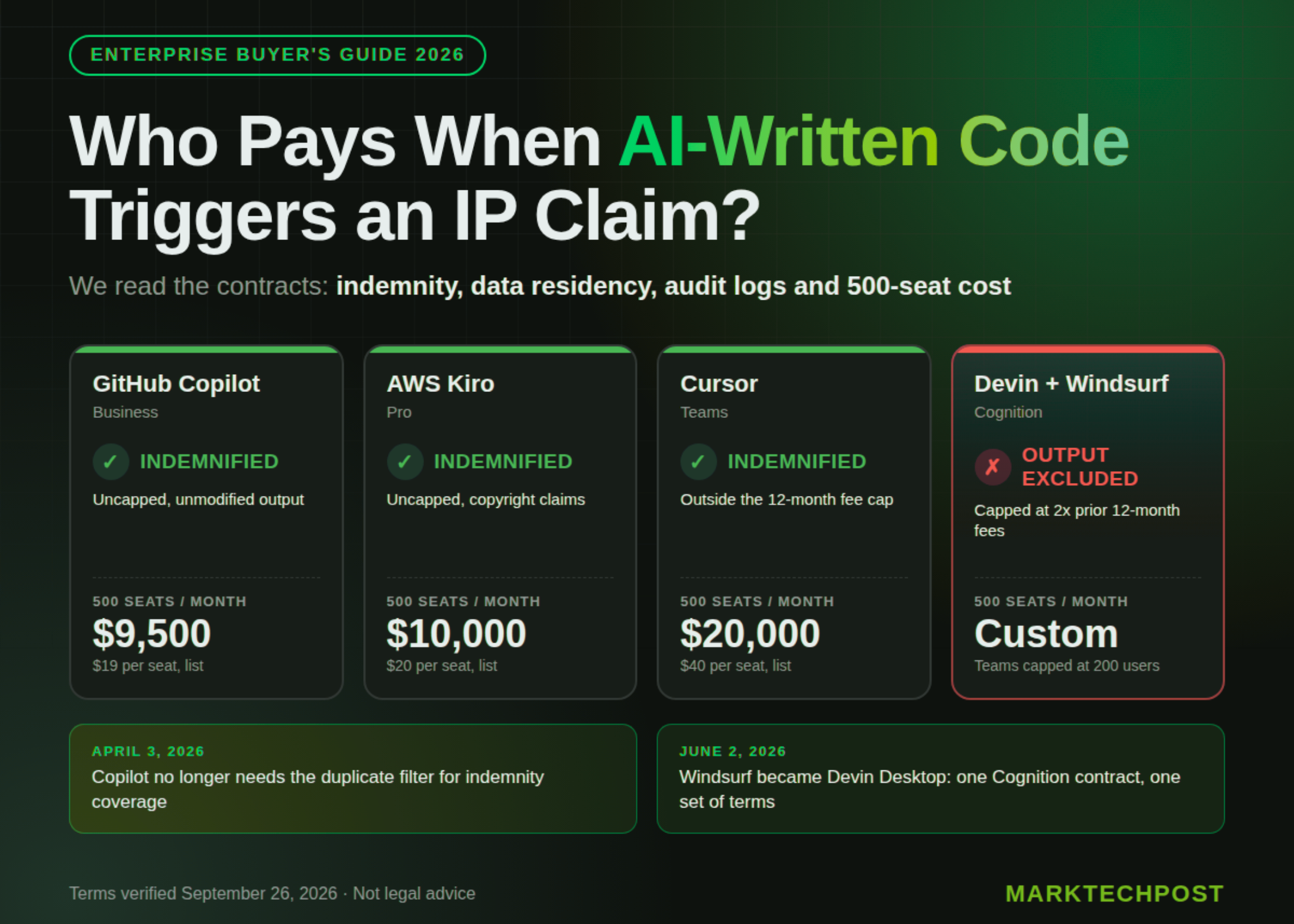
AI Coding Agents for Enterprise: IP Indemnity, Data Residency and 500-Seat Cost Compared

A key feature of DQO is its ability to identify and optimize correct reasoning steps even within partially correct responses. For example, in mathematical problem-solving, DQO assigns higher value to accurate steps and penalizes errors, enabling incremental improvement in reasoning. This makes DQO particularly suitable for tasks requiring detailed, long-horizon decision-making.

Technical Implementation and Practical Advantages

DQO’s approach is centered on parameterizing the Q-function using the language model, thereby integrating policy and value functions. The model updates its Q-function and value function based on the Soft Bellman Equation. KL-regularization ensures stable learning and helps prevent overfitting to specific samples.

To handle challenges such as high bias in temporal difference errors, DQO employs λ-return, a mechanism that balances short-term and long-term rewards for more stable training. Importance sampling further enhances DQO’s offline learning capabilities by reducing distributional shifts between the training data and the model’s policy.

DQO offers several practical advantages. It eliminates the need for online sampling, reducing computational costs. Moreover, it can learn from unbalanced and negative samples, enhancing its robustness across various scenarios. The use of process rewards helps refine reasoning capabilities while improving alignment with task requirements.

Results and Insights

Experimental evaluations of DQO on mathematical reasoning datasets—GSM8K and MATH—demonstrate its effectiveness. On the GSM8K dataset, DQO improved performance from a baseline of 59.06% to 87.26% for greedy generation and from 53.30% to 84.69% for sampling-based generation. These results surpass other baseline methods, including DPO and DRO. Similarly, on the MATH dataset, DQO outperformed baselines, achieving improvements of 1.18% in sampling and 1.40% in greedy generation.

Enhancing DQO with process rewards further boosted performance, suggesting its potential to incorporate additional supervisory signals. These results underscore DQO’s capability to handle multi-step reasoning tasks effectively and align LLMs with complex objectives.

Conclusion

Direct Q-function Optimization (DQO) offers a thoughtful approach to reinforcement learning for LLM alignment. By framing response generation as an MDP and utilizing the SAC framework, DQO addresses the limitations of existing methods. Its ability to integrate process rewards, handle unbalanced data, and stabilize training through λ-return and importance sampling makes it a practical solution for tasks involving multi-step reasoning.

Future research could explore applying DQO to other domains, such as code generation and dialogue systems, where long-horizon decision-making is critical. As AI systems evolve to tackle increasingly complex challenges, methods like DQO will play an important role in enhancing the alignment and performance of language models.


Check out the Paper. All credit for this research goes to the researchers of this project. Also, don’t forget to follow us on Twitter and join our Telegram Channel and LinkedIn Group. Don’t Forget to join our 60k+ ML SubReddit.

🚨 Trending: LG AI Research Releases EXAONE 3.5: Three Open-Source Bilingual Frontier AI-level Models Delivering Unmatched Instruction Following and Long Context Understanding for Global Leadership in Generative AI Excellence….


Aswin AK is a consulting intern at MarkTechPost. He is pursuing his Dual Degree at the Indian Institute of Technology, Kharagpur. He is passionate about data science and machine learning, bringing a strong academic background and hands-on experience in solving real-life cross-domain challenges.

🧵🧵 [Download] Evaluation of Large Language Model Vulnerabilities Report (Promoted)


Credit: Source link

ShareTweetSendSharePin

Related Posts

Humanoid Robots Are Getting Even Creepier (This One Can Cry On Command)
AI & Technology

Humanoid Robots Are Getting Even Creepier (This One Can Cry On Command)

September 27, 2026
AI Coding Agents for Enterprise: IP Indemnity, Data Residency and 500-Seat Cost Compared
AI & Technology

AI Coding Agents for Enterprise: IP Indemnity, Data Residency and 500-Seat Cost Compared

September 27, 2026
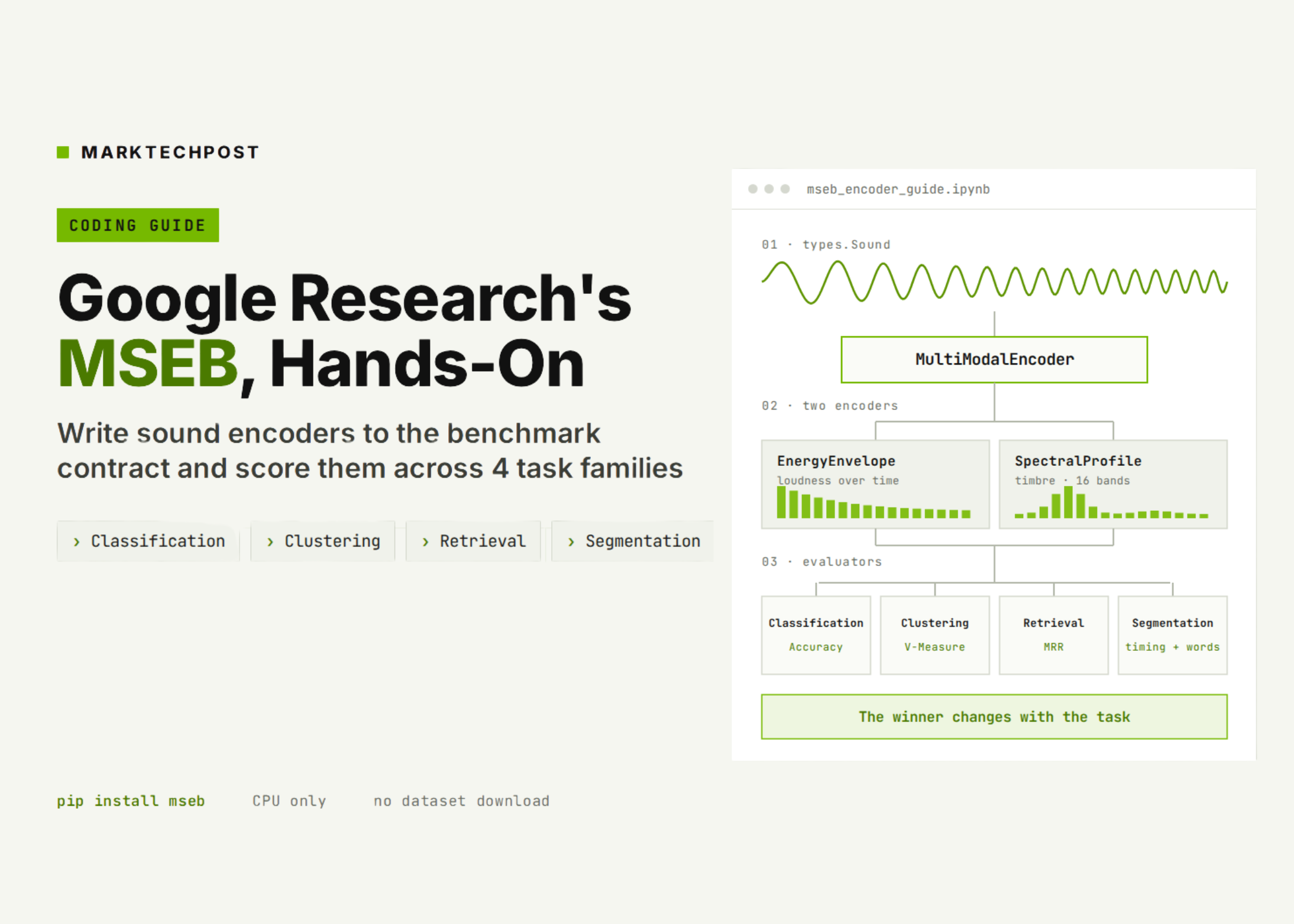
A Coding Guide to Google Research’s MSEB: Writing Sound Encoders to the Benchmark Contract and Scoring Them Across Classification, Clustering, Retrieval and Segmentation
AI & Technology

A Coding Guide to Google Research’s MSEB: Writing Sound Encoders to the Benchmark Contract and Scoring Them Across Classification, Clustering, Retrieval and Segmentation

September 27, 2026
Why We Won’t Know How Visible The iPhone Duo’s Crease Is For A Long Time
AI & Technology

Why We Won’t Know How Visible The iPhone Duo’s Crease Is For A Long Time

September 27, 2026
Next Post
WATCH: Congress holds votes on government funding as shutdown looms | NBC News

WATCH: Congress holds votes on government funding as shutdown looms | NBC News

Leave a Reply Cancel reply

Your email address will not be published. Required fields are marked *

Search

No Result
View All Result
Gemini: Crypto Boost Ignored

Gemini: Crypto Boost Ignored

September 22, 2026
iPhone 18 Pro Vs. iPhone 17 Pro: What’s New?

iPhone 18 Pro Vs. iPhone 17 Pro: What’s New?

September 26, 2026
What  Trillion in U.S. Debt Means for America’s Bottom Line; Drive to Decision Day in OH | Aug 20

What $40 Trillion in U.S. Debt Means for America’s Bottom Line; Drive to Decision Day in OH | Aug 20

September 26, 2026

About

Learn more

Our Services

Legal

Privacy Policy

Terms of Use

Bloggers

Learn more

Article Links

Contact

Advertise

Ask us anything

©2020- TradePoint.io - All rights reserved!

Tradepoint.io, being just a publishing and technology platform, is not a registered broker-dealer or investment adviser. So we do not provide investment advice. Rather, brokerage services are provided to clients of Tradepoint.io by independent SEC-registered broker-dealers and members of FINRA/SIPC. Every form of investing carries some risk and past performance is not a guarantee of future results. “Tradepoint.io“, “Instant Investing” and “My Trading Tools” are registered trademarks of Apperbuild, LLC.

This website is operated by Apperbuild, LLC. We have no link to any brokerage firm and we do not provide investment advice. Every information and resource we provide is solely for the education of our readers. © 2020 Apperbuild, LLC. All rights reserved.

No Result
View All Result
  • Main
  • AI & Technology
  • Stock Charts
  • Market & News
  • Business
  • Finance Tips
  • Trade Tube
  • Blog
  • Shop

© 2023 - TradePoint.io - All Rights Reserved!