
• bitcoinBitcoin(BTC)$83,171.00-3.12%
  • ethereumEthereum(ETH)$2,642.21-3.51%
  • tetherTether(USDT)$1.00-0.02%
  • binancecoinBNB(BNB)$766.25-2.29%
  • rippleXRP(XRP)$1.46-8.70%
  • usd-coinUSDC(USDC)$1.00-0.01%
  • solanaSolana(SOL)$113.17-3.59%
  • tronTRON(TRX)$0.339110-0.97%
  • zcashZcash(ZEC)$1,477.94-8.78%
  • Figure HelocFigure Heloc(FIGR_HELOC)$1.040.38%
  • HyperliquidHyperliquid(HYPE)$91.06-4.98%
  • dogecoinDogecoin(DOGE)$0.091957-7.98%
  • moneroMonero(XMR)$552.12-3.18%
  • whitebitWhiteBIT Coin(WBT)$83.21-3.49%
  • USDSUSDS(USDS)$1.00-0.04%
  • chainlinkChainlink(LINK)$12.18-5.78%
  • cardanoCardano(ADA)$0.234471-7.78%
  • RainRain(RAIN)$0.012040-6.84%
  • leo-tokenLEO Token(LEO)$8.93-0.40%
  • stellarStellar(XLM)$0.198281-8.53%
  • bitcoin-cashBitcoin Cash(BCH)$327.97-7.88%
  • uniswapUniswap(UNI)$8.90-12.45%
  • nearNEAR Protocol(NEAR)$4.22-8.64%
  • litecoinLitecoin(LTC)$67.226.68%
  • Ethena USDeEthena USDe(USDE)$1.00-0.02%
  • daiDai(DAI)$1.00-0.02%
  • avalanche-2Avalanche(AVAX)$10.09-9.51%
  • USD1USD1(USD1)$1.00-0.02%
  • CantonCanton(CC)$0.106963-5.32%
  • the-open-networkGram (prev. Toncoin)(GRAM)$1.40-3.24%
  • hedera-hashgraphHedera(HBAR)$0.088860-8.88%
  • suiSui(SUI)$0.94-7.42%
  • shiba-inuShiba Inu(SHIB)$0.000006-8.46%
  • Global DollarGlobal Dollar(USDG)$1.00-0.02%
  • BittensorBittensor(TAO)$280.81-9.47%
  • crypto-com-chainCronos(CRO)$0.060625-9.00%
  • MemeCoreMemeCore(M)$1.23-3.86%
  • BitwayBitway(BTW)$1.006.38%
  • paypal-usdPayPal USD(PYUSD)$1.00-0.03%
  • tether-goldTether Gold(XAUT)$4,257.12-1.48%
  • okbOKB(OKB)$117.67-5.11%
  • Circle USYCCircle USYC(USYC)$1.140.01%
  • Ripple USDRipple USD(RLUSD)$1.00-0.01%
  • BlackRock USD Institutional Digital Liquidity FundBlackRock USD Institutional Digital Liquidity Fund(BUIDL)$1.000.00%
  • Ondo US Dollar YieldOndo US Dollar Yield(USDY)$1.150.20%
  • mantleMantle(MNT)$0.67-1.48%
  • aaveAave(AAVE)$136.02-9.15%
  • OndoOndo(ONDO)$0.425319-2.49%
  • EthenaEthena(ENA)$0.201200-5.78%
  • AsterAster(ASTER)$0.69-4.37%
TradePoint.io
  • Main
  • AI & Technology
  • Stock Charts
  • Market & News
  • Business
  • Finance Tips
  • Trade Tube
  • Blog
  • Shop
No Result
View All Result
TradePoint.io
No Result
View All Result

When to Avoid AI in Healthcare

December 11, 2024
in AI & Technology
Reading Time: 3 mins read
A A
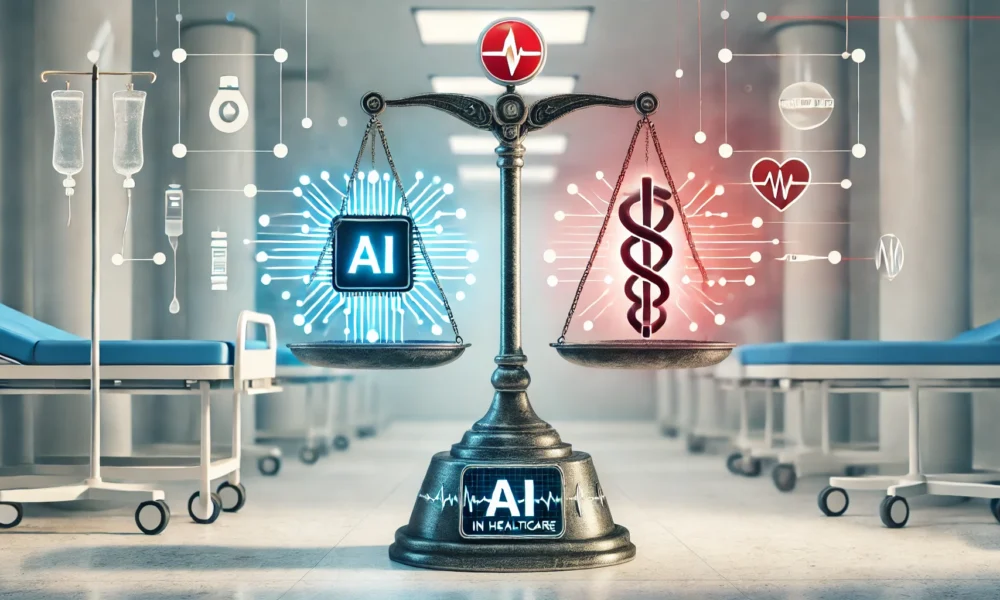
When to Avoid AI in Healthcare
ShareShareShareShareShare

Anytime a new technological advancement makes its way into an industry, there can be a temptation to anoint that shiny new toy as an anecdote to all of an industry’s ills. AI in healthcare is a great example. As the technology has continued to advance, it has been adopted for use cases in drug development, care coordination, and reimbursement, to name a few. There are a great number of legitimate use cases for AI in healthcare, where the technology is far and away better than any currently available alternative.

However, AI—as it stands today—excels only at certain tasks, like understanding large swaths of data and making judgements based on well-defined rules. Other situations, particularly where added context is essential for making the right decision, are not well-suited for AI. Let’s explore some examples.

YOU MAY ALSO LIKE

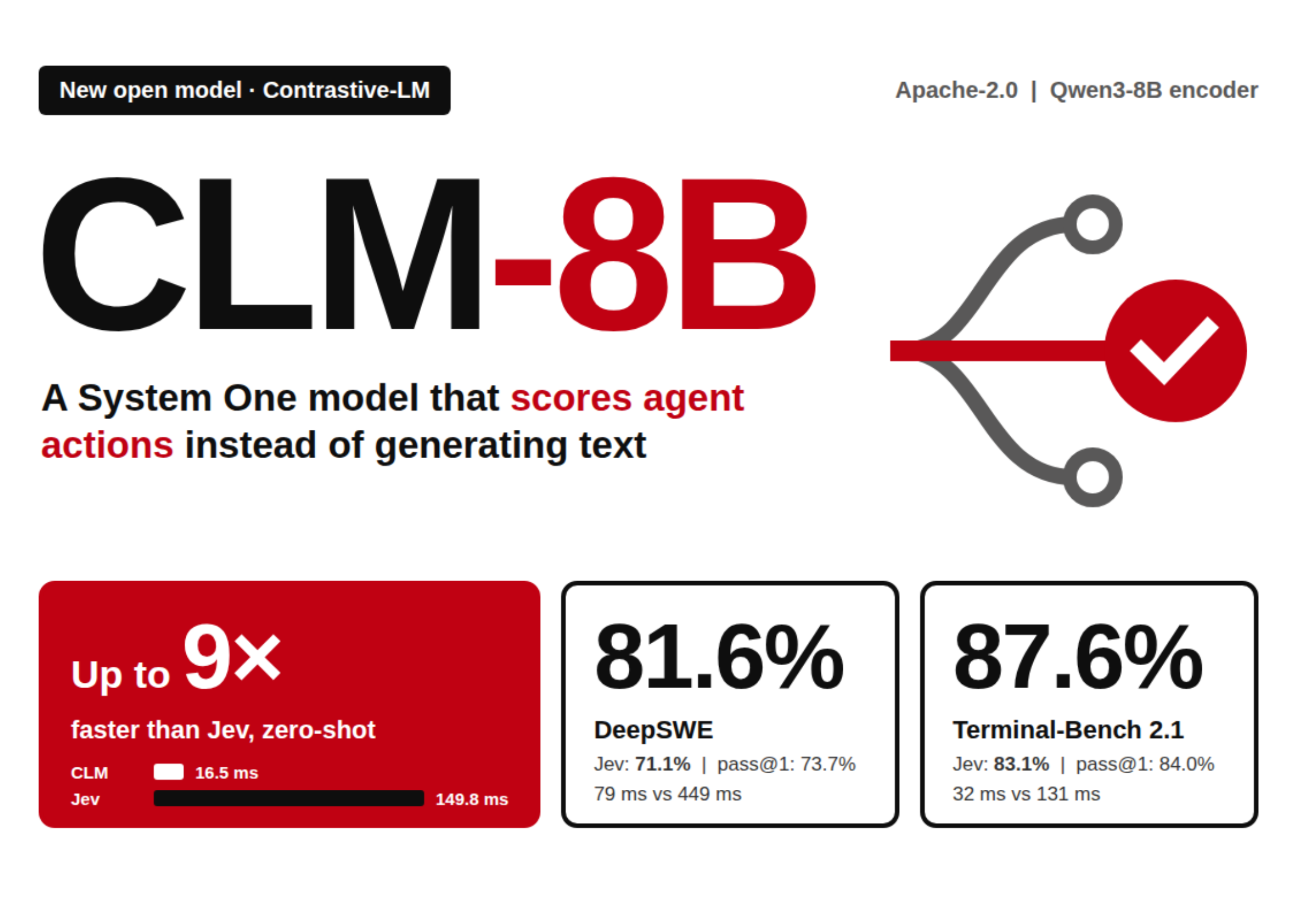
Contrastive-LM Releases CLM-8B: An Open System One Model That Scores Agent Actions Up to 9× Faster Than Jev

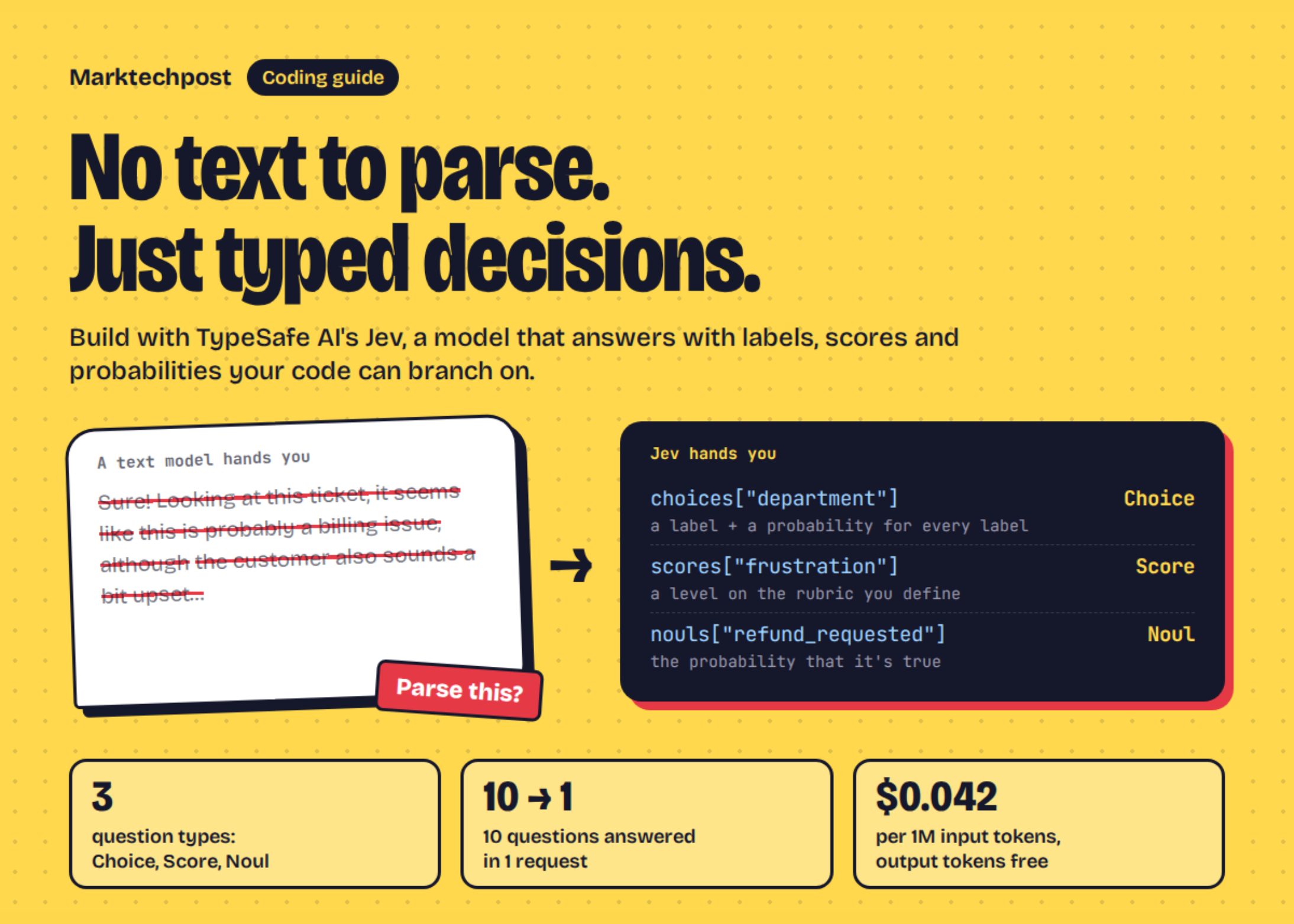
A Coding Guide to TypeSafe AI Jev: Typed Decisions, Calibrated Confidence, and Speculative Fan-Out with a System One Model

Denying Claims and Care

Whether it be for a claim or care, denials are complex decisions, and too important to be handled by AI on its own. When denying a claim or care, there is an obvious moral imperative to do so with the utmost caution, and based on AI’s capabilities today, that necessitates human input.

Beyond the morality element, health plans put themselves at risk when they rely too heavily on AI to make denial decisions. Plans can, and are, facing lawsuits, for using AI improperly to deny claims, with litigation accusing plans of not meeting the minimum requirements for physician review because AI was used instead.

Relying on Past Decisions

Trusting AI to make decisions based solely on how it made a previous decision has an obvious flaw: one wrong decision from the past will live on to influence others. Plus, because policy rules that inform AI are often distributed across systems or imperfectly codified by humans, AI systems can end up adopting, and then perpetuating, an inexact understanding of these policies. To avoid this, organizations need to create a single source of policy truth, so that AI can reference and learn from a reliable dataset.

Building on Legacy Systems

As a relatively new technology, AI brings a sense of possibility, and many health plan data science teams are anxious to tap into that possibility quickly by leveraging AI tools already built into existing enterprise platforms. The trouble is that healthcare claims processes are extremely complex, and enterprise platforms often do not understand the intricacies. Slapping AI on top of these legacy platforms as a one-size-fits-all solution (one that does not account for all of the various factors impacting claim adjudication) ends up causing confusion and inaccuracy, rather than creating more efficient processes.

Leaning on Old Data

One of the biggest benefits of AI is that it gets increasingly better at orchestrating tasks as it learns, but that learning can only take place if there is a consistent feedback loop that helps AI understand what its done wrong so that it can adjust accordingly. That feedback must not only be constant, it must be based on clean, accurate data. After all, AI is only as good as the data it learns from.

When AI in Healthcare IS Beneficial

The use of AI in a sector where the outputs are as consequential as healthcare certainly requires caution, but that does not mean there are not use cases where AI makes sense.

For one, there is no shortage of data in healthcare (consider that that one person’s medical record could be thousands of pages), and the patterns within that data can tell us a lot about diagnosing disease, adjudicating claims correctly, and more. This is where AI excels, looking for patterns and suggesting actions based on those patterns that human reviewers can run with.

Another area where AI excels is in cataloging and ingesting policies and rules that govern how claims are paid. Generative AI (GenAI) can be used to transform this policy content from various formats into machine-readable code that can be applied consistently across all patient claims. GenAI can also be used to summarize information and display it in an easy-to-read format for a human to review.

The key thread through all of these use cases is that AI is being used as a co-pilot for humans who oversee it, not running the show on its own. As long as organizations can keep that idea in mind as they implement AI, they will be in a position to succeed during this era in which healthcare is being transformed by AI.

Credit: Source link

ShareTweetSendSharePin

Related Posts

Contrastive-LM Releases CLM-8B: An Open System One Model That Scores Agent Actions Up to 9× Faster Than Jev
AI & Technology

Contrastive-LM Releases CLM-8B: An Open System One Model That Scores Agent Actions Up to 9× Faster Than Jev

September 24, 2026
A Coding Guide to TypeSafe AI Jev: Typed Decisions, Calibrated Confidence, and Speculative Fan-Out with a System One Model
AI & Technology

A Coding Guide to TypeSafe AI Jev: Typed Decisions, Calibrated Confidence, and Speculative Fan-Out with a System One Model

September 24, 2026
Everything Announced At Meta Connect 2026
AI & Technology

Everything Announced At Meta Connect 2026

September 24, 2026
Meta Put Muse In A Tamagotchi Like ‘Charm’ Device
AI & Technology

Meta Put Muse In A Tamagotchi Like ‘Charm’ Device

September 24, 2026
Next Post
How to Overcome Innovation FOMO & Use AI/GenAI to Solve Specific Business Problems

How to Overcome Innovation FOMO & Use AI/GenAI to Solve Specific Business Problems

Leave a Reply Cancel reply

Your email address will not be published. Required fields are marked *

Search

No Result
View All Result
Jim Clyburn says impeaching Trump should not be a priority for Democrats

Jim Clyburn says impeaching Trump should not be a priority for Democrats

September 21, 2026
40% Stocks, 0% Bitcoin — 2026 Portfolio Breakdown

40% Stocks, 0% Bitcoin — 2026 Portfolio Breakdown

September 18, 2026
San Diego woman sentenced to at least 36 years in prison for killing her Cal Fire captain wife

San Diego woman sentenced to at least 36 years in prison for killing her Cal Fire captain wife

September 17, 2026

About

Learn more

Our Services

Legal

Privacy Policy

Terms of Use

Bloggers

Learn more

Article Links

Contact

Advertise

Ask us anything

©2020- TradePoint.io - All rights reserved!

Tradepoint.io, being just a publishing and technology platform, is not a registered broker-dealer or investment adviser. So we do not provide investment advice. Rather, brokerage services are provided to clients of Tradepoint.io by independent SEC-registered broker-dealers and members of FINRA/SIPC. Every form of investing carries some risk and past performance is not a guarantee of future results. “Tradepoint.io“, “Instant Investing” and “My Trading Tools” are registered trademarks of Apperbuild, LLC.

This website is operated by Apperbuild, LLC. We have no link to any brokerage firm and we do not provide investment advice. Every information and resource we provide is solely for the education of our readers. © 2020 Apperbuild, LLC. All rights reserved.

No Result
View All Result
  • Main
  • AI & Technology
  • Stock Charts
  • Market & News
  • Business
  • Finance Tips
  • Trade Tube
  • Blog
  • Shop

© 2023 - TradePoint.io - All Rights Reserved!