• bitcoinBitcoin(BTC)$84,823.000.79%
  • ethereumEthereum(ETH)$2,708.980.83%
  • tetherTether(USDT)$1.000.00%
  • binancecoinBNB(BNB)$778.490.63%
  • rippleXRP(XRP)$1.54-0.90%
  • usd-coinUSDC(USDC)$1.000.00%
  • solanaSolana(SOL)$123.922.81%
  • tronTRON(TRX)$0.333764-0.92%
  • zcashZcash(ZEC)$1,659.588.22%
  • Figure HelocFigure Heloc(FIGR_HELOC)$1.063.68%
  • HyperliquidHyperliquid(HYPE)$93.091.13%
  • dogecoinDogecoin(DOGE)$0.097685-0.39%
  • chainlinkChainlink(LINK)$14.340.56%
  • moneroMonero(XMR)$556.470.68%
  • whitebitWhiteBIT Coin(WBT)$84.610.77%
  • USDSUSDS(USDS)$1.000.00%
  • cardanoCardano(ADA)$0.255958-0.59%
  • RainRain(RAIN)$0.0126826.10%
  • leo-tokenLEO Token(LEO)$9.020.53%
  • stellarStellar(XLM)$0.217136-1.06%
  • nearNEAR Protocol(NEAR)$5.226.46%
  • bitcoin-cashBitcoin Cash(BCH)$339.11-0.10%
  • uniswapUniswap(UNI)$9.983.19%
  • litecoinLitecoin(LTC)$71.73-2.34%
  • CantonCanton(CC)$0.1373571.25%
  • suiSui(SUI)$1.255.09%
  • Ethena USDeEthena USDe(USDE)$1.000.01%
  • avalanche-2Avalanche(AVAX)$11.022.36%
  • the-open-networkGram (prev. Toncoin)(GRAM)$1.6412.85%
  • daiDai(DAI)$1.000.02%
  • USD1USD1(USD1)$1.000.01%
  • hedera-hashgraphHedera(HBAR)$0.0947130.21%
  • BittensorBittensor(TAO)$329.903.39%
  • shiba-inuShiba Inu(SHIB)$0.0000060.11%
  • crypto-com-chainCronos(CRO)$0.0692265.18%
  • Global DollarGlobal Dollar(USDG)$1.00-0.01%
  • BitwayBitway(BTW)$1.1225.18%
  • paypal-usdPayPal USD(PYUSD)$1.00-0.01%
  • MemeCoreMemeCore(M)$1.22-0.77%
  • EthenaEthena(ENA)$0.271741-4.16%
  • tether-goldTether Gold(XAUT)$4,280.05-0.02%
  • OndoOndo(ONDO)$0.55-2.13%
  • okbOKB(OKB)$121.870.28%
  • Ripple USDRipple USD(RLUSD)$1.000.01%
  • quant-networkQuant(QNT)$171.1360.52%
  • Circle USYCCircle USYC(USYC)$1.140.00%
  • aaveAave(AAVE)$155.590.64%
  • BlackRock USD Institutional Digital Liquidity FundBlackRock USD Institutional Digital Liquidity Fund(BUIDL)$1.000.00%
  • mantleMantle(MNT)$0.69-1.75%
  • Ondo US Dollar YieldOndo US Dollar Yield(USDY)$1.15-0.03%
TradePoint.io
  • Main
  • AI & Technology
  • Stock Charts
  • Market & News
  • Business
  • Finance Tips
  • Trade Tube
  • Blog
  • Shop
No Result
View All Result
TradePoint.io
No Result
View All Result

Researchers at Cambridge Provide Empirical Insights into Deep Learning through the Pedagogical Lens of Telescopic Model that Uses First-Order Approximations

November 9, 2024
in AI & Technology
Reading Time: 4 mins read
A A
Researchers at Cambridge Provide Empirical Insights into Deep Learning through the Pedagogical Lens of Telescopic Model that Uses First-Order Approximations
ShareShareShareShareShare

Neural networks remain a beguiling enigma to this day. On the one hand, they are responsible for automating daunting tasks across fields such as image vision, natural language comprehension, and text generation; yet, on the other hand, their underlying behaviors and decision-making processes remain elusive. Neural networks many times exhibit counterintuitive and abnormal behavior, like non-monotonic generalization performance, which reinstates doubts about their caliber. Even XGBoost and Random Forests outperform neural networks in structured data. Furthermore, neural nets often behave like linear models—this invokes great confusion, given that they are renowned for their ability to model complex nonlinearities. These issues have motivated researchers to decode neural networks.

Researchers at the University of Cambridge presented a simple model to provide empirical insights into neural networks. This work follows a hybrid approach to applying theoretical research principles to simple yet accurate models of neural networks for empirical investigation. Inspired by the work of Neural Tangent Kernels, the authors consider a model that uses first-order approximations for functional updates made during training. Moreover, in this definition, the model increments by telescoping out approximations to individual updates made during training to replicate the behavior of fully trained practical networks. The whole setup to conduct empirical investigations could be articulated as a pedagogical lens to showcase how neural networks sometimes generalize seemingly unpredictably. The research also proposes methods to construct and extract metrics for predicting and understanding this abnormal behavior.

YOU MAY ALSO LIKE

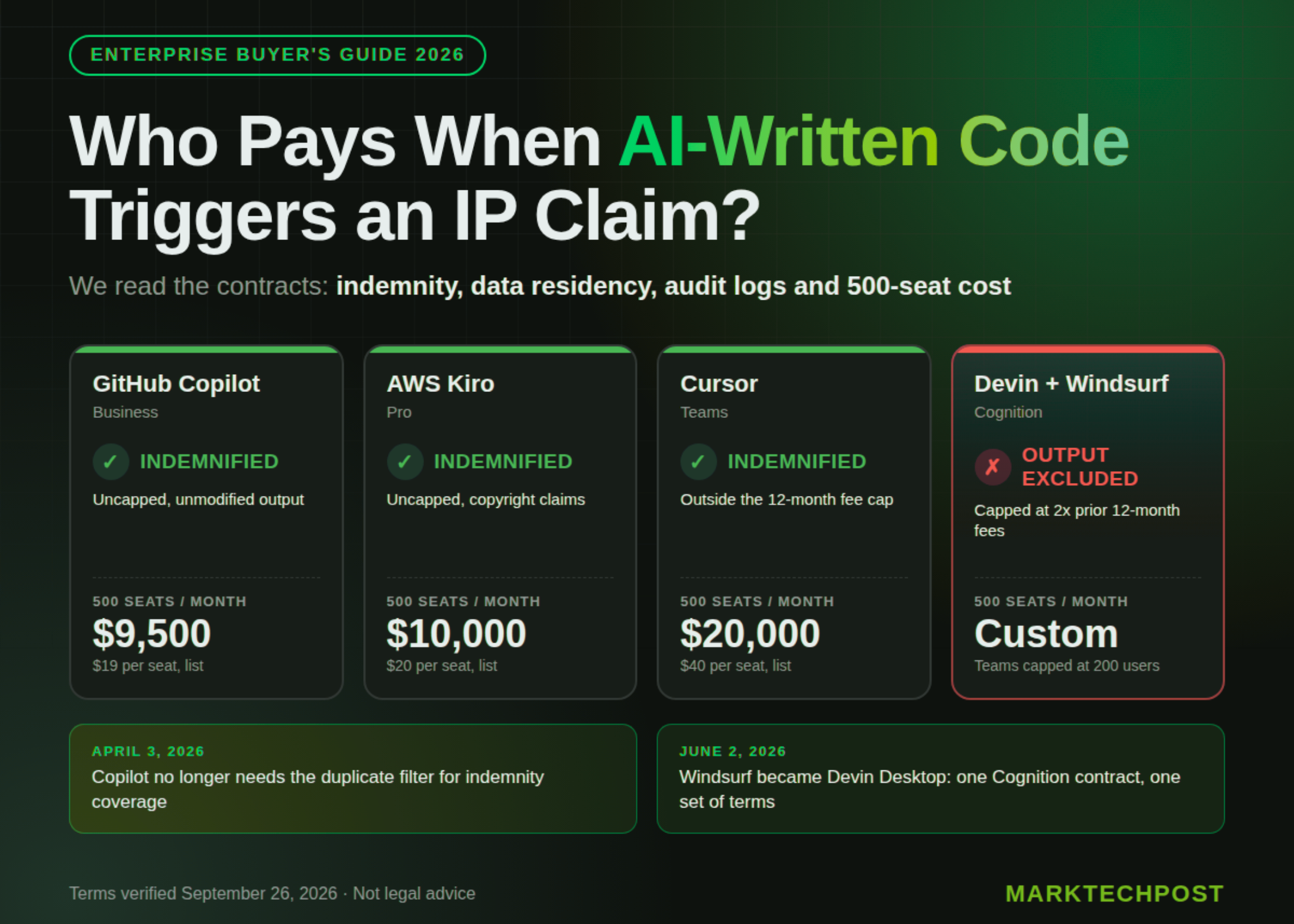
AI Coding Agents for Enterprise: IP Indemnity, Data Residency and 500-Seat Cost Compared

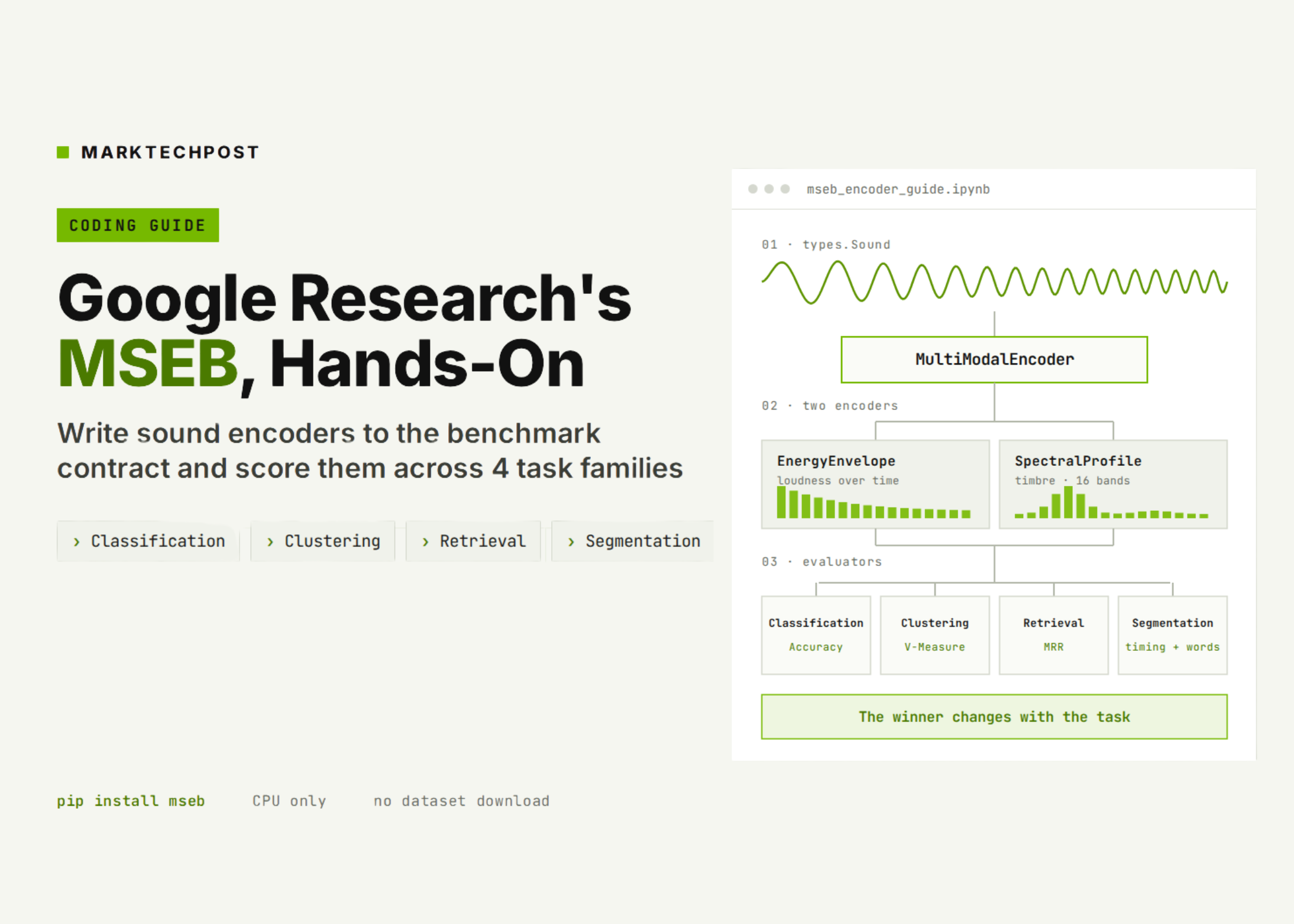
A Coding Guide to Google Research’s MSEB: Writing Sound Encoders to the Benchmark Contract and Scoring Them Across Classification, Clustering, Retrieval and Segmentation

The authors present three case studies in this paper for empirical investigation. Firstly, the proposed telescopic model extends an existing metric for measuring model complexity to neural networks. The purpose of this incorporation was to understand the overfitting curves and generalizing behavior of networks, especially on new data when the model underperformed. Their findings included the phenomenon of double descent and grokking linked to changes in the complexity of the model during training and testing. Double descent basically explains the non-monotonic performance of the telescopic model when its test performance first worsened (normal overfitting) but then improved upon increasing model complexity. In grokking, even after achieving perfect performance on the training data, a model may continue to improve its performance on the test data significantly after a long period. The telescopic model quantifies learning complexity, double descent, and grokking during training and establishes the causation of these effects to be the divergence between training and test complexity.

The second case study explains the underperformance of neural networks relative to XGBoost on tabular data. Neural Networks struggle with tabular data, particularly those with irregularities, despite their remarkable versatility. Although both models exhibit similar optimization behaviors, XGBoost wins the race by better handling feature irregularities and sparsity. In the study, the telescopic model and XGBoost used kernels, but it was established that the tangent kernel of neural nets was unbounded, which meant every point could be used differently, while XGBoost kernels behaved more predictably when exposed to test data.

The last case discussed gradient stabilization and weight averaging. The model revealed that as training progresses, gradient updates become more aligned, leading to smoother loss surfaces. They showed how gradient stabilization during training contributes to linear mode connectivity and weight averaging, which has become very successful.

The proposed telescopic model for neural network learning helped in understanding several perplexing phenomena in deep learning through empirical investigations. This work would instigate more efforts to understand the mystery of neural nets both empirically and theoretically.


Check out the Paper. All credit for this research goes to the researchers of this project. Also, don’t forget to follow us on Twitter and join our Telegram Channel and LinkedIn Group. If you like our work, you will love our newsletter.. Don’t Forget to join our 55k+ ML SubReddit.

[AI Magazine/Report] Read Our Latest Report on ‘SMALL LANGUAGE MODELS‘


Adeeba Alam Ansari is currently pursuing her Dual Degree at the Indian Institute of Technology (IIT) Kharagpur, earning a B.Tech in Industrial Engineering and an M.Tech in Financial Engineering. With a keen interest in machine learning and artificial intelligence, she is an avid reader and an inquisitive individual. Adeeba firmly believes in the power of technology to empower society and promote welfare through innovative solutions driven by empathy and a deep understanding of real-world challenges.

Listen to our latest AI podcasts and AI research videos here ➡️


Credit: Source link

ShareTweetSendSharePin

Related Posts

AI Coding Agents for Enterprise: IP Indemnity, Data Residency and 500-Seat Cost Compared
AI & Technology

AI Coding Agents for Enterprise: IP Indemnity, Data Residency and 500-Seat Cost Compared

September 27, 2026
A Coding Guide to Google Research’s MSEB: Writing Sound Encoders to the Benchmark Contract and Scoring Them Across Classification, Clustering, Retrieval and Segmentation
AI & Technology

A Coding Guide to Google Research’s MSEB: Writing Sound Encoders to the Benchmark Contract and Scoring Them Across Classification, Clustering, Retrieval and Segmentation

September 27, 2026
Why We Won’t Know How Visible The iPhone Duo’s Crease Is For A Long Time
AI & Technology

Why We Won’t Know How Visible The iPhone Duo’s Crease Is For A Long Time

September 27, 2026
How Powerful Of A Power Bank Do You Need To Safely Charge A Laptop?
AI & Technology

How Powerful Of A Power Bank Do You Need To Safely Charge A Laptop?

September 27, 2026
Next Post
Harris looks for boost from Beyoncé, Trump slams Harris on immigration | Election day countdown

Harris looks for boost from Beyoncé, Trump slams Harris on immigration | Election day countdown

Leave a Reply Cancel reply

Your email address will not be published. Required fields are marked *

Search

No Result
View All Result
Crews recover SpaceX’s Starship from Indian Ocean

Crews recover SpaceX’s Starship from Indian Ocean

September 21, 2026
How the new U.S. sanctions on Iran could affect China

How the new U.S. sanctions on Iran could affect China

September 25, 2026
NBC Nightly News Full Episode – Aug. 24

NBC Nightly News Full Episode – Aug. 24

September 24, 2026

About

Learn more

Our Services

Legal

Privacy Policy

Terms of Use

Bloggers

Learn more

Article Links

Contact

Advertise

Ask us anything

©2020- TradePoint.io - All rights reserved!

Tradepoint.io, being just a publishing and technology platform, is not a registered broker-dealer or investment adviser. So we do not provide investment advice. Rather, brokerage services are provided to clients of Tradepoint.io by independent SEC-registered broker-dealers and members of FINRA/SIPC. Every form of investing carries some risk and past performance is not a guarantee of future results. “Tradepoint.io“, “Instant Investing” and “My Trading Tools” are registered trademarks of Apperbuild, LLC.

This website is operated by Apperbuild, LLC. We have no link to any brokerage firm and we do not provide investment advice. Every information and resource we provide is solely for the education of our readers. © 2020 Apperbuild, LLC. All rights reserved.

No Result
View All Result
  • Main
  • AI & Technology
  • Stock Charts
  • Market & News
  • Business
  • Finance Tips
  • Trade Tube
  • Blog
  • Shop

© 2023 - TradePoint.io - All Rights Reserved!