• bitcoinBitcoin(BTC)$84,345.00-2.49%
  • ethereumEthereum(ETH)$2,670.05-3.00%
  • tetherTether(USDT)$1.00-0.01%
  • binancecoinBNB(BNB)$767.33-2.54%
  • rippleXRP(XRP)$1.50-5.38%
  • usd-coinUSDC(USDC)$1.000.00%
  • solanaSolana(SOL)$114.41-3.16%
  • tronTRON(TRX)$0.340108-0.41%
  • zcashZcash(ZEC)$1,522.630.09%
  • Figure HelocFigure Heloc(FIGR_HELOC)$1.03-1.22%
  • HyperliquidHyperliquid(HYPE)$93.94-2.74%
  • dogecoinDogecoin(DOGE)$0.092156-7.76%
  • moneroMonero(XMR)$550.73-3.59%
  • whitebitWhiteBIT Coin(WBT)$84.63-2.59%
  • USDSUSDS(USDS)$1.00-0.02%
  • chainlinkChainlink(LINK)$12.26-5.74%
  • cardanoCardano(ADA)$0.238410-4.87%
  • RainRain(RAIN)$0.012252-7.02%
  • leo-tokenLEO Token(LEO)$8.970.04%
  • stellarStellar(XLM)$0.203345-5.25%
  • bitcoin-cashBitcoin Cash(BCH)$348.912.93%
  • nearNEAR Protocol(NEAR)$4.452.64%
  • uniswapUniswap(UNI)$9.160.09%
  • Ethena USDeEthena USDe(USDE)$1.000.00%
  • litecoinLitecoin(LTC)$61.10-1.36%
  • daiDai(DAI)$1.000.01%
  • avalanche-2Avalanche(AVAX)$10.30-6.41%
  • USD1USD1(USD1)$1.000.00%
  • CantonCanton(CC)$0.108027-4.25%
  • suiSui(SUI)$0.97-3.69%
  • hedera-hashgraphHedera(HBAR)$0.090453-7.10%
  • the-open-networkGram (prev. Toncoin)(GRAM)$1.41-3.34%
  • BittensorBittensor(TAO)$292.26-5.47%
  • shiba-inuShiba Inu(SHIB)$0.000006-7.20%
  • Global DollarGlobal Dollar(USDG)$1.00-0.01%
  • crypto-com-chainCronos(CRO)$0.061089-8.24%
  • paypal-usdPayPal USD(PYUSD)$1.00-0.02%
  • MemeCoreMemeCore(M)$1.21-7.20%
  • BitwayBitway(BTW)$0.9914.61%
  • tether-goldTether Gold(XAUT)$4,291.18-1.42%
  • okbOKB(OKB)$118.02-3.73%
  • Circle USYCCircle USYC(USYC)$1.140.01%
  • Ripple USDRipple USD(RLUSD)$1.000.00%
  • BlackRock USD Institutional Digital Liquidity FundBlackRock USD Institutional Digital Liquidity Fund(BUIDL)$1.000.00%
  • Ondo US Dollar YieldOndo US Dollar Yield(USDY)$1.14-0.15%
  • mantleMantle(MNT)$0.66-1.94%
  • aaveAave(AAVE)$139.12-3.28%
  • EthenaEthena(ENA)$0.2095292.69%
  • OndoOndo(ONDO)$0.412445-4.72%
  • polkadotPolkadot(DOT)$1.10-6.21%
TradePoint.io
  • Main
  • AI & Technology
  • Stock Charts
  • Market & News
  • Business
  • Finance Tips
  • Trade Tube
  • Blog
  • Shop
No Result
View All Result
TradePoint.io
No Result
View All Result

DriveGenVLM: Advancing Autonomous Driving with Generated Videos and Vision Language Models VLMs

September 6, 2024
in AI & Technology
Reading Time: 4 mins read
A A
DriveGenVLM: Advancing Autonomous Driving with Generated Videos and Vision Language Models VLMs
ShareShareShareShareShare

Integrating advanced predictive models into autonomous driving systems has become crucial for enhancing safety and efficiency. Camera-based video prediction emerges as a pivotal component, offering rich real-world data. Content generated by artificial intelligence is presently a leading area of study within the domains of computer vision and artificial intelligence. However, generating photo-realistic and coherent videos poses significant challenges due to limited memory and computation time. Moreover, predicting video from a front-facing camera is critical for advanced driver-assistance systems in autonomous vehicles.

Existing approaches include diffusion-based architectures that have become popular for generating images and videos, with better performance in tasks such as image generation, editing, and translation. Other methods like Generative Adversarial Networks (GANs), flow-based models, auto-regressive models, and Variational Autoencoders (VAEs) have also been used for video generation and prediction. Denoising Diffusion Probabilistic Models (DDPMs) outperform traditional generation models in effectiveness. However, generating long videos continues to be computationally demanding. Although autoregressive models like Phenaki tackle this issue, they often face challenges with unrealistic scene transitions and inconsistencies in longer sequences.

YOU MAY ALSO LIKE

Disney+ And Hulu Are Getting Even More Expensive (Again)

Logitech’s Yeti 2 Brings The 17-Year-Old USB Mic Into The Modern Age

A team of researchers from Columbia University in New York have proposed the DriveGenVLM framework to generate driving videos and used Vision Language Models (VLMs) to understand them. The framework utilizes a video generation approach based on denoising diffusion probabilistic models (DDPM) to predict real-world video sequences. A pre-trained model called Efficient In-context Learning on Egocentric Videos (EILEV) is utilized to evaluate the adequacy of generated videos for VLMs. EILEV also provides narrations for these generated videos, potentially enhancing traffic scene understanding, aiding navigation, and improving planning capabilities in autonomous driving.

The DriveGenVLM framework is validated using the Waymo Open Dataset, which provides diverse real-world driving scenarios from multiple cities. The dataset is split into 108 videos for training and divided equally among the three cameras, and 30 videos for testing (10 per camera). This framework utilizes the Frechet Video Distance (FVD) metric to evaluate the quality of generated videos, where FVD measures the similarity between the distributions of generated and real videos. This metric is valuable for temporal coherence and visual quality evaluation, making it an effective tool for benchmarking video synthesis models in tasks such as video generation and future frame prediction.

The results for the DriveGenVLM framework on the Waymo Open Dataset for three cameras reveal that the adaptive hierarchy-2 sampling method outperforms other sampling schemes by yielding the lowest FVD scores. Prediction videos are generated for each camera using this superior sampling method, where each example is conditioned on the first 40 frames, with ground truth frames and predicted frames. Moreover, the flexible diffusion model’s training on the Waymo dataset shows its capacity for generating coherent and photorealistic videos. However, it still faces challenges in accurately interpreting complex real-world driving scenarios, such as navigating traffic and pedestrians.

In conclusion, researchers from Columbia University have introduced the DriveGenVLM framework to generate driving videos. The DDPM trained on the Waymo dataset is proficient while generating coherent and lifelike images from front and side cameras. Moreover, the pre-trained EILEV model is used to generate action narrations for the videos. The DriveGenVLM framework highlights the potential of integrating generative models and VLMs for autonomous driving tasks. In the future, the generated descriptions of driving scenarios can be used in large language models to offer driver assistance or support language model-based algorithms.


Check out the Paper. All credit for this research goes to the researchers of this project. Also, don’t forget to follow us on Twitter and LinkedIn. Join our Telegram Channel.

If you like our work, you will love our newsletter..

Don’t Forget to join our 50k+ ML SubReddit


Sajjad Ansari is a final year undergraduate from IIT Kharagpur. As a Tech enthusiast, he delves into the practical applications of AI with a focus on understanding the impact of AI technologies and their real-world implications. He aims to articulate complex AI concepts in a clear and accessible manner.

[Promotion] 🧵 Join the Waitlist: ‘deepset Studio’- deepset Studio, a new free visual programming interface for Haystack, our leading open-source AI framework


Credit: Source link

ShareTweetSendSharePin

Related Posts

Disney+ And Hulu Are Getting Even More Expensive (Again)
AI & Technology

Disney+ And Hulu Are Getting Even More Expensive (Again)

September 23, 2026
Logitech’s Yeti 2 Brings The 17-Year-Old USB Mic Into The Modern Age
AI & Technology

Logitech’s Yeti 2 Brings The 17-Year-Old USB Mic Into The Modern Age

September 23, 2026
Never Use ChatGPT For These Five Tasks
AI & Technology

Never Use ChatGPT For These Five Tasks

September 23, 2026
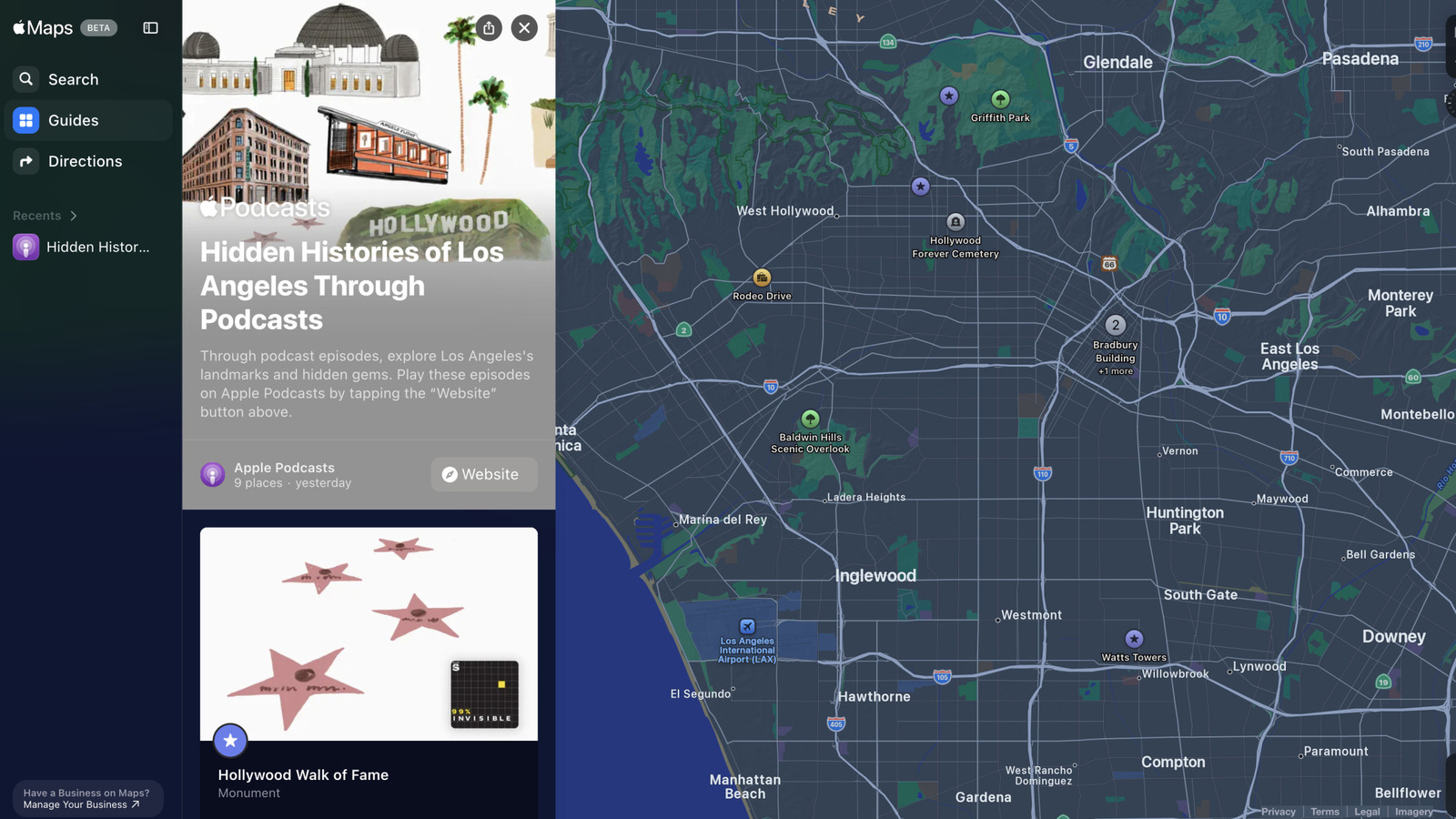
Apple Links Landmarks On Its Maps App To Hidden Histories Podcast Episodes
AI & Technology

Apple Links Landmarks On Its Maps App To Hidden Histories Podcast Episodes

September 23, 2026
Next Post
Family of woman missing in Bahamas suspects discrimination in her case

Family of woman missing in Bahamas suspects discrimination in her case

Leave a Reply Cancel reply

Your email address will not be published. Required fields are marked *

Search

No Result
View All Result
Japanese artist Yayoi Kusama dies at 97

Japanese artist Yayoi Kusama dies at 97

September 22, 2026
Duane Davis found guilty of murder in Tupac’s death

Duane Davis found guilty of murder in Tupac’s death

September 20, 2026
ICE plans to buy robot ‘dogs’ for some immigration enforcement operations

ICE plans to buy robot ‘dogs’ for some immigration enforcement operations

September 21, 2026

About

Learn more

Our Services

Legal

Privacy Policy

Terms of Use

Bloggers

Learn more

Article Links

Contact

Advertise

Ask us anything

©2020- TradePoint.io - All rights reserved!

Tradepoint.io, being just a publishing and technology platform, is not a registered broker-dealer or investment adviser. So we do not provide investment advice. Rather, brokerage services are provided to clients of Tradepoint.io by independent SEC-registered broker-dealers and members of FINRA/SIPC. Every form of investing carries some risk and past performance is not a guarantee of future results. “Tradepoint.io“, “Instant Investing” and “My Trading Tools” are registered trademarks of Apperbuild, LLC.

This website is operated by Apperbuild, LLC. We have no link to any brokerage firm and we do not provide investment advice. Every information and resource we provide is solely for the education of our readers. © 2020 Apperbuild, LLC. All rights reserved.

No Result
View All Result
  • Main
  • AI & Technology
  • Stock Charts
  • Market & News
  • Business
  • Finance Tips
  • Trade Tube
  • Blog
  • Shop

© 2023 - TradePoint.io - All Rights Reserved!