

tadamichi
In this article, we provide a Q2 update on the BDC Bain Capital Specialty Finance, Inc. (NYSE:BCSF). BCSF is part of the Bain Capital Credit’s private credit umbrella which manages $12bn in assets. The company is overweight in the Defense, Tech, and Business Service sectors. It is underweight Healthcare which usually figures in the top 3 sectors of most BDCs. We recently added a position in the stock across our Income Portfolios.
BCSF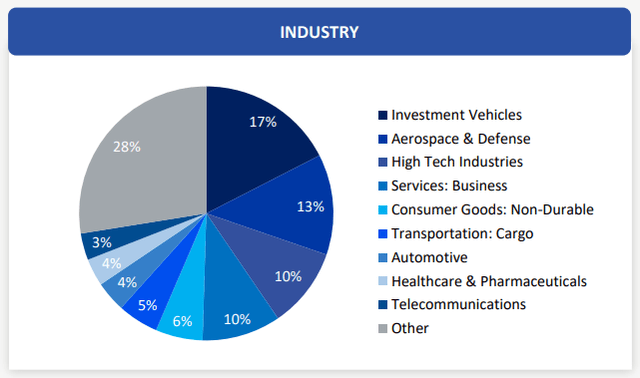
The company is focused on the core middle-market segment, with a median EBITDA of $44m. Unlike the upper middle-market segment, occupied by the largest BDCs, borrowers in this segment are, arguably, less likely to be refinanced by banks – a pattern that looks to be happening in the larger BDCs.
BCSF trades at an 11.5% dividend yield and a 12% discount to book. Its net investment income yield on price is 13.3% – above the median and average levels in our coverage.
We upgrade the stock to Buy from our previous article, given its continued strong performance and an improved valuation.
Quarter Update
Net investment income came in at $0.513, about 2.5% below the previous quarter. This looks to be a function of both a drop in leverage as well as a focus on making first-lien investments.
Systematic Income BDC Tool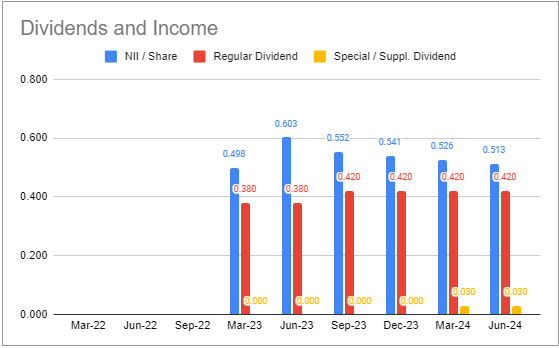
Base dividend coverage remained fairly high at around 122%. Total dividend coverage was 114%.
Systematic Income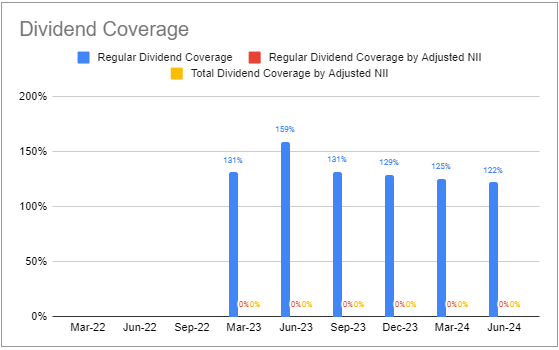
The company declared the same $0.42 regular dividend as well as a special $0.03 dividend.
The NAV came in flat to the previous quarter as a small net realized loss was offset by retained income.
BCSF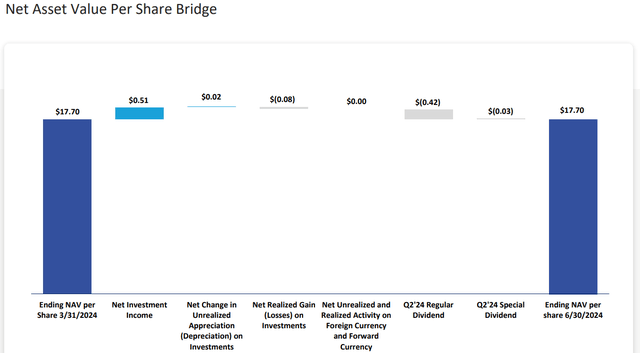
The NAV has been very stable over the last 3 years.
Systematic Income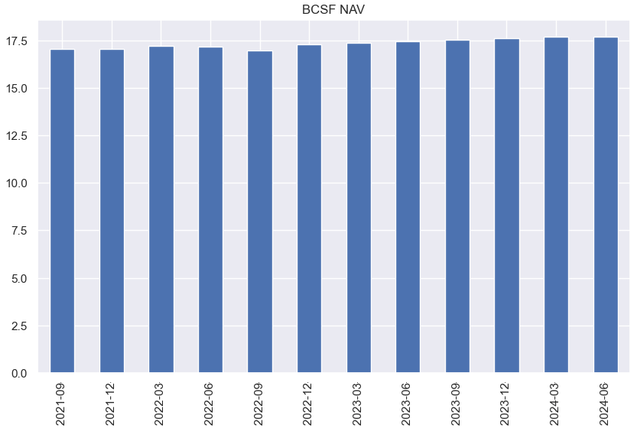
Income Dynamics
Net new investments were down over the quarter as repayments exceeded net fundings.
Systematic Income BDC Tool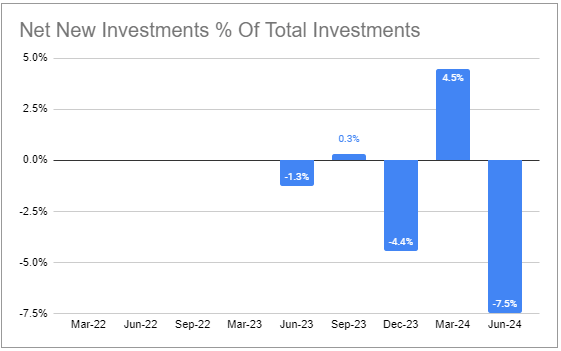
This caused leverage to fall significantly from Q1 to the bottom of the target range of 1-1.25x. Leverage is running on the lower side of the sector range.
Systematic Income BDC Tool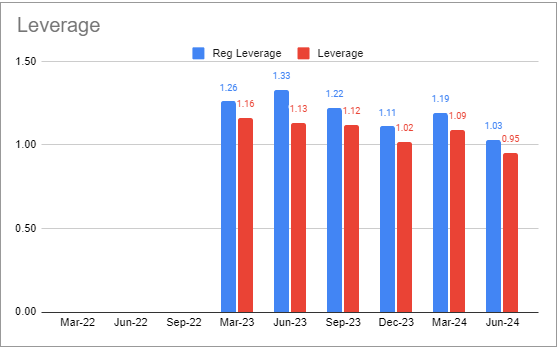
Both portfolios yield and interest expense were relatively stable. The company’s yield spread of 8% is well above the sector average level of 6.7%.
Systematic Income BDC Tool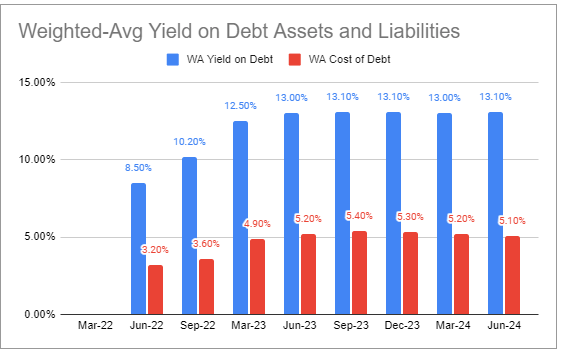
This wide yield spread is due to the company’s extremely low level of interest expense at just 5.1% – the second-lowest level in our coverage. This significant competitive advantage will carry on for another 18 months or so at which point it will move closer to the BDC average level.
BCSF
The impact of changes in SOFR on net investment income is about 6.3% for each 1% change in SOFR. That means that, based on the consensus of around 2% in rate cuts coming up, net investment income should settle slightly above the current base dividend.
Portfolio Quality
Non-accruals have been stable and remain below the sector-average level.
Systematic Income BDC Tool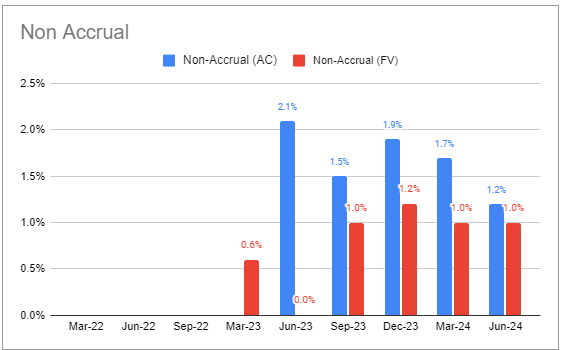
Investments in the lowest two buckets were flat vs. the previous quarter.
Systematic Income BDC Tool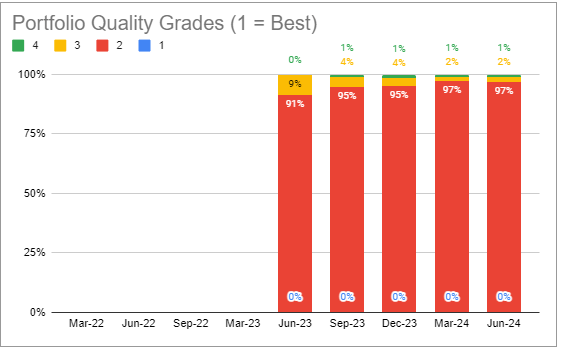
The company has been focused on first-lien lending in its recent investments which is good to see.
BCSF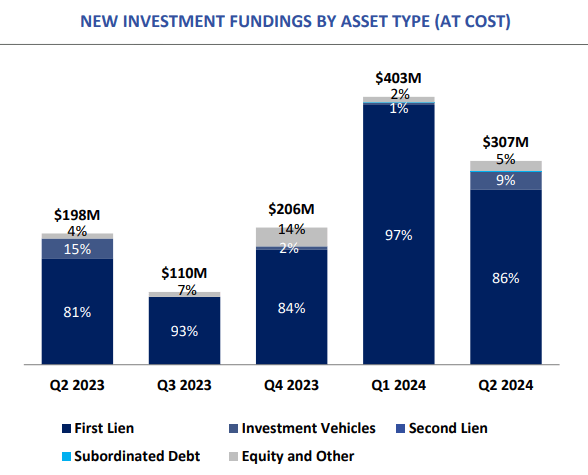
Its first-lien allocation at around 80% is in line with the sector average level however its combination of preferred and equity allocation of 15% is above the sector average.
Return And Valuation Profile
The company has delivered strong longer-term returns, on par with the sector over the last 5 years (if we include the additional rights offering benefit) and stronger than the sector over the past 1-3 years. We discussed the rights offering and its impact in our last article on the stock.
Systematic Income BDC Tool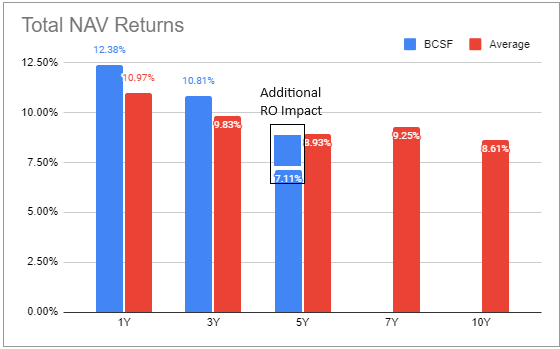
The stock has rarely traded at a premium. Its valuation has recently fallen to below 90%.
Systematic Income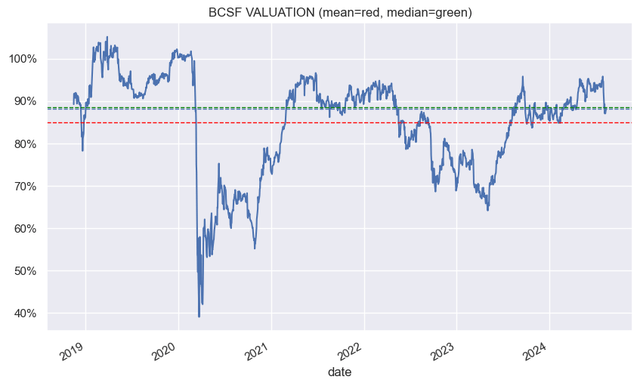
It has not traded at a premium to the sector since prior to COVID. It’s possible that the optics around the rights offering have kept the valuation low despite the fact that its total NAV return is on par or better than the sector average.
Systematic Income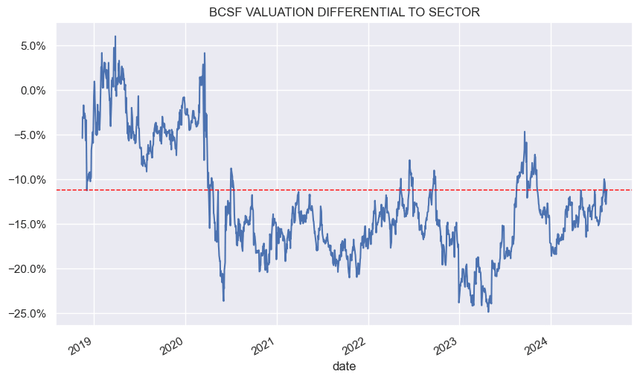
Combining the 3-year total NAV return with its valuation we see that it is one of the better performers per unit of valuation in our coverage.
Systematic Income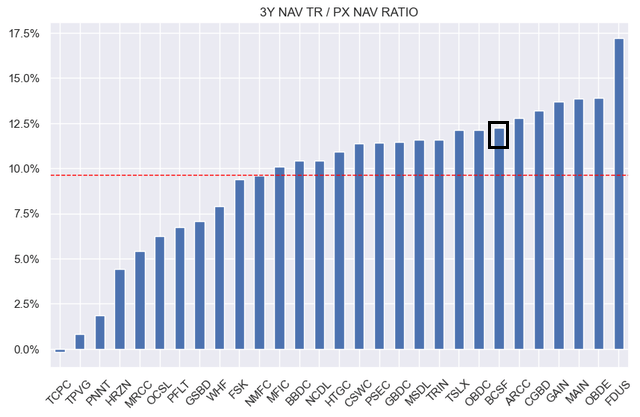
Stance And Takeaways
We recently added BCSF to our Income Portfolios. The stock has an attractive combination of strong performance and cheap valuation. Its ultra-low level of interest expense will be a big competitive advantage for another 18 months. A stable credit profile as well as a focus on middle-market borrowers makes it a great diversifier to the larger BDCs.
Credit: Source link