• bitcoinBitcoin(BTC)$86,302.000.49%
  • ethereumEthereum(ETH)$2,742.180.19%
  • tetherTether(USDT)$1.000.00%
  • binancecoinBNB(BNB)$788.05-1.79%
  • rippleXRP(XRP)$1.575.20%
  • usd-coinUSDC(USDC)$1.000.00%
  • solanaSolana(SOL)$117.17-0.34%
  • tronTRON(TRX)$0.341479-1.11%
  • zcashZcash(ZEC)$1,536.952.72%
  • Figure HelocFigure Heloc(FIGR_HELOC)$1.01-3.22%
  • HyperliquidHyperliquid(HYPE)$95.001.80%
  • dogecoinDogecoin(DOGE)$0.0998274.11%
  • moneroMonero(XMR)$573.090.45%
  • whitebitWhiteBIT Coin(WBT)$86.660.33%
  • chainlinkChainlink(LINK)$13.000.30%
  • USDSUSDS(USDS)$1.00-0.02%
  • RainRain(RAIN)$0.013423-5.05%
  • cardanoCardano(ADA)$0.2515253.29%
  • leo-tokenLEO Token(LEO)$8.970.61%
  • stellarStellar(XLM)$0.2132741.91%
  • bitcoin-cashBitcoin Cash(BCH)$326.4224.19%
  • uniswapUniswap(UNI)$9.275.06%
  • nearNEAR Protocol(NEAR)$4.408.61%
  • avalanche-2Avalanche(AVAX)$11.16-0.34%
  • Ethena USDeEthena USDe(USDE)$1.00-0.04%
  • litecoinLitecoin(LTC)$61.24-1.72%
  • CantonCanton(CC)$0.115803-0.35%
  • daiDai(DAI)$1.000.01%
  • USD1USD1(USD1)$1.00-0.03%
  • hedera-hashgraphHedera(HBAR)$0.0981607.90%
  • suiSui(SUI)$1.01-0.99%
  • the-open-networkGram (prev. Toncoin)(GRAM)$1.440.43%
  • BittensorBittensor(TAO)$314.379.85%
  • shiba-inuShiba Inu(SHIB)$0.0000062.87%
  • crypto-com-chainCronos(CRO)$0.0663574.46%
  • Global DollarGlobal Dollar(USDG)$1.000.00%
  • MemeCoreMemeCore(M)$1.30-12.72%
  • paypal-usdPayPal USD(PYUSD)$1.000.00%
  • tether-goldTether Gold(XAUT)$4,330.02-0.47%
  • okbOKB(OKB)$122.10-0.98%
  • Circle USYCCircle USYC(USYC)$1.140.01%
  • Ripple USDRipple USD(RLUSD)$1.000.00%
  • BitwayBitway(BTW)$0.86-3.99%
  • BlackRock USD Institutional Digital Liquidity FundBlackRock USD Institutional Digital Liquidity Fund(BUIDL)$1.000.00%
  • Ondo US Dollar YieldOndo US Dollar Yield(USDY)$1.140.04%
  • aaveAave(AAVE)$143.460.06%
  • mantleMantle(MNT)$0.662.49%
  • OndoOndo(ONDO)$0.429551-2.29%
  • EthenaEthena(ENA)$0.206385-4.17%
  • Pump.funPump.fun(PUMP)$0.0044442.42%
TradePoint.io
  • Main
  • AI & Technology
  • Stock Charts
  • Market & News
  • Business
  • Finance Tips
  • Trade Tube
  • Blog
  • Shop
No Result
View All Result
TradePoint.io
No Result
View All Result

Assessing Noise Impact on Machine Learning Models for Voice Disorder Evaluation

August 3, 2024
in AI & Technology
Reading Time: 4 mins read
A A
Assessing Noise Impact on Machine Learning Models for Voice Disorder Evaluation
ShareShareShareShareShare

Deep learning has become a powerful tool for classifying pathological voices, particularly in the GRBAS (Grade, Roughness, Breathiness, Asthenia, Strain) scale assessment. The GRBAS scale is a standardized method clinicians use to evaluate voice disorders based on auditory-perceptual judgment. Traditional methods for classifying pathological voices often rely on manual feature extraction and subjective analysis, which can be time-consuming and inconsistent. Deep learning techniques such as 1D convolutional neural networks (1D-CNNs) offer significant advantages by automatically learning relevant features from raw audio data, capturing complex patterns and nuances indicative of specific pathological conditions.

However, noise can significantly impact the accuracy of these models. Since they rely on extracting subtle features from voice signals, any background noise or distortion can obscure important characteristics, leading to misclassification. Noise from recording environments, equipment, or background sounds poses a critical challenge in developing reliable voice pathology detection systems. Preprocessing techniques like noise reduction and signal enhancement are often employed, but they may only sometimes be sufficient to eliminate the effects of noise on classification performance.

YOU MAY ALSO LIKE

How To Enter VR Mode On Steam

Peloton Has Made A Foldable (Treadmill)

In this context, a new paper was recently published in the journal The Laryngoscope, which aims to assess the impact of background noise on machine learning models used for evaluating the GRBAS scale in voice disorder assessments.

In this study, the authors created a unique dataset from clinical patients’ voice samples recorded in a soundproof room. These samples were rated according to the GRBAS scale by otolaryngologists and an expert speech and language therapist. The ratings’ median values were adopted as the correct answers, and inter-rater agreement was evaluated using Krippendorff’s alpha.

The machine learning model was a 5-layer 1D-CNN, constructed and evaluated using TensorFlow. The dataset was divided into 80% training, 10% validation, and 10% test data. The training process was conducted without noise data. Gaussian noise of various intensities was added to the test samples to assess noise resilience. The model’s performance was evaluated using accuracy, F1 score, and quadratic weighted Cohen’s kappa score under different noise conditions. The study highlights the significance of noise as a challenge in applying machine learning models to real-world scenarios like examination rooms.

The dataset of voice samples, balanced for age and gender, showed that the deep learning model performed well with noise-free data. As Gaussian noise intensity increased, performance metrics dropped significantly, with accuracy falling dramatically at the highest noise level. This degradation was observed across all GRBAS parameters, with certain scales showing the most significant declines.

The study found that background noise severely affects the model’s accuracy and performance metrics. The model’s effectiveness decreased as noise levels increased, highlighting its vulnerability to real-world conditions. Certain GRBAS components were more sensitive to noise. The study suggests incorporating noise-resilient techniques such as data augmentation and noise reduction to improve model robustness. Limitations include the small number of evaluators and using only one type of vocal sample, which may not fully capture the variability in voice disorders. Future work should address these issues to enhance the model’s generalizability and performance in noisy environments.

To conclude, the model’s performance significantly declined with increased background noise, impacting the evaluation metrics. Future research should focus on developing noise-tolerant methods, such as data augmentation, to enhance the model’s resilience in real-world conditions. Improving the GRBAS scale’s reliability can make it a valuable tool for both physicians and patients. Automated evaluations can facilitate earlier disease detection, leading to more effective treatments and better support for rehabilitation.


Check out the Paper. All credit for this research goes to the researchers of this project. Also, don’t forget to follow us on Twitter and join our Telegram Channel and LinkedIn Group. If you like our work, you will love our newsletter..

Don’t Forget to join our 47k+ ML SubReddit

Find Upcoming AI Webinars here


Mahmoud is a PhD researcher in machine learning. He also holds a
bachelor’s degree in physical science and a master’s degree in
telecommunications and networking systems. His current areas of
research concern computer vision, stock market prediction and deep
learning. He produced several scientific articles about person re-
identification and the study of the robustness and stability of deep
networks.


Credit: Source link

ShareTweetSendSharePin

Related Posts

How To Enter VR Mode On Steam
AI & Technology

How To Enter VR Mode On Steam

September 22, 2026
Peloton Has Made A Foldable (Treadmill)
AI & Technology

Peloton Has Made A Foldable (Treadmill)

September 22, 2026
OpenAI Faces Lawsuit From British Columbia Over Tumbler Ridge Shooting
AI & Technology

OpenAI Faces Lawsuit From British Columbia Over Tumbler Ridge Shooting

September 22, 2026
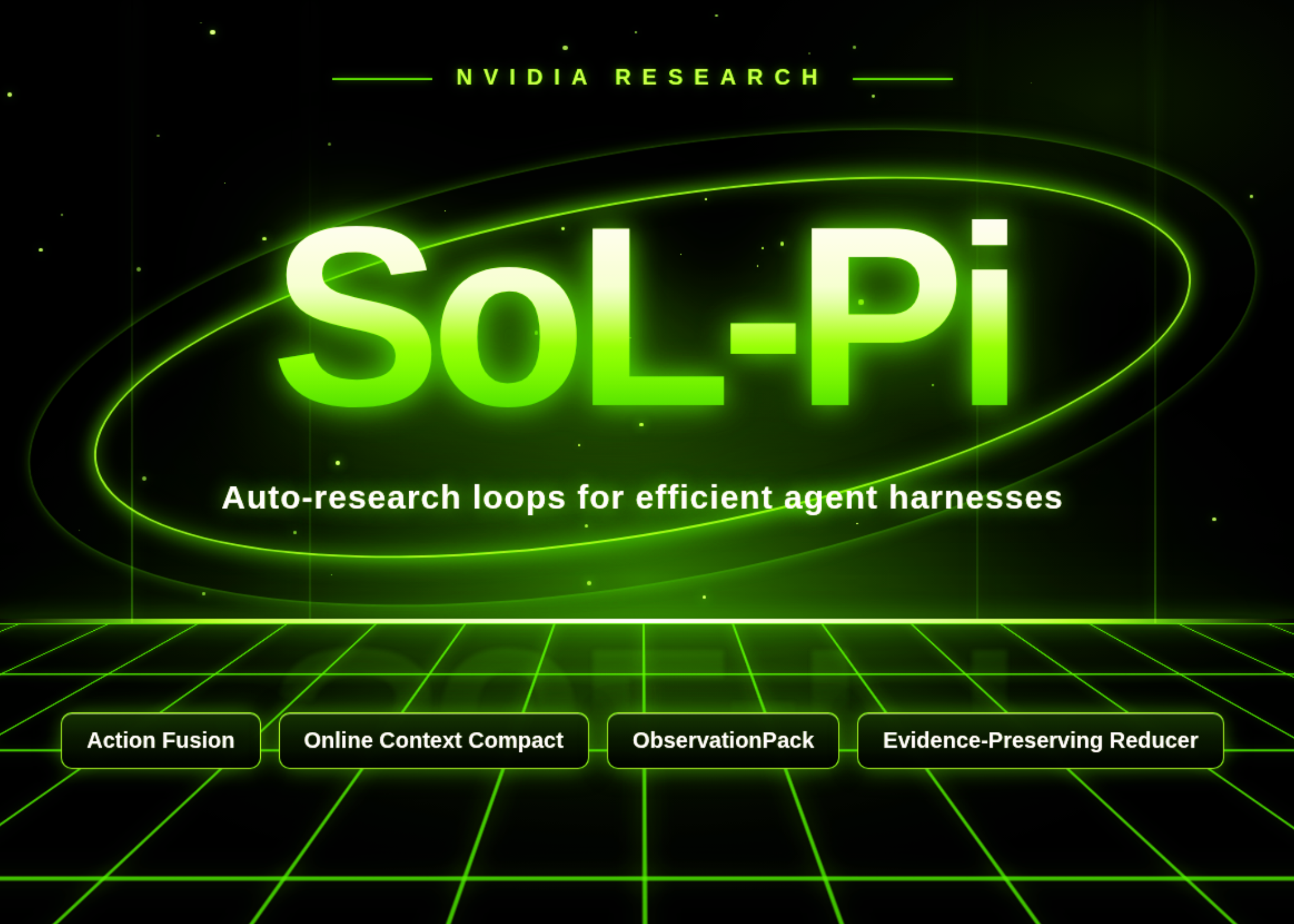
NVIDIA Introduces SoL-Pi: Auto-Research Loops That Cut Coding Agent Token Traffic by Up to 49%
AI & Technology

NVIDIA Introduces SoL-Pi: Auto-Research Loops That Cut Coding Agent Token Traffic by Up to 49%

September 22, 2026
Next Post
Zebras run loose on I-90 in Washington

Zebras run loose on I-90 in Washington

Leave a Reply Cancel reply

Your email address will not be published. Required fields are marked *

Search

No Result
View All Result
NYT writer Nikole Hannah-Jones sent daughter to troubled schools as a ‘sacrifice’ — and it backfired

NYT writer Nikole Hannah-Jones sent daughter to troubled schools as a ‘sacrifice’ — and it backfired

September 20, 2026
Tate brothers ask judge to be released from Miami jail as they fight extradition to U.K.

Tate brothers ask judge to be released from Miami jail as they fight extradition to U.K.

September 22, 2026
Michael Minogue wins Massachusetts Republican governor primary, NBC News projects

Michael Minogue wins Massachusetts Republican governor primary, NBC News projects

September 19, 2026

About

Learn more

Our Services

Legal

Privacy Policy

Terms of Use

Bloggers

Learn more

Article Links

Contact

Advertise

Ask us anything

©2020- TradePoint.io - All rights reserved!

Tradepoint.io, being just a publishing and technology platform, is not a registered broker-dealer or investment adviser. So we do not provide investment advice. Rather, brokerage services are provided to clients of Tradepoint.io by independent SEC-registered broker-dealers and members of FINRA/SIPC. Every form of investing carries some risk and past performance is not a guarantee of future results. “Tradepoint.io“, “Instant Investing” and “My Trading Tools” are registered trademarks of Apperbuild, LLC.

This website is operated by Apperbuild, LLC. We have no link to any brokerage firm and we do not provide investment advice. Every information and resource we provide is solely for the education of our readers. © 2020 Apperbuild, LLC. All rights reserved.

No Result
View All Result
  • Main
  • AI & Technology
  • Stock Charts
  • Market & News
  • Business
  • Finance Tips
  • Trade Tube
  • Blog
  • Shop

© 2023 - TradePoint.io - All Rights Reserved!