






• bitcoinBitcoin(BTC)$85,496.005.32%
  • ethereumEthereum(ETH)$2,743.993.28%
  • tetherTether(USDT)$1.000.01%
  • binancecoinBNB(BNB)$787.731.43%
  • rippleXRP(XRP)$1.516.78%
  • usd-coinUSDC(USDC)$1.000.01%
  • solanaSolana(SOL)$117.325.37%
  • tronTRON(TRX)$0.3483461.61%
  • zcashZcash(ZEC)$1,464.47-3.27%
  • Figure HelocFigure Heloc(FIGR_HELOC)$1.011.25%
  • HyperliquidHyperliquid(HYPE)$92.970.21%
  • dogecoinDogecoin(DOGE)$0.09952413.23%
  • moneroMonero(XMR)$581.932.72%
  • whitebitWhiteBIT Coin(WBT)$86.093.58%
  • RainRain(RAIN)$0.013859-2.31%
  • chainlinkChainlink(LINK)$12.983.59%
  • USDSUSDS(USDS)$1.000.00%
  • cardanoCardano(ADA)$0.2450067.55%
  • leo-tokenLEO Token(LEO)$8.960.37%
  • stellarStellar(XLM)$0.2109907.22%
  • nearNEAR Protocol(NEAR)$4.364.74%
  • uniswapUniswap(UNI)$9.125.58%
  • bitcoin-cashBitcoin Cash(BCH)$264.384.71%
  • avalanche-2Avalanche(AVAX)$11.10-0.36%
  • Ethena USDeEthena USDe(USDE)$1.000.00%
  • litecoinLitecoin(LTC)$60.953.93%
  • CantonCanton(CC)$0.1175505.80%
  • daiDai(DAI)$1.000.01%
  • USD1USD1(USD1)$1.000.00%
  • suiSui(SUI)$1.0412.02%
  • the-open-networkGram (prev. Toncoin)(GRAM)$1.455.16%
  • hedera-hashgraphHedera(HBAR)$0.0918057.36%
  • BittensorBittensor(TAO)$314.5119.52%
  • shiba-inuShiba Inu(SHIB)$0.0000069.18%
  • Global DollarGlobal Dollar(USDG)$1.000.00%
  • crypto-com-chainCronos(CRO)$0.0657058.67%
  • MemeCoreMemeCore(M)$1.43-5.42%
  • paypal-usdPayPal USD(PYUSD)$1.000.02%
  • tether-goldTether Gold(XAUT)$4,350.44-0.56%
  • okbOKB(OKB)$122.733.34%
  • Circle USYCCircle USYC(USYC)$1.140.01%
  • Ripple USDRipple USD(RLUSD)$1.00-0.02%
  • BlackRock USD Institutional Digital Liquidity FundBlackRock USD Institutional Digital Liquidity Fund(BUIDL)$1.000.00%
  • Ondo US Dollar YieldOndo US Dollar Yield(USDY)$1.150.00%
  • aaveAave(AAVE)$143.884.76%
  • pepePepe(PEPE)$0.00000527.08%
  • OndoOndo(ONDO)$0.4384743.23%
  • EthenaEthena(ENA)$0.211535-0.05%
  • mantleMantle(MNT)$0.645.16%
  • Pump.funPump.fun(PUMP)$0.0044724.98%
TradePoint.io
  • Main
  • AI & Technology
  • Stock Charts
  • Market & News
  • Business
  • Finance Tips
  • Trade Tube
  • Blog
  • Shop
No Result
View All Result
TradePoint.io
No Result
View All Result

This AI Paper from Cohere AI Introduces a Multi-faceted Approach to AI Governance by Rethinking Compute Thresholds

July 25, 2024
in AI & Technology
Reading Time: 5 mins read
A A
This AI Paper from Cohere AI Introduces a Multi-faceted Approach to AI Governance by Rethinking Compute Thresholds
ShareShareShareShareShare

As AI systems become more advanced, ensuring their safe and ethical deployment has become a critical concern for researchers and policymakers. One of the pressing issues in AI governance is the management of risks associated with increasingly powerful AI systems. These risks include potential misuse, ethical concerns, and unintended consequences that could arise from AI’s growing capabilities. Policymakers are exploring various strategies to mitigate these risks, but the challenge lies in accurately predicting and controlling the potential harms AI systems might cause as they scale.

Current governance strategies often rely on defining thresholds for the computational power (measured in FLOP – floating-point operations) used to train AI models. These thresholds are intended to identify and regulate AI systems that exceed certain levels of computational intensity under the assumption that higher compute correlates with greater risk. Frameworks like the White House Executive Orders on AI Safety and the EU AI Act have incorporated these thresholds into their policies.

YOU MAY ALSO LIKE

Why Is Your Laptop Fan So Loud?

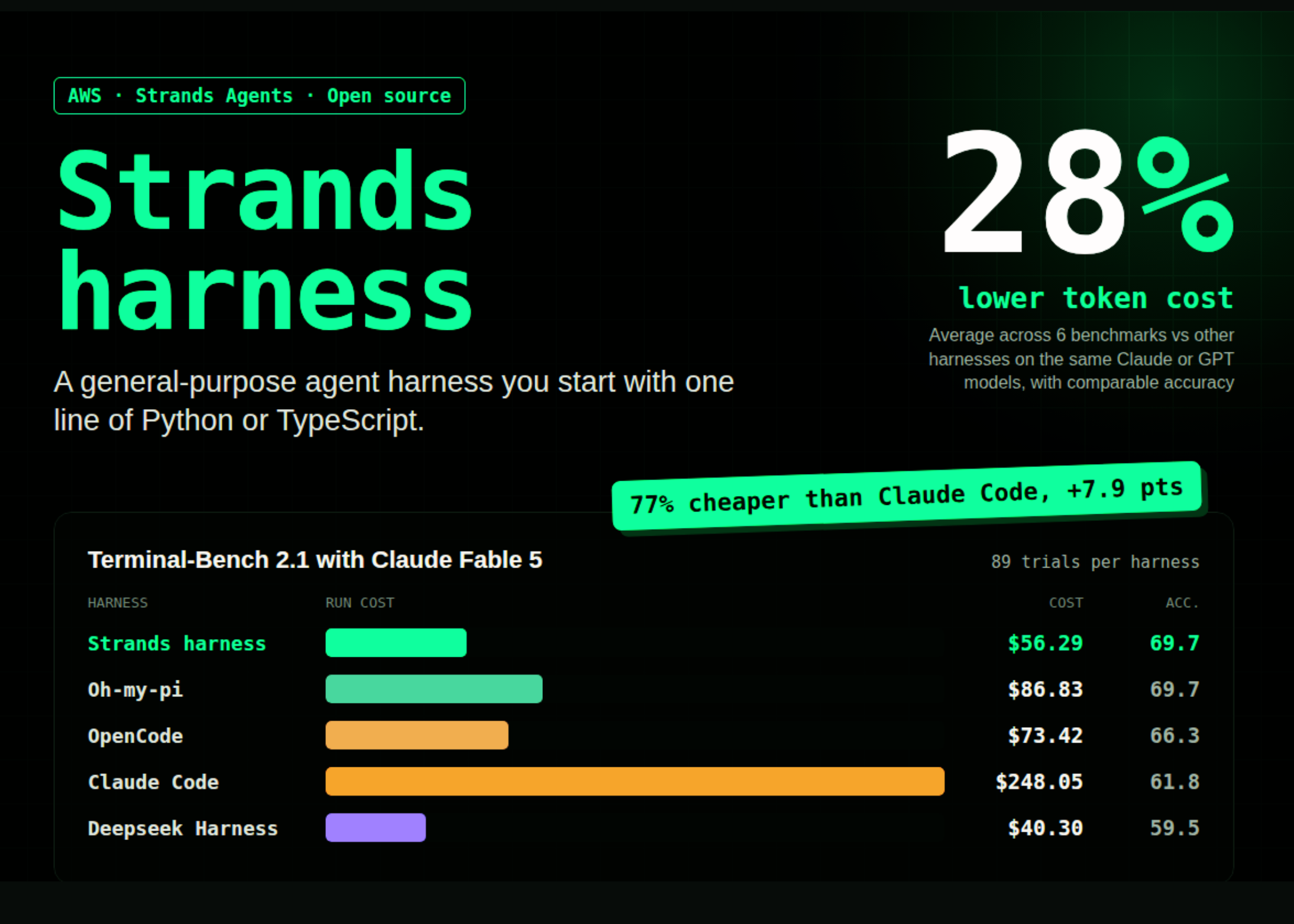
AWS Strands Agents Team Releases Strands Harness: An Open-Source Agent Harness With 28% Lower Token Cost at Comparable Accuracy

Cohere for AI researcher has introduced a critical examination of these compute thresholds as a governance tool. They argue that current implementations are shortsighted and fail to effectively mitigate risks. They emphasize that the relationship between compute and risk is highly uncertain and rapidly evolving. Instead of relying solely on compute thresholds, they suggest a more nuanced approach to AI governance that considers multiple factors influencing AI’s risk profile.

The proposed approach advocates for a dynamic and comprehensive evaluation of AI systems rather than fixed compute thresholds. This includes better specifying FLOP as a metric, considering additional dimensions of AI performance and risk, and implementing adaptive thresholds that adjust to the evolving landscape of AI capabilities. The researchers recommend enhancing transparency and standardization in reporting AI risks and aligning governance practices with the actual performance and potential harms of AI systems. This comprehensive method involves examining factors such as the quality of training data, optimization techniques, and the specific applications of AI models to ensure a more accurate assessment of potential risks.

The research highlights that fixed compute thresholds often miss significant risks associated with smaller, highly optimized AI models. Empirical evidence suggests that many current policies need to account for the rapid advancements and optimization techniques that can make smaller models as capable and risky as larger ones. For instance, models with less than 13 billion parameters have been shown to outperform larger models with over 176 billion parameters in certain tasks. This oversight indicates that compute thresholds, as currently applied, are unreliable predictors of AI risks and need substantial revision to be effective.
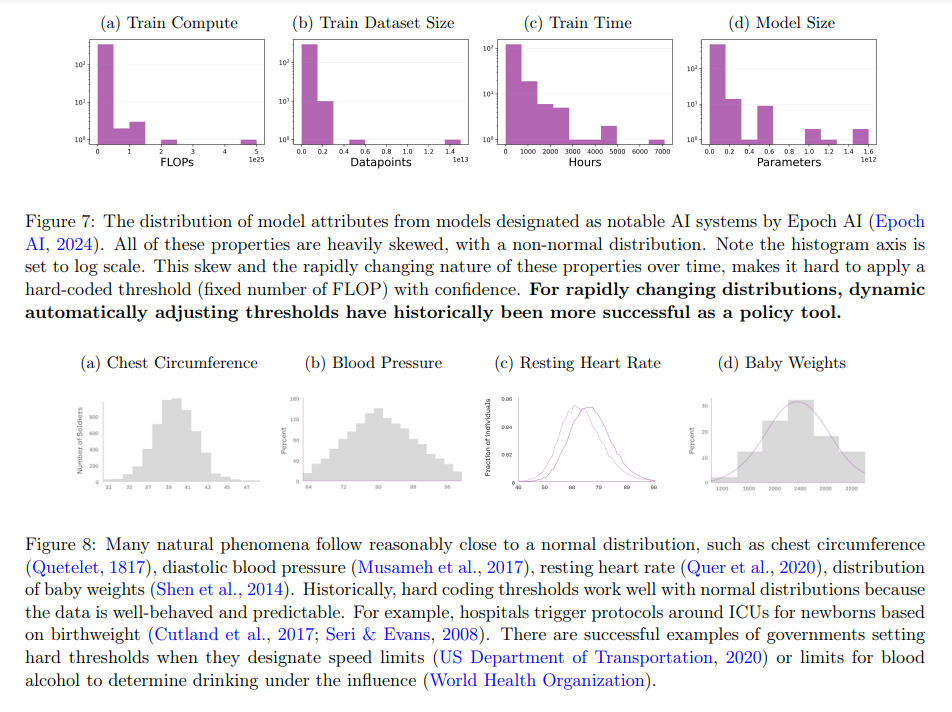
One noteworthy result from the research is that smaller models, when optimized, can achieve performance levels comparable to much larger models. For example, the study found that smaller models could reach up to 77.15% performance scores on benchmark tests, a significant improvement from the 38.59% average just two years prior. Furthermore, the researchers pointed out that the current thresholds, such as those set by the EU AI Act and the White House Executive Order, do not capture the nuances of model performance and risk, as they primarily focus on the sheer amount of compute without considering the specific capabilities and optimizations of the models.

In conclusion, the research underscores the inadequacy of compute thresholds as a standalone governance tool for AI. The problem lies in the unpredictable relationship between compute and risk, necessitating a more flexible and informed approach to regulation. The proposed solution involves shifting towards dynamic thresholds and multi-faceted risk assessments that can better anticipate and mitigate the risks posed by advanced AI systems. Researchers emphasize the need for policies that evolve with the technology and accurately reflect the complexities of modern AI development.


Check out the Paper. All credit for this research goes to the researchers of this project. Also, don’t forget to follow us on Twitter and join our Telegram Channel and LinkedIn Group. If you like our work, you will love our newsletter..

Don’t Forget to join our 47k+ ML SubReddit

Find Upcoming AI Webinars here


Nikhil is an intern consultant at Marktechpost. He is pursuing an integrated dual degree in Materials at the Indian Institute of Technology, Kharagpur. Nikhil is an AI/ML enthusiast who is always researching applications in fields like biomaterials and biomedical science. With a strong background in Material Science, he is exploring new advancements and creating opportunities to contribute.


Credit: Source link

ShareTweetSendSharePin

Related Posts

Why Is Your Laptop Fan So Loud?
AI & Technology

Why Is Your Laptop Fan So Loud?

September 22, 2026
AWS Strands Agents Team Releases Strands Harness: An Open-Source Agent Harness With 28% Lower Token Cost at Comparable Accuracy
AI & Technology

AWS Strands Agents Team Releases Strands Harness: An Open-Source Agent Harness With 28% Lower Token Cost at Comparable Accuracy

September 21, 2026
Bungie Leaders Now Say The Studio’s ‘Not Done With Destiny’
AI & Technology

Bungie Leaders Now Say The Studio’s ‘Not Done With Destiny’

September 21, 2026
Here’s Why Apple’s Mac Studio Has Become So Expensive
AI & Technology

Here’s Why Apple’s Mac Studio Has Become So Expensive

September 21, 2026
Next Post
Trump’s allies defend him outside NYC courthouse

Trump’s allies defend him outside NYC courthouse

Leave a Reply Cancel reply

Your email address will not be published. Required fields are marked *

Search

No Result
View All Result
BREAKING: Judge declares mistrial in Lindsay Clancy trial

BREAKING: Judge declares mistrial in Lindsay Clancy trial

September 17, 2026
House nearly engulfed by Nepal floodwaters

House nearly engulfed by Nepal floodwaters

September 21, 2026
Mourners gather in Oslo to pay respects to King Harald V

Mourners gather in Oslo to pay respects to King Harald V

September 21, 2026

About

Learn more

Our Services

Legal

Privacy Policy

Terms of Use

Bloggers

Learn more

Article Links

Contact

Advertise

Ask us anything

©2020- TradePoint.io - All rights reserved!

Tradepoint.io, being just a publishing and technology platform, is not a registered broker-dealer or investment adviser. So we do not provide investment advice. Rather, brokerage services are provided to clients of Tradepoint.io by independent SEC-registered broker-dealers and members of FINRA/SIPC. Every form of investing carries some risk and past performance is not a guarantee of future results. “Tradepoint.io“, “Instant Investing” and “My Trading Tools” are registered trademarks of Apperbuild, LLC.

This website is operated by Apperbuild, LLC. We have no link to any brokerage firm and we do not provide investment advice. Every information and resource we provide is solely for the education of our readers. © 2020 Apperbuild, LLC. All rights reserved.

No Result
View All Result
  • Main
  • AI & Technology
  • Stock Charts
  • Market & News
  • Business
  • Finance Tips
  • Trade Tube
  • Blog
  • Shop

© 2023 - TradePoint.io - All Rights Reserved!