


• bitcoinBitcoin(BTC)$86,475.000.41%
  • ethereumEthereum(ETH)$2,761.41-0.28%
  • tetherTether(USDT)$1.000.01%
  • binancecoinBNB(BNB)$791.15-0.77%
  • rippleXRP(XRP)$1.593.53%
  • usd-coinUSDC(USDC)$1.000.01%
  • solanaSolana(SOL)$118.89-0.18%
  • tronTRON(TRX)$0.342280-1.12%
  • zcashZcash(ZEC)$1,617.199.93%
  • Figure HelocFigure Heloc(FIGR_HELOC)$1.031.80%
  • HyperliquidHyperliquid(HYPE)$97.423.87%
  • dogecoinDogecoin(DOGE)$0.100872-0.05%
  • moneroMonero(XMR)$564.72-3.86%
  • whitebitWhiteBIT Coin(WBT)$86.800.13%
  • chainlinkChainlink(LINK)$13.03-0.99%
  • USDSUSDS(USDS)$1.000.00%
  • cardanoCardano(ADA)$0.2548862.97%
  • RainRain(RAIN)$0.013116-5.98%
  • leo-tokenLEO Token(LEO)$8.980.49%
  • stellarStellar(XLM)$0.2167650.21%
  • bitcoin-cashBitcoin Cash(BCH)$341.0426.61%
  • uniswapUniswap(UNI)$10.3313.13%
  • nearNEAR Protocol(NEAR)$4.391.67%
  • avalanche-2Avalanche(AVAX)$11.17-0.14%
  • Ethena USDeEthena USDe(USDE)$1.000.00%
  • litecoinLitecoin(LTC)$62.921.44%
  • daiDai(DAI)$1.00-0.03%
  • CantonCanton(CC)$0.115578-3.40%
  • USD1USD1(USD1)$1.00-0.01%
  • hedera-hashgraphHedera(HBAR)$0.0989765.89%
  • suiSui(SUI)$1.02-4.85%
  • the-open-networkGram (prev. Toncoin)(GRAM)$1.460.07%
  • shiba-inuShiba Inu(SHIB)$0.0000060.34%
  • BittensorBittensor(TAO)$312.30-1.54%
  • crypto-com-chainCronos(CRO)$0.067043-1.80%
  • Global DollarGlobal Dollar(USDG)$1.000.01%
  • MemeCoreMemeCore(M)$1.31-9.09%
  • paypal-usdPayPal USD(PYUSD)$1.00-0.01%
  • tether-goldTether Gold(XAUT)$4,355.28-0.07%
  • okbOKB(OKB)$123.72-1.67%
  • Circle USYCCircle USYC(USYC)$1.140.01%
  • BitwayBitway(BTW)$0.9016.34%
  • Ripple USDRipple USD(RLUSD)$1.000.01%
  • BlackRock USD Institutional Digital Liquidity FundBlackRock USD Institutional Digital Liquidity Fund(BUIDL)$1.000.00%
  • aaveAave(AAVE)$147.751.13%
  • Ondo US Dollar YieldOndo US Dollar Yield(USDY)$1.15-0.13%
  • mantleMantle(MNT)$0.684.20%
  • EthenaEthena(ENA)$0.215407-0.57%
  • OndoOndo(ONDO)$0.437480-4.75%
  • pepePepe(PEPE)$0.000005-3.03%
TradePoint.io
  • Main
  • AI & Technology
  • Stock Charts
  • Market & News
  • Business
  • Finance Tips
  • Trade Tube
  • Blog
  • Shop
No Result
View All Result
TradePoint.io
No Result
View All Result

Q-Sparse: A New Artificial Intelligence AI Approach to Enable Full Sparsity of Activations in LLMs

July 20, 2024
in AI & Technology
Reading Time: 4 mins read
A A
Q-Sparse: A New Artificial Intelligence AI Approach to Enable Full Sparsity of Activations in LLMs
ShareShareShareShareShare

LLMs excel in natural language processing tasks but face deployment challenges due to high computational and memory demands during inference. Recent research [MWM+24, WMD+23, SXZ+24, XGZC23, LKM23] aims to enhance LLM efficiency through quantization, pruning, distillation, and improved decoding. Sparsity, a key approach, reduces computation by omitting zero elements and lessens I/O transfer between memory and computation units. While weight sparsity saves computation, it struggles with GPU parallelization and accuracy loss. Activation sparsity, achieved via techniques like the mixture-of-experts (MoE) mechanism, also needs full efficiency and requires further study on scaling laws compared to dense models.

Researchers from Microsoft and the University of Chinese Academy of Sciences have developed Q-Sparse, an efficient approach for training sparsely-activated LLMs. Q-Sparse enables full activation sparsity by applying top-K sparsification to activations and using a straight-through estimator during training, significantly enhancing inference efficiency. Key findings include achieving baseline LLM performance with lower inference costs, establishing an optimal scaling law for sparsely-activated LLMs, and demonstrating effectiveness in various training settings. Q-Sparse works with full-precision and 1-bit models, offering a path to more efficient, cost-effective, and energy-saving LLMs.

YOU MAY ALSO LIKE

The Pros And Cons Of Using A Password Manager Over An Authenticator App

Why Are Some Songs Grayed Out On Apple Music (And How To Fix It)

Q-Sparse enhances the Transformer architecture by enabling full sparsity in activations through top-K sparsification and the straight-through estimator (STE). This approach applies a top-K function to the activations during matrix multiplication, reducing computational costs and memory footprint. It supports full-precision and quantized models, including 1-bit models like BitNet b1.58. Additionally, Q-Sparse uses squared ReLU for feed-forward layers to improve activation sparsity. For training, it overcomes gradient vanishing by using STE. Q-Sparse is effective for training from scratch, continue-training, and fine-tuning, maintaining efficiency and performance across various settings.

Recent studies show that LLM performance scales with model size and training data follow a power law. The researchers explore this for sparsely-activated LLMs, finding their performance also follows a power law with model size and an exponential statute with sparsity ratio. Experiments reveal that, with a fixed sparsity ratio, sparsely-activated models’ performance scales are similar to those of dense models. The performance gap between sparse and dense models diminishes with increasing model size. An inference-optimal scaling law indicates that sparse models can efficiently match or outperform dense models with proper sparsity, with optimal sparsity ratios of 45.58% for full precision and 61.25% for 1.58-bit models.

The researchers evaluated Q-Sparse LLMs in various settings, including training from scratch, continue-training, and fine-tuning. When training from scratch with 50B tokens, Q-Sparse matched dense baselines at 40% sparsity. BitNet b1.58 models with Q-Sparse outperformed dense baselines with the same compute budget. Continue-training of Mistral 7B showed that Q-Sparse achieved comparable performance to dense baselines but with higher efficiency. Fine-tuning results demonstrated that Q-Sparse models with around 4B activated parameters matched or exceeded the performance of dense 7B models, proving Q-Sparse’s efficiency and effectiveness across training scenarios.

In conclusion, the results show that combining BitNet b1.58 with Q-Sparse offers significant efficiency gains, particularly in inference. The researchers plan to scale up training with more model sizes and tokens and integrate YOCO to optimize KV cache management. Q-Sparse complements MoE and will be adapted for batch processing to enhance its practicality. Q-Sparse performs comparably to dense baselines, enhancing inference efficiency through top-K sparsification and the straight-through estimator. It is effective across various settings and compatible with full-precision and 1-bit models, making it a pivotal approach for improving LLM efficiency and sustainability.


Check out the Paper. All credit for this research goes to the researchers of this project. Also, don’t forget to follow us on Twitter. 

Join our Telegram Channel and LinkedIn Group.

If you like our work, you will love our newsletter..

Don’t Forget to join our 46k+ ML SubReddit


Sana Hassan, a consulting intern at Marktechpost and dual-degree student at IIT Madras, is passionate about applying technology and AI to address real-world challenges. With a keen interest in solving practical problems, he brings a fresh perspective to the intersection of AI and real-life solutions.

🐝 Join the Fastest Growing AI Research Newsletter Read by Researchers from Google + NVIDIA + Meta + Stanford + MIT + Microsoft and many others…


Credit: Source link

ShareTweetSendSharePin

Related Posts

The Pros And Cons Of Using A Password Manager Over An Authenticator App
AI & Technology

The Pros And Cons Of Using A Password Manager Over An Authenticator App

September 23, 2026
Why Are Some Songs Grayed Out On Apple Music (And How To Fix It)
AI & Technology

Why Are Some Songs Grayed Out On Apple Music (And How To Fix It)

September 22, 2026
Motorola’s New Signature 27 Is Among The First Smartphone To Use The Snapdragon 8 Elite Extreme Gen 6 Processor
AI & Technology

Motorola’s New Signature 27 Is Among The First Smartphone To Use The Snapdragon 8 Elite Extreme Gen 6 Processor

September 22, 2026
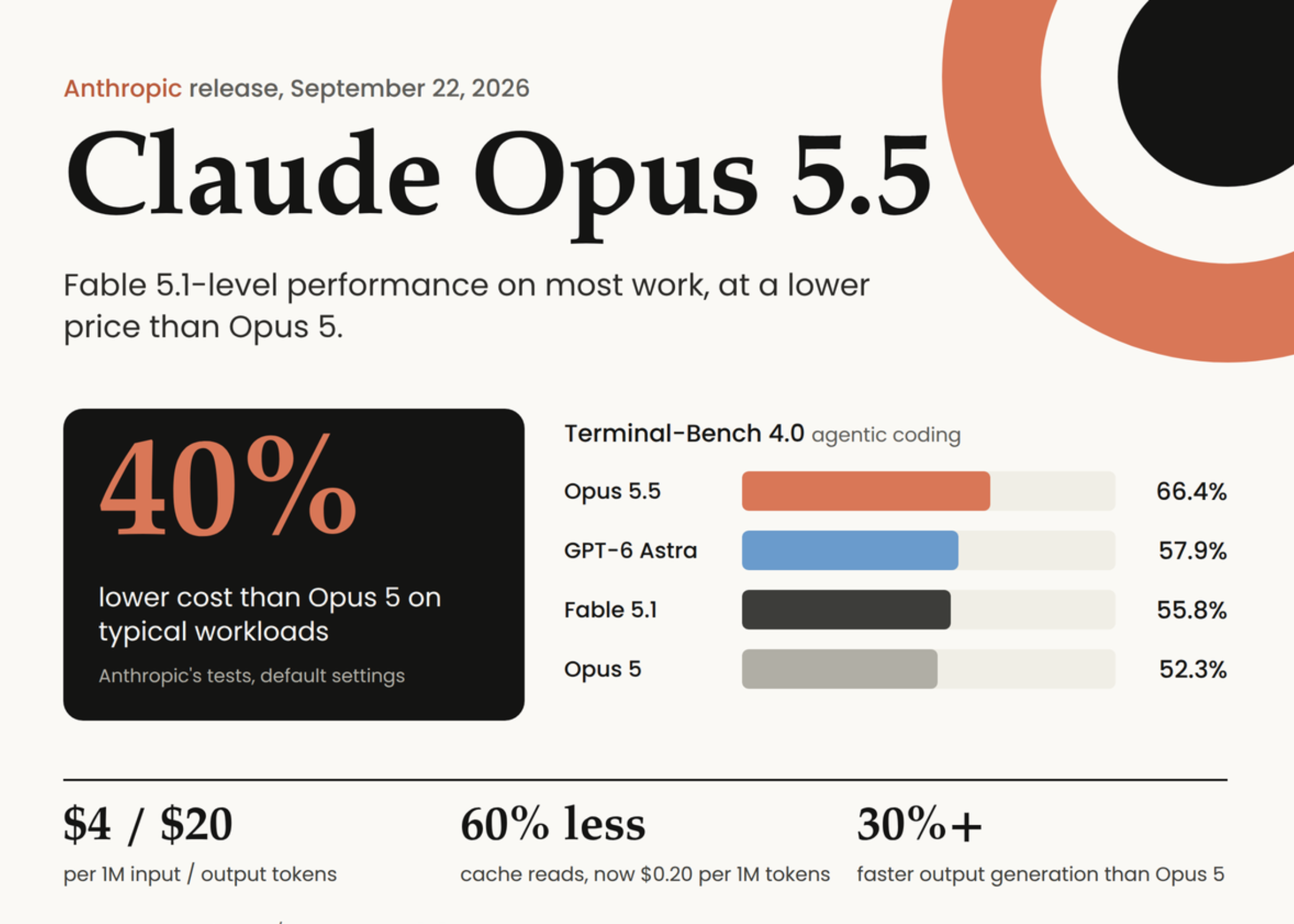
Anthropic Releases Claude Opus 5.5: Fable 5.1-Level Performance at 40% Lower Running Cost Than Opus 5
AI & Technology

Anthropic Releases Claude Opus 5.5: Fable 5.1-Level Performance at 40% Lower Running Cost Than Opus 5

September 22, 2026
Next Post
I Loaned My Dad ,000 (I Was 19)

I Loaned My Dad $40,000 (I Was 19)

Leave a Reply Cancel reply

Your email address will not be published. Required fields are marked *

Search

No Result
View All Result
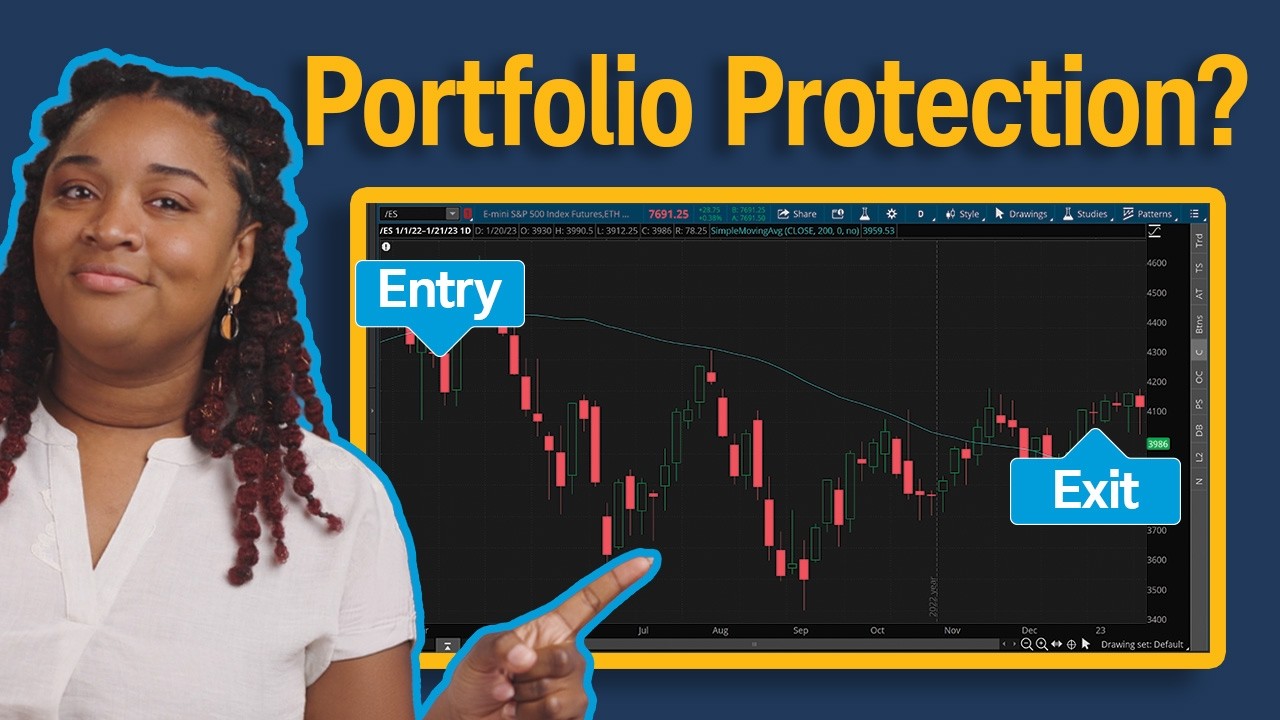
Three Steps to Hedging a Portfolio With Futures

Three Steps to Hedging a Portfolio With Futures

September 16, 2026
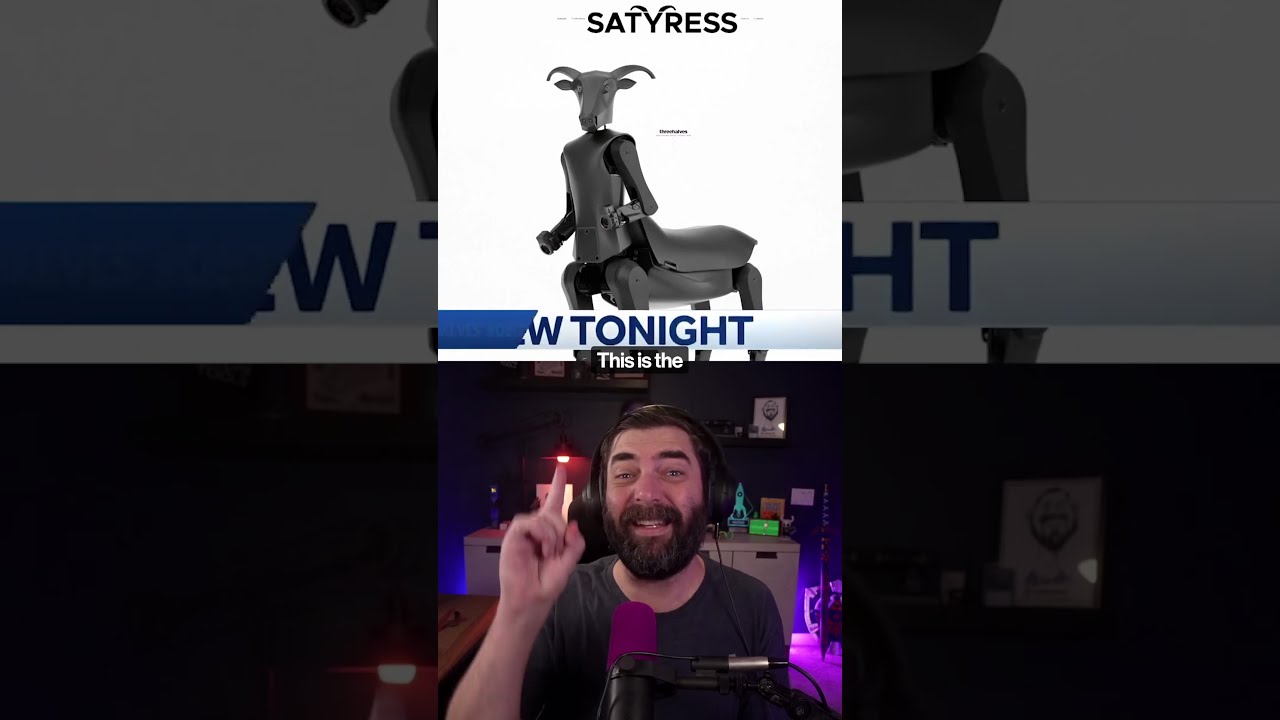
This Robot Looks DEMONIC… On Purpose?

This Robot Looks DEMONIC… On Purpose?

September 21, 2026
Powerful storms blast Midwest

Powerful storms blast Midwest

September 18, 2026

About

Learn more

Our Services

Legal

Privacy Policy

Terms of Use

Bloggers

Learn more

Article Links

Contact

Advertise

Ask us anything

©2020- TradePoint.io - All rights reserved!

Tradepoint.io, being just a publishing and technology platform, is not a registered broker-dealer or investment adviser. So we do not provide investment advice. Rather, brokerage services are provided to clients of Tradepoint.io by independent SEC-registered broker-dealers and members of FINRA/SIPC. Every form of investing carries some risk and past performance is not a guarantee of future results. “Tradepoint.io“, “Instant Investing” and “My Trading Tools” are registered trademarks of Apperbuild, LLC.

This website is operated by Apperbuild, LLC. We have no link to any brokerage firm and we do not provide investment advice. Every information and resource we provide is solely for the education of our readers. © 2020 Apperbuild, LLC. All rights reserved.

No Result
View All Result
  • Main
  • AI & Technology
  • Stock Charts
  • Market & News
  • Business
  • Finance Tips
  • Trade Tube
  • Blog
  • Shop

© 2023 - TradePoint.io - All Rights Reserved!