• bitcoinBitcoin(BTC)$77,393.000.40%
  • ethereumEthereum(ETH)$2,246.811.21%
  • tetherTether(USDT)$1.000.01%
  • binancecoinBNB(BNB)$704.540.86%
  • rippleXRP(XRP)$1.250.37%
  • usd-coinUSDC(USDC)$1.000.02%
  • solanaSolana(SOL)$95.810.30%
  • tronTRON(TRX)$0.318405-4.88%
  • Figure HelocFigure Heloc(FIGR_HELOC)$1.03-0.19%
  • zcashZcash(ZEC)$1,283.454.05%
  • HyperliquidHyperliquid(HYPE)$87.54-4.25%
  • dogecoinDogecoin(DOGE)$0.075315-0.22%
  • moneroMonero(XMR)$593.321.03%
  • USDSUSDS(USDS)$1.000.02%
  • chainlinkChainlink(LINK)$11.594.95%
  • whitebitWhiteBIT Coin(WBT)$74.260.62%
  • leo-tokenLEO Token(LEO)$9.37-0.46%
  • cardanoCardano(ADA)$0.1927120.34%
  • stellarStellar(XLM)$0.1694611.62%
  • bitcoin-cashBitcoin Cash(BCH)$290.041.63%
  • nearNEAR Protocol(NEAR)$4.403.73%
  • daiDai(DAI)$1.000.01%
  • Ethena USDeEthena USDe(USDE)$1.00-0.02%
  • uniswapUniswap(UNI)$6.981.47%
  • RainRain(RAIN)$0.006119-7.59%
  • litecoinLitecoin(LTC)$55.10-0.45%
  • USD1USD1(USD1)$1.000.02%
  • CantonCanton(CC)$0.095987-0.36%
  • avalanche-2Avalanche(AVAX)$8.503.11%
  • suiSui(SUI)$0.901.29%
  • the-open-networkGram (prev. Toncoin)(GRAM)$1.181.74%
  • hedera-hashgraphHedera(HBAR)$0.0719820.19%
  • tether-goldTether Gold(XAUT)$3,874.86-1.32%
  • Global DollarGlobal Dollar(USDG)$1.00-0.02%
  • quant-networkQuant(QNT)$201.154.21%
  • paypal-usdPayPal USD(PYUSD)$1.000.01%
  • shiba-inuShiba Inu(SHIB)$0.000005-1.73%
  • BittensorBittensor(TAO)$234.901.49%
  • crypto-com-chainCronos(CRO)$0.051459-0.19%
  • EthenaEthena(ENA)$0.1910272.45%
  • Ripple USDRipple USD(RLUSD)$1.00-0.01%
  • Ondo US Dollar YieldOndo US Dollar Yield(USDY)$1.150.12%
  • Circle USYCCircle USYC(USYC)$1.140.00%
  • okbOKB(OKB)$110.70-0.09%
  • MemeCoreMemeCore(M)$0.92-5.34%
  • pepePepe(PEPE)$0.000005-3.05%
  • aaveAave(AAVE)$135.238.20%
  • BlackRock USD Institutional Digital Liquidity FundBlackRock USD Institutional Digital Liquidity Fund(BUIDL)$1.000.00%
  • OndoOndo(ONDO)$0.4101135.10%
  • Pump.funPump.fun(PUMP)$0.0041563.22%
TradePoint.io
  • Main
  • AI & Technology
  • Stock Charts
  • Market & News
  • Business
  • Finance Tips
  • Trade Tube
  • Blog
  • Shop
No Result
View All Result
TradePoint.io
No Result
View All Result

Unveiling the Diagnostic Landscape: Assessing AI and Human Performance in the Long Tail of Rare Diseases

June 4, 2024
in AI & Technology
Reading Time: 4 mins read
A A
Unveiling the Diagnostic Landscape: Assessing AI and Human Performance in the Long Tail of Rare Diseases
ShareShareShareShareShare

Using extensive labeled data, supervised machine learning algorithms have surpassed human experts in various tasks, leading to concerns about job displacement, particularly in diagnostic radiology. However, some argue that short-term job displacement is unlikely since many jobs involve a range of tasks beyond just prediction. Humans may remain essential in prediction tasks as they can learn from fewer examples. In radiology, human expertise is crucial for recognizing rare diseases. Similarly, autonomous cars face challenges with rare scenarios, which humans can handle using broader knowledge beyond driving-specific data.

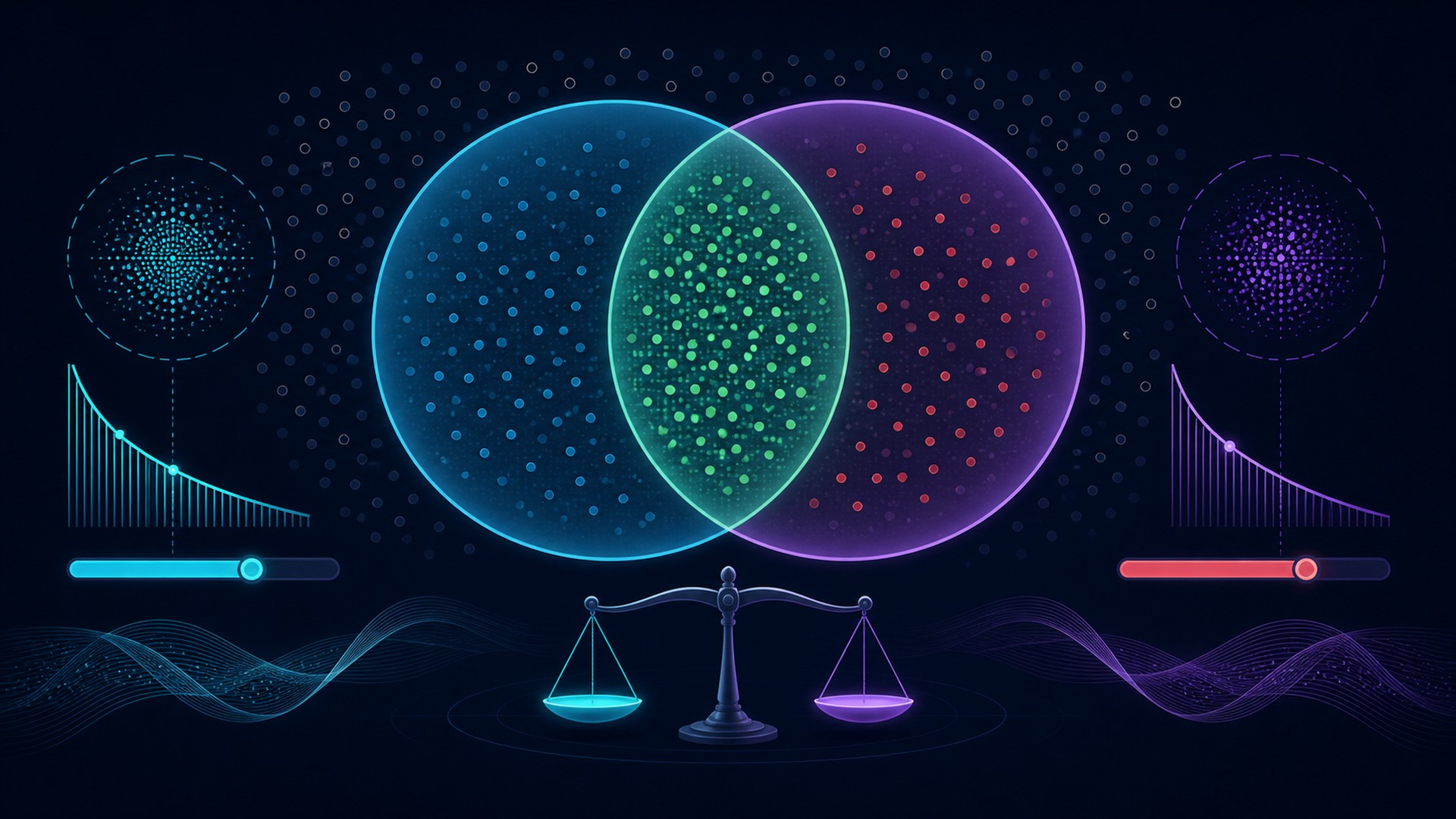
Researchers from MIT and Harvard Medical School investigated whether zero-shot learning algorithms reduce the diagnostic advantage of human radiologists for rare diseases. They compared the performance of CheXzero, a zero-shot algorithm for chest X-rays, to human radiologists and CheXpert, a traditional supervised algorithm. CheXzero, trained on the MIMIC-CXR dataset, predicts multiple pathologies using contrastive learning, while CheXpert, trained on Stanford radiographs, diagnoses twelve pathologies with explicit labels. Data was collected from 227 radiologists evaluating 324 cases from Stanford, excluding training data cases, to assess performance variation with disease prevalence.

AI and radiologist performance is compared using the concordance statistic (C), an extension of AUROC for continuous settings. Concordance, Crt, measures the proportion of concordant pairs, calculated separately for each radiologist and pathology, then averaged to obtain Ct. AI’s concordance is denoted as CAt. Concordance is chosen for its invariance to prevalence and lack of preference dependency, making it suitable even when no cases have a high consensus probability. Despite being an ordinal measure, it remains informative. Another performance metric, the deviation from consensus probability, is less effective for low-prevalence pathologies, thus influencing some conclusions.

The classification performance of human radiologists is compared to the CheXzero and CheXpert algorithms. The average prevalence of pathologies is low, around 2.42%, with some exceeding 15%. Radiologists have an average concordance of 0.58, lower than both AI algorithms, with CheXpert slightly outperforming CheXzero. However, CheXpert’s predictions cover only 12 pathologies, while CheXzero covers 79. Human and CheXzero performances are weakly correlated, indicating different focal points in X-ray analysis. CheXzero’s performance varies widely, with concordance ranging from 0.45 to 0.94, compared to the narrower 0.52 to 0.72 range for human radiologists.

The study illustrates the significance of the long tail in pathology prevalence, revealing that most relevant pathologies are not covered by the supervised learning algorithm studied. While both human and AI performance improves with pathology prevalence, CheXpert shows substantial enhancement in higher prevalence cases. CheXzero’s performance is less affected by prevalence, consistently outperforming humans across all prevalence bins. Notably, CheXzero outperforms humans even in low prevalence pathologies, challenging the notion of human superiority in such cases. However, assessing overall algorithmic performance requires cautious interpretation due to the complexity of converting ordinal outputs to diagnostic decisions, especially for rare pathologies.

Supervised machine learning algorithms have shown superiority in specific tasks compared to humans. However, humans still hold value due to their adeptness in handling rare cases, known as the long tail. Zero-shot learning algorithms aim to tackle this challenge by circumventing the need for extensive labeled data. The study compared radiologists’ assessments to two leading algorithms for diagnosing chest pathologies, indicating that self-supervised algorithms rapidly close the gap or surpass humans in predicting rare diseases. However, challenges still need to be solved in deploying algorithms, as their outputs don’t directly translate into actionable decisions, suggesting they are more likely to complement rather than replace humans.

more modalities. 


Check out the Paper. All credit for this research goes to the researchers of this project. Also, don’t forget to follow us on Twitter. Join our Telegram Channel, Discord Channel, and LinkedIn Group.

If you like our work, you will love our newsletter..

Don’t Forget to join our 43k+ ML SubReddit | Also, check out our AI Events Platform


YOU MAY ALSO LIKE

Google Joins OpenAI And Anthropic In Promising New Scraping Controls

Vercel Labs Open-Sources agent-desktop for Agent Computer Use

Sana Hassan, a consulting intern at Marktechpost and dual-degree student at IIT Madras, is passionate about applying technology and AI to address real-world challenges. With a keen interest in solving practical problems, he brings a fresh perspective to the intersection of AI and real-life solutions.


🐝 Join the Fastest Growing AI Research Newsletter Read by Researchers from Google + NVIDIA + Meta + Stanford + MIT + Microsoft and many others…


Credit: Source link

ShareTweetSendSharePin

Related Posts

Google Joins OpenAI And Anthropic In Promising New Scraping Controls
AI & Technology

Google Joins OpenAI And Anthropic In Promising New Scraping Controls

October 31, 2026
Vercel Labs Open-Sources agent-desktop for Agent Computer Use
AI & Technology

Vercel Labs Open-Sources agent-desktop for Agent Computer Use

October 31, 2026
Apple Brings First Apple Intelligence Features to China in iOS 27.3 – Unite.AI
AI & Technology

Apple Brings First Apple Intelligence Features to China in iOS 27.3 – Unite.AI

October 30, 2026
Powerlattice Raises M in Equity Offering, SEC Filing Shows – Unite.AI
AI & Technology

Powerlattice Raises $86M in Equity Offering, SEC Filing Shows – Unite.AI

October 30, 2026
Next Post
Ether Is not a good product, says author Acheson

Ether Is not a good product, says author Acheson

Leave a Reply Cancel reply

Your email address will not be published. Required fields are marked *

Search

No Result
View All Result
Pope Leo to undergo lung surgery this week

Pope Leo to undergo lung surgery this week

October 27, 2026
Luxury cruise passengers stranded in Cambodia due to soaring fuel costs – BBC

Luxury cruise passengers stranded in Cambodia due to soaring fuel costs – BBC

October 28, 2026
Which Metric Should You Use? – Unite.AI

Which Metric Should You Use? – Unite.AI

October 29, 2026

About

Learn more

Our Services

Legal

Privacy Policy

Terms of Use

Bloggers

Learn more

Article Links

Contact

Advertise

Ask us anything

©2020- TradePoint.io - All rights reserved!

Tradepoint.io, being just a publishing and technology platform, is not a registered broker-dealer or investment adviser. So we do not provide investment advice. Rather, brokerage services are provided to clients of Tradepoint.io by independent SEC-registered broker-dealers and members of FINRA/SIPC. Every form of investing carries some risk and past performance is not a guarantee of future results. “Tradepoint.io“, “Instant Investing” and “My Trading Tools” are registered trademarks of Apperbuild, LLC.

This website is operated by Apperbuild, LLC. We have no link to any brokerage firm and we do not provide investment advice. Every information and resource we provide is solely for the education of our readers. © 2020 Apperbuild, LLC. All rights reserved.

No Result
View All Result
  • Main
  • AI & Technology
  • Stock Charts
  • Market & News
  • Business
  • Finance Tips
  • Trade Tube
  • Blog
  • Shop

© 2023 - TradePoint.io - All Rights Reserved!