• bitcoinBitcoin(BTC)$81,321.004.33%
  • ethereumEthereum(ETH)$2,640.795.60%
  • tetherTether(USDT)$1.000.05%
  • binancecoinBNB(BNB)$767.702.86%
  • rippleXRP(XRP)$1.438.43%
  • usd-coinUSDC(USDC)$1.000.02%
  • solanaSolana(SOL)$111.846.09%
  • tronTRON(TRX)$0.3380010.12%
  • zcashZcash(ZEC)$1,544.886.28%
  • Figure HelocFigure Heloc(FIGR_HELOC)$1.030.22%
  • HyperliquidHyperliquid(HYPE)$92.743.06%
  • dogecoinDogecoin(DOGE)$0.0883503.86%
  • moneroMonero(XMR)$584.629.01%
  • whitebitWhiteBIT Coin(WBT)$83.183.60%
  • RainRain(RAIN)$0.0139338.64%
  • USDSUSDS(USDS)$1.000.02%
  • chainlinkChainlink(LINK)$12.526.20%
  • cardanoCardano(ADA)$0.2266756.27%
  • leo-tokenLEO Token(LEO)$8.89-0.15%
  • stellarStellar(XLM)$0.1947375.08%
  • uniswapUniswap(UNI)$9.114.28%
  • bitcoin-cashBitcoin Cash(BCH)$251.121.41%
  • Ethena USDeEthena USDe(USDE)$1.000.03%
  • nearNEAR Protocol(NEAR)$3.675.32%
  • daiDai(DAI)$1.00-0.02%
  • litecoinLitecoin(LTC)$58.165.79%
  • CantonCanton(CC)$0.1110703.85%
  • USD1USD1(USD1)$1.000.05%
  • avalanche-2Avalanche(AVAX)$9.2315.88%
  • the-open-networkGram (prev. Toncoin)(GRAM)$1.381.42%
  • hedera-hashgraphHedera(HBAR)$0.0807874.81%
  • suiSui(SUI)$0.868.69%
  • Global DollarGlobal Dollar(USDG)$1.00-0.01%
  • shiba-inuShiba Inu(SHIB)$0.0000052.00%
  • BittensorBittensor(TAO)$268.779.94%
  • crypto-com-chainCronos(CRO)$0.0599541.46%
  • MemeCoreMemeCore(M)$1.290.45%
  • paypal-usdPayPal USD(PYUSD)$1.000.02%
  • tether-goldTether Gold(XAUT)$4,373.580.13%
  • okbOKB(OKB)$122.517.84%
  • Circle USYCCircle USYC(USYC)$1.140.03%
  • Ripple USDRipple USD(RLUSD)$1.000.01%
  • BlackRock USD Institutional Digital Liquidity FundBlackRock USD Institutional Digital Liquidity Fund(BUIDL)$1.000.00%
  • Ondo US Dollar YieldOndo US Dollar Yield(USDY)$1.150.07%
  • aaveAave(AAVE)$143.115.88%
  • AsterAster(ASTER)$0.773.03%
  • mantleMantle(MNT)$0.613.86%
  • OndoOndo(ONDO)$0.4129415.95%
  • EthenaEthena(ENA)$0.19668920.56%
  • Pump.funPump.fun(PUMP)$0.004154-0.14%
TradePoint.io
  • Main
  • AI & Technology
  • Stock Charts
  • Market & News
  • Business
  • Finance Tips
  • Trade Tube
  • Blog
  • Shop
No Result
View All Result
TradePoint.io
No Result
View All Result

Nearest Neighbor Speculative Decoding (NEST): An Inference-Time Revision Method for Language Models to Enhance Factuality and Attribution Using Nearest-Neighbor Speculative Decoding

June 2, 2024
in AI & Technology
Reading Time: 5 mins read
A A
Nearest Neighbor Speculative Decoding (NEST): An Inference-Time Revision Method for Language Models to Enhance Factuality and Attribution Using Nearest-Neighbor Speculative Decoding
ShareShareShareShareShare

Large language models (LLMs) have proven their potential to handle multiple tasks and perform extremely well across various applications. However, it is challenging for LLMs to generate accurate information, especially when the knowledge is less represented in their training data. To overcome this challenge, retrieval augmentation combines information retrieval and nearest neighbor search from a non-parametric data store that improves evidence-based and situated reasoning with LLMs. This leads to a reduction tendency in semi-parametric LMs while generating unsupported content.

Many works have been explored to overcome these shortcomings. One of the existing methods is Retrieval Augmentation (RA), which uses external knowledge sources to enhance the performance of LMs in tasks that require deep understanding. Advancements in retrieval augmentation, like REALM, RAG, and Atlas, integrate the retrieval component into pre-training and fine-tuning for these downstream tasks. Another method discussed is Speculative decoding, which utilizes a small model to generate drafts for a large model. The most related method is REST which takes multiple drafts from a data store and uses a prefix trie tree to find the proposal distribution. 

Researchers from FAIR at Meta, the University of Waterloo, Carnegie Mellon University, and the University of Chicago have proposed Nearest Neighbor Speculative Decoding (NEST). NEST is a new semi-parametric language modeling method that can integrate real-world text spans of any length into the generations of an existing LM, enhancing both the quality and latency. NEST extends the standard kNN-LM method by interpolating the output distribution of an LM with the distribution of potential next tokens derived from a corpus. Initially, it includes an extra passage retrieval step, which reduces the need to store and search through all tokens in the corpus, creating a balance between search accuracy and efficiency.

NEST generates content with three sub-steps at each inference step. These steps are:

  • Confidence-based interpolation: Relative Retrieval Confidence (RRC) score is used to evaluate the uncertainty of the token retriever, which is then used as the interpolation coefficient for the output probability mixture.
  • Dynamic span selection: NEST selects the best token predicted by the mixture probability and extends to include the span from that token when the threshold is exceeded by token retrieval confidence.
  • Relaxed speculative decoding: When a span of multiple tokens is selected, it is evaluated based on mixture probability, and only a prefix that is highly likely according to the mixture probability is accepted.

NEST outperforms both the methods, base LM and the standard kNN-LM under a zero-shot setting using Llama-2-Chat models of different sizes on tasks such as text completion, and factuality aware generation. For example, the NEST, combined with the Llama-2-Chat 70B model, shows a 42.3% improvement of ROUGE-1 on WikiText-103 and a 21.6% improvement of FActScore on Biography. Moreover, NEST enhances the efficiency of long-form generation by producing multiple tokens at each time step, and becomes 1.8 times faster in inference time with Llama-2-Chat 70B, without affecting attribution or fluency.  

In conclusion, researchers introduced NEST, an inference-time revision method for LMs that enhances their factuality and attribution with the help of nearest-neighbor speculative decoding. NEST enhances both validation perplexity and quality of free-form generation across 9 different tasks. However, some of the limitations of the proposed method are:

  • The results of NEST might have factual errors depending on the accuracy of the first-stage passage retrieval and the second-stage token retrieval. 
  • The results can be better if fine-tuned on appropriate tasks because the integrated system without fine-tuning might be sub-optimal.

Check out the Paper. All credit for this research goes to the researchers of this project. Also, don’t forget to follow us on Twitter. Join our Telegram Channel, Discord Channel, and LinkedIn Group.

If you like our work, you will love our newsletter..

Don’t Forget to join our 43k+ ML SubReddit | Also, check out our AI Events Platform


YOU MAY ALSO LIKE

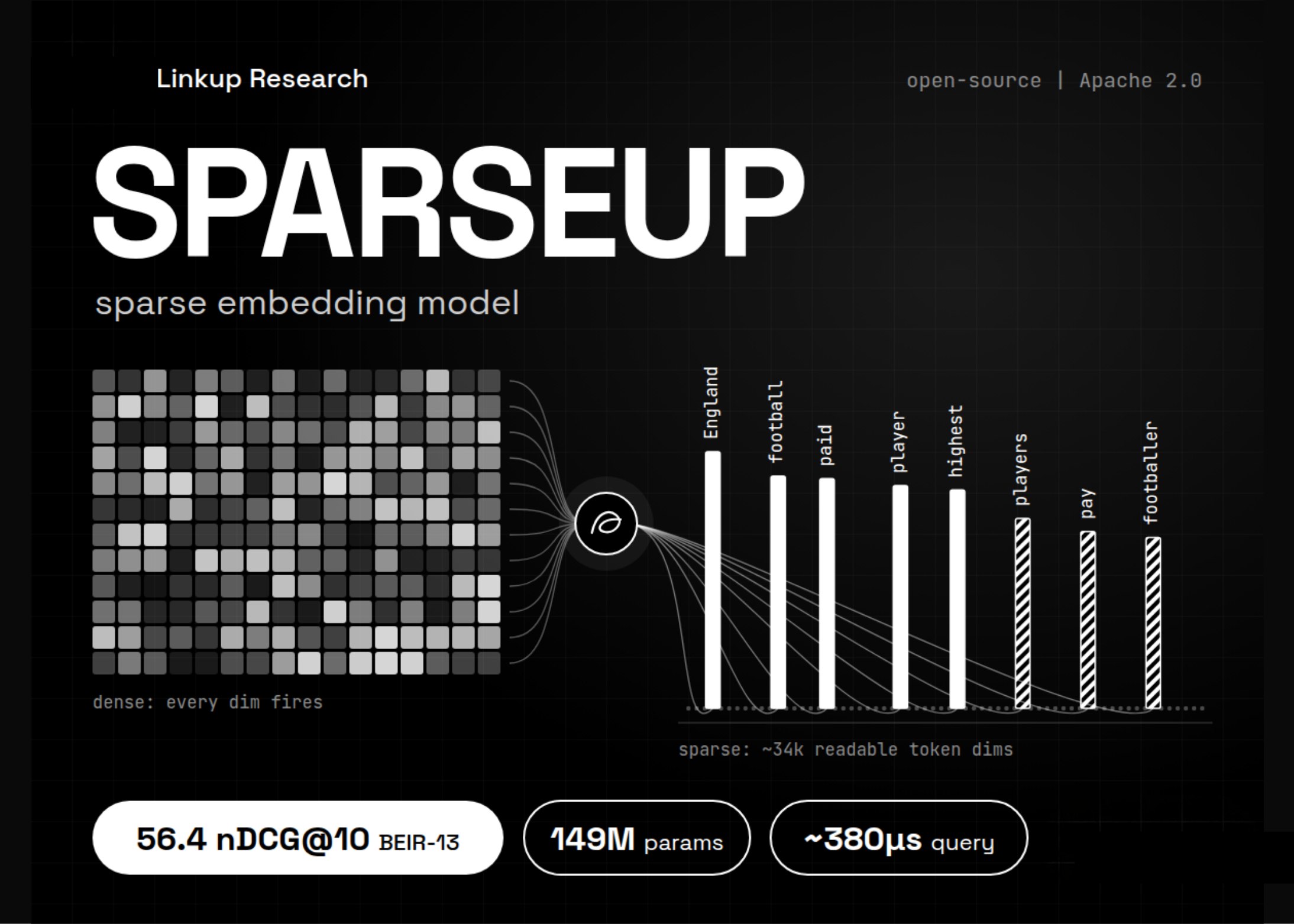
Linkup Research Releases SPARSEUP: A 149M-Parameter Open-Source Sparse Embedding Model

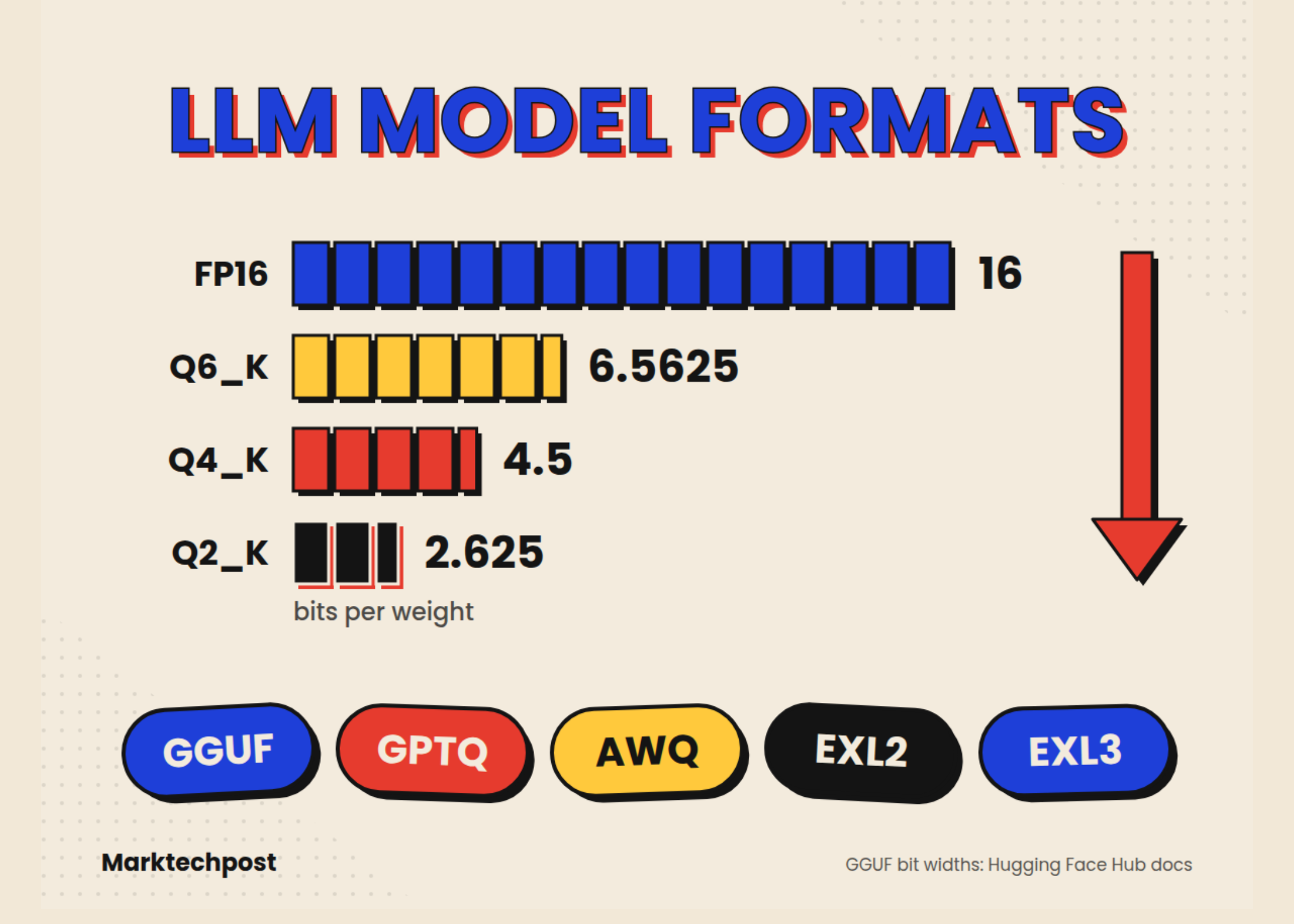
GGUF vs GPTQ vs AWQ vs EXL2: LLM Model Formats Explained (2026)

Sajjad Ansari is a final year undergraduate from IIT Kharagpur. As a Tech enthusiast, he delves into the practical applications of AI with a focus on understanding the impact of AI technologies and their real-world implications. He aims to articulate complex AI concepts in a clear and accessible manner.


🐝 Join the Fastest Growing AI Research Newsletter Read by Researchers from Google + NVIDIA + Meta + Stanford + MIT + Microsoft and many others…


Credit: Source link

ShareTweetSendSharePin

Related Posts

Linkup Research Releases SPARSEUP: A 149M-Parameter Open-Source Sparse Embedding Model
AI & Technology

Linkup Research Releases SPARSEUP: A 149M-Parameter Open-Source Sparse Embedding Model

September 19, 2026
GGUF vs GPTQ vs AWQ vs EXL2: LLM Model Formats Explained (2026)
AI & Technology

GGUF vs GPTQ vs AWQ vs EXL2: LLM Model Formats Explained (2026)

September 19, 2026
Consumers Sue Anthropic, OpenAI, SpaceXAI and Google Over Alleged AI Pact – Unite.AI
AI & Technology

Consumers Sue Anthropic, OpenAI, SpaceXAI and Google Over Alleged AI Pact – Unite.AI

September 19, 2026
How Focus Mode Has Changed In iOS 27
AI & Technology

How Focus Mode Has Changed In iOS 27

September 18, 2026
Next Post
Data Complexity and Scaling Laws in Neural Language Models

Data Complexity and Scaling Laws in Neural Language Models

Leave a Reply Cancel reply

Your email address will not be published. Required fields are marked *

Search

No Result
View All Result
Teaching 9/11 to a new generation of students

Teaching 9/11 to a new generation of students

September 12, 2026
Meta Introduces ZGateway: A Stateless Proxy Tier That Unifies ZippyDB Traffic and Handles Over 1 Billion Operations Per Second

Meta Introduces ZGateway: A Stateless Proxy Tier That Unifies ZippyDB Traffic and Handles Over 1 Billion Operations Per Second

September 15, 2026
Honoring the man with the red bandana who saved many lives during 9/11

Honoring the man with the red bandana who saved many lives during 9/11

September 13, 2026

About

Learn more

Our Services

Legal

Privacy Policy

Terms of Use

Bloggers

Learn more

Article Links

Contact

Advertise

Ask us anything

©2020- TradePoint.io - All rights reserved!

Tradepoint.io, being just a publishing and technology platform, is not a registered broker-dealer or investment adviser. So we do not provide investment advice. Rather, brokerage services are provided to clients of Tradepoint.io by independent SEC-registered broker-dealers and members of FINRA/SIPC. Every form of investing carries some risk and past performance is not a guarantee of future results. “Tradepoint.io“, “Instant Investing” and “My Trading Tools” are registered trademarks of Apperbuild, LLC.

This website is operated by Apperbuild, LLC. We have no link to any brokerage firm and we do not provide investment advice. Every information and resource we provide is solely for the education of our readers. © 2020 Apperbuild, LLC. All rights reserved.

No Result
View All Result
  • Main
  • AI & Technology
  • Stock Charts
  • Market & News
  • Business
  • Finance Tips
  • Trade Tube
  • Blog
  • Shop

© 2023 - TradePoint.io - All Rights Reserved!