• bitcoinBitcoin(BTC)$86,102.002.89%
  • ethereumEthereum(ETH)$2,745.401.56%
  • tetherTether(USDT)$1.000.00%
  • binancecoinBNB(BNB)$788.411.06%
  • rippleXRP(XRP)$1.543.99%
  • usd-coinUSDC(USDC)$1.000.01%
  • solanaSolana(SOL)$117.281.38%
  • tronTRON(TRX)$0.3486451.34%
  • zcashZcash(ZEC)$1,507.43-0.36%
  • Figure HelocFigure Heloc(FIGR_HELOC)$1.010.00%
  • HyperliquidHyperliquid(HYPE)$95.090.28%
  • dogecoinDogecoin(DOGE)$0.0993177.98%
  • moneroMonero(XMR)$570.63-2.50%
  • whitebitWhiteBIT Coin(WBT)$86.591.72%
  • chainlinkChainlink(LINK)$13.011.43%
  • RainRain(RAIN)$0.013567-3.52%
  • USDSUSDS(USDS)$1.000.00%
  • cardanoCardano(ADA)$0.2480864.74%
  • leo-tokenLEO Token(LEO)$8.980.63%
  • stellarStellar(XLM)$0.2127364.33%
  • nearNEAR Protocol(NEAR)$4.474.33%
  • uniswapUniswap(UNI)$9.022.42%
  • bitcoin-cashBitcoin Cash(BCH)$269.223.44%
  • Ethena USDeEthena USDe(USDE)$1.00-0.03%
  • avalanche-2Avalanche(AVAX)$10.91-2.28%
  • CantonCanton(CC)$0.1199394.60%
  • litecoinLitecoin(LTC)$60.893.51%
  • daiDai(DAI)$1.000.00%
  • USD1USD1(USD1)$1.00-0.02%
  • hedera-hashgraphHedera(HBAR)$0.0966769.89%
  • suiSui(SUI)$1.034.02%
  • the-open-networkGram (prev. Toncoin)(GRAM)$1.431.43%
  • BittensorBittensor(TAO)$319.0815.25%
  • shiba-inuShiba Inu(SHIB)$0.0000066.06%
  • crypto-com-chainCronos(CRO)$0.0667035.95%
  • Global DollarGlobal Dollar(USDG)$1.000.00%
  • MemeCoreMemeCore(M)$1.35-12.06%
  • paypal-usdPayPal USD(PYUSD)$1.000.00%
  • tether-goldTether Gold(XAUT)$4,320.22-0.83%
  • okbOKB(OKB)$122.581.25%
  • Circle USYCCircle USYC(USYC)$1.140.01%
  • Ripple USDRipple USD(RLUSD)$1.000.00%
  • BlackRock USD Institutional Digital Liquidity FundBlackRock USD Institutional Digital Liquidity Fund(BUIDL)$1.000.00%
  • Ondo US Dollar YieldOndo US Dollar Yield(USDY)$1.14-0.01%
  • aaveAave(AAVE)$142.550.53%
  • BitwayBitway(BTW)$0.812.34%
  • EthenaEthena(ENA)$0.213819-2.88%
  • mantleMantle(MNT)$0.655.41%
  • Pump.funPump.fun(PUMP)$0.0045813.86%
  • OndoOndo(ONDO)$0.436985-0.70%
TradePoint.io
  • Main
  • AI & Technology
  • Stock Charts
  • Market & News
  • Business
  • Finance Tips
  • Trade Tube
  • Blog
  • Shop
No Result
View All Result
TradePoint.io
No Result
View All Result

Matryoshka Multimodal Models With Adaptive Visual Tokenization: Enhancing Efficiency and Flexibility in Multimodal Machine Learning

June 1, 2024
in AI & Technology
Reading Time: 6 mins read
A A
Matryoshka Multimodal Models With Adaptive Visual Tokenization: Enhancing Efficiency and Flexibility in Multimodal Machine Learning
ShareShareShareShareShare

Multimodal machine learning is a cutting-edge research field combining various data types, such as text, images, and audio, to create more comprehensive and accurate models. By integrating these different modalities, researchers aim to enhance the model’s ability to understand and reason about complex tasks. This integration allows models to leverage the strengths of each modality, leading to improved performance in applications ranging from image recognition and NLP to video analysis and beyond.

The key problem in multimodal machine learning is the inefficiency and inflexibility of large multimodal models (LMMs) when dealing with high-resolution images and videos. Traditional LMMs, like LLaVA, use a fixed number of visual tokens to represent an image, often leading to excessive tokens for dense visual content. This increases computational costs and degrades performance by overwhelming the model with too much information. Consequently, there is a pressing need for methods that can dynamically adjust the number of tokens based on the complexity of the visual input.

✅ [Featured Article] LLMWare.ai Selected for 2024 GitHub Accelerator: Enabling the Next Wave of Innovation in Enterprise RAG with Small Specialized Language Models

Existing solutions to this problem, such as token pruning and merging, attempt to reduce the number of visual tokens fed into the language model. However, these methods typically generate a fixed-length output for each image, which does not allow flexibility to balance information density and efficiency. They need to adapt to varying levels of visual complexity, which can be critical in applications like video analysis, where the visual content can significantly vary from frame to frame.

The University of Wisconsin-Madison and Microsoft Research researchers introduced Matryoshka Multimodal Models (M3). Inspired by the concept of Matryoshka dolls, M3 represents visual content as nested sets of visual tokens that capture information across multiple granularities. This novel approach allows for explicit control over the visual granularity during inference, enabling the adjustment of the number of tokens based on the anticipated complexity or simplicity of the content. For example, an image with dense details can be represented with more tokens, while simpler images can use fewer tokens.

The M3 model achieves this by encoding images into multiple sets of visual tokens with increasing granularity levels, from coarse to fine. During training, the model learns to derive coarser tokens from finer ones, ensuring that the visual information is captured efficiently. Specifically, the model uses scales such as 1, 9, 36, 144, and 576 tokens, with each level providing a progressively finer representation of the visual content. This hierarchical structure allows the model to preserve spatial information while adapting the level of detail based on the specific requirements.
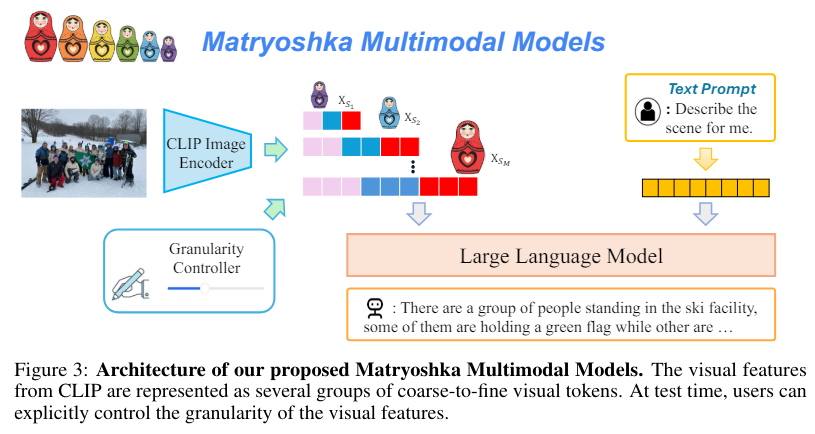
Performance evaluations of the M3 model demonstrate its significant advantages. On COCO-style benchmarks, the model achieved accuracy similar to using all 576 tokens with only about 9 per image. This represents a substantial improvement in efficiency without compromising accuracy. The M3 model also performed well on other benchmarks, showing it can maintain high performance even with a drastically reduced number of tokens. For instance, the model’s accuracy with 9 tokens was comparable to Qwen-VL-Chat with 256 tokens, and in some cases, it achieved similar performance with just 1 token.

The model can adapt to different computational and memory constraints during deployment by allowing for flexible control over the number of visual tokens. This flexibility is particularly valuable in real-world applications where resources may be limited. The M3 approach also provides a framework for evaluating the visual complexity of datasets, helping researchers understand the optimal granularity needed for various tasks. For example, while natural scene benchmarks like COCO can be handled with around 9 tokens, dense visual perception tasks such as document understanding or OCR require more tokens, ranging from 144 to 576.

In conclusion, Matryoshka Multimodal Models (M3) addresses the inefficiencies of current LMMs and provides a flexible, adaptive method for representing visual content, setting the stage for more efficient and effective multimodal systems. The model’s ability to dynamically adjust the number of visual tokens based on content complexity ensures a better balance between performance and computational cost. This innovative approach enhances multimodal models’ understanding and reasoning capabilities and opens up new possibilities for their application in diverse and resource-constrained environments.


Check out the Paper and Project. All credit for this research goes to the researchers of this project. Also, don’t forget to follow us on Twitter. Join our Telegram Channel, Discord Channel, and LinkedIn Group.

If you like our work, you will love our newsletter..

Don’t Forget to join our 43k+ ML SubReddit | Also, check out our AI Events Platform


YOU MAY ALSO LIKE

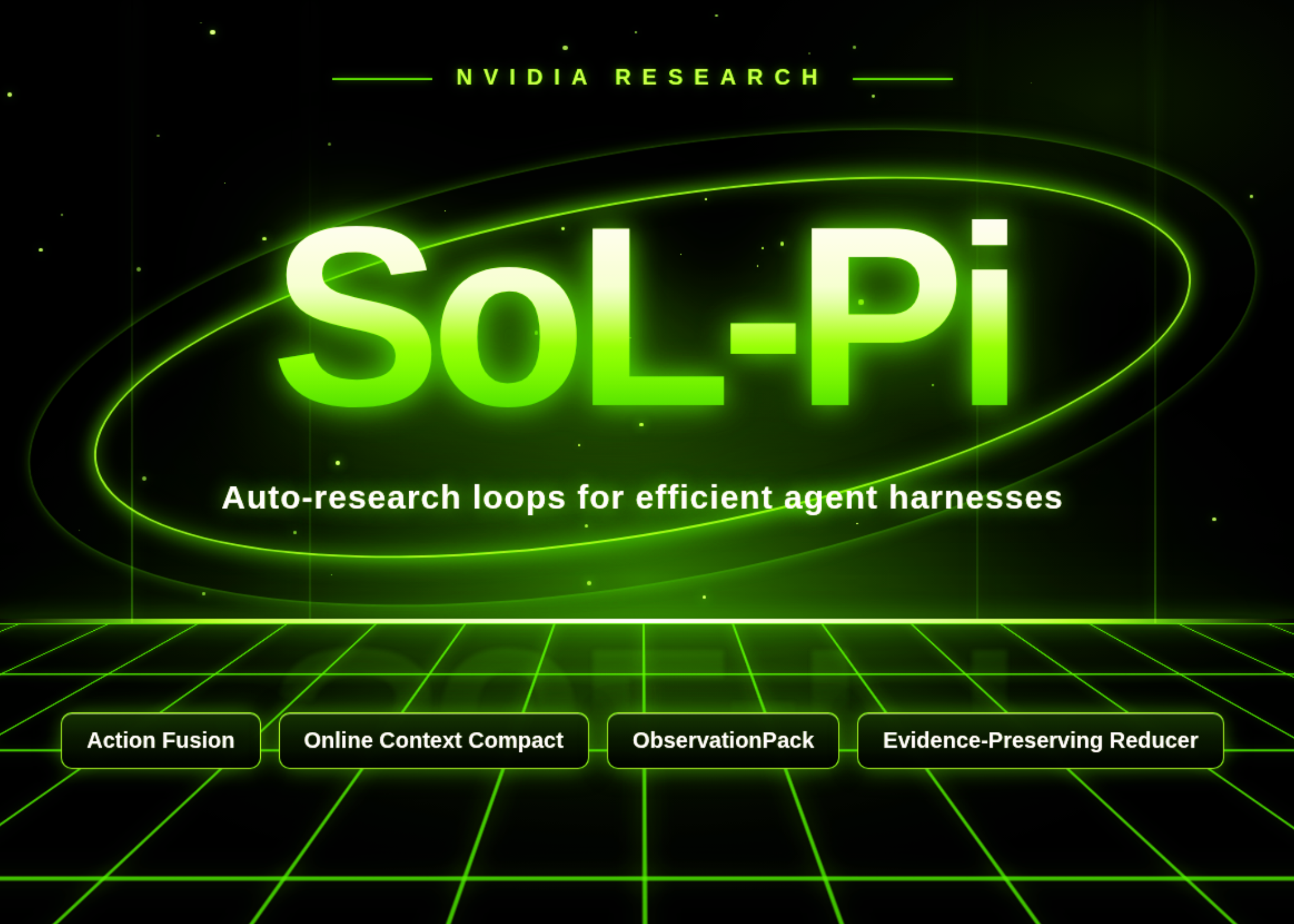
NVIDIA Introduces SoL-Pi: Auto-Research Loops That Cut Coding Agent Token Traffic by Up to 49%

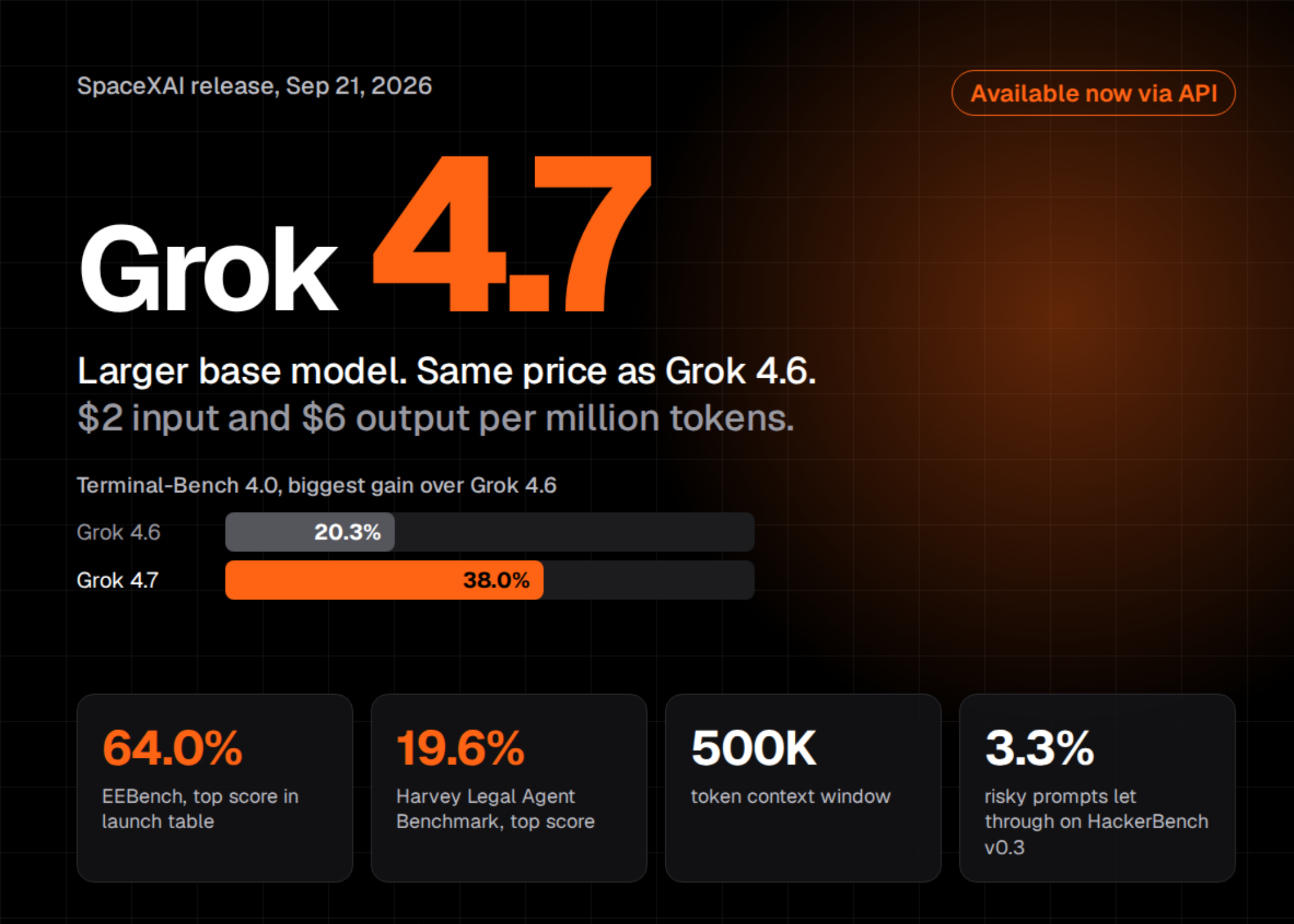
SpaceXAI Releases Grok 4.7: A Larger Base Model at the Same $2/$6 Price as Grok 4.6

Sana Hassan, a consulting intern at Marktechpost and dual-degree student at IIT Madras, is passionate about applying technology and AI to address real-world challenges. With a keen interest in solving practical problems, he brings a fresh perspective to the intersection of AI and real-life solutions.


🐝 Join the Fastest Growing AI Research Newsletter Read by Researchers from Google + NVIDIA + Meta + Stanford + MIT + Microsoft and many others…


Credit: Source link

ShareTweetSendSharePin

Related Posts

NVIDIA Introduces SoL-Pi: Auto-Research Loops That Cut Coding Agent Token Traffic by Up to 49%
AI & Technology

NVIDIA Introduces SoL-Pi: Auto-Research Loops That Cut Coding Agent Token Traffic by Up to 49%

September 22, 2026
SpaceXAI Releases Grok 4.7: A Larger Base Model at the Same / Price as Grok 4.6
AI & Technology

SpaceXAI Releases Grok 4.7: A Larger Base Model at the Same $2/$6 Price as Grok 4.6

September 22, 2026
Why It’s Important To Unplug Your PC During A Power Outage
AI & Technology

Why It’s Important To Unplug Your PC During A Power Outage

September 22, 2026
Why Is Your Laptop Fan So Loud?
AI & Technology

Why Is Your Laptop Fan So Loud?

September 22, 2026
Next Post
Part of Alaska Airlines plane that blew out mid-flight found

Part of Alaska Airlines plane that blew out mid-flight found

Leave a Reply Cancel reply

Your email address will not be published. Required fields are marked *

Search

No Result
View All Result
A second festival-goer dies at Burning Man

A second festival-goer dies at Burning Man

September 16, 2026
Toys ‘R’ Us to open 120 stores, biggest expansion in years — thanks to adults who ‘didn’t wanna grow up’

Toys ‘R’ Us to open 120 stores, biggest expansion in years — thanks to adults who ‘didn’t wanna grow up’

September 17, 2026
Patients rescued after fire breaks out in a nursing home

Patients rescued after fire breaks out in a nursing home

September 17, 2026

About

Learn more

Our Services

Legal

Privacy Policy

Terms of Use

Bloggers

Learn more

Article Links

Contact

Advertise

Ask us anything

©2020- TradePoint.io - All rights reserved!

Tradepoint.io, being just a publishing and technology platform, is not a registered broker-dealer or investment adviser. So we do not provide investment advice. Rather, brokerage services are provided to clients of Tradepoint.io by independent SEC-registered broker-dealers and members of FINRA/SIPC. Every form of investing carries some risk and past performance is not a guarantee of future results. “Tradepoint.io“, “Instant Investing” and “My Trading Tools” are registered trademarks of Apperbuild, LLC.

This website is operated by Apperbuild, LLC. We have no link to any brokerage firm and we do not provide investment advice. Every information and resource we provide is solely for the education of our readers. © 2020 Apperbuild, LLC. All rights reserved.

No Result
View All Result
  • Main
  • AI & Technology
  • Stock Charts
  • Market & News
  • Business
  • Finance Tips
  • Trade Tube
  • Blog
  • Shop

© 2023 - TradePoint.io - All Rights Reserved!