• bitcoinBitcoin(BTC)$76,209.000.73%
  • ethereumEthereum(ETH)$2,436.531.93%
  • tetherTether(USDT)$1.00-0.01%
  • binancecoinBNB(BNB)$733.302.06%
  • rippleXRP(XRP)$1.290.61%
  • usd-coinUSDC(USDC)$1.00-0.01%
  • solanaSolana(SOL)$100.813.35%
  • tronTRON(TRX)$0.334342-0.25%
  • zcashZcash(ZEC)$1,469.7412.52%
  • Figure HelocFigure Heloc(FIGR_HELOC)$1.021.43%
  • HyperliquidHyperliquid(HYPE)$83.136.78%
  • dogecoinDogecoin(DOGE)$0.0811451.58%
  • moneroMonero(XMR)$513.624.73%
  • USDSUSDS(USDS)$1.000.02%
  • whitebitWhiteBIT Coin(WBT)$78.521.12%
  • RainRain(RAIN)$0.012750-2.92%
  • chainlinkChainlink(LINK)$11.273.74%
  • leo-tokenLEO Token(LEO)$8.930.29%
  • cardanoCardano(ADA)$0.1999163.71%
  • stellarStellar(XLM)$0.1830212.29%
  • Ethena USDeEthena USDe(USDE)$1.00-0.01%
  • uniswapUniswap(UNI)$7.5919.08%
  • bitcoin-cashBitcoin Cash(BCH)$231.386.45%
  • daiDai(DAI)$1.000.01%
  • USD1USD1(USD1)$1.000.00%
  • litecoinLitecoin(LTC)$53.635.17%
  • CantonCanton(CC)$0.1002143.30%
  • nearNEAR Protocol(NEAR)$3.0318.22%
  • the-open-networkGram (prev. Toncoin)(GRAM)$1.342.40%
  • avalanche-2Avalanche(AVAX)$7.552.75%
  • Global DollarGlobal Dollar(USDG)$1.000.00%
  • hedera-hashgraphHedera(HBAR)$0.0739681.81%
  • shiba-inuShiba Inu(SHIB)$0.0000054.06%
  • suiSui(SUI)$0.734.25%
  • crypto-com-chainCronos(CRO)$0.0571963.06%
  • paypal-usdPayPal USD(PYUSD)$1.00-0.02%
  • tether-goldTether Gold(XAUT)$4,341.911.80%
  • MemeCoreMemeCore(M)$1.196.34%
  • BittensorBittensor(TAO)$228.254.30%
  • Circle USYCCircle USYC(USYC)$1.140.01%
  • BlackRock USD Institutional Digital Liquidity FundBlackRock USD Institutional Digital Liquidity Fund(BUIDL)$1.000.00%
  • Ripple USDRipple USD(RLUSD)$1.000.01%
  • okbOKB(OKB)$111.921.53%
  • Ondo US Dollar YieldOndo US Dollar Yield(USDY)$1.140.00%
  • AsterAster(ASTER)$0.746.95%
  • aaveAave(AAVE)$127.269.16%
  • pax-goldPAX Gold(PAXG)$4,340.521.74%
  • BitwayBitway(BTW)$0.69-5.33%
  • mantleMantle(MNT)$0.573.10%
  • Pump.funPump.fun(PUMP)$0.00396810.77%
TradePoint.io
  • Main
  • AI & Technology
  • Stock Charts
  • Market & News
  • Business
  • Finance Tips
  • Trade Tube
  • Blog
  • Shop
No Result
View All Result
TradePoint.io
No Result
View All Result

Inductive Biases in Deep Learning: Understanding Feature Representation

May 28, 2024
in AI & Technology
Reading Time: 4 mins read
A A
Inductive Biases in Deep Learning: Understanding Feature Representation
ShareShareShareShareShare

Machine learning research aims to learn representations that enable effective downstream task performance. A growing subfield seeks to interpret these representations’ roles in model behaviors or modify them to enhance alignment, interpretability, or generalization. Similarly, neuroscience examines neural representations and their behavioral correlations. Both fields focus on understanding or improving system computations, abstract behavior patterns on tasks, and their implementations. The relationship between representation and computation is complex and needs to be more straightforward.

Highly over-parameterized deep networks often generalize well despite their capacity for memorization, suggesting an implicit inductive bias towards simplicity in their architectures and gradient-based learning dynamics. Networks biased towards simpler functions facilitate easier learning of simpler features, which can impact internal representations even for complex features. Representational biases favor simple, common features influenced by factors such as feature prevalence and output position in transformers. Shortcut learning and disentangled representation research highlight how these biases affect network behavior and generalization.

✅ [Featured Article] LLMWare.ai Selected for 2024 GitHub Accelerator: Enabling the Next Wave of Innovation in Enterprise RAG with Small Specialized Language Models

In this work, DeepMind researchers investigate dissociations between representation and computation by creating datasets that match the computational roles of features while manipulating their properties. Various deep learning architectures are trained to compute multiple abstract features from inputs. Results show systematic biases in feature representation based on properties like feature complexity, learning order, and feature distribution. Simpler or earlier-learned features are more strongly represented than complex or later-learned ones. These biases are influenced by architectures, optimizers, and training regimes, such as transformers favoring features decoded earlier in the output sequence.

Their approach involves training networks to classify multiple features either through separate output units (e.g., MLP) or as a sequence (e.g., Transformer). The datasets are constructed to ensure statistical independence among features, with models achieving high accuracy (>95%) on held-out test sets, confirming the correct computation of features. The study investigates how properties such as feature complexity, prevalence, and position in the output sequence affect feature representation. Families of training datasets are created to systematically manipulate these properties, with corresponding validation and test datasets ensuring expected generalization.

Training various deep learning architectures to compute multiple abstract features reveals systematic biases in feature representation. These biases depend on extraneous properties like feature complexity, learning order, and feature distribution. Simpler or earlier-learned features are represented more strongly than complex or later-learned ones, even if all are learned equally well. Architectures, optimizers, and training regimes, such as transformers, also influence these biases. These findings characterize the inductive biases of gradient-based representation learning and highlight challenges in disentangling extraneous biases from computationally important aspects for interpretability and comparison with brain representations.

In this work, researchers trained deep learning models to compute multiple input features, revealing substantial biases in their representations. These biases depend on feature properties like complexity, learning order, dataset prevalence, and output sequence position. Representational biases may relate to implicit inductive biases in deep learning. Practically, these biases pose challenges for interpreting learned representations and comparing them across different systems in machine learning, cognitive science, and neuroscience.


Check out the Paper. All credit for this research goes to the researchers of this project. Also, don’t forget to follow us on Twitter. Join our Telegram Channel, Discord Channel, and LinkedIn Group.

If you like our work, you will love our newsletter..

Don’t Forget to join our 43k+ ML SubReddit | Also, check out our AI Events Platform


YOU MAY ALSO LIKE

FAA Says Laser Strikes On Aircraft Fell For The Third Consecutive Year

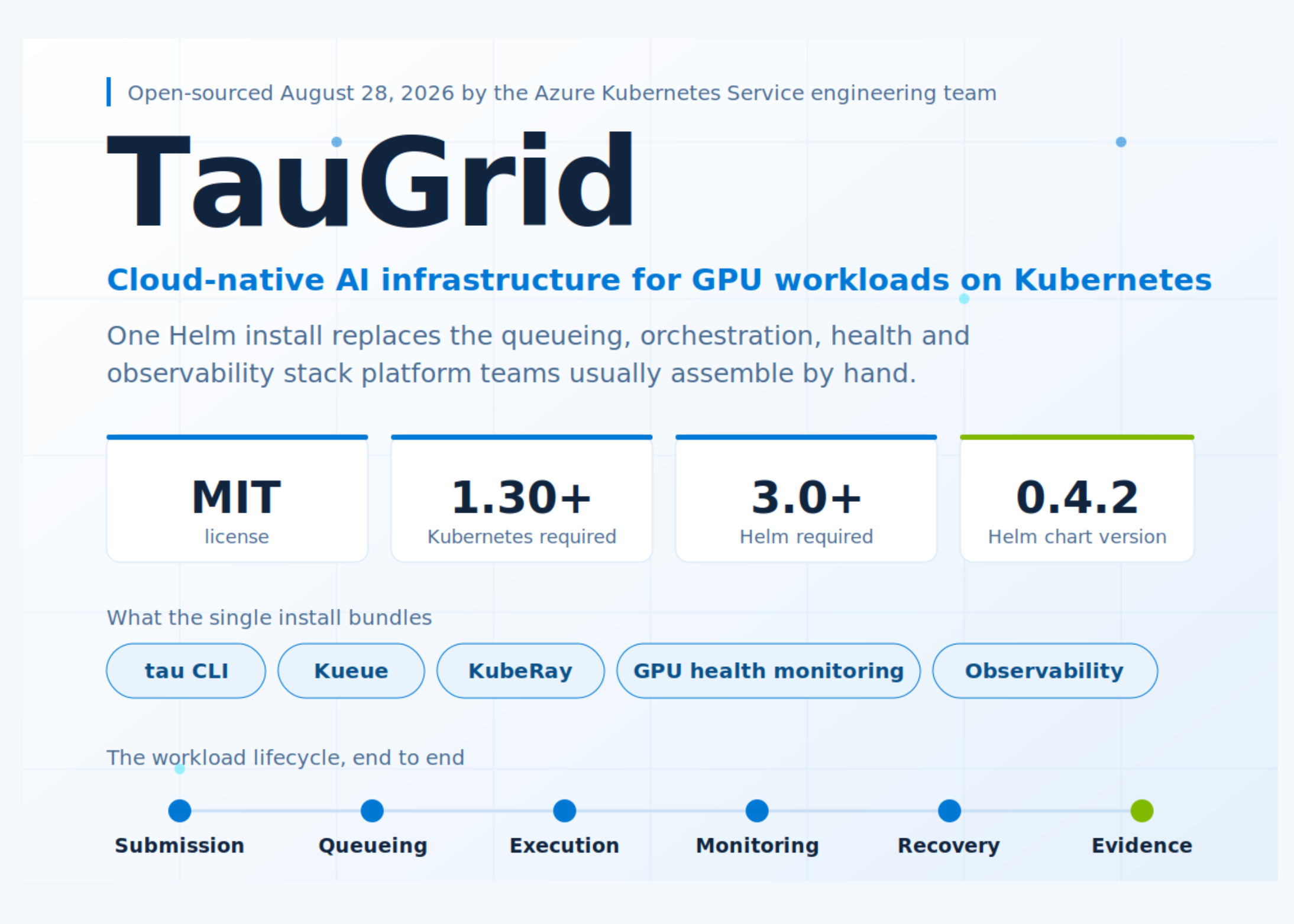
Microsoft Open-Sources TauGrid: A Kubernetes-Native Stack for GPU AI Workloads

Asjad is an intern consultant at Marktechpost. He is persuing B.Tech in mechanical engineering at the Indian Institute of Technology, Kharagpur. Asjad is a Machine learning and deep learning enthusiast who is always researching the applications of machine learning in healthcare.


[Free AI Webinar] ‘Supercharge Your MySQL Apps 100X at Scale with No Code Changes’ [May 29, 10 am-11 am PST]


Credit: Source link

ShareTweetSendSharePin

Related Posts

FAA Says Laser Strikes On Aircraft Fell For The Third Consecutive Year
AI & Technology

FAA Says Laser Strikes On Aircraft Fell For The Third Consecutive Year

September 17, 2026
Microsoft Open-Sources TauGrid: A Kubernetes-Native Stack for GPU AI Workloads
AI & Technology

Microsoft Open-Sources TauGrid: A Kubernetes-Native Stack for GPU AI Workloads

September 17, 2026
GSA Extends Anthropic’s Claude OneGov Offer for Federal Agencies – Unite.AI
AI & Technology

GSA Extends Anthropic’s Claude OneGov Offer for Federal Agencies – Unite.AI

September 17, 2026
Candy Crush Developers Are Planning A Strike For Next Week
AI & Technology

Candy Crush Developers Are Planning A Strike For Next Week

September 17, 2026
Next Post
Melinda French Gates blasts ‘frustrating’ lack of funding for women’s rights in veiled shot at ex-husband Bill Gates

Melinda French Gates blasts 'frustrating' lack of funding for women's rights in veiled shot at ex-husband Bill Gates

Leave a Reply Cancel reply

Your email address will not be published. Required fields are marked *

Search

No Result
View All Result
Sakana AI Launches Fugu Max and Fugu Ultra v2 for Cheaper, Stronger Multi-Agent Orchestration

Sakana AI Launches Fugu Max and Fugu Ultra v2 for Cheaper, Stronger Multi-Agent Orchestration

September 11, 2026
We’re Going To Lose Our House This Month

We’re Going To Lose Our House This Month

September 12, 2026
Morning News NOW Full Episode – Sept. 7

Morning News NOW Full Episode – Sept. 7

September 16, 2026

About

Learn more

Our Services

Legal

Privacy Policy

Terms of Use

Bloggers

Learn more

Article Links

Contact

Advertise

Ask us anything

©2020- TradePoint.io - All rights reserved!

Tradepoint.io, being just a publishing and technology platform, is not a registered broker-dealer or investment adviser. So we do not provide investment advice. Rather, brokerage services are provided to clients of Tradepoint.io by independent SEC-registered broker-dealers and members of FINRA/SIPC. Every form of investing carries some risk and past performance is not a guarantee of future results. “Tradepoint.io“, “Instant Investing” and “My Trading Tools” are registered trademarks of Apperbuild, LLC.

This website is operated by Apperbuild, LLC. We have no link to any brokerage firm and we do not provide investment advice. Every information and resource we provide is solely for the education of our readers. © 2020 Apperbuild, LLC. All rights reserved.

No Result
View All Result
  • Main
  • AI & Technology
  • Stock Charts
  • Market & News
  • Business
  • Finance Tips
  • Trade Tube
  • Blog
  • Shop

© 2023 - TradePoint.io - All Rights Reserved!