• bitcoinBitcoin(BTC)$81,324.000.52%
  • ethereumEthereum(ETH)$2,634.220.97%
  • tetherTether(USDT)$1.00-0.01%
  • binancecoinBNB(BNB)$762.890.19%
  • rippleXRP(XRP)$1.411.28%
  • usd-coinUSDC(USDC)$1.00-0.01%
  • solanaSolana(SOL)$111.06-1.58%
  • tronTRON(TRX)$0.3397900.43%
  • zcashZcash(ZEC)$1,472.02-6.45%
  • Figure HelocFigure Heloc(FIGR_HELOC)$1.02-1.61%
  • HyperliquidHyperliquid(HYPE)$91.72-0.91%
  • dogecoinDogecoin(DOGE)$0.0878180.30%
  • moneroMonero(XMR)$547.03-3.17%
  • whitebitWhiteBIT Coin(WBT)$82.95-0.11%
  • RainRain(RAIN)$0.0137542.55%
  • USDSUSDS(USDS)$1.00-0.01%
  • chainlinkChainlink(LINK)$12.431.59%
  • cardanoCardano(ADA)$0.2277751.74%
  • leo-tokenLEO Token(LEO)$8.90-0.09%
  • stellarStellar(XLM)$0.1964032.13%
  • uniswapUniswap(UNI)$8.66-2.11%
  • bitcoin-cashBitcoin Cash(BCH)$255.040.08%
  • Ethena USDeEthena USDe(USDE)$1.00-0.02%
  • nearNEAR Protocol(NEAR)$3.59-4.13%
  • daiDai(DAI)$1.00-0.02%
  • litecoinLitecoin(LTC)$57.900.42%
  • avalanche-2Avalanche(AVAX)$10.0022.02%
  • USD1USD1(USD1)$1.00-0.02%
  • CantonCanton(CC)$0.109358-1.52%
  • the-open-networkGram (prev. Toncoin)(GRAM)$1.380.49%
  • hedera-hashgraphHedera(HBAR)$0.0814942.83%
  • suiSui(SUI)$0.866.14%
  • MemeCoreMemeCore(M)$1.5216.37%
  • Global DollarGlobal Dollar(USDG)$1.00-0.01%
  • shiba-inuShiba Inu(SHIB)$0.0000061.03%
  • BittensorBittensor(TAO)$263.716.84%
  • crypto-com-chainCronos(CRO)$0.059555-0.35%
  • paypal-usdPayPal USD(PYUSD)$1.00-0.03%
  • tether-goldTether Gold(XAUT)$4,373.91-0.07%
  • Circle USYCCircle USYC(USYC)$1.140.00%
  • okbOKB(OKB)$117.771.28%
  • Ripple USDRipple USD(RLUSD)$1.000.00%
  • BlackRock USD Institutional Digital Liquidity FundBlackRock USD Institutional Digital Liquidity Fund(BUIDL)$1.000.00%
  • Ondo US Dollar YieldOndo US Dollar Yield(USDY)$1.150.22%
  • aaveAave(AAVE)$141.341.57%
  • EthenaEthena(ENA)$0.20570122.54%
  • AsterAster(ASTER)$0.76-2.05%
  • mantleMantle(MNT)$0.62-0.70%
  • OndoOndo(ONDO)$0.4204616.00%
  • Pump.funPump.fun(PUMP)$0.004222-1.27%
TradePoint.io
  • Main
  • AI & Technology
  • Stock Charts
  • Market & News
  • Business
  • Finance Tips
  • Trade Tube
  • Blog
  • Shop
No Result
View All Result
TradePoint.io
No Result
View All Result

This AI Research from Google DeepMind Explores the Performance Gap between Online and Offline Methods for AI Alignment

May 18, 2024
in AI & Technology
Reading Time: 4 mins read
A A
This AI Research from Google DeepMind Explores the Performance Gap between Online and Offline Methods for AI Alignment
ShareShareShareShareShare

RLHF is the standard approach for aligning LLMs. However, recent advances in offline alignment methods, such as direct preference optimization (DPO) and its variants, challenge the necessity of on-policy sampling in RLHF. Offline methods, which align LLMs using pre-existing datasets without active online interaction, have shown practical efficiency and are simpler and cheaper to implement. This raises the question of whether online RL is essential for AI alignment. Comparing online and offline methods is complex due to their different computational demands, necessitating careful calibration of the budget spent to measure performance fairly.

Researchers from Google DeepMind demonstrated that online methods outperform offline methods in their initial experiments, prompting further investigation into this performance gap. Through controlled experiments, they found that factors like offline data coverage and quality must fully explain the discrepancy. Unlike online methods, offline methods excel in pairwise classification but need help with generation. The gap persists regardless of loss function type and model scaling. This suggests that on-policy sampling is crucial for AI alignment, highlighting challenges in offline alignment. The study uses KL divergence from the supervised fine-tuned (SFT) policy to compare performance across algorithms and budgets, revealing persistent differences.

The study complements previous work on RLHF by comparing online and offline RLHF algorithms.  The researchers identify a persistent performance gap between online and offline methods, even when using different loss functions and scaling policy networks. While previous studies noted challenges in offline RL, their findings emphasize that they extend to RLHF. 

The study compares online and offline alignment methods using the IPO loss across various datasets, examining their performance under Goodhart’s law. The IPO loss involves optimizing the weight of winning responses over losing ones, with differences in sampling processes defining the online and offline methods. Online algorithms sample responses on policy, while offline algorithms use a fixed dataset. Experiments reveal that online algorithms achieve better trade-offs between KL divergence and performance, using the KL budget more efficiently and achieving higher peak performance. Several hypotheses are proposed to explain these discrepancies, such as data coverage diversity and sub-optimal offline datasets.

The hypothesis posits that the performance discrepancy between online and offline algorithms can be partially attributed to the classification accuracy of the proxy preference model compared to the policy itself. Firstly, the proxy preference model tends to achieve higher classification accuracy than the policy when used as a classifier. Secondly, it proposes that this difference in classification accuracy contributes to the observed performance gap between online and offline algorithms. In essence, it suggests that better classification leads to better performance, but this hypothesis needs to be further examined and validated through empirical evidence.

In conclusion, the study highlights the critical role of on-policy sampling in effectively aligning LLMs and exposes the challenges associated with offline alignment approaches. The researchers debunked several commonly held beliefs about the performance gap between online and offline algorithms through rigorous experimentation and hypothesis testing. They emphasized the importance of on-policy data generation for enhancing policy learning efficiency. However, they also argue that offline algorithms can improve by adopting strategies that mimic online learning processes. This opens avenues for further exploration, such as hybrid approaches combining the strengths of both online and offline methods and deeper theoretical investigations into reinforcement learning for human feedback.


Check out the Paper. All credit for this research goes to the researchers of this project. Also, don’t forget to follow us on Twitter. Join our Telegram Channel, Discord Channel, and LinkedIn Group.

If you like our work, you will love our newsletter..

Don’t Forget to join our 42k+ ML SubReddit


YOU MAY ALSO LIKE

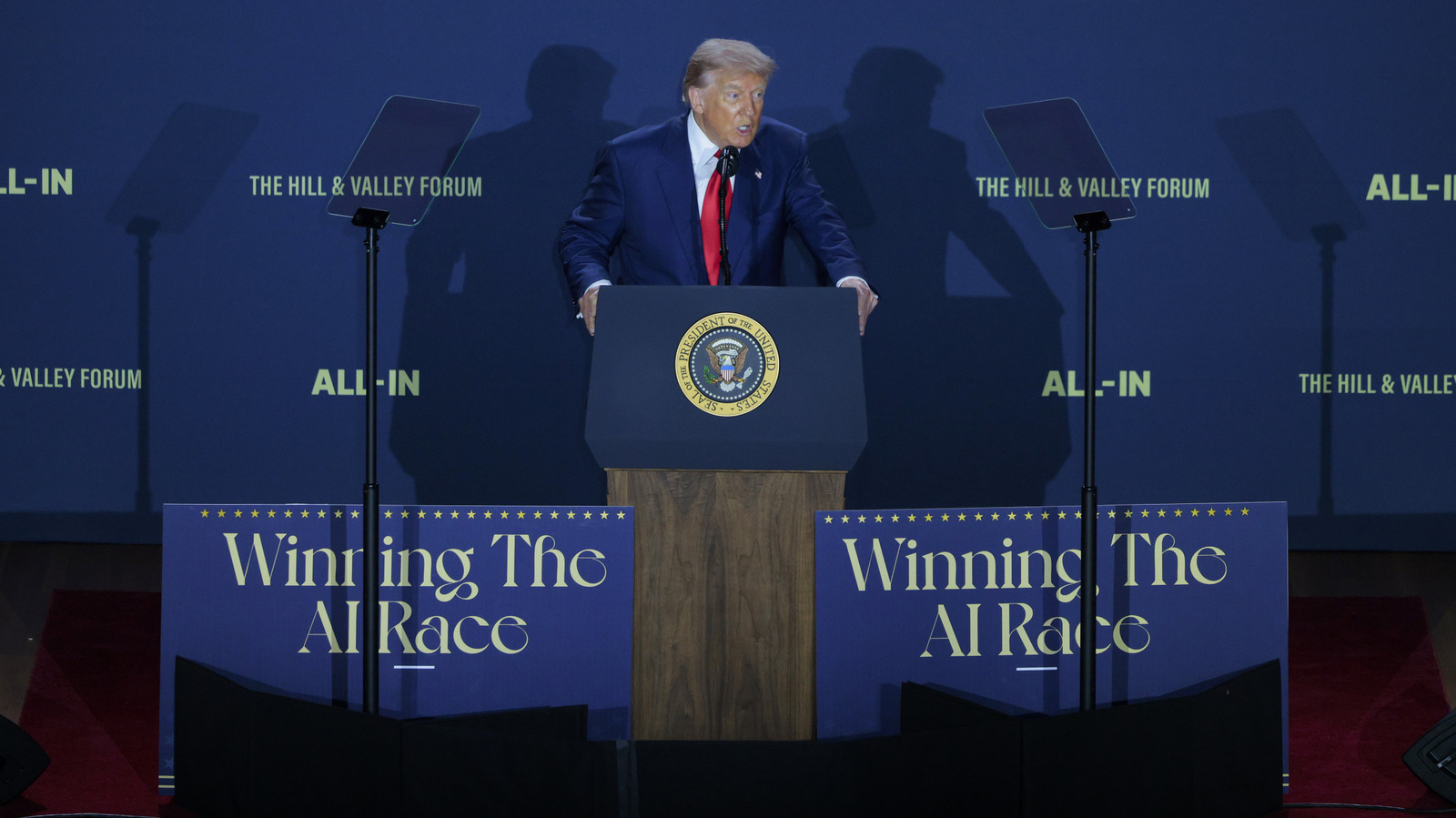
Trump Proposes Renaming Artificial Intelligence, Announces AI Force – Unite.AI

SpaceX Targets September 28 For Starship’s First Orbital Flight

Sana Hassan, a consulting intern at Marktechpost and dual-degree student at IIT Madras, is passionate about applying technology and AI to address real-world challenges. With a keen interest in solving practical problems, he brings a fresh perspective to the intersection of AI and real-life solutions.


🐝 Join the Fastest Growing AI Research Newsletter Read by Researchers from Google + NVIDIA + Meta + Stanford + MIT + Microsoft and many others…


Credit: Source link

ShareTweetSendSharePin

Related Posts

Trump Proposes Renaming Artificial Intelligence, Announces AI Force – Unite.AI
AI & Technology

Trump Proposes Renaming Artificial Intelligence, Announces AI Force – Unite.AI

September 19, 2026
SpaceX Targets September 28 For Starship’s First Orbital Flight
AI & Technology

SpaceX Targets September 28 For Starship’s First Orbital Flight

September 19, 2026
Now Trump Says He’s Creating An AI Force
AI & Technology

Now Trump Says He’s Creating An AI Force

September 19, 2026
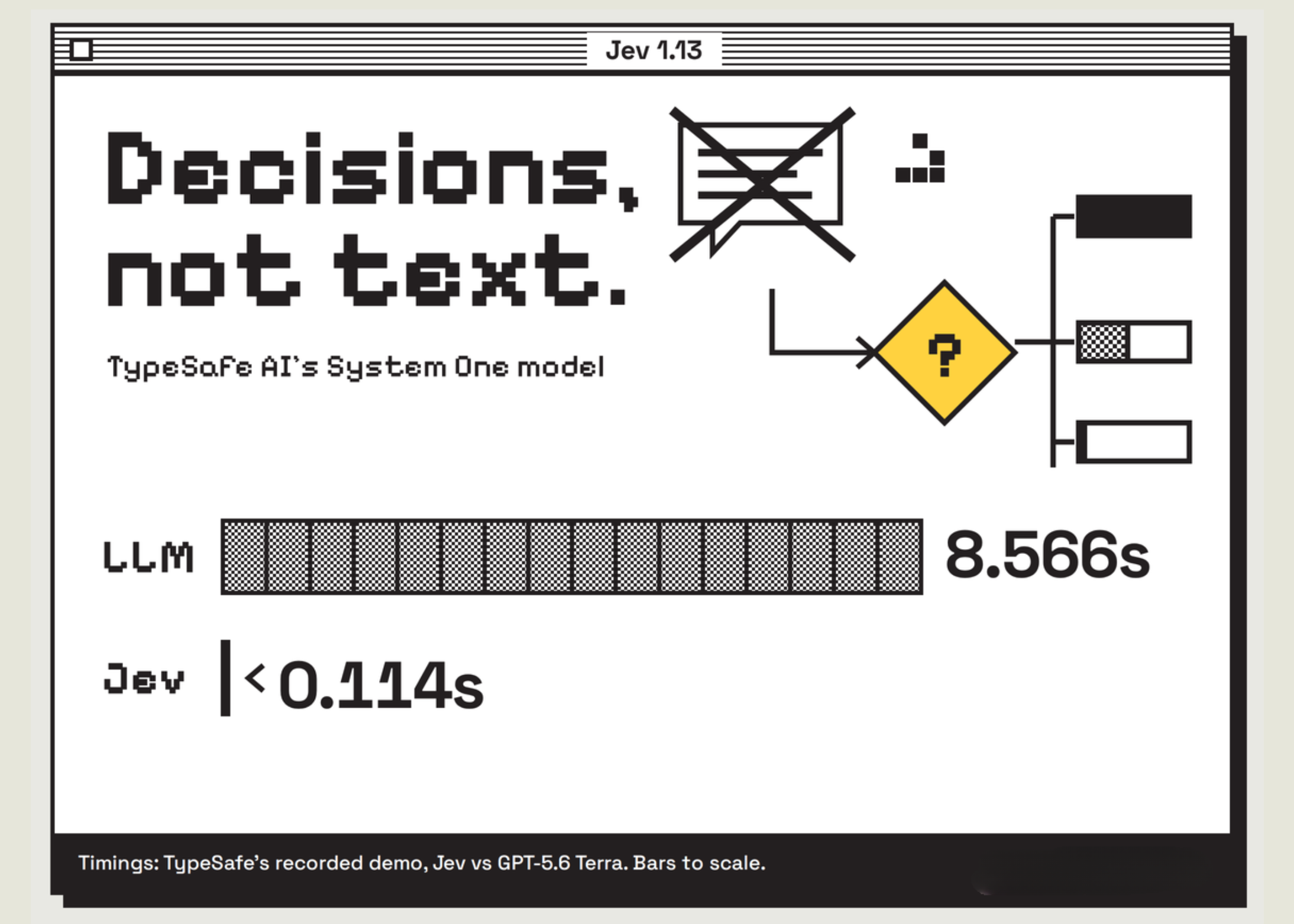
TypeSafe AI Releases Jev: A System One Model That Returns Typed, Calibrated Decisions Instead of Text
AI & Technology

TypeSafe AI Releases Jev: A System One Model That Returns Typed, Calibrated Decisions Instead of Text

September 19, 2026
Next Post
Global Chips Battle Intensifies, Apple Nears Deal with OpenAI | Bloomberg Technology

Global Chips Battle Intensifies, Apple Nears Deal with OpenAI | Bloomberg Technology

Leave a Reply Cancel reply

Your email address will not be published. Required fields are marked *

Search

No Result
View All Result
Hurricane Lowell barrels towards Hawaii

Hurricane Lowell barrels towards Hawaii

September 16, 2026
Plane with an Amazon logo crashes outside Miami airport

Plane with an Amazon logo crashes outside Miami airport

September 16, 2026
Search underway for Indonesian passenger ship carrying more than 240 people after it loses contact – apnews.com

Search underway for Indonesian passenger ship carrying more than 240 people after it loses contact – apnews.com

September 13, 2026

About

Learn more

Our Services

Legal

Privacy Policy

Terms of Use

Bloggers

Learn more

Article Links

Contact

Advertise

Ask us anything

©2020- TradePoint.io - All rights reserved!

Tradepoint.io, being just a publishing and technology platform, is not a registered broker-dealer or investment adviser. So we do not provide investment advice. Rather, brokerage services are provided to clients of Tradepoint.io by independent SEC-registered broker-dealers and members of FINRA/SIPC. Every form of investing carries some risk and past performance is not a guarantee of future results. “Tradepoint.io“, “Instant Investing” and “My Trading Tools” are registered trademarks of Apperbuild, LLC.

This website is operated by Apperbuild, LLC. We have no link to any brokerage firm and we do not provide investment advice. Every information and resource we provide is solely for the education of our readers. © 2020 Apperbuild, LLC. All rights reserved.

No Result
View All Result
  • Main
  • AI & Technology
  • Stock Charts
  • Market & News
  • Business
  • Finance Tips
  • Trade Tube
  • Blog
  • Shop

© 2023 - TradePoint.io - All Rights Reserved!