• bitcoinBitcoin(BTC)$76,814.001.16%
  • ethereumEthereum(ETH)$2,461.522.32%
  • tetherTether(USDT)$1.00-0.02%
  • binancecoinBNB(BNB)$728.272.15%
  • rippleXRP(XRP)$1.311.86%
  • usd-coinUSDC(USDC)$1.00-0.01%
  • solanaSolana(SOL)$100.853.49%
  • tronTRON(TRX)$0.334394-0.12%
  • Figure HelocFigure Heloc(FIGR_HELOC)$1.032.65%
  • zcashZcash(ZEC)$1,370.4612.76%
  • HyperliquidHyperliquid(HYPE)$80.292.17%
  • dogecoinDogecoin(DOGE)$0.0814092.57%
  • USDSUSDS(USDS)$1.000.04%
  • moneroMonero(XMR)$501.91-0.30%
  • whitebitWhiteBIT Coin(WBT)$79.181.41%
  • RainRain(RAIN)$0.013113-2.15%
  • chainlinkChainlink(LINK)$11.284.81%
  • leo-tokenLEO Token(LEO)$8.920.50%
  • cardanoCardano(ADA)$0.2005953.96%
  • stellarStellar(XLM)$0.1840925.05%
  • Ethena USDeEthena USDe(USDE)$1.000.03%
  • daiDai(DAI)$1.00-0.03%
  • bitcoin-cashBitcoin Cash(BCH)$225.133.26%
  • USD1USD1(USD1)$1.00-0.01%
  • uniswapUniswap(UNI)$6.849.01%
  • litecoinLitecoin(LTC)$52.844.54%
  • CantonCanton(CC)$0.0999879.66%
  • nearNEAR Protocol(NEAR)$2.8716.15%
  • the-open-networkGram (prev. Toncoin)(GRAM)$1.331.17%
  • avalanche-2Avalanche(AVAX)$7.614.66%
  • hedera-hashgraphHedera(HBAR)$0.0750671.12%
  • Global DollarGlobal Dollar(USDG)$1.000.00%
  • shiba-inuShiba Inu(SHIB)$0.0000055.09%
  • suiSui(SUI)$0.725.27%
  • crypto-com-chainCronos(CRO)$0.0578194.33%
  • paypal-usdPayPal USD(PYUSD)$1.00-0.04%
  • tether-goldTether Gold(XAUT)$4,355.750.35%
  • BlackRock USD Institutional Digital Liquidity FundBlackRock USD Institutional Digital Liquidity Fund(BUIDL)$1.000.00%
  • BittensorBittensor(TAO)$227.004.23%
  • MemeCoreMemeCore(M)$1.132.81%
  • Circle USYCCircle USYC(USYC)$1.140.01%
  • okbOKB(OKB)$111.991.81%
  • Ripple USDRipple USD(RLUSD)$1.000.00%
  • Ondo US Dollar YieldOndo US Dollar Yield(USDY)$1.150.24%
  • AsterAster(ASTER)$0.749.09%
  • aaveAave(AAVE)$123.543.70%
  • pax-goldPAX Gold(PAXG)$4,356.540.26%
  • mantleMantle(MNT)$0.573.51%
  • BitwayBitway(BTW)$0.69-11.46%
  • World Liberty FinancialWorld Liberty Financial(WLFI)$0.0585902.78%
TradePoint.io
  • Main
  • AI & Technology
  • Stock Charts
  • Market & News
  • Business
  • Finance Tips
  • Trade Tube
  • Blog
  • Shop
No Result
View All Result
TradePoint.io
No Result
View All Result

The Evolution of AI Model Training: Beyond Size to Efficiency

May 16, 2024
in AI & Technology
Reading Time: 4 mins read
A A
The Evolution of AI Model Training: Beyond Size to Efficiency
ShareShareShareShareShare

In the rapidly evolving landscape of artificial intelligence, the traditional approach to enhancing language models through mere increases in model size is undergoing a pivotal transformation. This shift underscores a more strategic, data-centric approach, as exemplified by the recent developments in models like Llama3.

Data is all you need

Historically, the prevailing belief in advancing AI capabilities has been that bigger is better.

YOU MAY ALSO LIKE

NVIDIA And Google’s New Coalition Wants To Speed Up AI Data Center Power Grid Connections

Z.ai Details GLM-5.3-Flash Inference Build on 100,000 Chinese Chips – Unite.AI

In the past, we’ve witnessed a dramatic increase in the capabilities of deep learning simply by adding more layers to neural networks. Algorithms and applications like image recognition, which were once only theoretically possible before the advent of deep learning, quickly became widely accepted. The development of graphic cards further amplified this trend, enabling larger models to run with increasing efficiency. This trend has carried over to the current large language model hype as well.

Periodically, we come across announcements from major AI companies releasing models with tens or even hundreds of billions of parameters. It’s easy to understand the rationale: the more parameters a model possesses, the more proficient it becomes. However, this brute-force method of scaling has reached a point of diminishing returns, particularly when considering the cost-effectiveness of such models in practical applications. Meta’s recent announcement of the Llama3 approach, which utilizes 8 billion parameters but is enriched with 6-7 times the amount of high-quality training data, matches—and in some scenarios, surpasses—the efficacy of earlier models like GPT3.5, which boast over 100 billion parameters. This marks a significant pivot in the scaling law for language models, where quality and quantity of data begin to take precedence over sheer size.

Cost vs. Performance: A Delicate Balance

As artificial intelligence (AI) models move from development to practical use, their economic impact, particularly the high operational costs of large-scale models, is becoming increasingly significant. These costs often surpass initial training expenses, emphasizing the need for a sustainable development approach that prioritizes efficient data use over expanding model size. Strategies like data augmentation and transfer learning can enhance datasets and reduce the need for extensive retraining. Streamlining models through feature selection and dimensionality reduction enhances computational efficiency and lowers costs. Techniques such as dropout and early stopping improve generalization, allowing models to perform effectively with less data. Alternative deployment strategies like edge computing reduce reliance on costly cloud infrastructure, while serverless computing offers scalable and cost-effective resource usage. By focusing on data-centric development and exploring economical deployment methods, organizations can establish a more sustainable AI ecosystem that balances performance with cost-efficiency.

The Diminishing Returns of Larger Models

The landscape of AI development is undergoing a paradigm shift, with a growing emphasis on efficient data utilization and model optimization. Centralized AI companies have traditionally relied on creating increasingly larger models to achieve state-of-the-art results. However, this strategy is becoming increasingly unsustainable, both in terms of computational resources and scalability.

Decentralized AI, on the other hand, presents a different set of challenges and opportunities. Decentralized blockchain networks, which form the foundation of Decentralized AI, have a fundamentally different design compared to centralized AI companies. This makes it challenging for decentralized AI ventures to compete with centralized entities in terms of scaling larger models while maintaining efficiency in decentralized operations.

This is where decentralized communities can maximize their potential and carve out a niche in the AI landscape. By leveraging collective intelligence and resources, decentralized communities can develop and deploy sophisticated AI models that are both efficient and scalable. This will enable them to compete effectively with centralized AI companies and drive the future of AI development.

Looking Ahead: The Path to Sustainable AI Development

The trajectory for future AI development should focus on creating models that are not only innovative but also integrative and economical. The emphasis should shift towards systems that can achieve high levels of accuracy and utility with manageable costs and resource use. Such a strategy will not only ensure the scalability of AI technologies but also their accessibility and sustainability in the long run.

As the field of artificial intelligence matures, the strategies for developing AI must evolve accordingly. The shift from valuing size to prioritizing efficiency and cost-effectiveness in model training is not merely a technical choice but a strategic imperative that will define the next generation of AI applications. This approach will likely catalyze a new era of innovation, where AI development is driven by smart, sustainable practices that promise wider adoption and greater impact.​​​​​​​​​​​​​​​​

Credit: Source link

ShareTweetSendSharePin

Related Posts

NVIDIA And Google’s New Coalition Wants To Speed Up AI Data Center Power Grid Connections
AI & Technology

NVIDIA And Google’s New Coalition Wants To Speed Up AI Data Center Power Grid Connections

September 17, 2026
Z.ai Details GLM-5.3-Flash Inference Build on 100,000 Chinese Chips – Unite.AI
AI & Technology

Z.ai Details GLM-5.3-Flash Inference Build on 100,000 Chinese Chips – Unite.AI

September 17, 2026
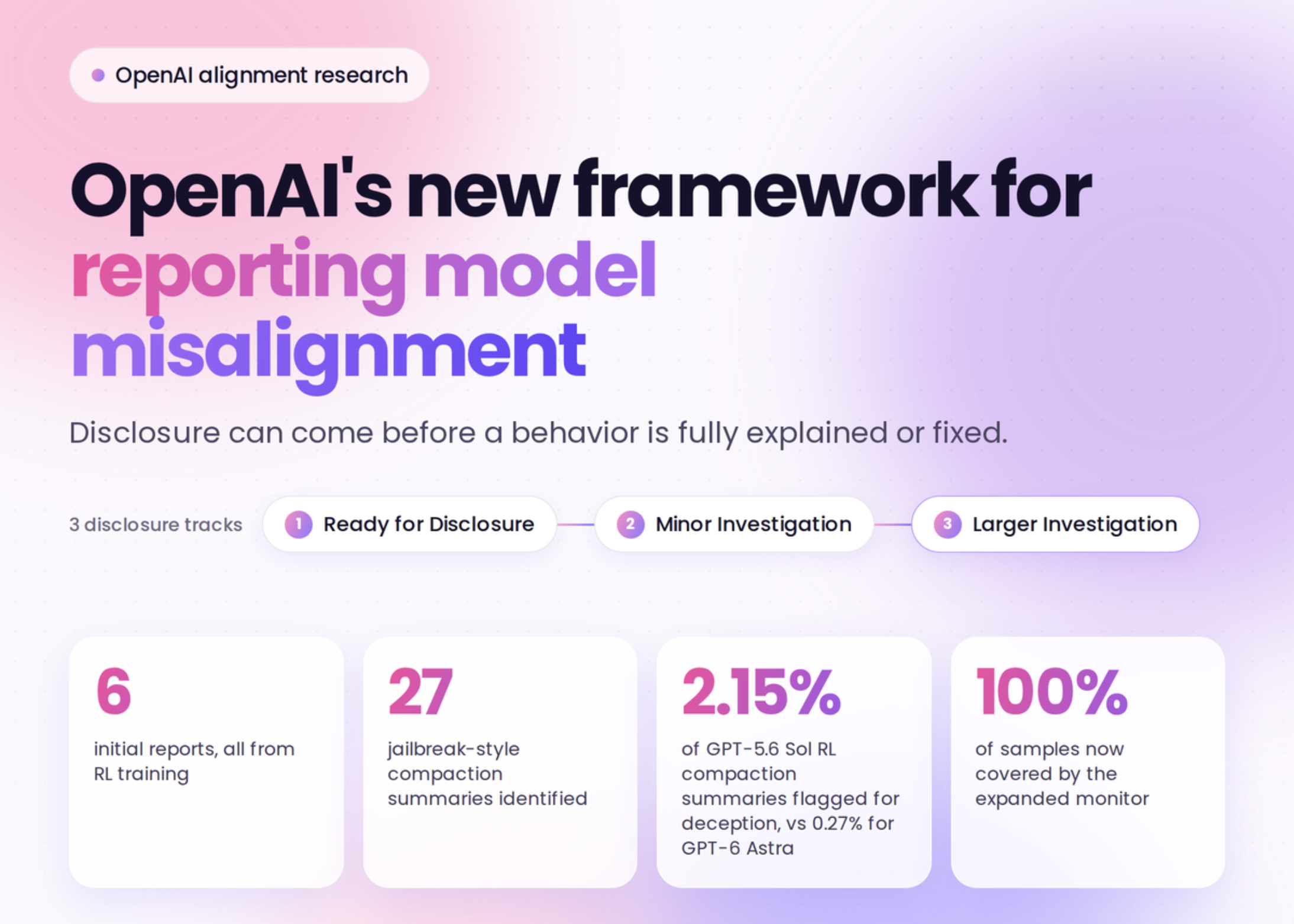
OpenAI Releases a Model Misalignment Disclosure Framework With 3 Review Tracks and 6 Incident Reports From RL Training
AI & Technology

OpenAI Releases a Model Misalignment Disclosure Framework With 3 Review Tracks and 6 Incident Reports From RL Training

September 17, 2026
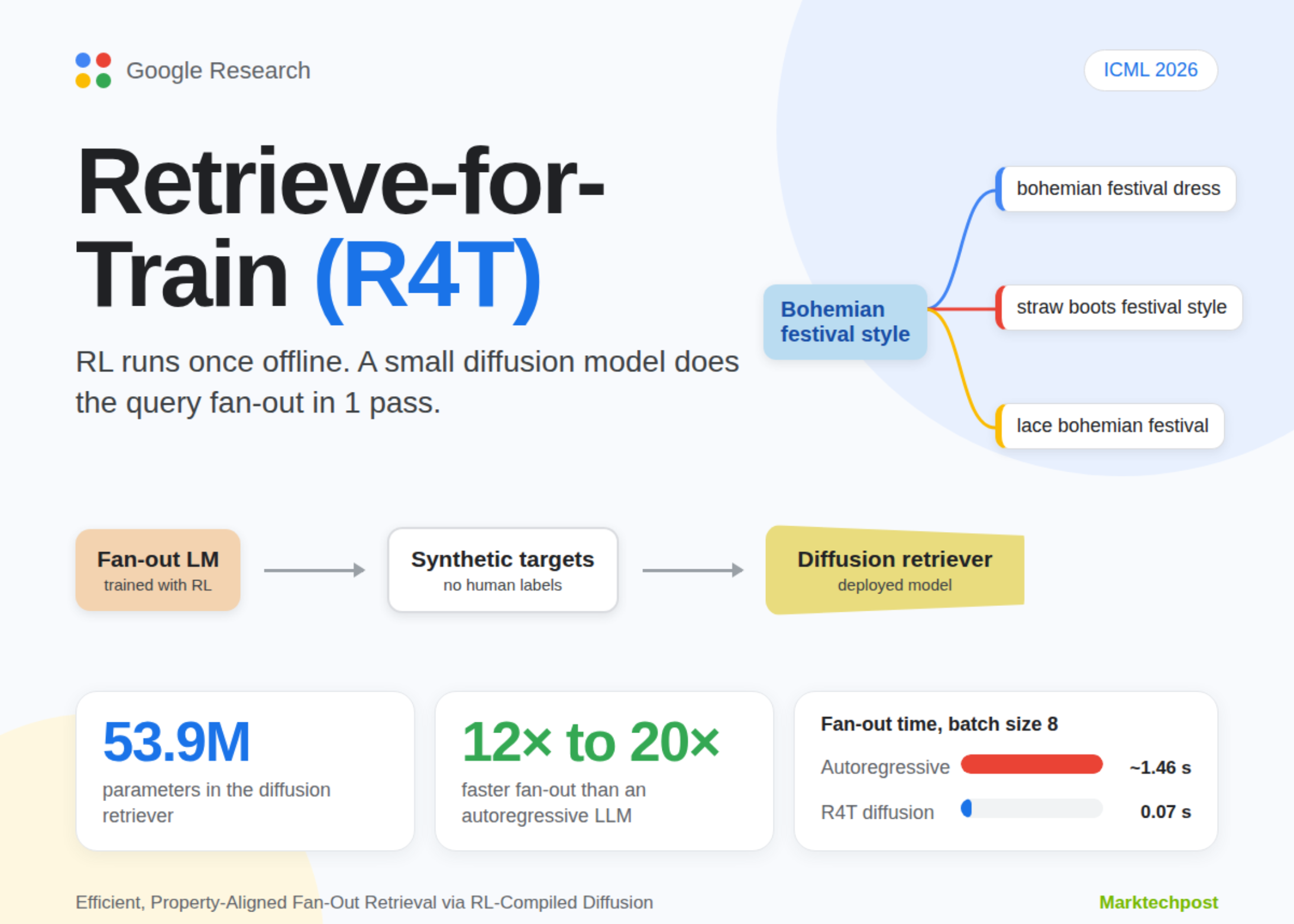
Google Research Introduces Retrieve-for-Train (R4T): An RL-Compiled Diffusion Retriever for 12× to 20× Faster Query Fan-Out
AI & Technology

Google Research Introduces Retrieve-for-Train (R4T): An RL-Compiled Diffusion Retriever for 12× to 20× Faster Query Fan-Out

September 17, 2026
Next Post
Your meme stocks are crashing today! #amc #gme #gamestop

Your meme stocks are crashing today! #amc #gme #gamestop

Leave a Reply Cancel reply

Your email address will not be published. Required fields are marked *

Search

No Result
View All Result
Tech company discloses first-of-its-kind A.I. cyberattack against a government

Tech company discloses first-of-its-kind A.I. cyberattack against a government

September 15, 2026
Trump pledges ,000 for Americans if GOP wins

Trump pledges $5,000 for Americans if GOP wins

September 14, 2026
Philippine coast guard rescues passengers after ferry fire

Philippine coast guard rescues passengers after ferry fire

September 14, 2026

About

Learn more

Our Services

Legal

Privacy Policy

Terms of Use

Bloggers

Learn more

Article Links

Contact

Advertise

Ask us anything

©2020- TradePoint.io - All rights reserved!

Tradepoint.io, being just a publishing and technology platform, is not a registered broker-dealer or investment adviser. So we do not provide investment advice. Rather, brokerage services are provided to clients of Tradepoint.io by independent SEC-registered broker-dealers and members of FINRA/SIPC. Every form of investing carries some risk and past performance is not a guarantee of future results. “Tradepoint.io“, “Instant Investing” and “My Trading Tools” are registered trademarks of Apperbuild, LLC.

This website is operated by Apperbuild, LLC. We have no link to any brokerage firm and we do not provide investment advice. Every information and resource we provide is solely for the education of our readers. © 2020 Apperbuild, LLC. All rights reserved.

No Result
View All Result
  • Main
  • AI & Technology
  • Stock Charts
  • Market & News
  • Business
  • Finance Tips
  • Trade Tube
  • Blog
  • Shop

© 2023 - TradePoint.io - All Rights Reserved!