• bitcoinBitcoin(BTC)$81,321.004.33%
  • ethereumEthereum(ETH)$2,640.795.60%
  • tetherTether(USDT)$1.000.05%
  • binancecoinBNB(BNB)$767.702.86%
  • rippleXRP(XRP)$1.438.43%
  • usd-coinUSDC(USDC)$1.000.02%
  • solanaSolana(SOL)$111.846.09%
  • tronTRON(TRX)$0.3380010.12%
  • zcashZcash(ZEC)$1,544.886.28%
  • Figure HelocFigure Heloc(FIGR_HELOC)$1.030.22%
  • HyperliquidHyperliquid(HYPE)$92.743.06%
  • dogecoinDogecoin(DOGE)$0.0883503.86%
  • moneroMonero(XMR)$584.629.01%
  • whitebitWhiteBIT Coin(WBT)$83.183.60%
  • RainRain(RAIN)$0.0139338.64%
  • USDSUSDS(USDS)$1.000.02%
  • chainlinkChainlink(LINK)$12.526.20%
  • cardanoCardano(ADA)$0.2266756.27%
  • leo-tokenLEO Token(LEO)$8.89-0.15%
  • stellarStellar(XLM)$0.1947375.08%
  • uniswapUniswap(UNI)$9.114.28%
  • bitcoin-cashBitcoin Cash(BCH)$251.121.41%
  • Ethena USDeEthena USDe(USDE)$1.000.03%
  • nearNEAR Protocol(NEAR)$3.675.32%
  • daiDai(DAI)$1.00-0.02%
  • litecoinLitecoin(LTC)$58.165.79%
  • CantonCanton(CC)$0.1110703.85%
  • USD1USD1(USD1)$1.000.05%
  • avalanche-2Avalanche(AVAX)$9.2315.88%
  • the-open-networkGram (prev. Toncoin)(GRAM)$1.381.42%
  • hedera-hashgraphHedera(HBAR)$0.0807874.81%
  • suiSui(SUI)$0.868.69%
  • Global DollarGlobal Dollar(USDG)$1.00-0.01%
  • shiba-inuShiba Inu(SHIB)$0.0000052.00%
  • BittensorBittensor(TAO)$268.779.94%
  • crypto-com-chainCronos(CRO)$0.0599541.46%
  • MemeCoreMemeCore(M)$1.290.45%
  • paypal-usdPayPal USD(PYUSD)$1.000.02%
  • tether-goldTether Gold(XAUT)$4,373.580.13%
  • okbOKB(OKB)$122.517.84%
  • Circle USYCCircle USYC(USYC)$1.140.03%
  • Ripple USDRipple USD(RLUSD)$1.000.01%
  • BlackRock USD Institutional Digital Liquidity FundBlackRock USD Institutional Digital Liquidity Fund(BUIDL)$1.000.00%
  • Ondo US Dollar YieldOndo US Dollar Yield(USDY)$1.150.07%
  • aaveAave(AAVE)$143.115.88%
  • AsterAster(ASTER)$0.773.03%
  • mantleMantle(MNT)$0.613.86%
  • OndoOndo(ONDO)$0.4129415.95%
  • EthenaEthena(ENA)$0.19668920.56%
  • Pump.funPump.fun(PUMP)$0.004154-0.14%
TradePoint.io
  • Main
  • AI & Technology
  • Stock Charts
  • Market & News
  • Business
  • Finance Tips
  • Trade Tube
  • Blog
  • Shop
No Result
View All Result
TradePoint.io
No Result
View All Result

This AI Paper by Microsoft and Tsinghua University Introduces YOCO: A Decoder-Decoder Architectures for Language Models

May 11, 2024
in AI & Technology
Reading Time: 5 mins read
A A
This AI Paper by Microsoft and Tsinghua University Introduces YOCO: A Decoder-Decoder Architectures for Language Models
ShareShareShareShareShare

Language modeling, a core component of machine learning, involves predicting the likelihood of a sequence of words. This field primarily enhances machine understanding and generation of human language, serving as a backbone for various applications such as text summarization, translation, and auto-completion systems. Efficient language modeling faces significant hurdles, particularly with large models. The main challenge is the computational and memory overhead associated with processing and storing extensive data sequences, which hampers scalability and real-time processing capabilities.

Existing research in language modeling prominently features the Transformer architecture, known for its self-attention mechanism that effectively processes word sequences regardless of distance. Distinguished adaptations include the decoder-only Transformer, optimizing text generation processes in models like OpenAI’s GPT series. Innovations like Sparse Transformers have also emerged, reducing computational demands by limiting interactions between distant sequence elements. Moreover, hybrid models such as BERT and T5 combine various architectural strengths, enhancing language models’ efficiency and capability in understanding and generating nuanced text.

Microsoft Research and Tsinghua University researchers have introduced a novel architecture, You Only Cache Once (YOCO), for large language models. The YOCO architecture presents a unique decoder-decoder framework that diverges from traditional approaches by caching key-value pairs only once. This method significantly reduces the computational overhead and memory usage typically associated with repetitive caching in large language models. YOCO efficiently processes long sequences by leveraging precomputed global KV caches throughout the model’s operation, streamlining the attention mechanism and enhancing overall performance by employing a self-decoder and a cross-decoder.
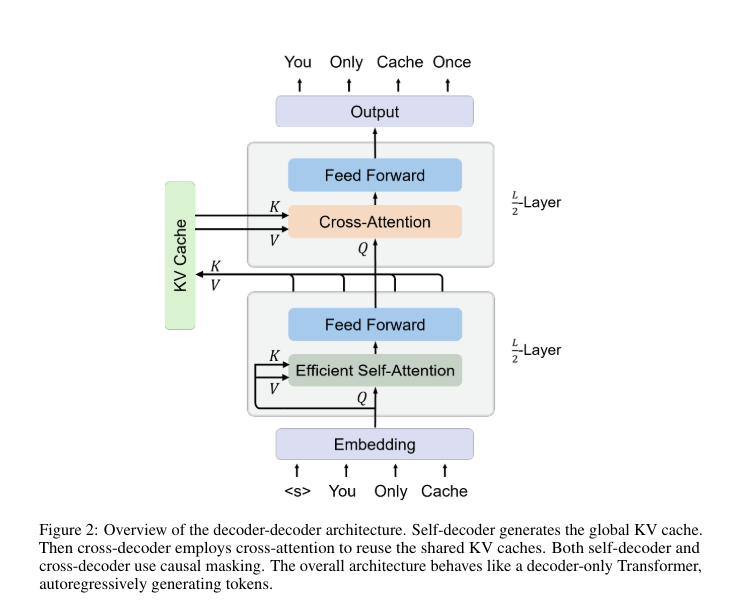
The YOCO methodology combines the use of self-decoder and cross-decoder mechanisms with advanced attention techniques to optimize language processing. Specifically, the self-decoder utilizes a sliding window and gated retention attention to generate a compact set of KV pairs. The cross-decoder reuses these pairs via cross-attention, eliminating the need for re-encoding and thus conserving computational resources. The model was evaluated on various datasets to assess its performance in real-world scenarios, demonstrating substantial improvements in processing speeds and memory efficiency compared to conventional Transformer-based models.

Experimental results highlight YOCO’s effectiveness, with the model achieving near-perfect needle retrieval accuracy for sequences up to 1 million tokens. YOCO reduces GPU memory demands by approximately 80 times for 65-billion-parameter models. Furthermore, it cuts down prefilling latency from 180 seconds to less than 6 seconds for contexts as large as 512,000 tokens while improving throughput to 43.1 tokens per second compared to 4.5 for the traditional Transformer, marking a 9.6 times increase. These metrics establish YOCO as a highly efficient architecture for processing extensive data sequences.
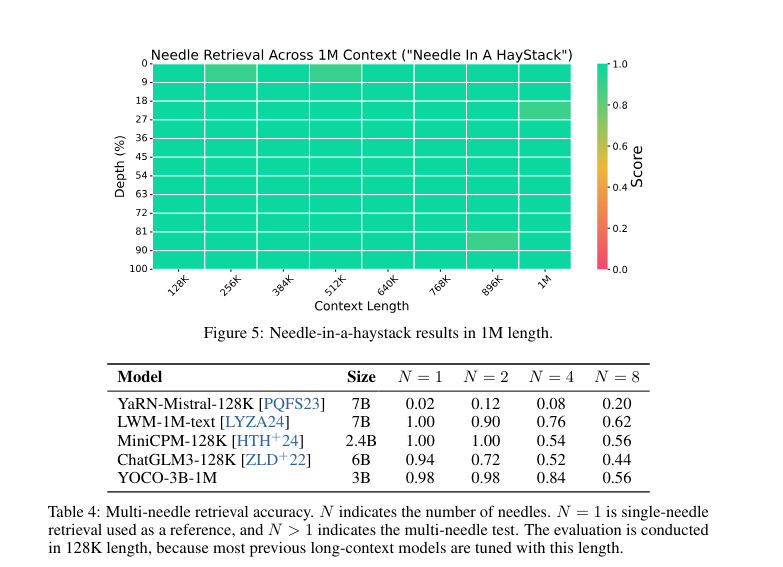
To summarize, the YOCO architecture introduces an innovative approach to language modeling by caching key-value pairs only once, significantly reducing computational overhead and memory usage. By employing a unique decoder-decoder framework that leverages efficient attention mechanisms, YOCO demonstrates substantial improvements in handling long sequences—achieving near-perfect retrieval accuracy and drastically lowering latency and memory demands. This research provides a scalable, efficient solution for deploying large language models, offering substantial practical benefits for real-world applications that require processing extensive data sequences.


Check out the Paper. All credit for this research goes to the researchers of this project. Also, don’t forget to follow us on Twitter. Join our Telegram Channel, Discord Channel, and LinkedIn Group.

If you like our work, you will love our newsletter..

Don’t Forget to join our 42k+ ML SubReddit


YOU MAY ALSO LIKE

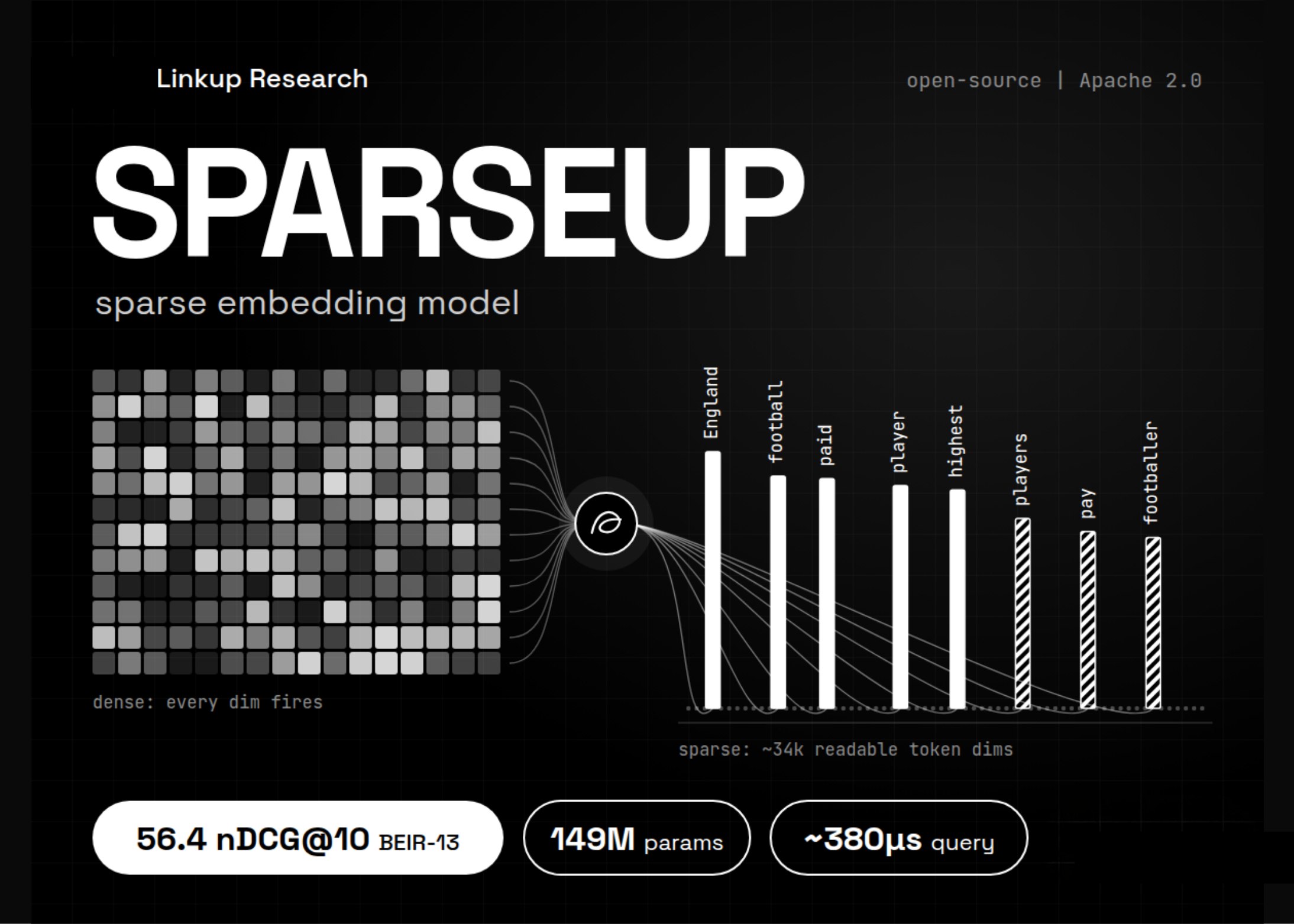
Linkup Research Releases SPARSEUP: A 149M-Parameter Open-Source Sparse Embedding Model

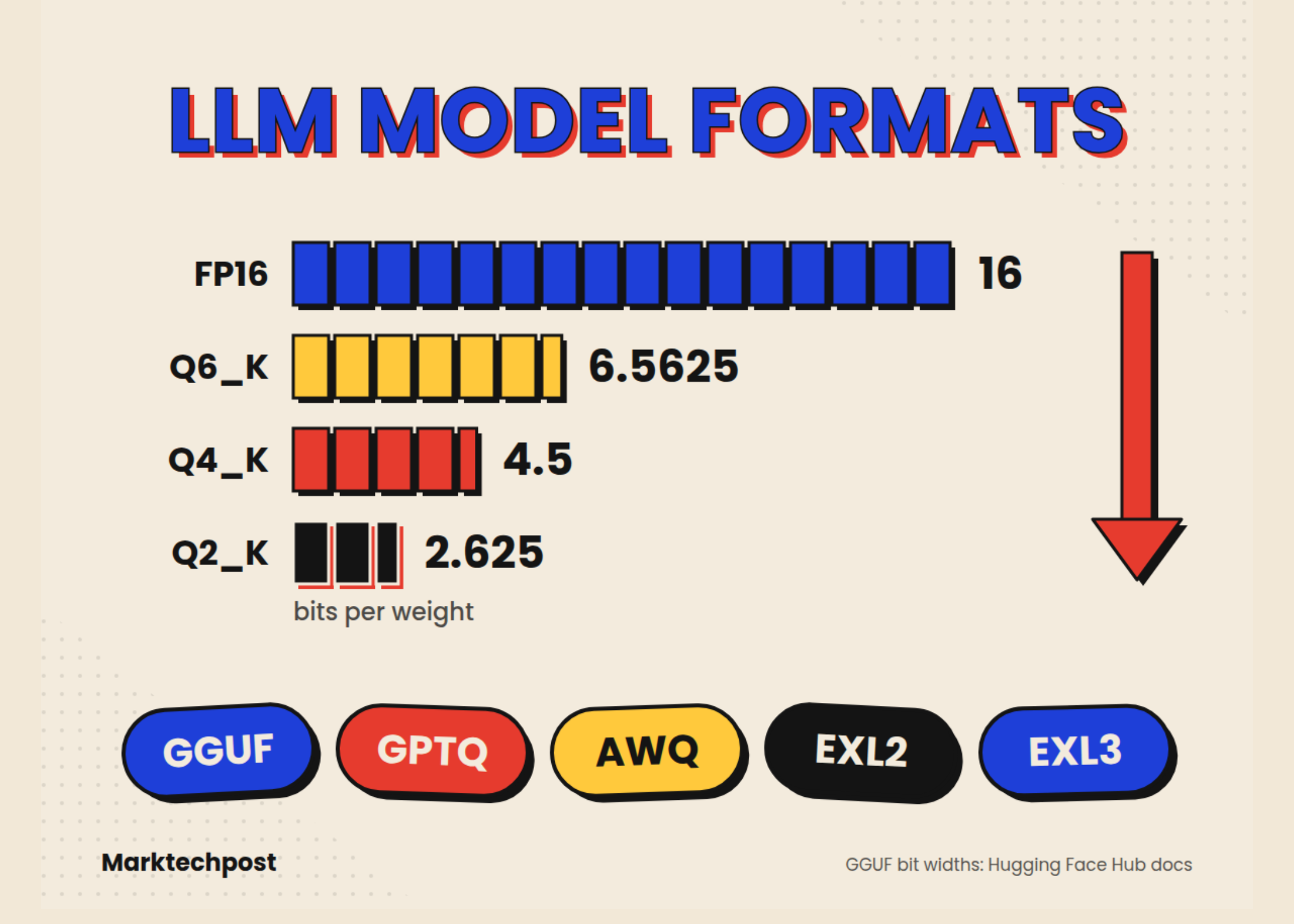
GGUF vs GPTQ vs AWQ vs EXL2: LLM Model Formats Explained (2026)

Nikhil is an intern consultant at Marktechpost. He is pursuing an integrated dual degree in Materials at the Indian Institute of Technology, Kharagpur. Nikhil is an AI/ML enthusiast who is always researching applications in fields like biomaterials and biomedical science. With a strong background in Material Science, he is exploring new advancements and creating opportunities to contribute.


[Recommended Read] Rightsify’s GCX: Your Go-To Source for High-Quality, Ethically Sourced, Copyright-Cleared AI Music Training Datasets with Rich Metadata


Credit: Source link

ShareTweetSendSharePin

Related Posts

Linkup Research Releases SPARSEUP: A 149M-Parameter Open-Source Sparse Embedding Model
AI & Technology

Linkup Research Releases SPARSEUP: A 149M-Parameter Open-Source Sparse Embedding Model

September 19, 2026
GGUF vs GPTQ vs AWQ vs EXL2: LLM Model Formats Explained (2026)
AI & Technology

GGUF vs GPTQ vs AWQ vs EXL2: LLM Model Formats Explained (2026)

September 19, 2026
Consumers Sue Anthropic, OpenAI, SpaceXAI and Google Over Alleged AI Pact – Unite.AI
AI & Technology

Consumers Sue Anthropic, OpenAI, SpaceXAI and Google Over Alleged AI Pact – Unite.AI

September 19, 2026
How Focus Mode Has Changed In iOS 27
AI & Technology

How Focus Mode Has Changed In iOS 27

September 18, 2026
Next Post
Warnings issued to stay off roads as millions affected by Northeast snowstorms

Warnings issued to stay off roads as millions affected by Northeast snowstorms

Leave a Reply Cancel reply

Your email address will not be published. Required fields are marked *

Search

No Result
View All Result
Donkey race in Lebanon gives locals a reason to smile

Donkey race in Lebanon gives locals a reason to smile

September 16, 2026
College football’s chaos era is here: Texas rallies, Oregon falls and Lane Kiffin eyes return to Ole Miss – Fox News

College football’s chaos era is here: Texas rallies, Oregon falls and Lane Kiffin eyes return to Ole Miss – Fox News

September 13, 2026
Saudi Arabia Faces ‘Worst-Case Scenario’ After Being Rebuffed by Trump – The New York Times

Saudi Arabia Faces ‘Worst-Case Scenario’ After Being Rebuffed by Trump – The New York Times

September 14, 2026

About

Learn more

Our Services

Legal

Privacy Policy

Terms of Use

Bloggers

Learn more

Article Links

Contact

Advertise

Ask us anything

©2020- TradePoint.io - All rights reserved!

Tradepoint.io, being just a publishing and technology platform, is not a registered broker-dealer or investment adviser. So we do not provide investment advice. Rather, brokerage services are provided to clients of Tradepoint.io by independent SEC-registered broker-dealers and members of FINRA/SIPC. Every form of investing carries some risk and past performance is not a guarantee of future results. “Tradepoint.io“, “Instant Investing” and “My Trading Tools” are registered trademarks of Apperbuild, LLC.

This website is operated by Apperbuild, LLC. We have no link to any brokerage firm and we do not provide investment advice. Every information and resource we provide is solely for the education of our readers. © 2020 Apperbuild, LLC. All rights reserved.

No Result
View All Result
  • Main
  • AI & Technology
  • Stock Charts
  • Market & News
  • Business
  • Finance Tips
  • Trade Tube
  • Blog
  • Shop

© 2023 - TradePoint.io - All Rights Reserved!