
Rasi Bhadramani
Introduction And Investment Thesis
Thesis
This analysis posits Akero Therapeutics, Inc. (NASDAQ:AKRO) as a potential short investment, premised on the assessment that its flagship product, Efruxifermin (EFX) – an FGF21 analogue – faces considerable hurdles toward achieving substantial market success. The likelihood of FDA approval appears constrained, not merely by the drug’s marginal efficacy but also due to concerns over bone mass density (BMD) implications and adverse quality of life (QoL) impacts. In our opinion, the methodology employed by Akero in their statistical analysis paints an overly favorable clinical relevance, therefore making the underlying fragility of the data less apparent. Anticipation of accelerated approval notwithstanding the actual market performance of EFX is likely to fall short of the forecasts until its efficacy and safety parameters are unequivocally established in subsequent confirmatory trials. The “multi-billion” MASH market is associated with challenges, including a nascent understanding of the disease pathophysiology, stringent FDA safety requirements, and intensifying competition, notably from the recent approval of Resmetirom and likely more to come.
Regulatory Landscape
The FDA’s guidance on the development of therapeutics for MASH has been outlined in official documents and was further discussed in a comprehensive webinar that convened a panel of experts to shed light on the evolving understanding of the disease and set forth expectations for sponsors. The FDA mandates significant improvements in at least one of two critical surrogate endpoints for therapeutic efficacy, with the EMA requiring satisfaction of both criteria. These are defined as: a) an improvement in liver fibrosis of at least one stage according to the NASH CRN fibrosis score without worsening steatohepatitis, specifically indicating no increase in NAS scores for ballooning, inflammation, or steatosis; or b) histopathological resolution of steatohepatitis accompanied by no worsening of liver fibrosis, where resolution entails the absence of fatty liver disease or the presence of only simple steatosis without steatohepatitis, characterized by specific NAS scoring criteria. The efficacy of endpoints with questionable correlation to hard clinical outcomes (mortality, time to liver transplant) must be combined with a clean safety profile, as proven on an example of Obeticholic acid (OA), which reported similar efficacy in the improvement of liver fibrosis endpoint to Resmetirom (~10% difference between placebo and higher dose treatment) but was not approved concerns over its safety profile, including hepatic and biliary complications and adverse impacts on QoL.
Efruxifermin Investigations
EFX was evaluated in two notable phase 2 trials (Symmetry and Harmony): one over 36 weeks (anticipating a 96-week follow-up) in MASH patients with compensated cirrhosis, and another spanning 24 and 96 weeks in MASH F2-F3 stage patients. Early exploratory studies showed significant improvements in various endpoints, with over 60% response rate in the main measures. Yet, by the 24-week mark in the Harmony trial, these improvements had tapered to around 40%. The 36-week results in the cirrhotic population showed no significant change in fibrosis, raising doubts about EFX’s effectiveness in the more advanced fibrotic population. Following the announcement of 96-week data from the Harmony trial, Akero’s stock initially surged by 25% but then fell to below pre-data levels. This later update claimed a 70% improvement in the high-dose group, but this was based on a smaller subset of responders, casting questions on the depth of the drug’s impact. The handling of EFX’s clinical data, particularly the emphasis on selective positive outcomes and often meaningless competitors’ comparisons, has sparked concern in us over the fragility of its efficacy and the likelihood of gaining regulatory approval.
FGF competition
Investigations into the therapeutic potential of FGF21 and FGF19 analogues, through diverse clinical trials exploring various formulations (including pegylated peptides and antibodies), have thus far yielded sub-par results that fall at the threshold of arguable clinical significance, prompting entities such as BMS to discontinue their respective research endeavors. A pervasive issue encountered across the spectrum of FGF21 analogues pertains to their safety profiles, characterized by a marked increase in adverse events impacting the quality of life – namely, diarrhea, nausea, pruritis, and rash – culminating in elevated discontinuation rates among trial participants. Furthermore, exploratory studies into compounds that modulate the activity of FGF21 through upstream mechanisms, such as PPAR alpha/delta agonists, have failed to demonstrate substantial efficacy in phase 3 trials. Notably, FGF21’s interaction with a wide array of tissue receptors has been implicated in undesirable off-target effects, with a significant concern arising from its potential impact on bone turnover – a risk initially hinted at in the findings from 24-week trials and subsequently observed in 96-week follow-up data.
The outlined key issues supra will be further discussed in more detail, leveraging figures from the company and external sources. A critique of the statistical approach reveals that adjusting the most recent data for multiplicity would render many endpoints statistically insignificant, casting doubt on the results’ replicability in Phase 3 studies. Furthermore, we will scrutinize the discrepancies between the 24-week and 96-week data to determine if the administration of FGF21 in humans aligns with the anticipated mechanisms of action.
FDA Guidance In Context
Obeticholic acid and Resmetirom
Reflecting on the pragmatic FDA guidelines outlined supra, these were crafted to facilitate accelerated drug approvals via demonstrably convincing surrogate endpoints efficacy. Obeticholic acid emerged as a front-runner in the MASH therapeutic arena, positioned as a potential candidate for FDA approval. Unfortunately, for the sponsors, the drug was denied multiple times, largely due to its sub-par efficacy and safety profile. Here we quote one of the FDA officials commenting on OA:
…treating 1,000 patients with OCA 25 mg for 1 year would translate to 263 additional patients with pruritus, 198 with dyslipidemia, 22 with severe pruritus, 12 with gallbladder disease, 11 with drug-induced liver injury of mild severity, 8 with cholecystectomy and 2.4 with drug-induced liver injury of moderate severity. Treatment over 2 years would approximately double these additional outcomes.” – Source
The phase 3 REGENERATE study, evaluating Obeticholic acid in a cohort exceeding 900 subjects, did not demonstrate a significant effect on MASH resolution without worsening fibrosis, though it purportedly achieved ‘positive’ results in improving fibrosis without worsening of MASH. Given that liver fibrosis serves as a crucial surrogate marker for liver-related mortality, the modest numerical enhancements reported were insufficient to mitigate the FDA’s safety concerns.
doi:10.1016/ S0140-6736(19)33041-7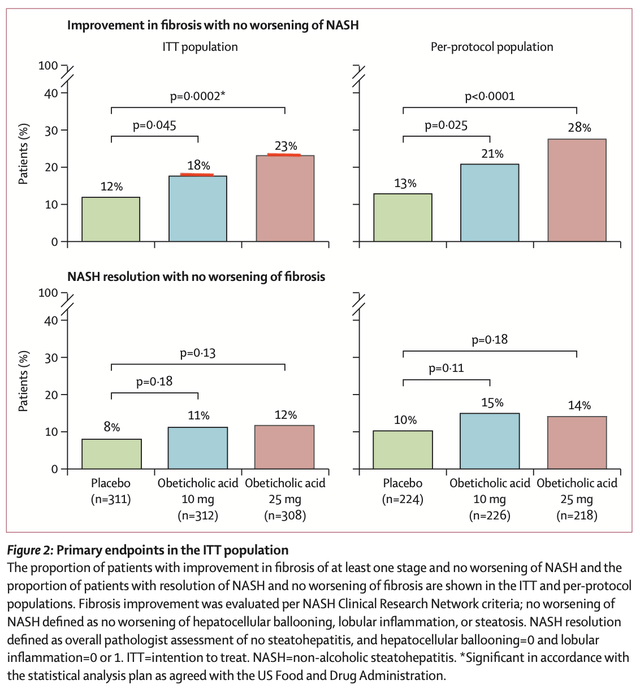
In a contrasting development, Resmetirom secured accelerated approval by showcasing efficacy profiles analogous to Obeticholic acid in terms of fibrosis improvement but demonstrated superior results regarding MASH resolution and safety parameters. The trial further highlighted significant reductions in LDL cholesterol, a critical biomarker linked to cardiovascular risk, underscoring its therapeutic potential in the MASH demographic. Detailed findings from the MAESTRO-NASH trial, delineating these outcomes, are presented infra.
DOI: 10.1056/NEJMoa2309000 DOI: 10.1056/NEJMoa2309000 DOI: 10.1056/NEJMoa2309000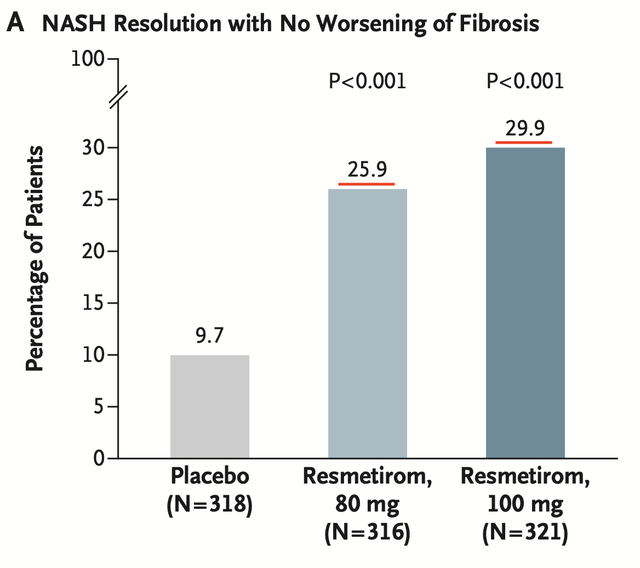
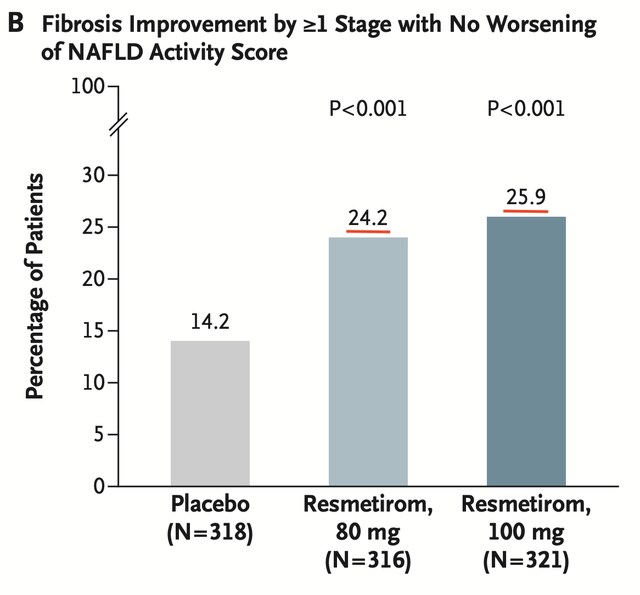
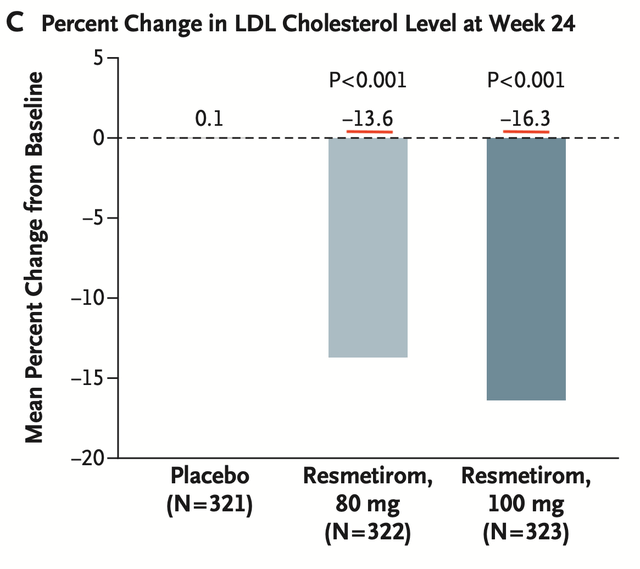
In evaluating Obeticholic Acid and Resmetirom, it’s evident that Resmetirom managed to improve both primary endpoints in roughly one-third to one-quarter of patients, a marked improvement over OA, which only showed efficacy in one-quarter of patients in the higher dose group for fibrosis improvement without worsening of MASH. Notably, Resmetirom’s superior safety profile likely contributed significantly to its favorable regulatory outcome, setting new precedents for the approval of future MASH therapeutics. The contrasting regulatory journeys and clinical efficacy profiles of OA and Resmetirom now serve as benchmarks for the development and approval processes of upcoming treatments in the MASH landscape. The commercial success of Resmetirom, priced at $47,000 annually and demonstrating surrogate endpoint improvements in one out of every five patients (after adjusting for placebo response rates), remains to be seen in the context of its market adoption and patient affordability.
EFX Efficacy And Safety
Harmony and Symmetry Trials
EFX was tested in two phase 2 trials: the Harmony trial for non-cirrhotic MASH patients and the Symmetry trial for patients with compensated cirrhotic MASH. The Symmetry trial didn’t show significant improvements in fibrosis or MASH at 36 weeks, and more data from a 96-week follow-up is expected in Q125. The Harmony trial 24-week results were shared in a peer-reviewed article and the 96-week follow-up was released through a press release and a webcast. MASH trials often struggle with high dropout rates and slow enrollment, mainly because liver biopsies are needed and many people get screened out. Researchers look at different groups of patients in these studies, but the most important data usually come from the intention-to-treat group (ITT), which includes everyone who was randomized to receive treatment. Sponsors often choose to analyze data in subpopulations that include only patients that finished the study, or that provided certain samples at the time of completion. Relevant analysis involves use of ITT population and statistical models that mark the missing subjects as non-responders. Moving between various patient groups in data presentation can be used to advantage, as we plan to demonstrate infra.
Harmony Week 24 Efficacy Overview
doi:10.1016/ S2468-1253(23)00272-8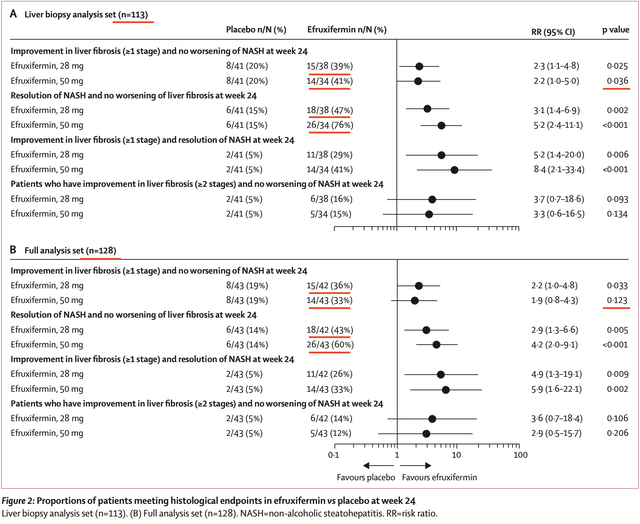
As shown supra, the Harmony week 24 paper disclosed noteworthy outcomes across both primary endpoints… in “liver biopsy analysis set”. When considering the full analysis set, the distinction of EFX’s impact on liver fibrosis improvement and the mitigation of MASH progression in the higher dosage cohort was not statistically significant, with marginal significance observed in the lower dose group. Conversely, the alternate primary endpoint demonstrated significant therapeutic benefits, notably diverging from the highly optimistic efficacy rates (~60% to ~70%), nonetheless, arguably suggesting a tempered yet positive indication of early-stage efficacy.
This investigation was initially designed to identify a 40% differential in efficacy between placebo administrations and either dosage of EFX, employing a Chi-Squared test for primary endpoint analysis. Notably, observed variances below this threshold still achieved statistical significance, a phenomenon attributed to the authors’ decision to apply the Cochran-Mantel-Haenszel (CMH) method over the Chi-Squared test and to further stratify on variables already considered in stratification, such as the presence of type 2 diabetes and initial fibrosis stage. This methodological choice complicates the interpretation of the statistical significance attributed to the findings. Outlined use of CMH can boost the results statistical significance, as F3 population is often a majority (60-70% in Harmony) and is also more likely to regress due to being a more extreme phenotype. Furthermore, the authors state that the primary endpoints were not adjusted for multiplicity, challenging the validity of the results within hypothesis testing frameworks. Among the numerous biomarker and exploratory measures evaluated, the study reported a notable reduction in LDL cholesterol relative to the placebo, infra.
doi:10.1016/ S2468-1253(23)00272-8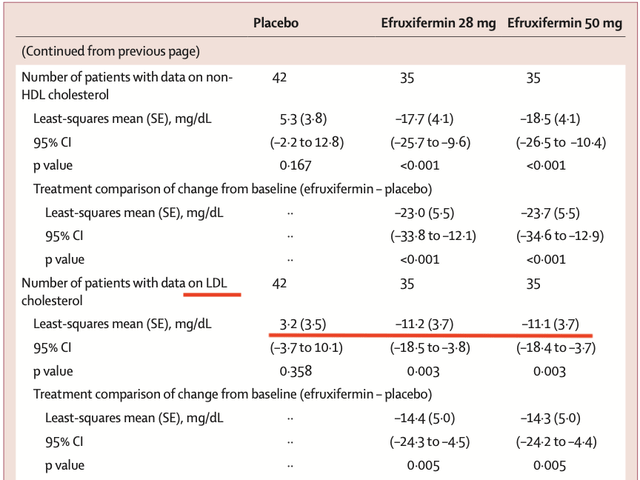
Harmony Initial Safety Data
Within the framework of phase 2 trials, which serve an exploratory purpose aimed at refining treatment effect estimations for subsequent phase 3 study power calculations, the Harmony trial’s initial safety data presents a complex picture. While the efficacy of the treatment, particularly in terms of MASH resolution without worsening fibrosis, hints at potential regardless of the choice of statistical tools, the safety profile introduces significant concerns, particularly in relation to quality of life and bone mineral density impacts detailed in supplementary findings.
doi:10.1016/ S2468-1253(23)00272-8 doi:10.1016/ S2468-1253(23)00272-8 supplement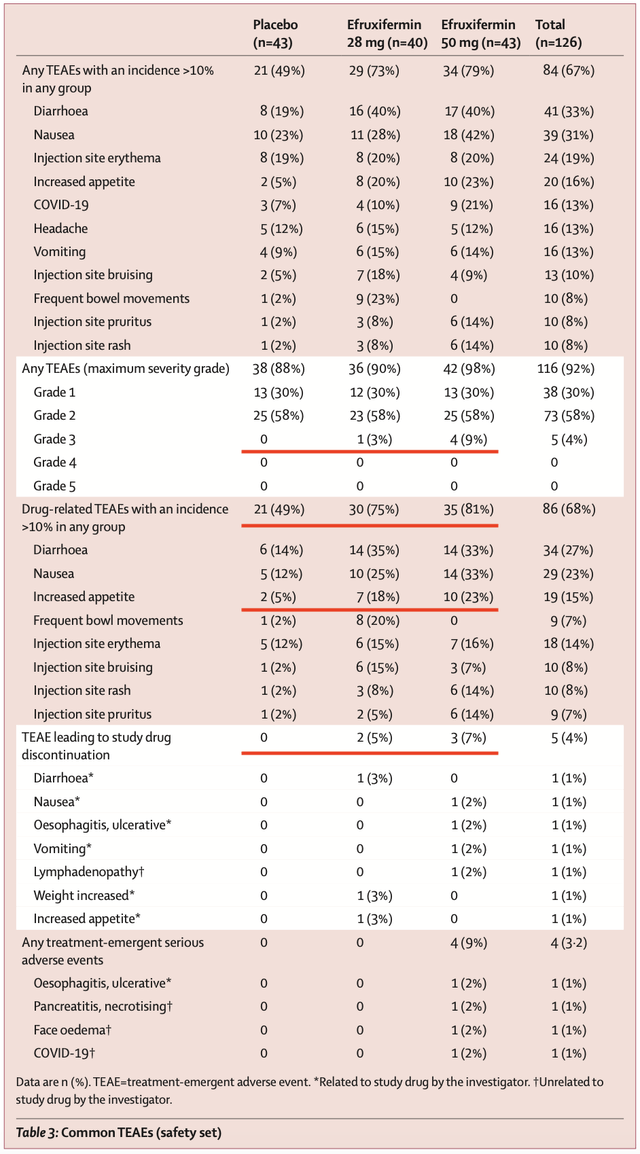
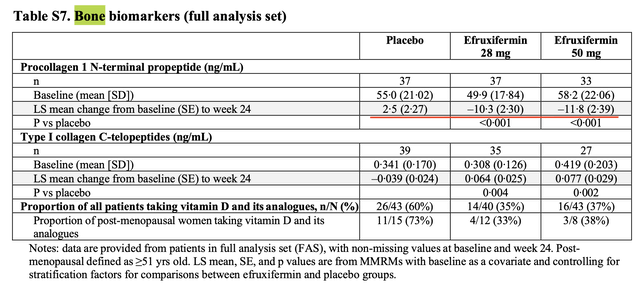
Treatment-Emergent Adverse Events (TEAEs) with over a 10% incidence rate were significantly more common in participants receiving EFX, unlike the placebo group, which showed no grade 3 or higher severity adverse events. Notably, grade 3 severity adverse events occurred at rates of 3% and 9% in the low and high dose groups, respectively. Declines in BMD markers also suggest potential long-term risks, but at that point in time the question remains whether they normalize or persist over a more prolonged use of the therapy; how did the week 24 findings translate into week 96? If the drug was reversing the MASH pathology and aiding recovery, there should be a clear and profound effect after almost 2 years of administration. We discuss the 96-week findings infra.
Harmony Week 96 Follow-up Fibrosis Improvement and No Worsening of MASH
AKERO investor presentation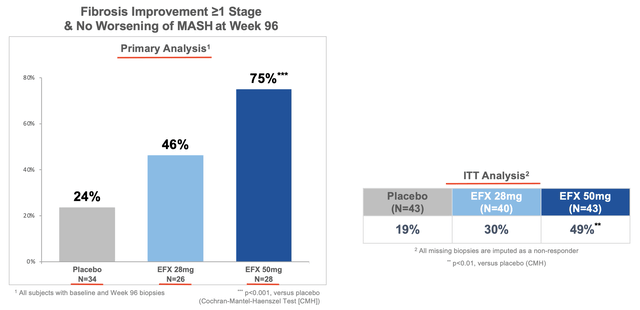
The announcement of the week 96 follow-up data initially was reported as groundbreaking, revealing a 75% response rate in the high-dose cohort for the endpoint of fibrosis improvement without worsening of MASH… in the liver biopsy analysis set. Yet, the ITT analysis yielded a more nuanced perspective, indicating a decline in efficacy from week 24 to week 96 in the low-dose group (from 36% to 30%) and an increase in the high-dose group (from 33% to 50%). Interestingly, this “modified” ITT set does not match exactly with the full analysis set from week 24 (28 mg group has 40 subjects instead of 42), suggesting exclusion of non-recipients of the drug for certain individuals initially counted. If the excluded subjects were to be included in the 96-week figure, the 28 mg response rate would be even lower. The liver biopsy analysis set reported data for only 54 patients in the exploratory arms out of initial 85, corresponding to only 64% of these patients. To elaborate on this point, the placebo group lost 9 out of 43 (21%) subjects from randomization to week 96, low does group lost 16 out of 42 (38%) subjects and high dose group lost 15 out of 43 (35%) subjects. We believe that clear and major differences in drop-out fractions are a significant red flag in such exploratory study, affecting both the strength of the data, but also impacting patient and physician perspective in future settings.
Incorporating both ITT and liver biopsy analysis sets in a single presentation is generally acceptable. However, Akero’s approach to contrasting their findings with those of competitors highlights worries about possibly overstating EFX’s actual efficacy, especially to investors less familiar with the nuances of clinical data, infra.
AKERO investor presentation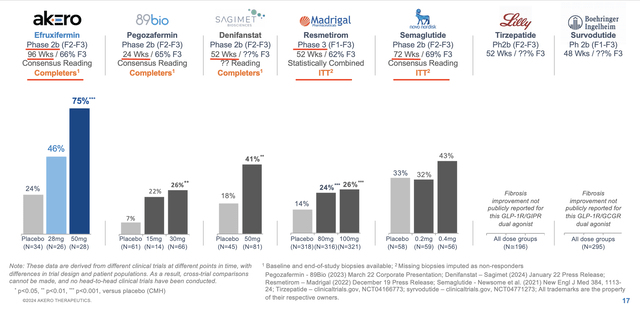
At first glance, one might infer that EFX significantly outperforms other drugs, but this comparison overlooks critical variations in study durations, sizes, and participant demographics across the different trials. For instance, Pegozafermin’s 24-week outcomes are more directly comparable to Harmony’s 24-week results than to its 96-week data. Similarly, Denifanstat’s 52-week findings and Resmetirom’s outcomes from a phase 3 study involving a larger sample size over 52 weeks present challenges for direct comparison to Harmony’s data. Furthermore, Semaglutide, primarily a type 2 diabetes treatment, reports ITT population results at 72 weeks, highlighting the discrepancies in trial parameters.
Moreover, despite the Harmony study not being explicitly designed to detect a 40% difference between treatment and placebo groups at week 96, the reported ITT data suggests a significant p-value for only a 30% difference. Since week 96 data is part of the same study as week 24 data, one could assume that the calculated p-values were not adjusted for multiplicity. We propose a different statistical approach to assess the statistical significance of the findings. If the ITT subset data, as reported in the press release, was to be interpreted using a Chi-Squared test and adjusted with Bonferroni Correction for multiplicity, the test yields a non-significant p=0.066, shown infra.
MExcel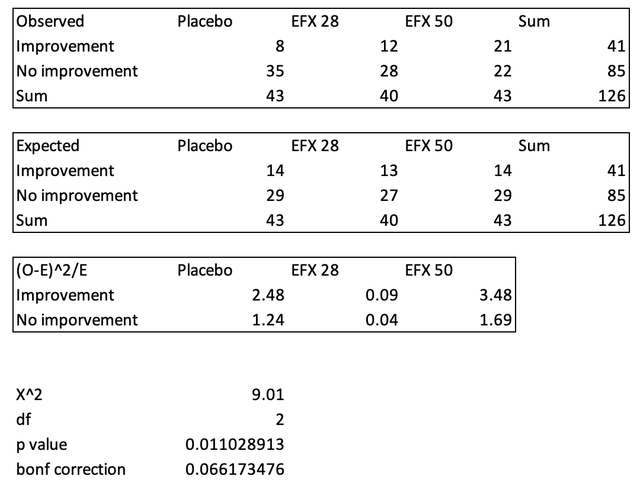
Harmony Week 96 Follow-up MASH Resolution and No Worsening of Fibrosis
Shown infra is the reported MASH resolution and no worsening of fibrosis figure. Similarly to the endpoint mentioned supra, the ITT analysis shows less profound effects compared to the liver biopsy subset. The response rates regressed in both groups, compared to week 24 (low dose – 43% -> 40%, high dose – 60% -> 37%), questioning the drug’s sustained efficacy and possibly showing signs of resistance, where it becomes less effective over time. Resistance (similar to insulin) to FGF21 in metabolic diseases has been previously proposed, due to observed increase plasma levels of the peptide (also observed in obese population). Oddly, the low dose group did better than the high dose group, which does not align with the fibrosis improvement finding. If we applied stricter statistical checks to these findings as supra, with response rates lower than the high dose fibrosis improvement and no worsening of MASH no statistically significant founding would be observed.
AKERO investor presentation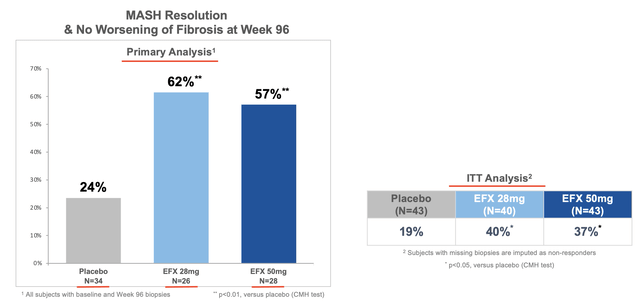
Harmony Week 96 Follow-up Lipoprotein and Glycemic Control Biomarkers
Among the lipoprotein exploratory biomarkers, the company reported several numerical improvements, however, the previously observed decrease in LDL cholesterol at week 24, was completely gone by week 96, as the marker increased in all three groups, shown infra. This outcome contrasts with findings from Resmetirom’s phase 3 study, where LDL percentage reductions (mid to high teens) were observed at week 24, and sustained throughout week 52, underscoring a potential divergence in long-term lipid management efficacy between the two treatments. EFX’s influence on the broader lipoprotein spectrum – encompassing triglyceride content, non-HDL, and HDL levels – demonstrated a regression from the promising trends observed at week 24, with only HDL in the high does group remaining almost the same. Highly relevant and not discussed by the sponsor, is whether the improvements in the lipoprotein measures were relevant enough to bring the values into the “healthy range”, rendering them more valuable in clinical context and more predictive of the observed primary surrogate endpoints improvements. Triglycerides at baseline were equal to ~160 mg/dL, and in fact, a 20% reduction observed in the high dose group would bring the level below the desired threshold of 150 mg/dL) The improvement of 27% in the high dose group in the HDL levels would not cross the desired threshold of 60 mg/dL, furthermore, there is little evidence to support that improvements in HDL correspond to clinically relevant improvements in cardiovascular mortality. The LDL profile did not improve and after the small increase over the 96-week period, it would in both dose groups approximately be at the threshold of the healthy level of 100 mg/dL. Not surprisingly, the non-HDL (all “bad” types of cholesterol) regressed in a similar manner to LDL (mid to high teens improvements in non-HDL observed at week 52 for Resmetirom).
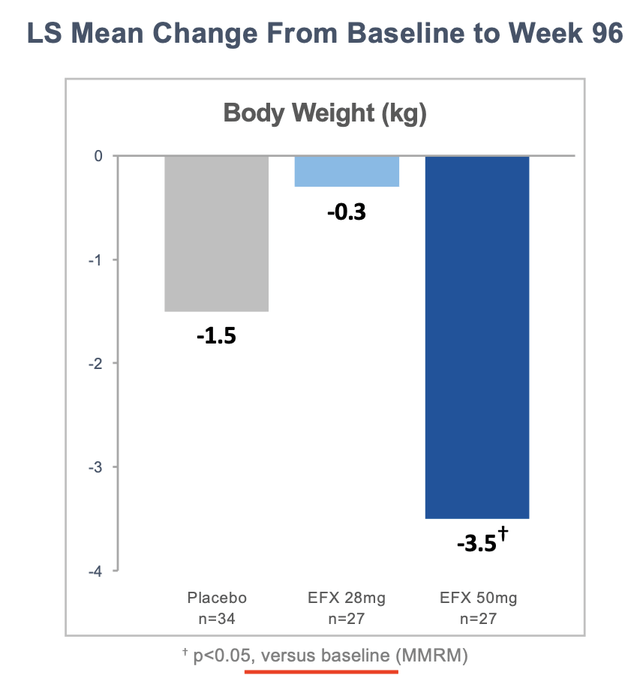
No significant changes in body weight were seen with EFX compared to placebo, which is a letdown since the drug was initially expected to promote weight loss. The 3.5 kg weight loss observed in the high does group corresponds to less than 5% change over 2 years, and even if replicated in a phase 3 trial over a year, it could still be considered marginal in regards to cardiovascular mortality improvements. Regression of the effect on the markers of lipoprotein profile indicate that the hypothesis of tolerance is a likely occurrence. This idea is backed by a slight increase in liver disease markers during the therapy, moving away from the significant improvements seen early on.
AKERO investor presentation AKERO investor presentation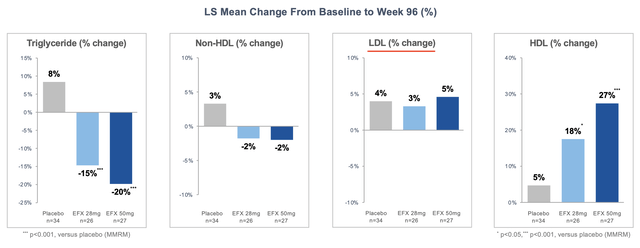
Surprisingly, the company has not released HbA1c week 96 data, which would provide a clear profile of EFX effect on glycemic control (GC), despite early claims it could enhance insulin sensitivity and thus improve GC. Only the investigators can know for sure, but perhaps due to regression to mean, the 96-week data was not significant on that endpoint. Shown infra, are the other glycemic control biomarkers, of questionable value.
AKERO investor presentation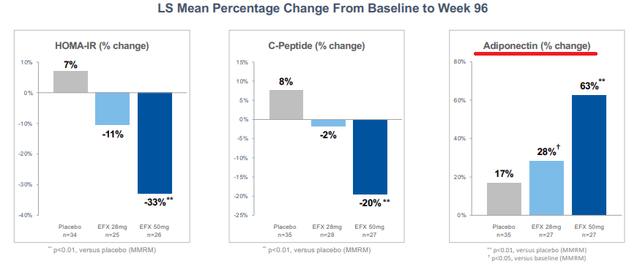
The most significant change was noted in the adiponectin biomarker, a favorite metric for companies like Akero. Despite reporting a notable 63% increase in adiponectin levels in the high-dose group, the clinical relevance of this improvement remains minimal. Specifically, adiponectin levels rose from 3.5 µg/mL to 5.7 µg/mL in the high dose group (note the baseline for these 27 subjects is not specified). Given that the normal adiponectin range in plasma spans from 3 to 30 µg/mL, this increase places the outcome at the lower end of the spectrum, notably when the baseline already falls within this normal range. The key issue lies in the translation of biomarker enhancements to tangible clinical benefits, particularly in the absence of HbA1c data, casting doubt on the drug’s ability to manage glycemic control. It stands to reason that significant HbA1c improvements would have been highlighted by Akero if present, suggesting their omission might indicate less impactful glycemic control outcomes than anticipated. We believe that if there was a significant improvement in HbA1c, the sponsor would include it in the press release.
Harmony Week 96 Follow-up Bone Mass Density
The Harmony trial’s 96-week follow-up safety assessment echoed the incidence rates of mild adverse events previously documented at the 24-week milestone, extending its scrutiny to safety implications tied to prevalent co-morbidities within the MASH demographic. Notably, the analysis disclosed no significant deviations in systolic and diastolic blood pressure compared to placebo – a critical observation given the cardiovascular co-morbidities characteristic of the MASH patient cohort. Yet, a significant concern raised by the 96-week follow-up was the bone mass density results, which aligned with the observations from week 24. The reported data indicated a statistically significant decrement in BMD at the lumbar spine and femoral neck regions compared to placebo, increased from those observed in the week 36 data from the cirrhotic cohort. These results resonate with existing animal model research on FGF21’s influence on BMD, which also raised concerns of the peptide effect on bone turnover. The sponsors’ attempt to rationalize these findings with an unexpected 1% increase in the placebo group’s BMD and variations in population characteristics, such as Vitamin D supplementation disparities, does little to alleviate the potential severity of these outcomes. The observed rates (~3-4%) were double what is expected based on longitudinal studies. BMD leading to osteopenia or osteoporosis is associated with an increase in all-cause mortality. Should these BMD concerns persist into phase 3 investigations, the FDA’s evaluation of EFX’s approval viability would necessitate a rigorous risk-benefit analysis, where questionable improvements of surrogate endpoints might not be enough to make up for the mortality risks attributable to co-morbid conditions within the MASH population.
Other FGF Competitors
The exploration of FGF analogues as potential therapeutics for MASH has extended beyond Efruxifermin, encompassing a variety of compounds in phase 2 clinical trials. This category includes an FGF19 analogue, Aldafermin, and two FGF21 analogues, Pegbelfermin and Pegozamerfin . Additionally, interventions targeting transcription factors involved in FGF21’s regulatory pathways, such as Elafibranor (a PPARa/d dual agonist), have undergone evaluation but failed to demonstrate significant efficacy in phase 3 trials. Following an uninspiring phase 2 performance, BMS opted to cease Pegbelfermin research, citing the drug’s limited prospects for success and acknowledging the superior design of 89Bio’s Pegozamerfin as a decisive factor in their withdrawal from competition.
Aldafermin, characterized by its dual role in regulating glucose and lipid metabolism as well as bile acid synthesis, presented inconsistent efficacy across dosing regimens, failing to exhibit a consistent therapeutic gradient. In light of these outcomes, NGM Bio, the sponsor behind Aldafermin, has shifted its focus towards primary sclerosing cholangitis, diverging from its original MASH therapeutic trajectory. Meanwhile, Pegozamerfin ‘s 24-week data from phase 2 trials, although numerically inferior to EFX’s results, achieved a comparable efficacy level post placebo-adjustment. However, like EFX, Pegozamerfin was implicated in an uptick in QoL adverse events and an elevated TEAEs rate, factors that contributed to its discontinuation in clinical evaluations.
Akero is contending with rivals developing varied MASH treatments, from those targeting insulin resistance and anti-inflammatory actions to anti-fibrotic approaches and microbiome alterations (involving THR-B agonists, SEFA, FASN inhibitors, PPAR agonists, GLP1-RA, FXR agonists, and more). This places Akero in a highly competitive field marked by lengthy, costly clinical trials and significant dropout rates. The likelihood that EFX’s effectiveness will surpass all competing drugs, including similar FGF21 analogues and other types of treatments, appears slim. Even if EFX proves to be as effective or slightly better, the reality of a fragmented market share remains.
Valuation
Madrigal Resmetirom Approval and Akero DCF Valuation
The landmark approval of Resmetirom by Madrigal Pharmaceuticals marks a pivotal moment in the treatment landscape of MASH, offering a precedent for evaluating the potential market trajectory of investigational compounds within this therapeutic domain. The valuation of Madrigal, particularly in light of Resmetirom’s approval, serves as a benchmark for companies navigating the complex terrain of novel drug approvals in MASH. Despite the groundbreaking nature of this approval, market responses to Resmetirom – priced at an annual cost of $47,000 – reflect a cautious approach, highlighting the underlying uncertainty regarding market acceptance and penetration of newly approved treatments.
Estimates suggest the U.S. F2-F3 patient population hovers around 300,000 individuals, providing a substantial market for emerging therapies. Madrigal’s stock experienced a notable surge following the approval announcement, though it subsequently receded to its pre-announcement valuation, mirroring a pattern observed with Akero’s valuation fluctuations. Currently, Madrigal’s enterprise value stands at approximately $4B post-offering, a figure nearly sixfold greater than Akero’s valuation of $700M, suggesting the market attributes a roughly 15% chance of success to Akero’s EFX. A DCF model was constructed under the following assumptions: market entry in 2026, annual cost of $47,000 (same as Resmetirom), target population of 300,000, peak sales of $2.8B, COS at 40% and tax rate of 19%, exclusivity until 2034, and discount rate of 10% (note, we did not account for low to high royalties that Akero would have to pay Amgen). Physician confidence (PC) was set at 1 in 4, insurance coverage was set to 90% and discontinuation rate was set at 10%, in total these assumptions converged to 20% market penetration.
The model gauges market confidence in Akero, presuming drug approval. While we doubt this outcome will materialize, the model serves as a valuable instrument for assessing risk and estimating potential upside.
ME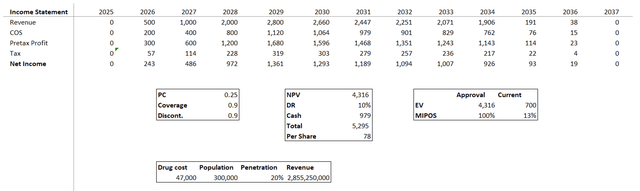
Cash Burn
As previously highlighted, the pathway to developing therapeutic solutions for MASH is fraught with financial exigencies, largely attributed to the considerable expenses inherent in conducting clinical trials. The complexity and specificity of these studies, notably including extensive serum screening for biomarkers and the requirement for repeated biopsies, entail substantial procedural costs and the necessity for expert pathological assessment. In the fiscal year 2023, Akero disclosed a total net loss of approximately $150M (or $170M if one were to exclude interest income), with a significant portion ($140M, or 82%) directly attributed to research and development. This expenditure is likely to escalate as Akero proceeds with the expansion of enrollment for its two phase 3 trials, each aiming to randomize around 1000 patients – a process that necessitates screening an estimated 5000 subjects to meet these targets.
The financial burden is further compounded by the nature of EFX as a monoclonal antibody, positioning its development and production costs above those of competitors pursuing less complex therapeutic formulations. Despite these financial challenges, Akero maintains a robust fiscal standing, bolstered by the recent issuance of 12,650,000 shares, which generated gross proceeds of $366M, elevating the company’s cash reserves to the vicinity of $1B. Prior to this capital infusion, Akero had asserted that its liquid assets were sufficient to sustain operations well into 2026; this successful funding initiative has extended the company’s operational runway even further, providing a cushion against the high burn rate characteristic of intensive R&D phases.
Conclusion and Future Direction
From our perspective, Akero is not the best bet for investors. The company is up against numerous competitors, potentially leading to a split market at best, or at worst, being outperformed by treatments with better efficacy, safety, and easier administration. Evidence from phase 2 trials indicates that long-term use of EFX could be resulting in tolerance and dampened improvements in biomarkers. In our opinion, the company’s reporting on key outcomes (like fibrosis improvement/no MASH worsening and MASH resolution/no fibrosis worsening) tends to paint a rosier picture than reality might support. There are also mismatches between biomarker changes and clinical endpoint improvements, suggesting complexities in MASH’s pathophysiology, which further underline that the use of biomarkers and surrogate endpoints has questionable translation into clinical outcomes. EFX is linked to a higher rate of side effects, particularly those affecting quality of life. Concerns about the effect of FGF21 analogues on bone mass density are particularly alarming, given the comorbidities of the target population. An increased appetite, consistent across those taking the drug, might explain the lack of significant weight loss in treatment groups. Another key cofounder affecting the measure could be the diet, as FGF21 concentrations were generally correlated with protein intake, suggesting that the mechanism is involved in regulation of body needs for balanced intake of macronutrients.
We’re skeptical that EFX will meet expectations in phase 3 trials, hindered by confounding factors like the placebo effect (including Hawthorne effect, lifestyle changes, and weight reduction), regression to the mean (favoring extreme phenotypes in screening), and data fragility (questionable statistical improvements and inconsistency between biomarkers and surrogate endpoints). Efficacy may also diminish in comparison to the 96-week findings due to the shorter duration of phase 3 trials, providing less time for the drug to effect change.
Akero is somewhat lucky to have a substantial cash reserve at its disposal, allowing it to persist in exploring EFX despite the challenges outlined. Our analysis, influenced by the broader market’s reaction to MDGL and incorporating various model assumptions, estimates the market perceived likelihood of EFX’s success at about 15%. Market valuations are likely to adjust rapidly, especially with Resmetirom’s market performance as a potential catalyst. A positive reception of Resmetirom could enhance the valuation landscape for the entire sector, regardless of the developmental stage of the companies involved. We view AKRO as a short, however, our current stance is to remain on the sidelines in the anticipation of the phase 3 data.
Credit: Source link