

lucadp/iStock via Getty Images
Unlike many software companies, Autodesk’s (NASDAQ:ADSK) performance has been fairly stable over the past 18 months, with revenue continuing to rise and margins improving. This is not that surprising given Autodesk’s end market exposure, but 2024 is likely to prove more difficult in terms of the demand environment. Longer-term, Autodesk stands to benefit from greater adoption of AI in design workflows and greater use of software throughout the building lifecycle.
Despite relatively soft performance over the past few years, Autodesk’s valuation still bakes in solid growth and high margins going forward. The company’s competitive positioning warrants a premium valuation, but it is difficult to see the stock outperforming the market by a significant margin from current levels.
Market
Autodesk recently suggested that leading indicators for its business have been consistent (growing usage, record bid activity, cautious optimism from channel partners). Renewal rates also continue to be strong, and new business growth has been consistent for many quarters. Macroeconomic conditions are reportedly a drag on new subscriber growth though.
Relative strength is not that surprising considering Autodesk’s exposure to AEC and the automotive industry, both of which have continued to perform well on the back of pandemic backlogs and in the case of AEC, enormous fiscal stimulus.
This strength may not be maintained through 2024 though. In the short-term, the automotive industry should continue to be supported by relatively low inventory levels, although inventory levels are rising rapidly. New vehicle sales growth in the US is currently high, but volumes are still not back to pre-COVID levels. Used vehicle prices also continue to plummet, which could potentially pressure new vehicle pricing and sales in time.
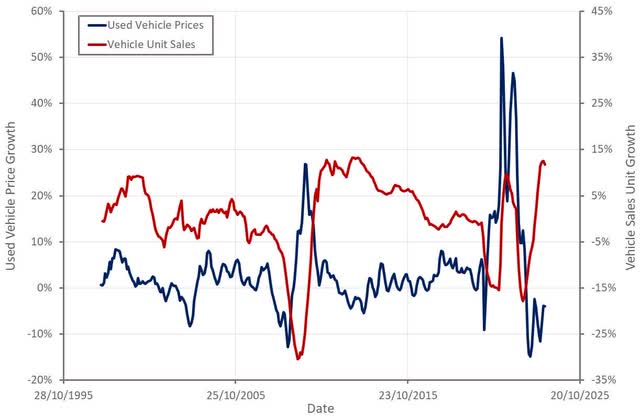
Figure 1: Used Vehicle Prices and Vehicle Sales (source: Created by author using data from Manheim and The Federal Reserve)
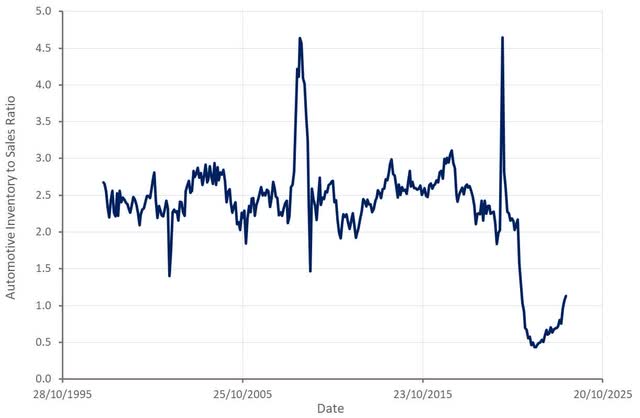
Figure 2: Automotive Inventory to Sales Ratio (source: Created by author using data from The Federal Reserve)
Strong demand from AEC customers may also only prove to be temporary. This sector is benefitting from a pandemic backlog and enormous fiscal stimulus, but these tailwinds won’t last forever. Commercial real estate is generally struggling and there appears to be a large bubble forming in multifamily residential.
Up to the end of the third quarter, AEC demand has continued to look robust. Autodesk has over one million builders on its BuildingConnected network (bidding software), and bid activities there continue to increase. Cracks may be beginning to show though. The Architecture Billings Index is at levels typically associated with a contraction in construction spending (44.3) and builder backlogs and sales confidence are falling.
Any weakness in construction could be offset by government sponsored infrastructure projects though. The Bipartisan Infrastructure Law has made over 850 billion USD in total funding available, which is being directed towards areas like water, road, rail, airports and power infrastructure. The law has an authorizing period of five years, but spending is likely to last beyond this.
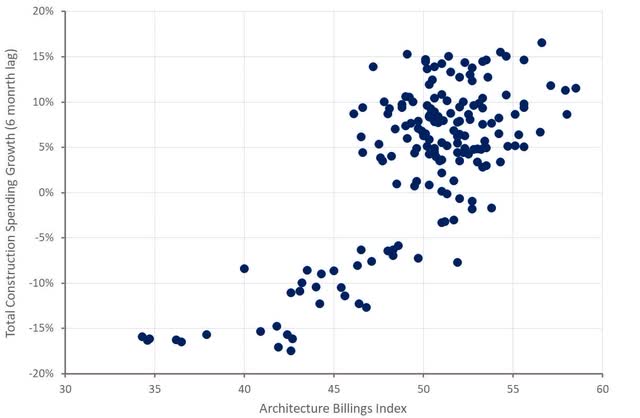
Figure 3: Architecture Billings Index and Total Construction Spending Growth (source: Created by author using data from AIA and The Federal Reserve)
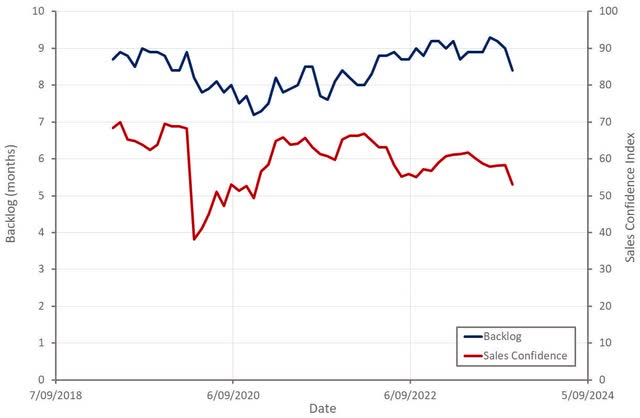
Figure 4: ABC Backlog and Sales Confidence Index (source: Created by author using data from ABC)
Autodesk
A large portion of Autodesk’s revenue comes from AEC, which has helped to support growth in the face of macro headwinds. Within AEC, Autodesk is focused on technology that drives efficiency and safety. Autodesk is also trying to address pre-planning and support more of a manufacturing approach to construction (offsite construction, modular construction, robotics). This plays to Autodesk’s strengths as it connects design, manufacturing and construction.
Autodesk’s AEC business continues to perform extremely well, particularly in transportation, water infrastructure and construction. Customers are reportedly consolidating on Autodesk’s solutions to connect previously siloed workflows. Interest in Autodesk’s end-to-end construction solutions (design, preconstruction, field execution, operations) is also growing.
The company has already managed to drive strong adoption amongst larger organizations but believes there is still significant growth potential amongst smaller organizations. Autodesk Construction Cloud is also an area of strength, with MAUs increasing over 100% YoY in the third quarter.
Autodesk’s expansion into larger infrastructure projects comes at the right time, with the Bipartisan Infrastructure Law driving a once in a generation spending boom. Autodesk has been investing in road and rail over the past 5-10 years and this is now beginning to pay off, with the company gaining traction in the market. Water is also a focus area, aided by Autodesk’s acquisition of Innovyze. Autodesk acquired Innovyze in 2021 for roughly 1 billion USD, its largest ever acquisition. Innovyze provides water infrastructure modeling and simulation software that supports the design of water distribution networks, water collection systems, water and wastewater treatment plants, and flood protection systems. The acquisition supports Autodesk’s infrastructure solutions and digital twin strategy.
More than 50% of new projects globally are now renovations and to support this, Autodesk is investing in areas like point cloud scanning, existing condition assessments and sustainability calculators.
AI
Like many software companies, AI presents Autodesk with a large opportunity, but unlike many, generative AI has a concrete use case that will likely be highly valued by customers. Autodesk AI augments the design process, automating repetitive tasks and providing analysis to aid decision making. Autodesk’s AI solutions are also built on a wealth of data which few companies can compete with.
Investors may be getting ahead of themselves in respect to the impact of AI on Autodesk’s business though. There is a large amount of hype around AI at the moment and much of this is likely to prove unwarranted. Even in use cases where AI will genuinely make a positive impact, it will likely take some time for the technology to evolve and for organizations to build it into existing workflows. While Autodesk already has solutions on the market, the company has stated that it is too early to talk about monetization.
Financial Analysis
Autodesk’s third quarter results were solid, with upside coming from incremental true-up and upfront revenue from EBA cohorts. Direct revenue increased 19% and represented 38% of total revenue. Autodesk continues to drive modest expansion within existing customers, with its net revenue retention rate between 100% and 110% in the third quarter.
Third quarter growth was generally robust across geographic regions, with APAC an outlier. APAC growth continues to reflect the impact of last year’s COVID lockdown in China.
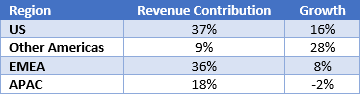
Table 1: Revenue Contribution and Growth by Region (source: Created by author using data from The Federal Reserve)
Autodesk’s recent performance could be considered emblematic of what has been termed a rolling recession. Geographic, product, and customer diversification has allowed strength in some areas to offset weakness in others. For example, accelerating growth in Canada has balanced decelerating growth in the UK and momentum in construction has offset weakness in media and entertainment. Whether AEC growth can remain high enough to offset weakness in other areas remains to be seen though.
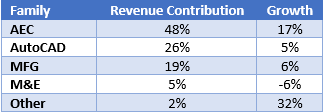
Table 2: Revenue Contribution and Growth by Product Family (source: Created by author using data from Autodesk)
FY2024 revenue is now expected to be between 5.45 and 5.47 billion USD, implying roughly 9% growth YoY in the fourth quarter. Autodesk is currently guiding to revenue growth of around 9% in FY2025, assuming the macro environment remains stable.
Autodesk recently introduced a new transaction model for Flex, which aims to strengthen Autodesk’s relationships with customers. Flex is a pay-as-you-go option that lets customers pre-purchase tokens to access products for a daily rate. Autodesk began testing the model in Australia recently and if the test goes well Autodesk plans on rolling out the model globally in FY25 and FY26. Under the new model, channel partners provide a quote to customers, but the actual transaction occurs directly between Autodesk and the customer. The model will cause a shift from contra revenue to operating costs, which will support revenue growth while depressing margins.
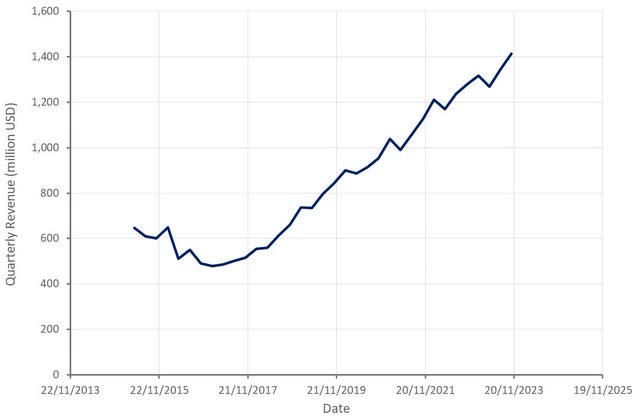
Figure 5: Autodesk Revenue (source: Created by author using data from Autodesk)
The number of job openings mentioning Autodesk in the job requirements has remained fairly steady in 2023, indicating a soft but stable demand environment.
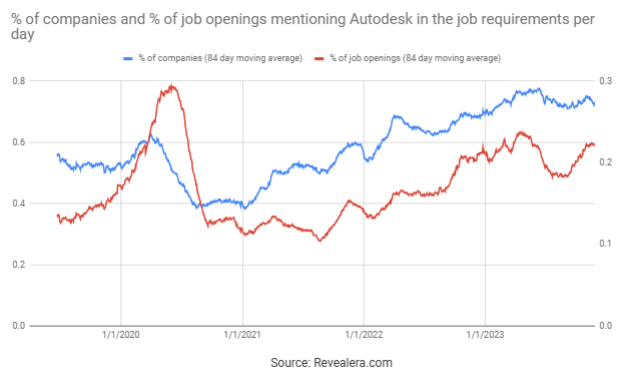
Figure 6: Job Openings Mentioning Autodesk in the Job Requirements (source: Revealera.com)
Autodesk’s gross profit margins have been fairly stable in recent years and the company continues to drive operating leverage as it scales. Further gains are likely to prove more difficult to come by, but I would still expect Autodesk’s operating profit margin to end up consistently in excess of 30%. R&D investments to support growth in areas like infrastructure and AI are likely to continue weighing on margins in the near to mid-term though.
Autodesk’s profitability outlook is positive, but the transition from upfront to annual billings for multiyear contracts will hamper cash flows in FY2025, which will likely not be well received by investors. Autodesk has suggested that around 200 million USD of free cash flow in Q1 FY2024 will not recur in FY2025 because of this.
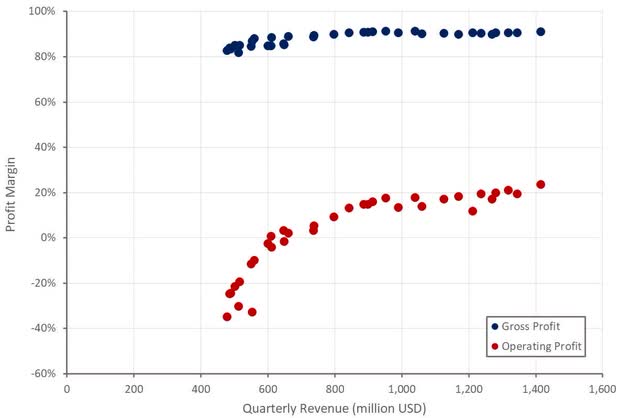
Figure 7: Autodesk Profit Margins (source: Created by author using data from Autodesk)
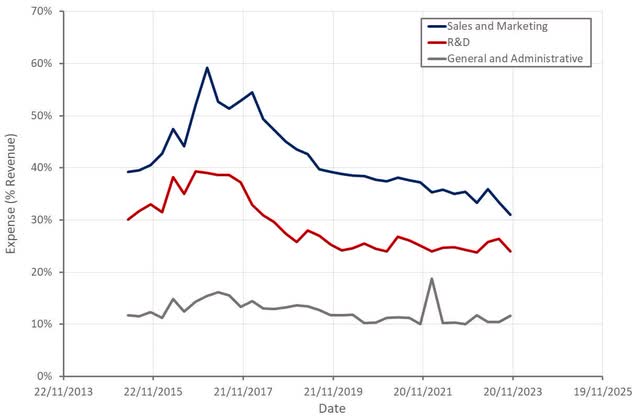
Figure 8: Autodesk Operating Expenses (source: Created by author using data from Autodesk)
Conclusion
Autodesk stands to benefit from digitization of AEC workflows, the adoption of digital twins and the use of generative AI in design. In the near-term, a wave of infrastructure spending should also continue to support growth. While infrastructure spending could accelerate in 2024, Autodesk could also face headwinds from automotive and some areas of construction, like residential. Investors may be willing to look through temporary weakness given Autodesk’s potential, but the risk/reward setup is unfavorable.
Autodesk has gained a reputation as a compounder, but its returns over the past 10-15 years have largely come from multiple expansion, something that is unlikely to be the case going forward. Faced with modest growth and the potential for multiple compression, I find it difficult to get excited about Autodesk at current prices. Autodesk’s stock has a better probability of providing reasonable returns at a price closer to 185 USD, but this type of price will likely require a significant deterioration in the macro environment.
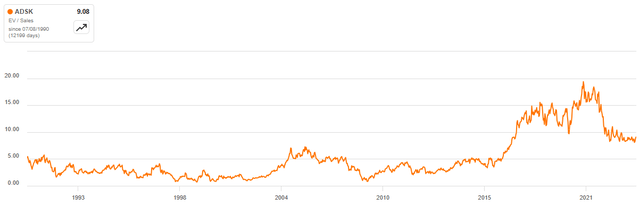
Figure 9: Autodesk EV/S Multiple (source: Seeking Alpha)
Credit: Source link