• bitcoinBitcoin(BTC)$77,138.00-0.19%
  • ethereumEthereum(ETH)$2,499.96-0.95%
  • tetherTether(USDT)$1.00-0.01%
  • binancecoinBNB(BNB)$720.86-0.80%
  • rippleXRP(XRP)$1.35-0.97%
  • usd-coinUSDC(USDC)$1.00-0.01%
  • solanaSolana(SOL)$100.94-0.66%
  • tronTRON(TRX)$0.3411450.40%
  • Figure HelocFigure Heloc(FIGR_HELOC)$1.000.00%
  • zcashZcash(ZEC)$1,089.94-3.04%
  • HyperliquidHyperliquid(HYPE)$78.34-1.63%
  • dogecoinDogecoin(DOGE)$0.083730-1.25%
  • RainRain(RAIN)$0.015254-3.33%
  • moneroMonero(XMR)$530.23-1.34%
  • USDSUSDS(USDS)$1.00-0.01%
  • whitebitWhiteBIT Coin(WBT)$79.99-0.46%
  • chainlinkChainlink(LINK)$11.37-1.27%
  • leo-tokenLEO Token(LEO)$9.02-1.57%
  • cardanoCardano(ADA)$0.206692-0.29%
  • stellarStellar(XLM)$0.179741-0.17%
  • Ethena USDeEthena USDe(USDE)$1.00-0.02%
  • daiDai(DAI)$1.00-0.01%
  • bitcoin-cashBitcoin Cash(BCH)$223.50-1.09%
  • USD1USD1(USD1)$1.00-0.01%
  • litecoinLitecoin(LTC)$54.481.59%
  • uniswapUniswap(UNI)$6.22-2.28%
  • CantonCanton(CC)$0.095573-1.66%
  • the-open-networkGram (prev. Toncoin)(GRAM)$1.36-1.92%
  • hedera-hashgraphHedera(HBAR)$0.0761992.24%
  • Global DollarGlobal Dollar(USDG)$1.00-0.01%
  • avalanche-2Avalanche(AVAX)$7.410.13%
  • shiba-inuShiba Inu(SHIB)$0.000005-1.46%
  • nearNEAR Protocol(NEAR)$2.33-1.01%
  • suiSui(SUI)$0.71-1.23%
  • crypto-com-chainCronos(CRO)$0.058210-2.48%
  • paypal-usdPayPal USD(PYUSD)$1.00-0.01%
  • BlackRock USD Institutional Digital Liquidity FundBlackRock USD Institutional Digital Liquidity Fund(BUIDL)$1.000.00%
  • tether-goldTether Gold(XAUT)$4,335.02-0.40%
  • MemeCoreMemeCore(M)$1.15-2.85%
  • Circle USYCCircle USYC(USYC)$1.140.00%
  • Ripple USDRipple USD(RLUSD)$1.000.00%
  • okbOKB(OKB)$112.88-0.86%
  • BittensorBittensor(TAO)$235.471.19%
  • Ondo US Dollar YieldOndo US Dollar Yield(USDY)$1.14-0.10%
  • BitwayBitway(BTW)$0.7230.22%
  • aaveAave(AAVE)$125.73-0.04%
  • AsterAster(ASTER)$0.701.19%
  • pax-goldPAX Gold(PAXG)$4,340.96-0.37%
  • mantleMantle(MNT)$0.56-0.78%
  • World Liberty FinancialWorld Liberty Financial(WLFI)$0.056995-1.85%
TradePoint.io
  • Main
  • AI & Technology
  • Stock Charts
  • Market & News
  • Business
  • Finance Tips
  • Trade Tube
  • Blog
  • Shop
No Result
View All Result
TradePoint.io
No Result
View All Result

Beyond the Fitzpatrick Scale: This AI Paper From Sony Introduces a Multidimensional Approach to Assess Skin Color Bias in Computer Vision

October 3, 2023
in AI & Technology
Reading Time: 4 mins read
A A
Beyond the Fitzpatrick Scale: This AI Paper From Sony Introduces a Multidimensional Approach to Assess Skin Color Bias in Computer Vision
ShareShareShareShareShare

Discrimination based on color continues to persist in many societies worldwide despite the progress in civil rights and social justice movements. They can harm individuals, communities, and society as a whole. These effects can manifest in various aspects of life, including psychological, social, economic, and health-related consequences. Efforts to address discrimination based on color should involve comprehensive strategies that promote equity, inclusion, and diversity. 

Can you even imagine that machine learning algorithms can also discriminate based on classes like race and gender? Recent studies by the researchers at Sony AI and the University of Tokyo have shown that these models can produce wrong skin lesion (abnormal change in skin structure ) diagnostics or incorrect heart rate measurements for individuals with darker skin tones. Most computer vision models use the Fitzpatrick Skin Type scale to determine appropriate treatments for various skin conditions and recommend sun protection measures. They say solely depending upon these scales will produce adverse decisions.

Describing the apparent skin color perception remains an open challenge as the final visual color perception results from complex physical and biological phenomena. The multilayered skin varies among individuals, as some have different amounts and distributions of carotene, hemoglobin, and melanin throughout these layers. Fitzpatrick skin scales are designed based on the spectrophotometer measurements of skin reflectance from the annotation process, and misclassification can occur as present skin types are not objective and descriptive enough.

Researchers use Colorimetry to derive quantitative metrics to overcome these limitations, enabling more reliable skin color scores. Based on the CIC established standard regarding illuminants and tristimulus values, they use the standard RGB space to view the images. To obtain a more comprehensive assessment of skin color, they use the Hue angle to describe the perceived gradation of color.  

They first quantified the skin color bias in face datasets and generative models trained on such datasets. They then broke down the results by the skin color of saliency-based image cropping and face verification algorithms. Instead of using uni-dimensional skin color scores to decide the fairness benchmarking, they use multidimensional skin color scores. They generated about 10,000 images with generative adversarial network and diffusion models for the datasets. 

Their multidimensional skin color scale offers a more representative assessment to surface socially relevant biases due to skin color effects in computer vision. This would enhance the diversity in the data collection process by encouraging specifications to represent skin color variability better and improve the identification of dataset and model biases by highlighting their limitations and leading to fairness-aware training methods.


Check out the Paper and Sony Article. All Credit For This Research Goes To the Researchers on This Project. Also, don’t forget to join our 31k+ ML SubReddit, 40k+ Facebook Community, Discord Channel, and Email Newsletter, where we share the latest AI research news, cool AI projects, and more.

If you like our work, you will love our newsletter..


YOU MAY ALSO LIKE

How To Adjust The Liquid Glass Effect On Your iPhone With iOS 27

Car Manufacturers Are Ditching CarPlay In 2026: Here’s Why

Arshad is an intern at MarktechPost. He is currently pursuing his Int. MSc Physics from the Indian Institute of Technology Kharagpur. Understanding things to the fundamental level leads to new discoveries which lead to advancement in technology. He is passionate about understanding the nature fundamentally with the help of tools like mathematical models, ML models and AI.


🚀 The end of project management by humans (Sponsored)

Credit: Source link

ShareTweetSendSharePin

Related Posts

How To Adjust The Liquid Glass Effect On Your iPhone With iOS 27
AI & Technology

How To Adjust The Liquid Glass Effect On Your iPhone With iOS 27

September 13, 2026
Car Manufacturers Are Ditching CarPlay In 2026: Here’s Why
AI & Technology

Car Manufacturers Are Ditching CarPlay In 2026: Here’s Why

September 13, 2026
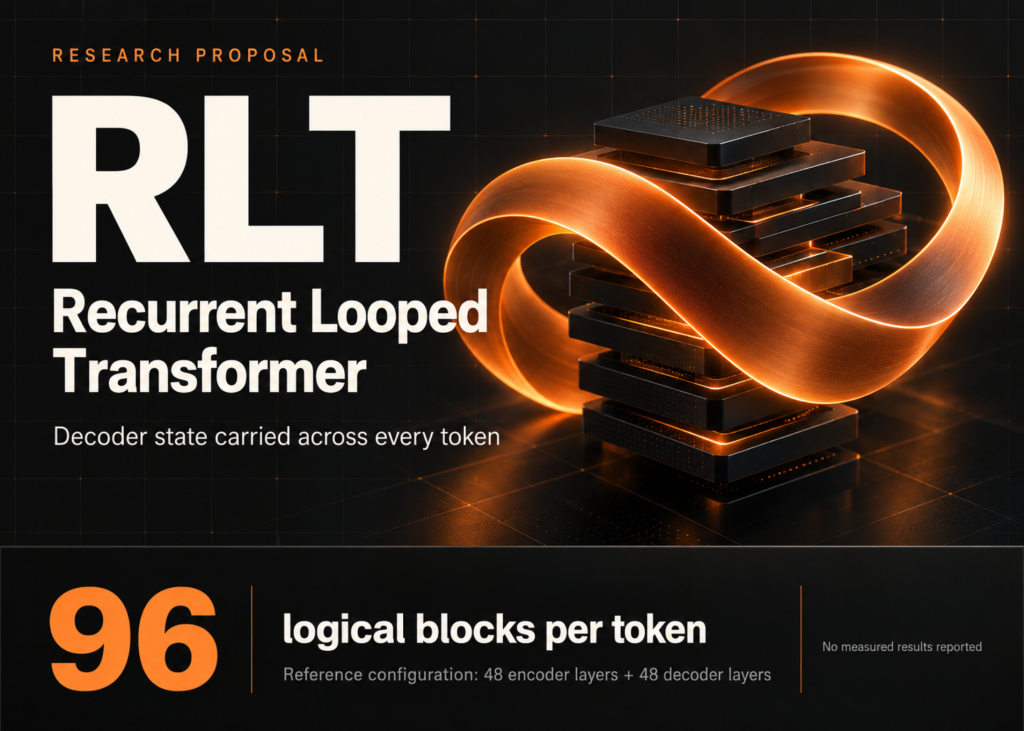
A Princeton Researcher Proposes Recurrent Looped Transformer (RLT) that Carries Decoder State across Every Token, Fixing 96 Blocks per Token with Unbounded Temporal Depth
AI & Technology

A Princeton Researcher Proposes Recurrent Looped Transformer (RLT) that Carries Decoder State across Every Token, Fixing 96 Blocks per Token with Unbounded Temporal Depth

September 13, 2026
Johnson Proposes White House Meeting of AI Leaders on Guardrails – Unite.AI
AI & Technology

Johnson Proposes White House Meeting of AI Leaders on Guardrails – Unite.AI

September 13, 2026
Next Post
Flying on the Boeing 787 Definitely Beats Flying on Older Aircraft

Flying on the Boeing 787 Definitely Beats Flying on Older Aircraft

Leave a Reply Cancel reply

Your email address will not be published. Required fields are marked *

Search

No Result
View All Result
Column | Schools should stop banning peanuts. Here’s what really keeps kids safe. – The Washington Post

Column | Schools should stop banning peanuts. Here’s what really keeps kids safe. – The Washington Post

September 8, 2026
Micron: Left In The Dirt As Peers Continue To Outperform It

Micron: Left In The Dirt As Peers Continue To Outperform It

September 8, 2026
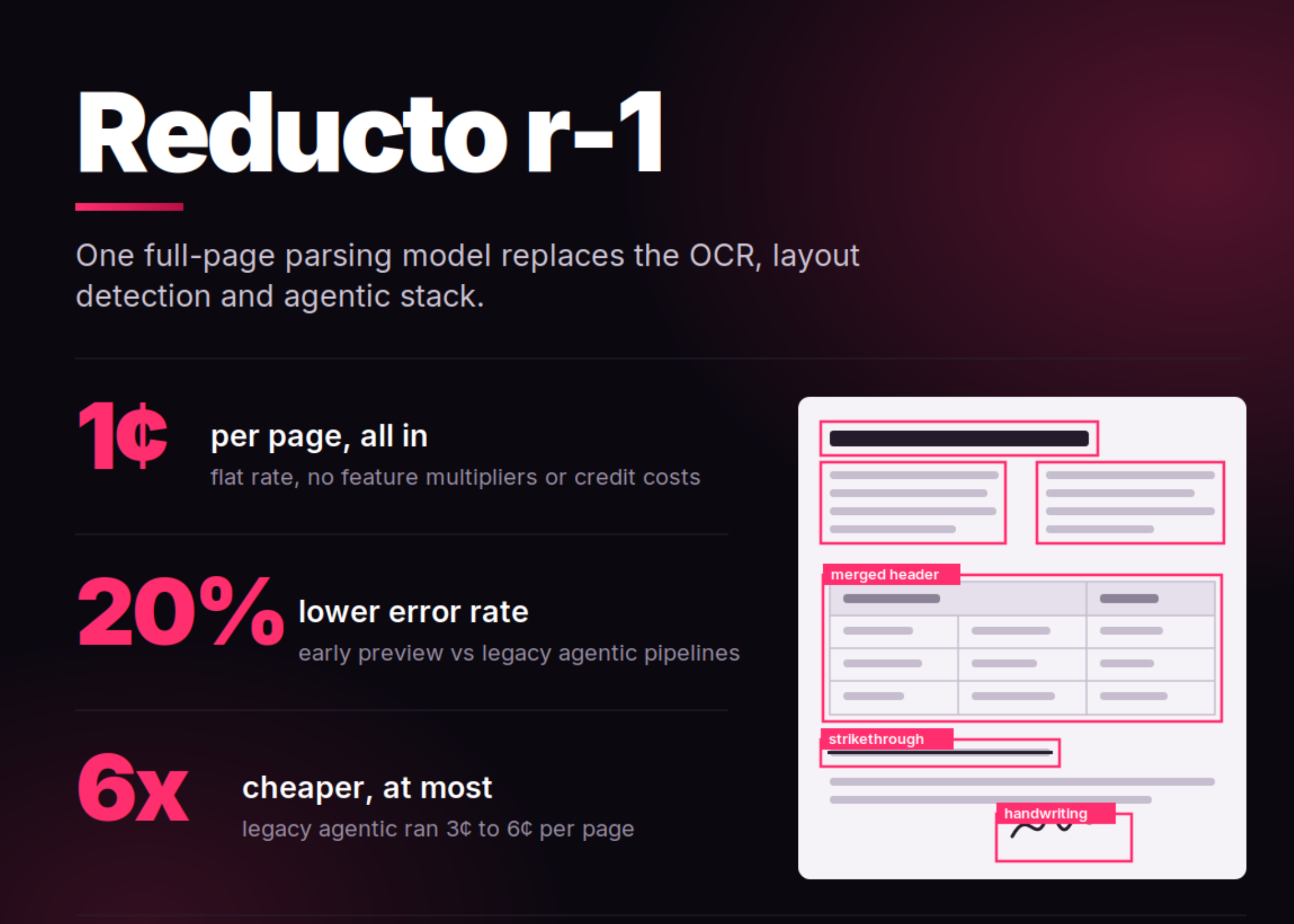
Reducto Releases r-1: A Single Pass Document Parsing Model That Cuts Errors 20% at 1 Cent Per Page

Reducto Releases r-1: A Single Pass Document Parsing Model That Cuts Errors 20% at 1 Cent Per Page

September 8, 2026

About

Learn more

Our Services

Legal

Privacy Policy

Terms of Use

Bloggers

Learn more

Article Links

Contact

Advertise

Ask us anything

©2020- TradePoint.io - All rights reserved!

Tradepoint.io, being just a publishing and technology platform, is not a registered broker-dealer or investment adviser. So we do not provide investment advice. Rather, brokerage services are provided to clients of Tradepoint.io by independent SEC-registered broker-dealers and members of FINRA/SIPC. Every form of investing carries some risk and past performance is not a guarantee of future results. “Tradepoint.io“, “Instant Investing” and “My Trading Tools” are registered trademarks of Apperbuild, LLC.

This website is operated by Apperbuild, LLC. We have no link to any brokerage firm and we do not provide investment advice. Every information and resource we provide is solely for the education of our readers. © 2020 Apperbuild, LLC. All rights reserved.

No Result
View All Result
  • Main
  • AI & Technology
  • Stock Charts
  • Market & News
  • Business
  • Finance Tips
  • Trade Tube
  • Blog
  • Shop

© 2023 - TradePoint.io - All Rights Reserved!