• bitcoinBitcoin(BTC)$76,741.00-0.76%
  • ethereumEthereum(ETH)$2,479.26-2.22%
  • tetherTether(USDT)$1.00-0.01%
  • binancecoinBNB(BNB)$716.07-2.70%
  • rippleXRP(XRP)$1.34-2.17%
  • usd-coinUSDC(USDC)$1.00-0.01%
  • solanaSolana(SOL)$99.72-2.25%
  • tronTRON(TRX)$0.3409780.04%
  • Figure HelocFigure Heloc(FIGR_HELOC)$1.00-1.59%
  • zcashZcash(ZEC)$1,095.61-4.71%
  • HyperliquidHyperliquid(HYPE)$77.40-3.61%
  • dogecoinDogecoin(DOGE)$0.083500-1.85%
  • RainRain(RAIN)$0.0153381.49%
  • moneroMonero(XMR)$538.110.88%
  • USDSUSDS(USDS)$1.00-0.01%
  • whitebitWhiteBIT Coin(WBT)$79.59-0.99%
  • chainlinkChainlink(LINK)$11.29-2.28%
  • leo-tokenLEO Token(LEO)$9.06-0.60%
  • cardanoCardano(ADA)$0.204574-2.23%
  • stellarStellar(XLM)$0.178346-2.15%
  • Ethena USDeEthena USDe(USDE)$1.00-0.02%
  • daiDai(DAI)$1.000.01%
  • bitcoin-cashBitcoin Cash(BCH)$223.38-3.29%
  • USD1USD1(USD1)$1.00-0.02%
  • litecoinLitecoin(LTC)$53.78-0.51%
  • uniswapUniswap(UNI)$6.27-1.50%
  • the-open-networkGram (prev. Toncoin)(GRAM)$1.35-1.89%
  • CantonCanton(CC)$0.094908-4.09%
  • Global DollarGlobal Dollar(USDG)$1.00-0.01%
  • hedera-hashgraphHedera(HBAR)$0.0752190.72%
  • avalanche-2Avalanche(AVAX)$7.32-1.69%
  • shiba-inuShiba Inu(SHIB)$0.000005-3.20%
  • nearNEAR Protocol(NEAR)$2.30-2.81%
  • suiSui(SUI)$0.71-2.52%
  • crypto-com-chainCronos(CRO)$0.0588291.36%
  • paypal-usdPayPal USD(PYUSD)$1.00-0.01%
  • BlackRock USD Institutional Digital Liquidity FundBlackRock USD Institutional Digital Liquidity Fund(BUIDL)$1.000.00%
  • tether-goldTether Gold(XAUT)$4,346.77-0.04%
  • MemeCoreMemeCore(M)$1.15-2.38%
  • Circle USYCCircle USYC(USYC)$1.140.00%
  • Ripple USDRipple USD(RLUSD)$1.000.00%
  • okbOKB(OKB)$113.49-0.68%
  • BittensorBittensor(TAO)$232.50-1.70%
  • Ondo US Dollar YieldOndo US Dollar Yield(USDY)$1.14-0.06%
  • aaveAave(AAVE)$124.15-2.92%
  • pax-goldPAX Gold(PAXG)$4,351.93-0.04%
  • AsterAster(ASTER)$0.690.70%
  • mantleMantle(MNT)$0.56-2.86%
  • World Liberty FinancialWorld Liberty Financial(WLFI)$0.0576301.03%
  • BitwayBitway(BTW)$0.6719.29%
TradePoint.io
  • Main
  • AI & Technology
  • Stock Charts
  • Market & News
  • Business
  • Finance Tips
  • Trade Tube
  • Blog
  • Shop
No Result
View All Result
TradePoint.io
No Result
View All Result

Revolutionizing Real-Time 1080p Novel-View Synthesis: A Breakthrough with 3D Gaussians and Visibility-Aware Rendering

August 22, 2023
in AI & Technology
Reading Time: 5 mins read
A A
Revolutionizing Real-Time 1080p Novel-View Synthesis: A Breakthrough with 3D Gaussians and Visibility-Aware Rendering
ShareShareShareShareShare

Meshes and points are the most common 3D scene representations because they are explicit and are a good fit for fast GPU/CUDA-based rasterization. In contrast, recent Neural Radiance Field (NeRF) methods build on continuous scene representations, typically optimizing a Multi-Layer Perceptron (MLP) using volumetric ray-marching for the novel-view synthesis of captured scenes. Similarly, the most efficient radiance field solutions build on continuous representations by interpolating values stored in, e.g., voxel, hash grids, or points. While the constant nature of these methods helps optimization, the stochastic sampling required for rendering is costly and can result in noise. 

Researchers from Université Côte d’Azur and Max-Planck-Institut für Informatik introduce a new approach that combines the best of both worlds: their 3D Gaussian representation allows optimization with state-of-the-art (SOTA) visual quality and competitive training times. At the same time, their tile-based splatting solution ensures real-time rendering at SOTA quality for 1080p resolution on several previously published datasets (see Fig. 1). Their goal is to allow real-time rendering for scenes captured with multiple photos and create the representations with optimization times as fast as the most efficient previous methods for typical real scenes. Recent methods achieve fast training but struggle to achieve the visual quality obtained by the current SOTA NeRF methods, i.e., Mip-NeRF360, which requires up to 48 hours of training.

Figure 1: The approach renders radiance fields in real-time with quality on par with the best prior methods while only needing optimization times commensurate with the quickest previous ways. A unique 3D Gaussian scene representation and a real-time differentiable renderer, which significantly accelerates scene optimization and innovative view synthesis, are essential to this performance. While this is the highest quality that InstantNGP can produce after a comparable training time, they can obtain state-of-the-art quality within 51 minutes, which is even slightly superior to Mip-NeRF360.

The fast – but lower-quality – radiance field methods can achieve interactive rendering times depending on the scene (10-15 frames per second) but fall short of high-resolution real-time rendering. Their solution builds on three main components. They first introduce 3D Gaussians as a flexible and expressive scene representation. They start with the same input as previous NeRF-like methods, i.e., cameras calibrated with Structure-from-Motion (SfM) and initialize the set of 3D Gaussians with the sparse point cloud produced for free as part of the SfM process. In contrast to most point-based solutions that require Multi-View Stereo (MVS) data, they achieve high-quality results with only SfM points as input. Note that for the NeRF-synthetic dataset, their method achieves high quality even with random initialization. 

They show that 3D Gaussians are an excellent choice since they are a differentiable volumetric representation. Still, they can be rasterized very efficiently by projecting them to 2D and applying standard 𝛼-blending, using an equivalent image formation model as NeRF. The second component of their method is the optimization of the properties of the 3D Gaussians – 3D position, opacity 𝛼, anisotropic covariance, and spherical harmonic (SH) coefficients – interleaved with adaptive density control steps, where they add and occasionally remove 3D Gaussians during optimization. The optimization procedure produces a reasonably compact, unstructured, and precise representation of the scene (1-5 million Gaussians for all scenes tested). Their method’s third and final element is their real-time rendering solution, which uses fast GPU sorting algorithms inspired by tile-based rasterization following recent work. 

However, thanks to their 3D Gaussian representation, they can perform anisotropic splatting that respects visibility ordering – thanks to sorting and 𝛼- blending – and enable a fast and accurate backward pass by tracking the traversal of as many-sorted splats as required. To summarize, they provide the following contributions: 

• The introduction of anisotropic 3D Gaussians as a high-quality, unstructured representation of radiance fields. 

• An optimization method of 3D Gaussian properties, interleaved with adaptive density control, creates high-quality representations for captured scenes. 

• A fast, differentiable rendering approach for the GPU, which is visibility-aware, allows anisotropic splatting and fast backpropagation to achieve high-quality novel view synthesis. 

Their results on previously published datasets show that they can optimize their 3D Gaussians from multi-view captures and achieve equal or better quality than the best of previous implicit radiance field approaches. They also can achieve training speeds and quality similar to the fastest methods and, importantly, provide the first real-time rendering with high quality for novel-view synthesis.


Check out the Paper and Github. All Credit For This Research Goes To the Researchers on This Project. Also, don’t forget to join our 29k+ ML SubReddit, 40k+ Facebook Community, Discord Channel, and Email Newsletter, where we share the latest AI research news, cool AI projects, and more.

If you like our work, please follow us on Twitter


YOU MAY ALSO LIKE

AWS Introduces Pizza Bot: An Open Source Inbox for Background AI Agents

Implementation of Machine Learning Workflows with NVIDIA cuML, RAPIDS, GPU Benchmarking, Explainability, Clustering, and Model Inference

Aneesh Tickoo is a consulting intern at MarktechPost. He is currently pursuing his undergraduate degree in Data Science and Artificial Intelligence from the Indian Institute of Technology(IIT), Bhilai. He spends most of his time working on projects aimed at harnessing the power of machine learning. His research interest is image processing and is passionate about building solutions around it. He loves to connect with people and collaborate on interesting projects.


🔥 Use SQL to predict the future (Sponsored)


Credit: Source link

ShareTweetSendSharePin

Related Posts

AWS Introduces Pizza Bot: An Open Source Inbox for Background AI Agents
AI & Technology

AWS Introduces Pizza Bot: An Open Source Inbox for Background AI Agents

September 13, 2026
Implementation of Machine Learning Workflows with NVIDIA cuML, RAPIDS, GPU Benchmarking, Explainability, Clustering, and Model Inference
AI & Technology

Implementation of Machine Learning Workflows with NVIDIA cuML, RAPIDS, GPU Benchmarking, Explainability, Clustering, and Model Inference

September 13, 2026
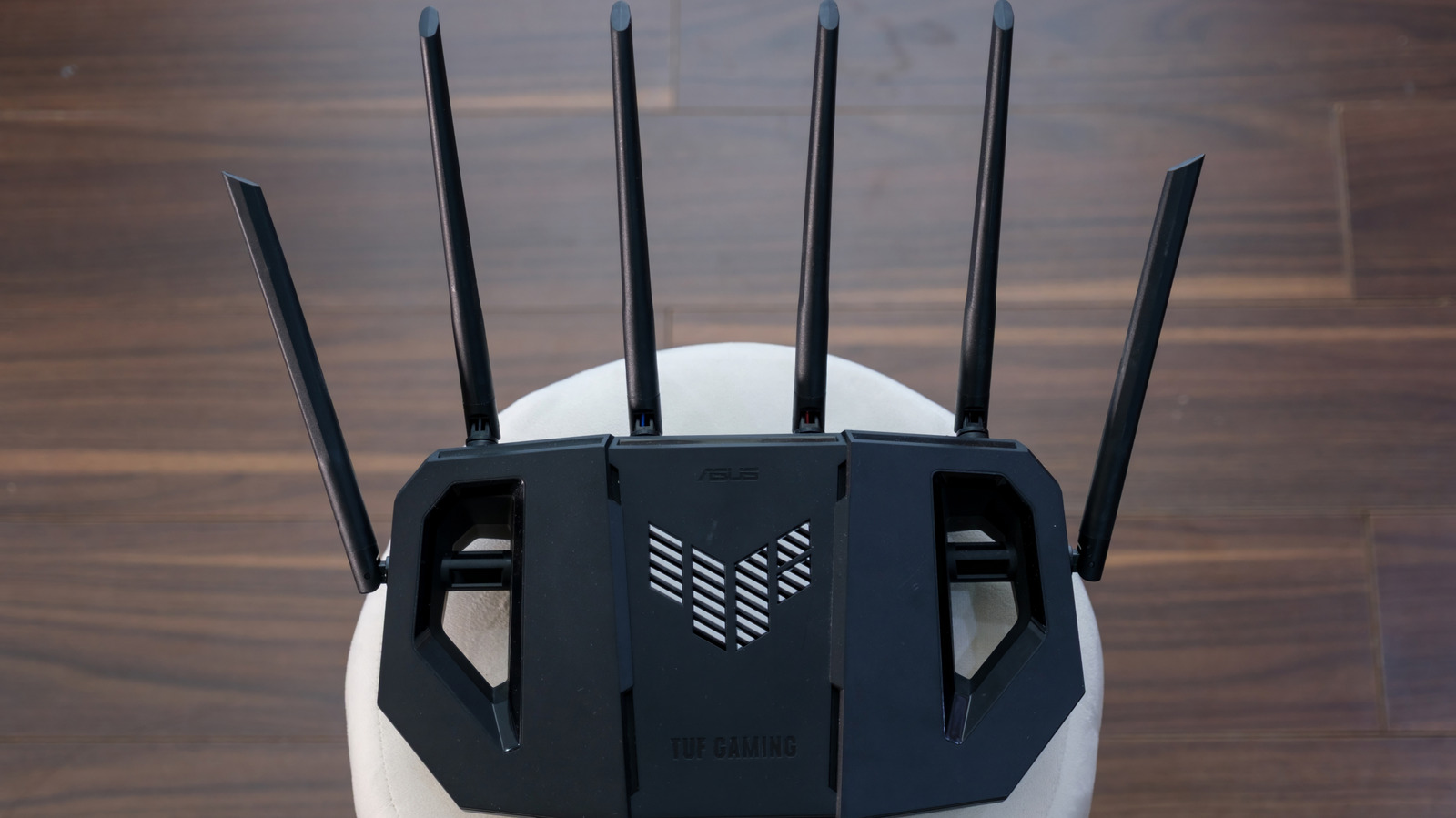
Why Do Routers Have So Many Antennas?
AI & Technology

Why Do Routers Have So Many Antennas?

September 13, 2026
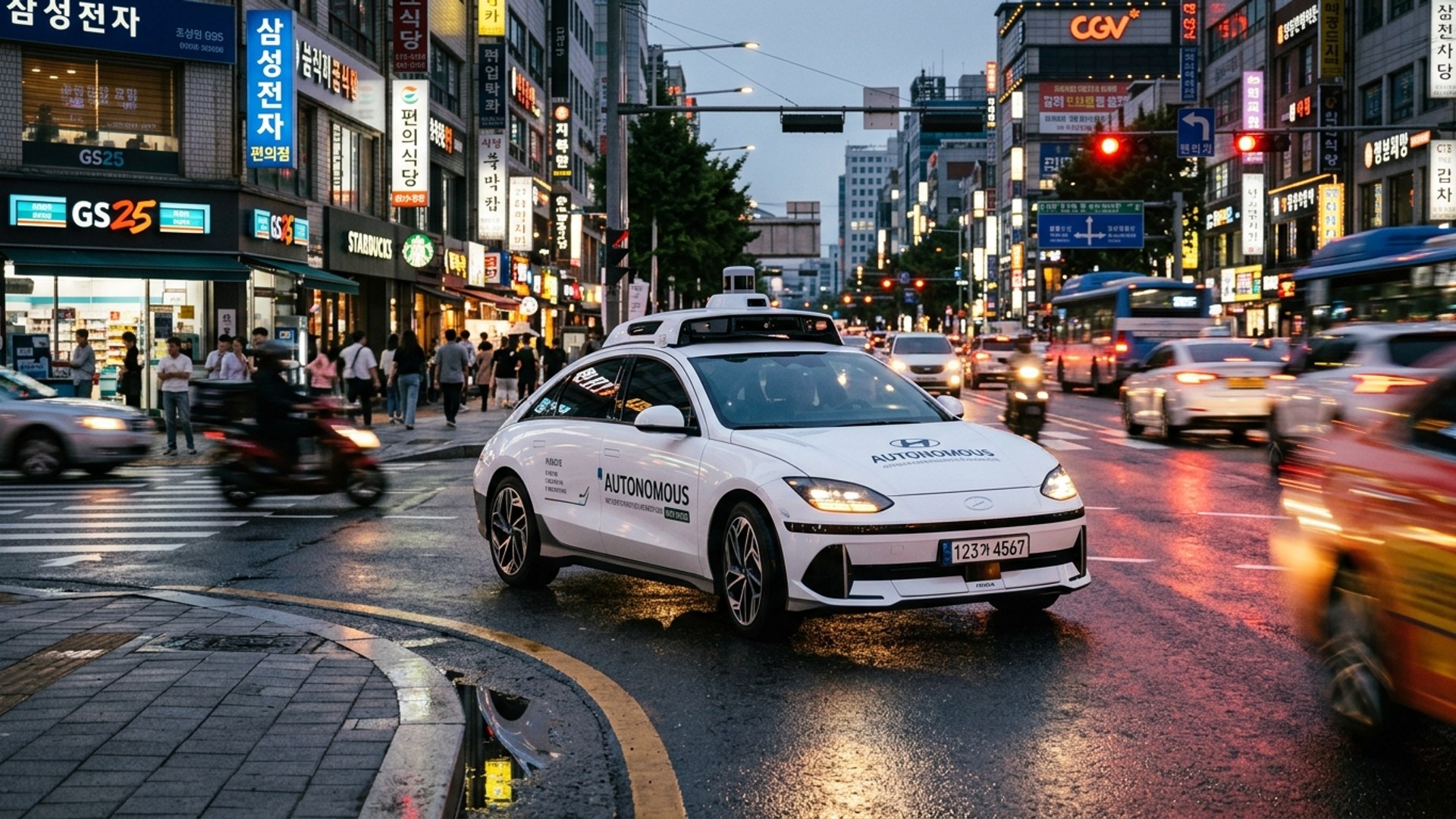
Hyundai Motor Group Puts Data Flywheel Into Full Operation – Unite.AI
AI & Technology

Hyundai Motor Group Puts Data Flywheel Into Full Operation – Unite.AI

September 13, 2026
Next Post
Why Apple and Salesforce Are Joining Forces

Why Apple and Salesforce Are Joining Forces

Leave a Reply Cancel reply

Your email address will not be published. Required fields are marked *

Search

No Result
View All Result
A Coming Rate Hike? What We Can Learn From History | Market Snapshot, September 2026

A Coming Rate Hike? What We Can Learn From History | Market Snapshot, September 2026

September 11, 2026
Teaching 9/11 to a new generation of students

Teaching 9/11 to a new generation of students

September 12, 2026
Stay Tuned NOW Streaming Behind The Scenes! – Jul 21

Stay Tuned NOW Streaming Behind The Scenes! – Jul 21

September 7, 2026

About

Learn more

Our Services

Legal

Privacy Policy

Terms of Use

Bloggers

Learn more

Article Links

Contact

Advertise

Ask us anything

©2020- TradePoint.io - All rights reserved!

Tradepoint.io, being just a publishing and technology platform, is not a registered broker-dealer or investment adviser. So we do not provide investment advice. Rather, brokerage services are provided to clients of Tradepoint.io by independent SEC-registered broker-dealers and members of FINRA/SIPC. Every form of investing carries some risk and past performance is not a guarantee of future results. “Tradepoint.io“, “Instant Investing” and “My Trading Tools” are registered trademarks of Apperbuild, LLC.

This website is operated by Apperbuild, LLC. We have no link to any brokerage firm and we do not provide investment advice. Every information and resource we provide is solely for the education of our readers. © 2020 Apperbuild, LLC. All rights reserved.

No Result
View All Result
  • Main
  • AI & Technology
  • Stock Charts
  • Market & News
  • Business
  • Finance Tips
  • Trade Tube
  • Blog
  • Shop

© 2023 - TradePoint.io - All Rights Reserved!