• bitcoinBitcoin(BTC)$79,938.000.27%
  • ethereumEthereum(ETH)$2,499.291.66%
  • tetherTether(USDT)$1.00-0.01%
  • binancecoinBNB(BNB)$755.18-0.72%
  • rippleXRP(XRP)$1.420.35%
  • usd-coinUSDC(USDC)$1.000.00%
  • solanaSolana(SOL)$106.873.82%
  • tronTRON(TRX)$0.3352100.65%
  • Figure HelocFigure Heloc(FIGR_HELOC)$1.061.52%
  • HyperliquidHyperliquid(HYPE)$89.094.66%
  • zcashZcash(ZEC)$1,169.8515.73%
  • dogecoinDogecoin(DOGE)$0.0898223.04%
  • RainRain(RAIN)$0.0170083.51%
  • moneroMonero(XMR)$538.68-1.04%
  • USDSUSDS(USDS)$1.00-0.02%
  • chainlinkChainlink(LINK)$12.273.78%
  • whitebitWhiteBIT Coin(WBT)$73.680.65%
  • leo-tokenLEO Token(LEO)$9.330.71%
  • cardanoCardano(ADA)$0.2204081.98%
  • stellarStellar(XLM)$0.1863181.08%
  • bitcoin-cashBitcoin Cash(BCH)$258.592.92%
  • daiDai(DAI)$1.000.00%
  • uniswapUniswap(UNI)$7.0312.55%
  • CantonCanton(CC)$0.1102680.73%
  • Ethena USDeEthena USDe(USDE)$1.00-0.01%
  • USD1USD1(USD1)$1.000.00%
  • litecoinLitecoin(LTC)$54.271.32%
  • the-open-networkGram (prev. Toncoin)(GRAM)$1.42-0.47%
  • hedera-hashgraphHedera(HBAR)$0.0811190.31%
  • avalanche-2Avalanche(AVAX)$7.681.89%
  • suiSui(SUI)$0.80-0.70%
  • Global DollarGlobal Dollar(USDG)$1.00-0.02%
  • shiba-inuShiba Inu(SHIB)$0.000005-0.40%
  • nearNEAR Protocol(NEAR)$2.345.40%
  • paypal-usdPayPal USD(PYUSD)$1.00-0.01%
  • BlackRock USD Institutional Digital Liquidity FundBlackRock USD Institutional Digital Liquidity Fund(BUIDL)$1.000.00%
  • crypto-com-chainCronos(CRO)$0.0572301.24%
  • tether-goldTether Gold(XAUT)$4,421.97-0.09%
  • Circle USYCCircle USYC(USYC)$1.140.00%
  • MemeCoreMemeCore(M)$1.131.48%
  • Ripple USDRipple USD(RLUSD)$1.000.00%
  • okbOKB(OKB)$113.560.35%
  • BittensorBittensor(TAO)$243.032.10%
  • Ondo US Dollar YieldOndo US Dollar Yield(USDY)$1.150.00%
  • AsterAster(ASTER)$0.78-6.76%
  • aaveAave(AAVE)$134.873.22%
  • mantleMantle(MNT)$0.614.47%
  • pax-goldPAX Gold(PAXG)$4,427.69-0.11%
  • OndoOndo(ONDO)$0.3780281.44%
  • World Liberty FinancialWorld Liberty Financial(WLFI)$0.0568130.61%
TradePoint.io
  • Main
  • AI & Technology
  • Stock Charts
  • Market & News
  • Business
  • Finance Tips
  • Trade Tube
  • Blog
  • Shop
No Result
View All Result
TradePoint.io
No Result
View All Result

Meet Med-Flamingo: A Unique Foundation Model which is Capable of Performing Multimodal in-context Learning Specialized for the Medical Domain

August 3, 2023
in AI & Technology
Reading Time: 4 mins read
A A
Meet Med-Flamingo: A Unique Foundation Model which is Capable of Performing Multimodal in-context Learning Specialized for the Medical Domain
ShareShareShareShareShare

With the increasing popularity of Artificial Intelligence (AI), foundation models have demonstrated an amazing ability to handle a variety of problems with only a small amount of information provided by labeled instances. The idea of in-context learning has gained attention with its ability to let a model pick up a task from a few examples given while being prompted without adjusting the model’s parameters. Considering the field of healthcare and the medical domain, in-context learning has the potential to improve current medical AI models exponentially.

Though in-context learning has shown some great capabilities in terms of medical data, due to the intrinsic complexity and multimodality of medical data, as well as the variety of tasks that must be accomplished, implementing in-context learning in a medical setting offers difficulties. Multimodal medical foundation models have been attempted in the past, such as ChexZero, which specializes in reading chest X-rays, and BiomedCLIP, which was trained on a variety of images linked with captions from biological literature. For surgical footage and electronic health record (EHR) data, several models have been devised. None of these models have included contextual learning for the multimodal medical domain.

To address the limitations, a team of researchers has proposed Med-Flamingo, a unique and highly effective foundation model that is capable of performing multimodal in-context learning specialized for the medical domain. This vision-language model is based on Flamingo, which is one of the first vision-language models that demonstrate in-context learning and few-shot learning capabilities. By providing pre-training in multimodal knowledge sources from multiple medical fields, Med-Flamingo expands these capabilities to the medical arena.

The first phase entails creating an original, interleaved image-text dataset from over 4K medical textbooks, assuring correctness by selecting the dataset from reputable and reliable sources of medical knowledge. In order to evaluate Med-Flamingo, the researchers have focussed on generative medical visual question-answering (VQA) tasks, where the model directly creates open-ended responses rather than assessing pre-defined possibilities. A new and realistic evaluation process has been developed that yields a human evaluation score as the key parameter. A visual USMLE dataset has also been developed, which is a difficult generative VQA dataset comprising difficult USMLE-style tasks across specialties, enhanced with images, case vignettes, and lab results.

In three generative medical VQA datasets, Med-Flamingo has been shown to outperform earlier models in clinical evaluation scores, suggesting that doctors favor the model’s predictions. It has exhibited medical reasoning skills, something multimodal medical foundation models have not previously done, by responding to complicated medical queries and offering justifications. The model’s effectiveness can, though, be constrained by the variety and accessibility of the training data as well as the difficulty of some medical tasks.

The team has summarized their contributions as follows.

  1. Med-Flamingo is the first multimodal few-shot learner designed for the medical domain, offering new clinical applications like rationale generation and context conditioning.
  2. The researchers have built a unique dataset for pre-training the model, specifically suited for multimodal few-shot learning in the medical domain.
  3. They have also introduced an evaluation dataset with USMLE-style problems, incorporating complex medical reasoning in visual question answering.
  4. Existing evaluation strategies are critiqued, and an in-depth clinical evaluation study has been conducted using a dedicated app involving medical raters to assess the model’s open-ended VQA generations.

Check out the Paper, Model, and Github. All Credit For This Research Goes To the Researchers on This Project. Also, don’t forget to join our 27k+ ML SubReddit, 40k+ Facebook Community, Discord Channel, and Email Newsletter, where we share the latest AI research news, cool AI projects, and more.


YOU MAY ALSO LIKE

Don’t Get Rid Of Your Old Phone, Turn It Into A Security Camera

What Is Model Routing? How AI Systems Choose the Right Model for Every Request – Unite.AI

Tanya Malhotra is a final year undergrad from the University of Petroleum & Energy Studies, Dehradun, pursuing BTech in Computer Science Engineering with a specialization in Artificial Intelligence and Machine Learning.
She is a Data Science enthusiast with good analytical and critical thinking, along with an ardent interest in acquiring new skills, leading groups, and managing work in an organized manner.


🔥 Use SQL to predict the future (Sponsored)

Credit: Source link

ShareTweetSendSharePin

Related Posts

Don’t Get Rid Of Your Old Phone, Turn It Into A Security Camera
AI & Technology

Don’t Get Rid Of Your Old Phone, Turn It Into A Security Camera

September 6, 2026
What Is Model Routing? How AI Systems Choose the Right Model for Every Request – Unite.AI
AI & Technology

What Is Model Routing? How AI Systems Choose the Right Model for Every Request – Unite.AI

September 6, 2026
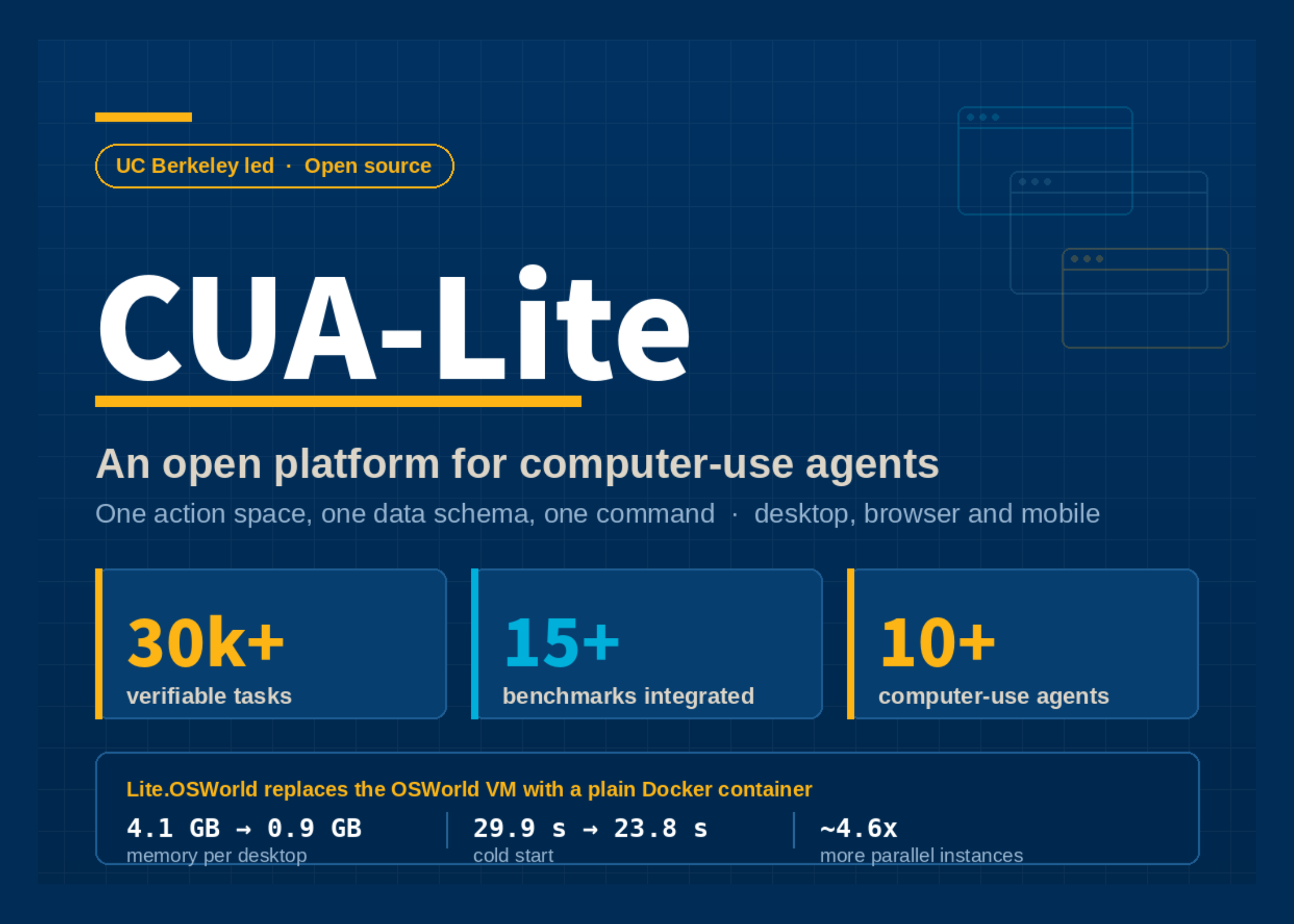
UC Berkeley Researchers Release CUA-Lite, an Open Platform Unifying Sandboxes, Data, Evaluation and RL for Computer-Use Agents
AI & Technology

UC Berkeley Researchers Release CUA-Lite, an Open Platform Unifying Sandboxes, Data, Evaluation and RL for Computer-Use Agents

September 6, 2026
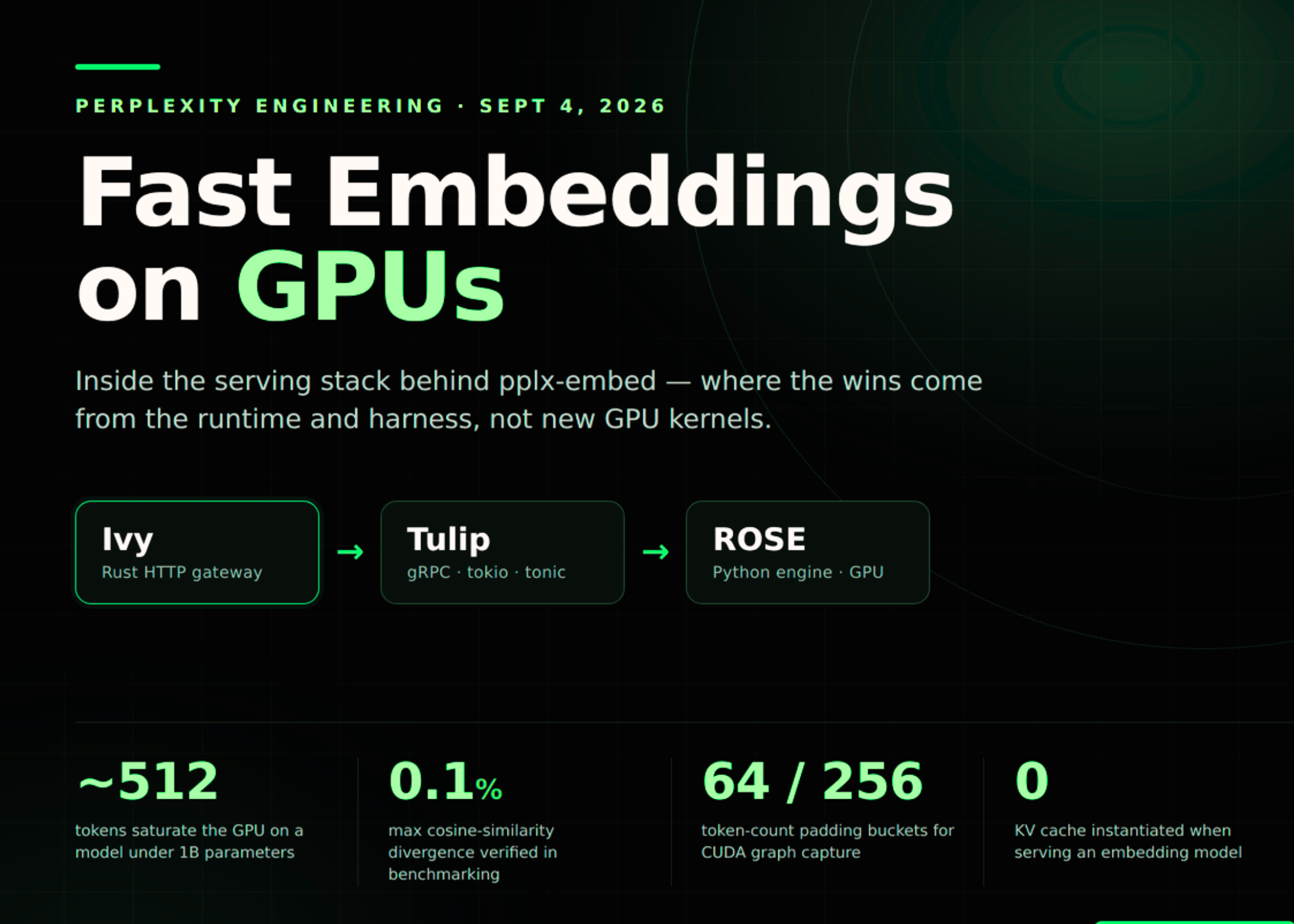
Perplexity Details Its GPU Embedding Stack: How Ivy, Tulip and ROSE Serve pplx-embed
AI & Technology

Perplexity Details Its GPU Embedding Stack: How Ivy, Tulip and ROSE Serve pplx-embed

September 6, 2026
Next Post
‘Bloomberg Technology’ Full Show (7/25/2019)

'Bloomberg Technology' Full Show (7/25/2019)

Leave a Reply Cancel reply

Your email address will not be published. Required fields are marked *

Search

No Result
View All Result
Her Ex Is Trying To Put Her In Jail

Her Ex Is Trying To Put Her In Jail

September 6, 2026
The Most Overhyped and Underhyped New AI Models

The Most Overhyped and Underhyped New AI Models

September 3, 2026
U.S. woman seen on on video before disappearing in Grenada

U.S. woman seen on on video before disappearing in Grenada

September 3, 2026

About

Learn more

Our Services

Legal

Privacy Policy

Terms of Use

Bloggers

Learn more

Article Links

Contact

Advertise

Ask us anything

©2020- TradePoint.io - All rights reserved!

Tradepoint.io, being just a publishing and technology platform, is not a registered broker-dealer or investment adviser. So we do not provide investment advice. Rather, brokerage services are provided to clients of Tradepoint.io by independent SEC-registered broker-dealers and members of FINRA/SIPC. Every form of investing carries some risk and past performance is not a guarantee of future results. “Tradepoint.io“, “Instant Investing” and “My Trading Tools” are registered trademarks of Apperbuild, LLC.

This website is operated by Apperbuild, LLC. We have no link to any brokerage firm and we do not provide investment advice. Every information and resource we provide is solely for the education of our readers. © 2020 Apperbuild, LLC. All rights reserved.

No Result
View All Result
  • Main
  • AI & Technology
  • Stock Charts
  • Market & News
  • Business
  • Finance Tips
  • Trade Tube
  • Blog
  • Shop

© 2023 - TradePoint.io - All Rights Reserved!