• bitcoinBitcoin(BTC)$83,998.000.25%
  • ethereumEthereum(ETH)$2,687.92-0.08%
  • tetherTether(USDT)$1.000.00%
  • binancecoinBNB(BNB)$773.26-0.15%
  • rippleXRP(XRP)$1.54-2.65%
  • usd-coinUSDC(USDC)$1.00-0.01%
  • solanaSolana(SOL)$120.910.88%
  • tronTRON(TRX)$0.336321-0.12%
  • zcashZcash(ZEC)$1,538.40-2.57%
  • Figure HelocFigure Heloc(FIGR_HELOC)$1.03-0.14%
  • HyperliquidHyperliquid(HYPE)$92.410.47%
  • dogecoinDogecoin(DOGE)$0.0975070.37%
  • chainlinkChainlink(LINK)$14.404.19%
  • moneroMonero(XMR)$551.020.30%
  • whitebitWhiteBIT Coin(WBT)$83.790.11%
  • USDSUSDS(USDS)$1.000.00%
  • cardanoCardano(ADA)$0.2562551.31%
  • RainRain(RAIN)$0.0128978.89%
  • leo-tokenLEO Token(LEO)$8.961.58%
  • stellarStellar(XLM)$0.2181621.05%
  • bitcoin-cashBitcoin Cash(BCH)$334.541.38%
  • nearNEAR Protocol(NEAR)$4.84-4.24%
  • uniswapUniswap(UNI)$9.660.11%
  • litecoinLitecoin(LTC)$72.484.02%
  • CantonCanton(CC)$0.13722310.40%
  • Ethena USDeEthena USDe(USDE)$1.00-0.03%
  • avalanche-2Avalanche(AVAX)$10.996.67%
  • suiSui(SUI)$1.175.26%
  • daiDai(DAI)$1.00-0.01%
  • USD1USD1(USD1)$1.000.01%
  • the-open-networkGram (prev. Toncoin)(GRAM)$1.484.57%
  • hedera-hashgraphHedera(HBAR)$0.0940630.55%
  • BittensorBittensor(TAO)$326.918.01%
  • shiba-inuShiba Inu(SHIB)$0.0000062.33%
  • crypto-com-chainCronos(CRO)$0.0655970.05%
  • Global DollarGlobal Dollar(USDG)$1.00-0.01%
  • EthenaEthena(ENA)$0.27962912.36%
  • paypal-usdPayPal USD(PYUSD)$1.00-0.01%
  • MemeCoreMemeCore(M)$1.213.01%
  • OndoOndo(ONDO)$0.551.56%
  • tether-goldTether Gold(XAUT)$4,279.910.27%
  • okbOKB(OKB)$121.150.89%
  • Ripple USDRipple USD(RLUSD)$1.00-0.02%
  • BitwayBitway(BTW)$0.92-22.70%
  • Circle USYCCircle USYC(USYC)$1.140.00%
  • aaveAave(AAVE)$154.604.77%
  • mantleMantle(MNT)$0.705.27%
  • BlackRock USD Institutional Digital Liquidity FundBlackRock USD Institutional Digital Liquidity Fund(BUIDL)$1.000.00%
  • Ondo US Dollar YieldOndo US Dollar Yield(USDY)$1.15-0.07%
  • polkadotPolkadot(DOT)$1.244.89%
TradePoint.io
  • Main
  • AI & Technology
  • Stock Charts
  • Market & News
  • Business
  • Finance Tips
  • Trade Tube
  • Blog
  • Shop
No Result
View All Result
TradePoint.io
No Result
View All Result

A New AI Research Introduces GPT4RoI: A Vision-Language Model based on Instruction Tuning Large Language Model (LLM) on Region-Text Pairs

July 14, 2023
in AI & Technology
Reading Time: 5 mins read
A A
A New AI Research Introduces GPT4RoI: A Vision-Language Model based on Instruction Tuning Large Language Model (LLM) on Region-Text Pairs
ShareShareShareShareShare

Large language models (LLM) have made great strides recently, demonstrating amazing performance in tasks conversationally requiring natural language processing. Examples include the commercial products ChatGPT, Claude, Bard, text-only GPT-4, and community opensource LLama, Alpaca, Vicuna, ChatGLM, MOSS, etc. Thanks to their unheard-of powers, they provide a potential route to general-purpose artificial intelligence models. As a result of the effectiveness of LLM, the multimodal modeling community is creating a new technological path to use LLM as the universal interface to create general-purpose models, where the feature space of a given job is adjusted to be in line with the feature space of pre-trained language models. 

Vision-and-language models, such as MiniGPT-4, LLaVA, LLaMA-Adapter, InstructBLIP, etc., align the vision encoder to LLM by instruction tuning on image-text pairings as one of the representative tasks. The alignment quality significantly impacts how well vision-and-language models perform under the design concept of instruction tuning. Although these works have excellent multimodal skills, their region-level alignment prevents them from progressing beyond more intricate comprehension tasks like region captioning and reasoning. Their alignments are exclusively on image-text pairings. Some studies use external vision models like MM-REACT, InternGPT, and DetGPT to provide region-level comprehension in vision-language models. 

Their non-end-to-end design, however, could be better for all-purpose multimodal models. This work aims to develop a vision-language model from beginning to finish that provides fine-grained comprehension of region-of-interest. The main design of picture-level vision-language models is to establish the object box as the format of spatial instruction since the model architecture in these models compresses the entire image as the image embedding without any operation to refer to particular parts. To get the answer, LLM is provided with the visual elements extracted by spatial teaching and linguistic instruction. For instance, the model will substitute with the area feature referred to by spatial instruction when the inquiry is the interleaved sequence of “What is this doing?” 

[Sponsored] 🔥 Build your personal brand with Taplio  🚀 The 1st all-in-one AI-powered tool to grow on LinkedIn. Create better LinkedIn content 10x faster, schedule, analyze your stats & engage. Try it for free!

RoIAlign or Deformable attention are two flexible implementation methods for spatial instruction. They update the training data from image-text datasets to region-text datasets, where each item’s bounding box and text description are supplied to build fine-grained alignment between region-text pairings. The publicly accessible datasets, such as COCO object identification, RefCOCO, RefCOCO+, RefCOCOg, Flickr30K entities, Visual Genome (VG), and Visual Commonsense Reasoning (VCR), are combined. These datasets are modified to a format for instruction tweaking. Additionally, using commercially available object detectors to extract object boxes from the pictures and utilize them as spatial instruction, off-the-shelf object detectors may be used to leverage image-text training data, such as LLaVA150K, for spatial teaching. Their model is enhanced in It is utilized to pre-train the region feature extractor without affecting the LLM.

Their model is enhanced in conversational quality and generates more human-like replies as a result of learning from these image-text datasets that have been carefully selected for visual instruction tweaking. Based on text length, the gathered datasets are divided into two kinds. First, short-text data includes information on item categories and basic characteristics. Without affecting the LLM, it is utilized to pre-train the region feature extractor. Second, lengthier texts frequently include complicated ideas or call for logical thinking. They provide intricate spatial instructions for this data to enable end-to-end fine-tuning of the area feature extractor and LLM, simulating flexible user instructions in actual use.Their approach, which gains from spatial instruction tuning, offers the user of vision-language models a unique interactive experience in which the user may communicate the inquiry to the model in both language form and spatial instruction form.

Figure 1 illustrates how this results in new abilities that go beyond image-level comprehension, such as complicated area reasoning and region captioning. In conclusion, their work contributes the following: 

• By giving LLM training on regional text datasets, they advance regional-level vision-language models. Their model has been built with additional capabilities, such as region caption and reasoning, compared to earlier image-level models. 

• In order to get a response, they introduce the spatial instruction to refer to the region of interest, and the region characteristics recovered from the visual encoder are supplied to LLM together with the language instruction. 

• The coding, datasets’ instruction tuning format, and online demo are all available on GitHub.

Figure 1: A vision-language model called GPT4RoI is built on instruction-tuning large language models (LLMs) on pairings of regions and texts. It is able to analyze user instructions that combine verbal and location information in a single region. Fine-grained multimodal comprehension tasks are accomplished, such as region captioning and reasoning.

Check out the Paper and Github link. Don’t forget to join our 26k+ ML SubReddit, Discord Channel, and Email Newsletter, where we share the latest AI research news, cool AI projects, and more. If you have any questions regarding the above article or if we missed anything, feel free to email us at [email protected]

🚀 Check Out 100’s AI Tools in AI Tools Club


YOU MAY ALSO LIKE

These Xbox Players Got GTA 6 For Free The Hard Way

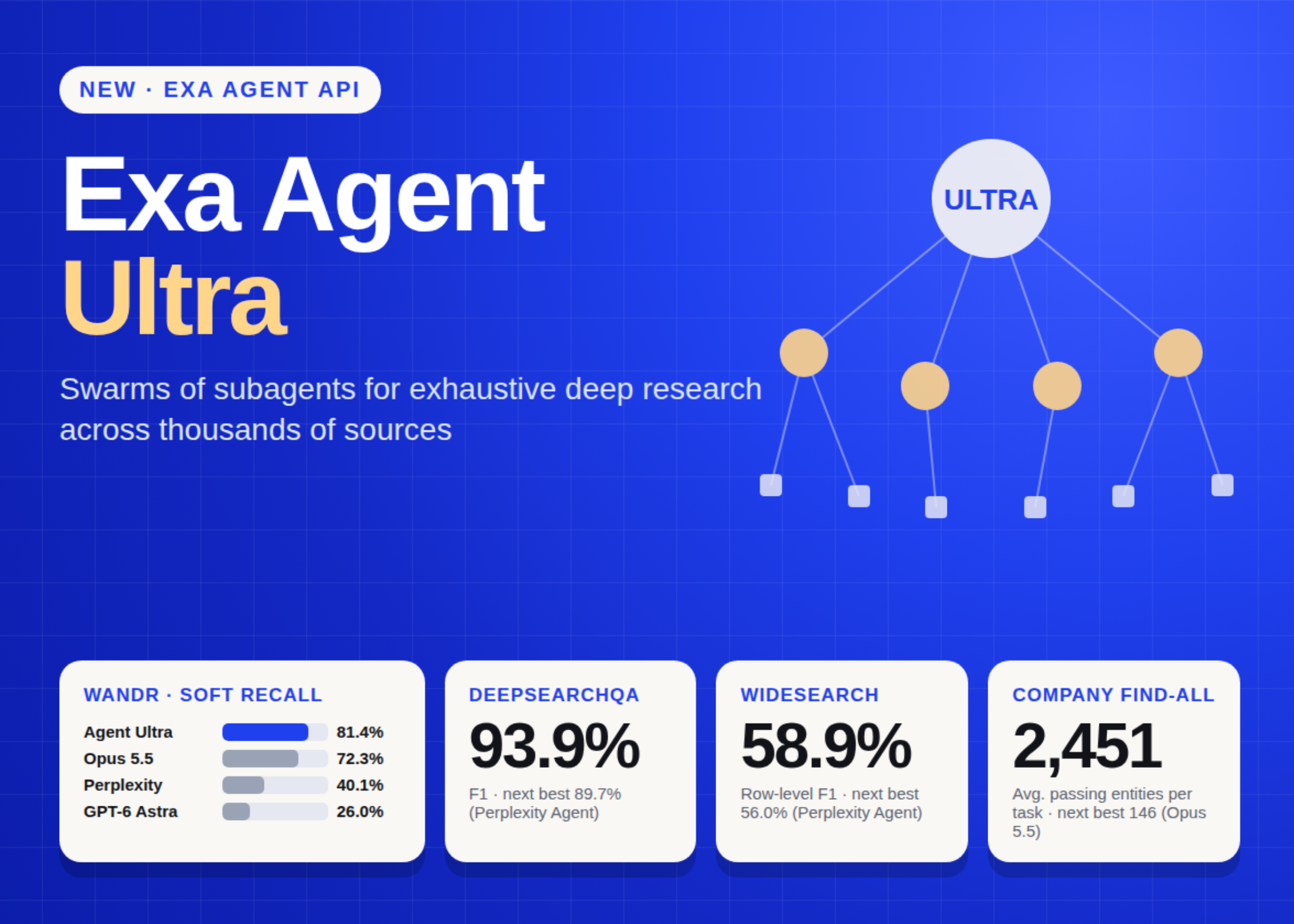
Exa Launches Agent Ultra: A Subagent Swarm Deep Research API Built for Exhaustive List Building

Aneesh Tickoo is a consulting intern at MarktechPost. He is currently pursuing his undergraduate degree in Data Science and Artificial Intelligence from the Indian Institute of Technology(IIT), Bhilai. He spends most of his time working on projects aimed at harnessing the power of machine learning. His research interest is image processing and is passionate about building solutions around it. He loves to connect with people and collaborate on interesting projects.


🔥 StoryBird.ai just dropped some amazing features. Generate an illustrated story from a prompt. Check it out here. (Sponsored)

Credit: Source link

ShareTweetSendSharePin

Related Posts

These Xbox Players Got GTA 6 For Free The Hard Way
AI & Technology

These Xbox Players Got GTA 6 For Free The Hard Way

September 26, 2026
Exa Launches Agent Ultra: A Subagent Swarm Deep Research API Built for Exhaustive List Building
AI & Technology

Exa Launches Agent Ultra: A Subagent Swarm Deep Research API Built for Exhaustive List Building

September 26, 2026
End-to-End Multimodal Data Augmentation and Adversarial Robustness Benchmark with AugLy for Images, Text, Audio, and PyTorch
AI & Technology

End-to-End Multimodal Data Augmentation and Adversarial Robustness Benchmark with AugLy for Images, Text, Audio, and PyTorch

September 26, 2026
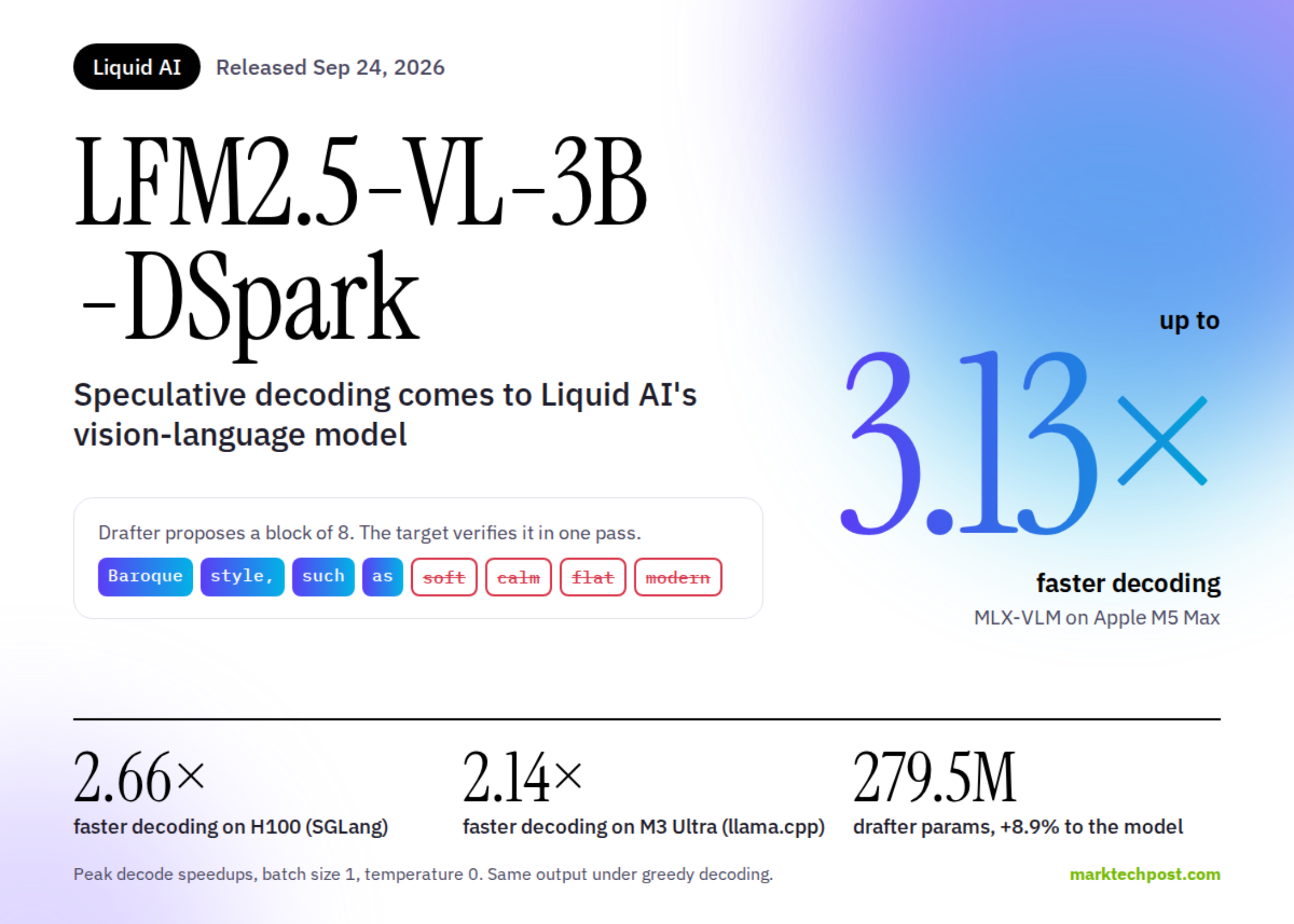
Liquid AI Releases LFM2.5-VL-3B-DSpark: Speculative Decoding for Vision-Language Models With Up to 3.13x Faster Decoding
AI & Technology

Liquid AI Releases LFM2.5-VL-3B-DSpark: Speculative Decoding for Vision-Language Models With Up to 3.13x Faster Decoding

September 25, 2026
Next Post
I’m 1,000 In Debt, Should I Continue Grad School?

I'm $291,000 In Debt, Should I Continue Grad School?

Leave a Reply Cancel reply

Your email address will not be published. Required fields are marked *

Search

No Result
View All Result
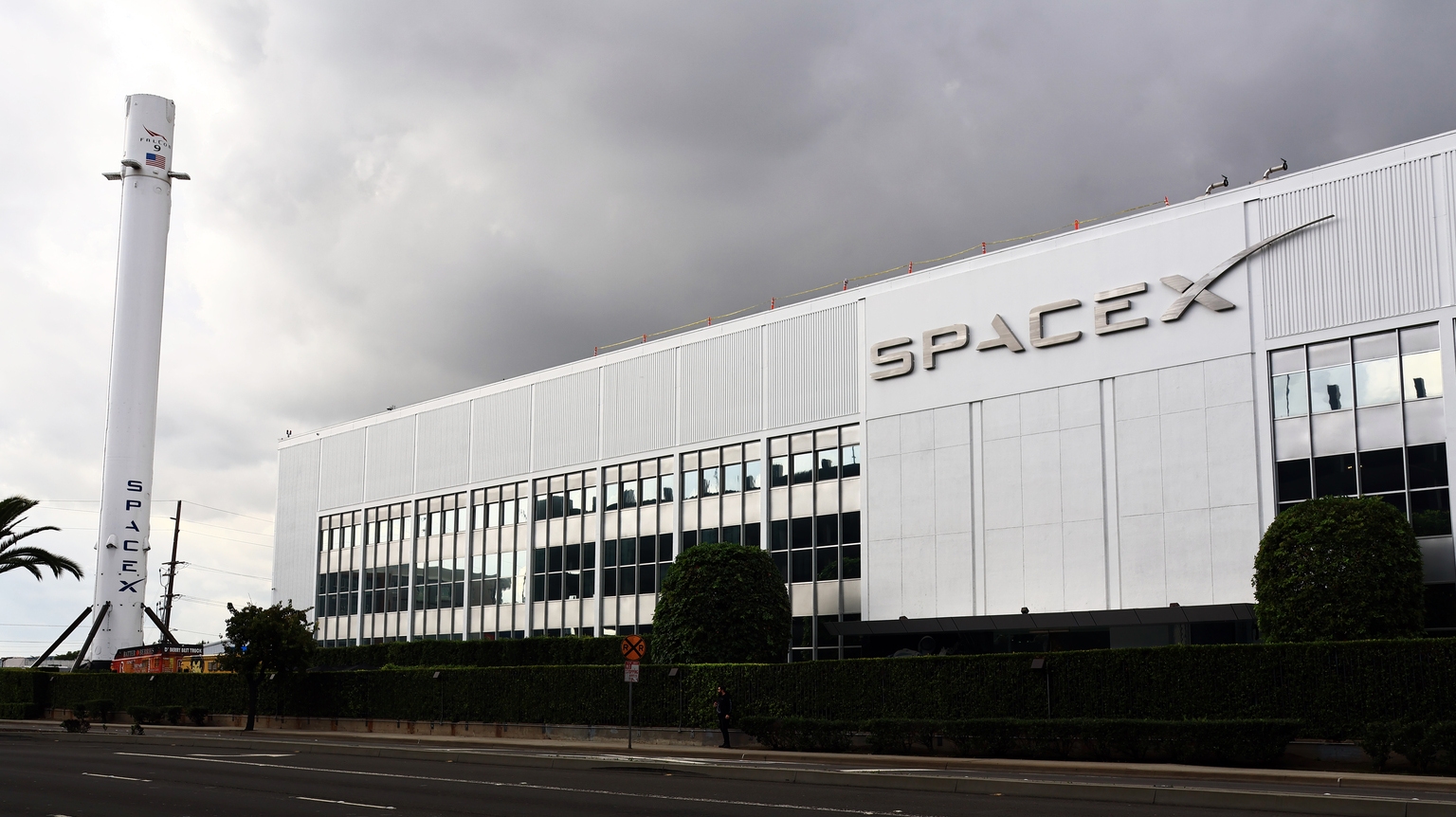
SpaceX: Louisiana Is Huge, But The Revenue Math Still Doesn’t Work (NASDAQ:SPCX)

SpaceX: Louisiana Is Huge, But The Revenue Math Still Doesn’t Work (NASDAQ:SPCX)

September 22, 2026
Two injured riders of state fair swing ride speak out

Two injured riders of state fair swing ride speak out

September 26, 2026
Family blames ICE ankle monitor for Haitian student’s suicide in Ohio

Family blames ICE ankle monitor for Haitian student’s suicide in Ohio

September 19, 2026

About

Learn more

Our Services

Legal

Privacy Policy

Terms of Use

Bloggers

Learn more

Article Links

Contact

Advertise

Ask us anything

©2020- TradePoint.io - All rights reserved!

Tradepoint.io, being just a publishing and technology platform, is not a registered broker-dealer or investment adviser. So we do not provide investment advice. Rather, brokerage services are provided to clients of Tradepoint.io by independent SEC-registered broker-dealers and members of FINRA/SIPC. Every form of investing carries some risk and past performance is not a guarantee of future results. “Tradepoint.io“, “Instant Investing” and “My Trading Tools” are registered trademarks of Apperbuild, LLC.

This website is operated by Apperbuild, LLC. We have no link to any brokerage firm and we do not provide investment advice. Every information and resource we provide is solely for the education of our readers. © 2020 Apperbuild, LLC. All rights reserved.

No Result
View All Result
  • Main
  • AI & Technology
  • Stock Charts
  • Market & News
  • Business
  • Finance Tips
  • Trade Tube
  • Blog
  • Shop

© 2023 - TradePoint.io - All Rights Reserved!